

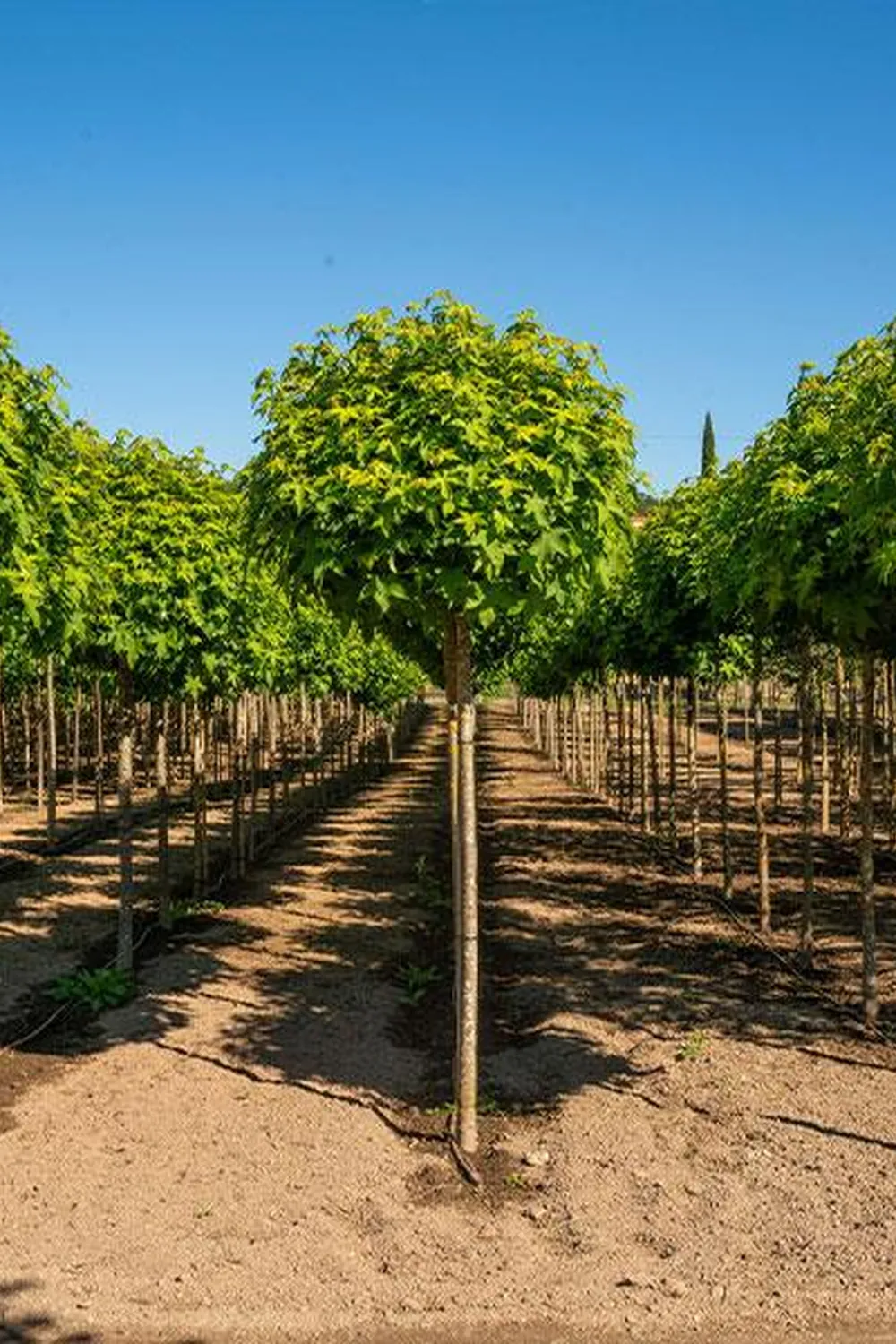
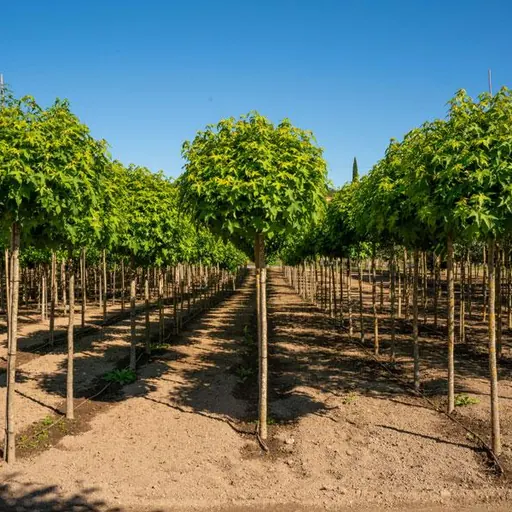
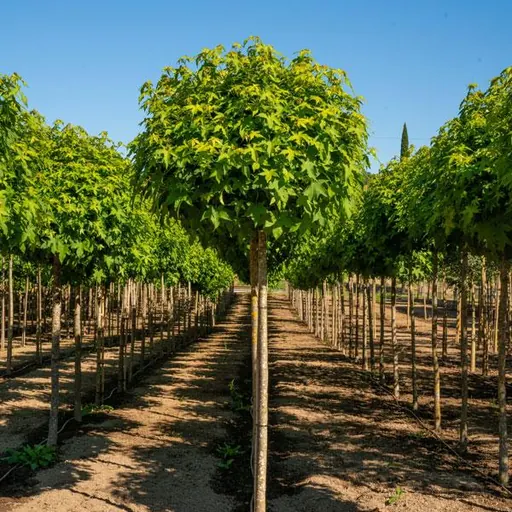
Compact rounded crown with autumn fireworks
Sweet Gum ‘Globosa’ · Liquidambar styraciflua ‘Globosa’
The dwarf, lollipop-crowned form of sweet gum, specified where designers want the autumn colour of the species inside a footprint compatible with narrow streets, courtyards, and tightly framed plaza pits.
- Compact rounded crown reaching roughly four metres tall and wide
- Strongest autumn colour in interior, Catalan and Atlantic Spanish gardens
- Tolerates Costa del Sol and Balearic conditions with softer autumn change
Key Facts
About this Cultivar
The cultivar reaches roughly 3 to 5 metres in height and spread at maturity, building a dense globose crown that is naturally symmetrical and requires no formative pruning. This is the practical differentiator against the straight species, which runs to 15 to 25 metres and asks for room the typical Spanish urban pit cannot offer. The cultivar does not…
Read more
Show less
The cultivar reaches roughly 3 to 5 metres in height and spread at maturity, building a dense globose crown that is naturally symmetrical and requires no formative pruning. This is the practical differentiator against the straight species, which runs to 15 to 25 metres and asks for room the typical Spanish urban pit cannot offer. The cultivar does not produce the spiny gumball fruit that makes Liquidambar styraciflua a maintenance liability over paving, footways, and play surfaces.
Foliage is the palmate, deeply lobed star of the species, glossy mid-green through spring and summer, turning through yellow, orange, red, and purple in autumn. The colour reads strongly in the cooler microclimates of the cornisa cantábrica and northern meseta, and remains a credible autumn feature in Mediterranean coastal projects with reliable irrigation; the show is generally shorter and less saturated under prolonged late-summer drought.
Hardy to roughly minus 23 °C through the species inheritance, the cultivar performs across continental meseta winters, the Atlantic northwest, and the milder Mediterranean coast. Heat tolerance is high but the species is acid-leaning and not at ease on the alkaline calcareous and gypsiferous substrates common in the Ebro valley, the sureste, and much of inland Levante; expect iron chlorosis on high-pH ground without targeted amendment. Drought tolerance is moderate once established, not absolute, and the first two to three summers require regular irrigation.
Disease and pest pressure is low, with the genus outside the principal Spanish phytosanitary concerns affecting Olea, Platanus, Buxus, and Phoenix. Growth is slow to moderate on the grafted form, which keeps the crown tight and the calibre proportioned for street furniture. The compact habit places it where plátano de sombra is too coarse and a clipped naranjo too southern, offering the servicio de parques y jardines a deciduous accent with strong seasonal programme.
Advice on this species
Want to know more about Liquidambar styraciflua 'Globosa'?
Tell us about your project and we'll advise you on this species — where it thrives, which size makes sense, and what to expect once planted.
- Produção própria
- Exemplares adultos
- Resposta em 1–2 dias
Sem compromisso · orçamento personalizado