

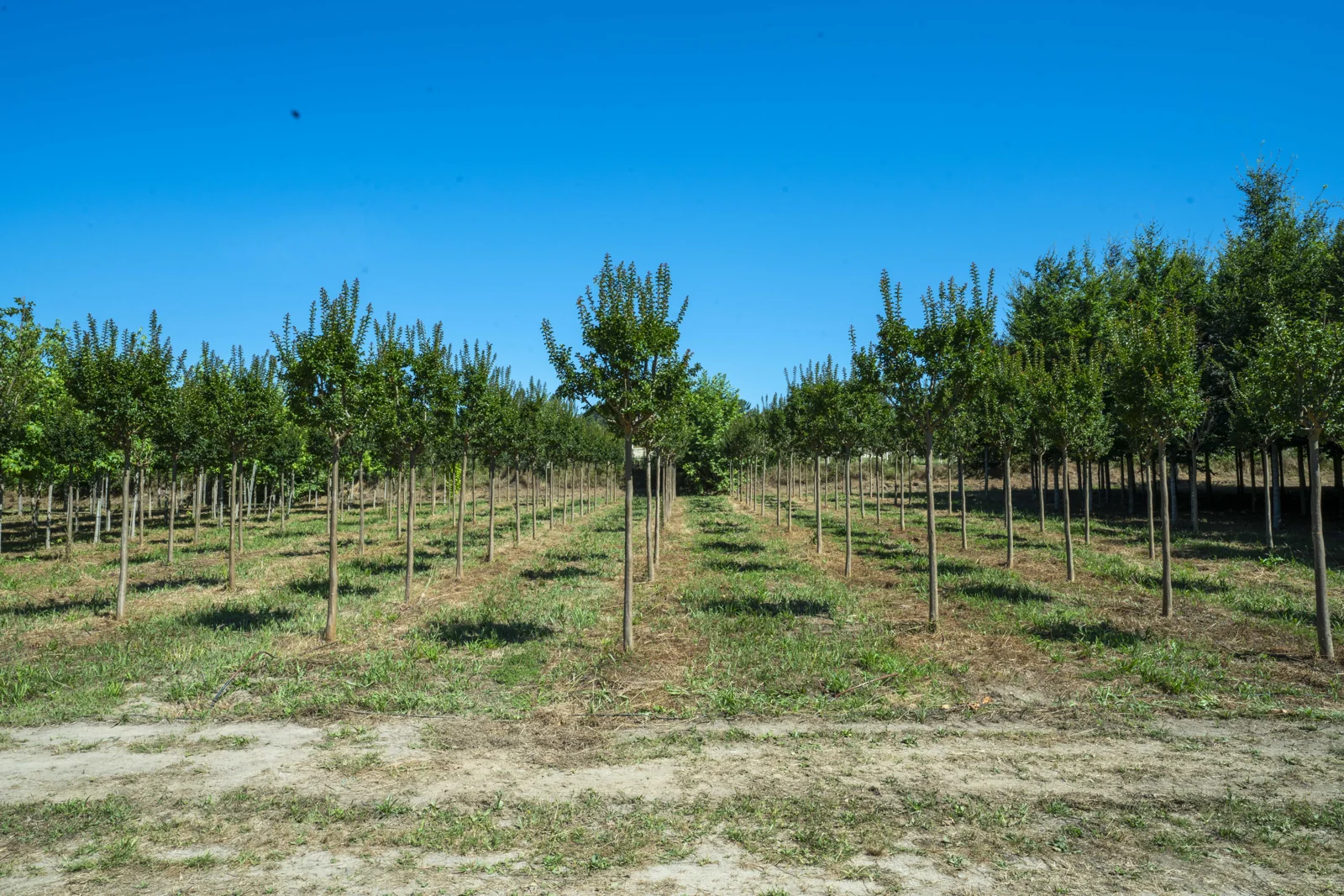
A summer-flowering tree for the dry Spanish garden
Crape Myrtle ‘Violacea’ · Lagerstroemia indica ‘Violacea’
A compact summer-flowering accent tree for projects across Mediterranean and continental Spain, where its purple panicle display, exfoliating bark and tolerance of urban heat carry the ornamental programme through the dry season.
- Deep violet flower sprays from July through September across the Mediterranean costas
- Hardy to roughly minus twelve degrees; suits Costa del Sol to Madrid
- Tolerates calcareous, sandy, and clay soils provided drainage is honest
About this Cultivar
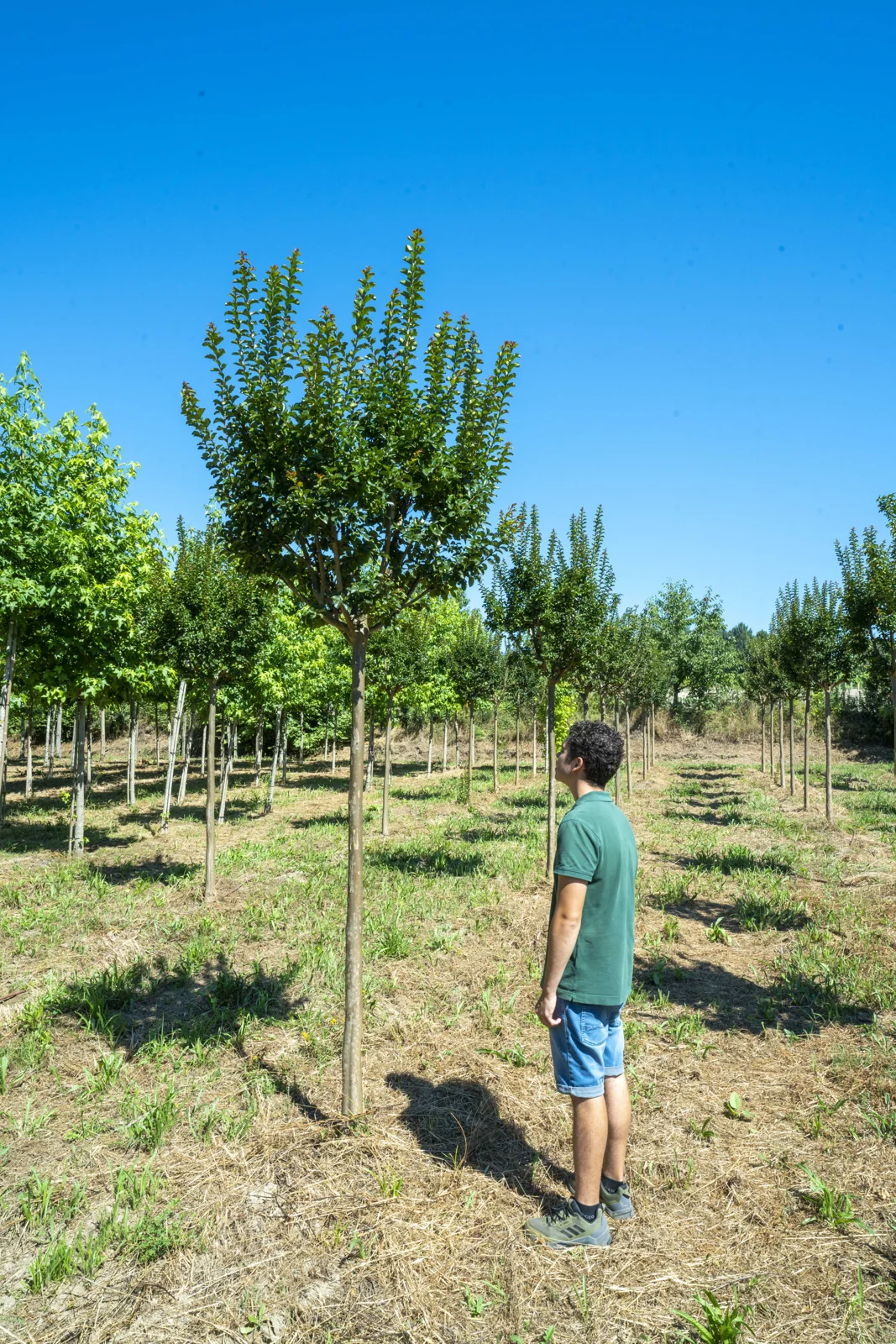
Lagerstroemia indica 'Violacea' (árbol de Júpiter) is a deciduous, multi-stemmed small tree reaching 4 to 6 m in height and 3 to 5 m in spread, with a rounded, well-balanced crown. Among Lagerstroemia cultivars routinely available to the Spanish trade, 'Violacea' is selected for the depth of its violet-purple panicle colour, which holds visual weight…
Read more
Show less
Lagerstroemia indica 'Violacea' (árbol de Júpiter) is a deciduous, multi-stemmed small tree reaching 4 to 6 m in height and 3 to 5 m in spread, with a rounded, well-balanced crown. Among Lagerstroemia cultivars routinely available to the Spanish trade, 'Violacea' is selected for the depth of its violet-purple panicle colour, which holds visual weight against the bleached light of an Iberian summer better than the pinks and pale lavenders.
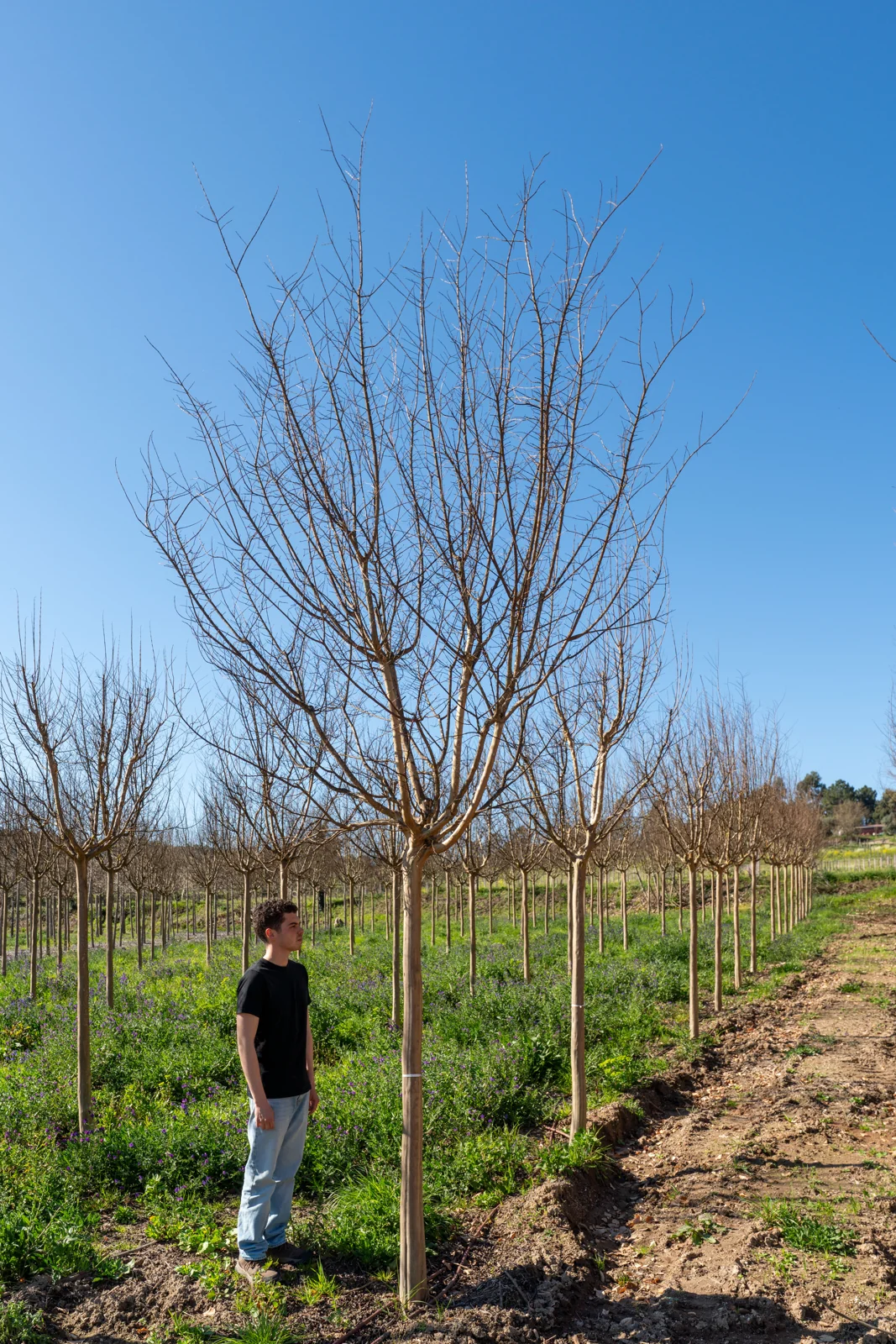
Flowering runs from June through August on the current season's growth, with crinkled panicles carried at the crown ends. The dark, glossy foliage shifts to yellow, orange and red in autumn, giving the tree a second ornamental phase that suits projects in the Atlantic strip (cornisa cantábrica) and the cooler interior of the meseta. Smooth bark exfoliates in plates to reveal lighter patches and provides winter interest after leaf drop.
Climate envelope: hardy to roughly minus 15 °C, with reliable performance across Mediterranean coastal Spain, the Levante, Andalucía, the Balearics and the meseta interior. Heat tolerance is high; drought tolerance is high once the tree is established, after two to three summers of regular irrigation. Mature water need is modest under coastal and southern conditions, and the tree withstands seasonal irrigation cut-off without dropping its flowering programme. Salt tolerance is low, so direct frontline coastal exposure is the limit of its envelope.
The species sits outside the current host range of Xylella fastidiosa, which makes 'Violacea' a useful specification where Olea, Polygala myrtifolia or Nerium would otherwise carry the colour role under demarcation pressure. The principal phytosanitary pressures are powdery mildew and leaf spot in humid Atlantic conditions; growth is best on fertile, well-drained soils in full sun, where flowering is vigorous and foliage stays clean.
Growth is slow to moderate, which suits the cultivar to confined urban pits, container planting and avenue work where mature dimensions are predictable. It tolerates urban pollution and compacted substrates, and reads well as a specimen, in small groups, or in short alignments alongside Citrus, Punica or low Mediterranean evergreens.
Advice on this species
Want to know more about Lagerstroemia indica 'Violacea'?
Tell us about your project and we'll advise you on this species — where it thrives, which size makes sense, and what to expect once planted.
- Produção própria
- Exemplares adultos
- Resposta em 1–2 dias
Sem compromisso · orçamento personalizado