

A fast evergreen screen for privacy and wind shelter
Leyland Cypress · ×Cupressocyparis leylandii
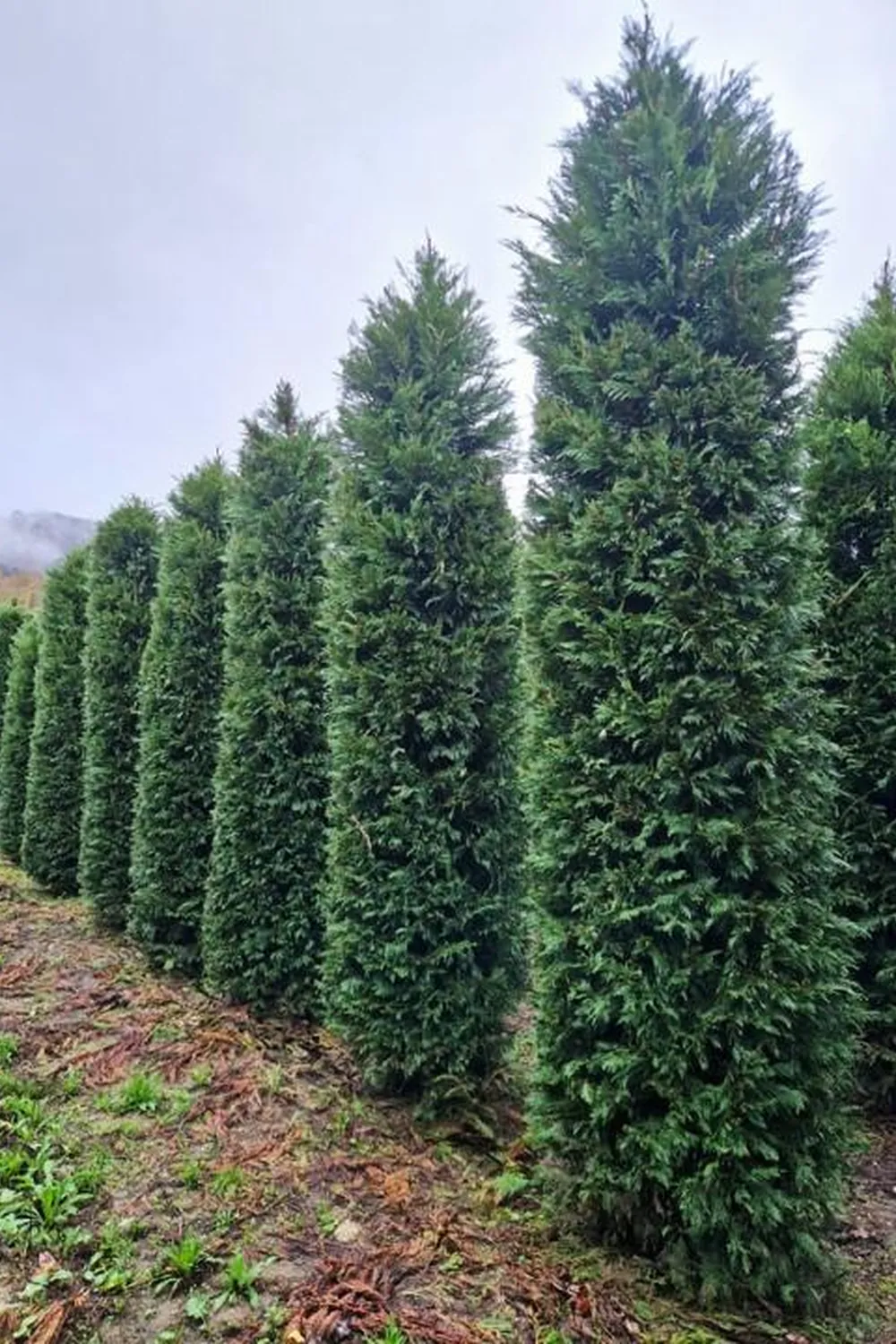
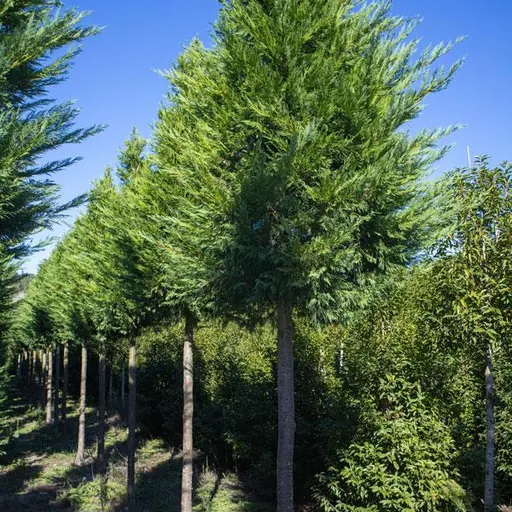
Where a project needs height and dense year-round screening within a few seasons, this fast-growing evergreen conifer closes a boundary quickly, holding a narrow pyramidal crown of dark blue-green foliage with little lateral spread.
- Thrives on the Costa del Sol, Costa Blanca, and the Balearics in full sun
- Dense dark evergreen foliage gives a solid screen all year round
- Fast cover, adding well over a metre of height in a good year
About this Species
The trade still lists this hybrid (Cupressus macrocarpa crossed with Callitropsis nootkatensis) as ×Cupressocyparis leylandii, or simply leylandii, though the accepted name is ×Hesperotropsis leylandii. Annual extension can exceed one metre in favourable conditions, so a continuous screen or windbreak (cortina corta-vento) reaches working height far sooner…
Read more
Show less
The trade still lists this hybrid (Cupressus macrocarpa crossed with Callitropsis nootkatensis) as ×Cupressocyparis leylandii, or simply leylandii, though the accepted name is ×Hesperotropsis leylandii. Annual extension can exceed one metre in favourable conditions, so a continuous screen or windbreak (cortina corta-vento) reaches working height far sooner than ×Cupressus sempervirens, the upright cypress a Spanish reader will recognise as the alternative. Mature dimensions run to roughly 15 to 25 m tall and 4 to 6 m wide, with a dense columnar habit that takes well to clipping and recovers from hard reduction, which is what allows it to be held as a formal hedge or grown out as a free specimen.
The envelope is broadest in mild conditions. It is reliable across Mediterranean coastal sites and the humid Atlantic northwest (cornisa cantábrica), tolerating moderate salt and coastal wind once established, and is hardy below roughly minus five degrees Celsius. On the continental interior (meseta) it accepts cold winters, but shallow rooting and the heat of an inland Spanish summer ask for care: give large specimens shelter from the strongest wind, since unsupported root systems can be unsteady, and irrigate through the first two or three summers to avoid drought stress.
Water demand is moderate rather than low. The plant draws on supplementary irrigation while establishing and is best kept off prolonged drought, because drought stress is the common trigger for Seiridium and Botryosphaeria canker, which is not curable once it takes hold. On heavy or poorly drained ground it is also exposed to Phytophthora and Armillaria root rot, so free-draining soil is the first line of defence.
As a member of the Cupressaceae it sits outside the Xylella fastidiosa host range, a useful point where Olea and Nerium are constrained. Inspect periodically for bagworm, which can defoliate a tree quickly, and plan on regular pruning to hold the form. Note medium flammability where projects sit in the wildland-urban interface (interfaz urbano-forestal).
Advice on this species
Want to know more about ×Cupressocyparis leylandii?
Tell us about your project and we'll advise you on this species — where it thrives, which size makes sense, and what to expect once planted.
- Produção própria
- Exemplares adultos
- Resposta em 1–2 dias
Sem compromisso · orçamento personalizado