

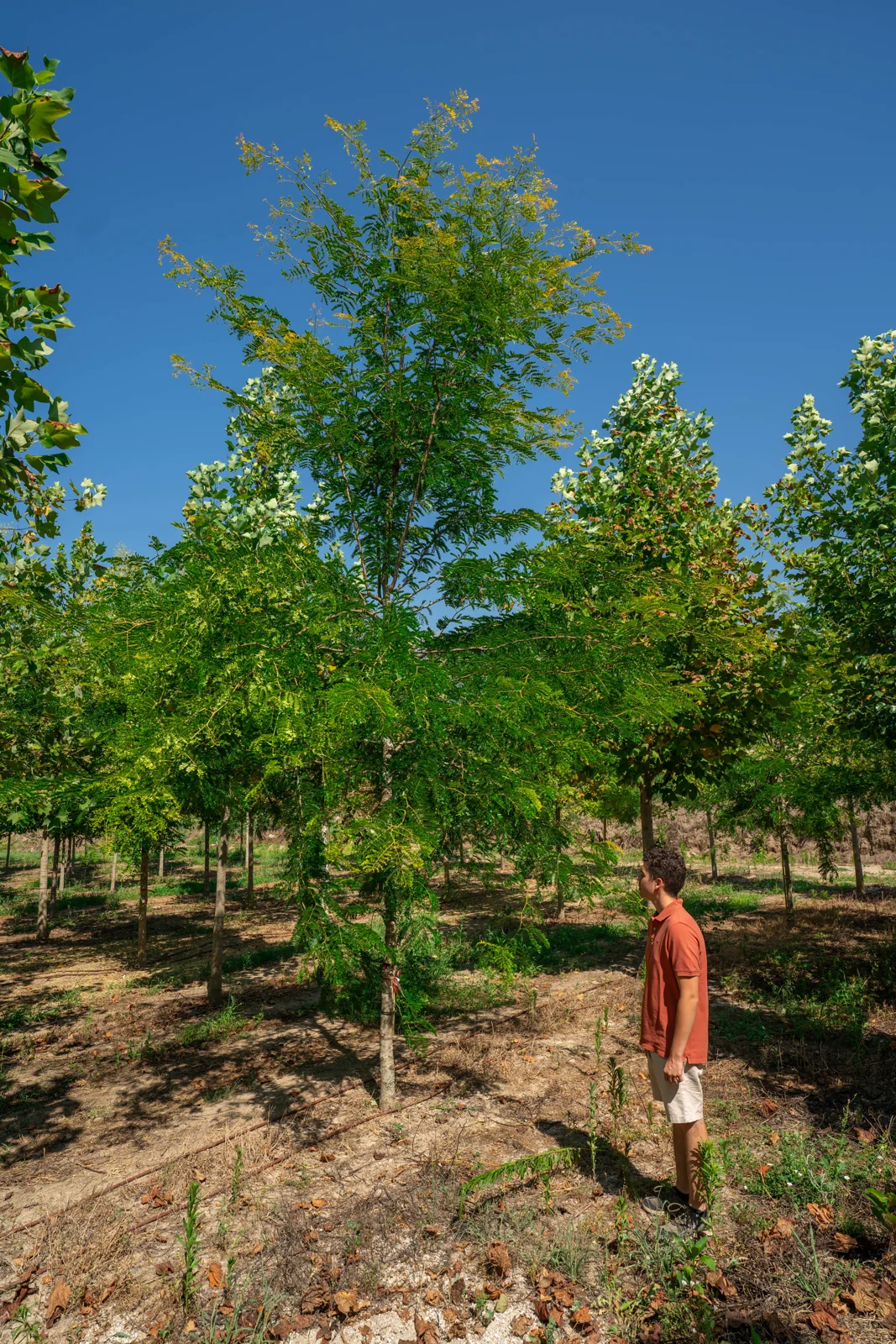
Golden, thornless shade for a sunlit terrace
Honey Locust ‘Sunburst’ · Gleditsia triacanthos ‘Sunburst’
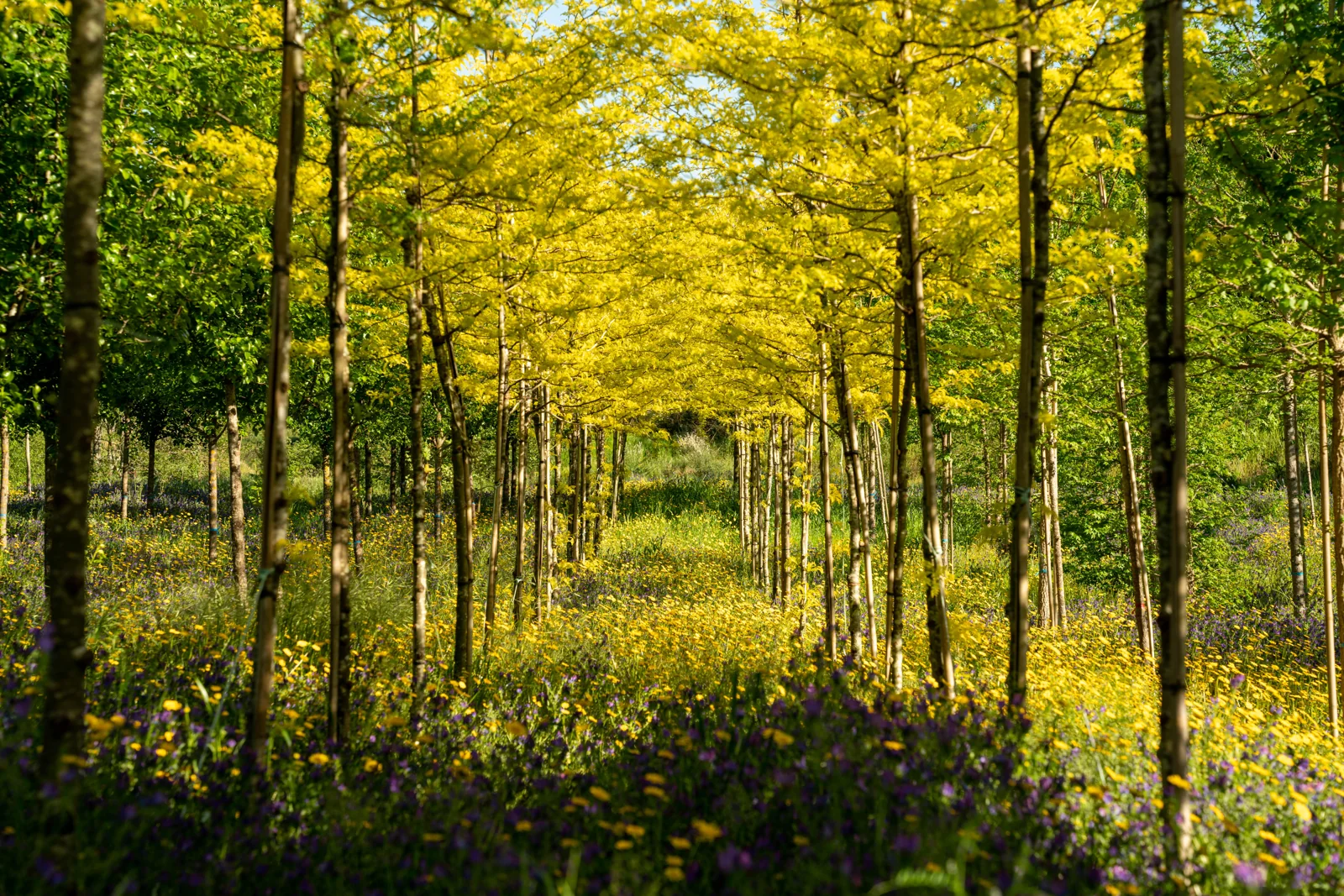
Where a project needs a fast-establishing shade tree that casts light rather than dense canopy, this thornless golden-foliaged selection suits low-water schemes, paved settings, and street alignments across most Spanish climates, tolerating poor soils and reflected urban heat.
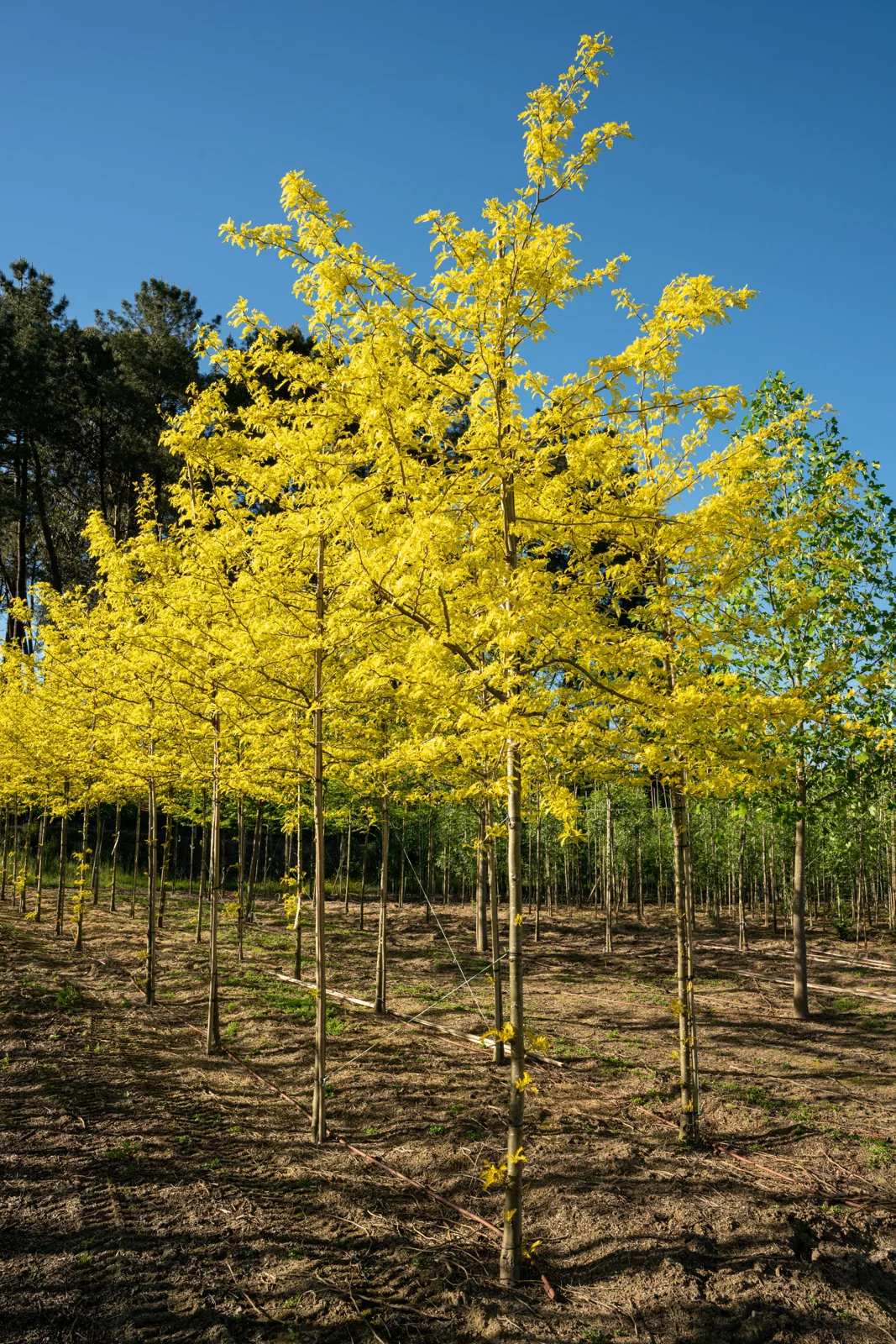
- Luminous golden foliage from spring break through to autumn
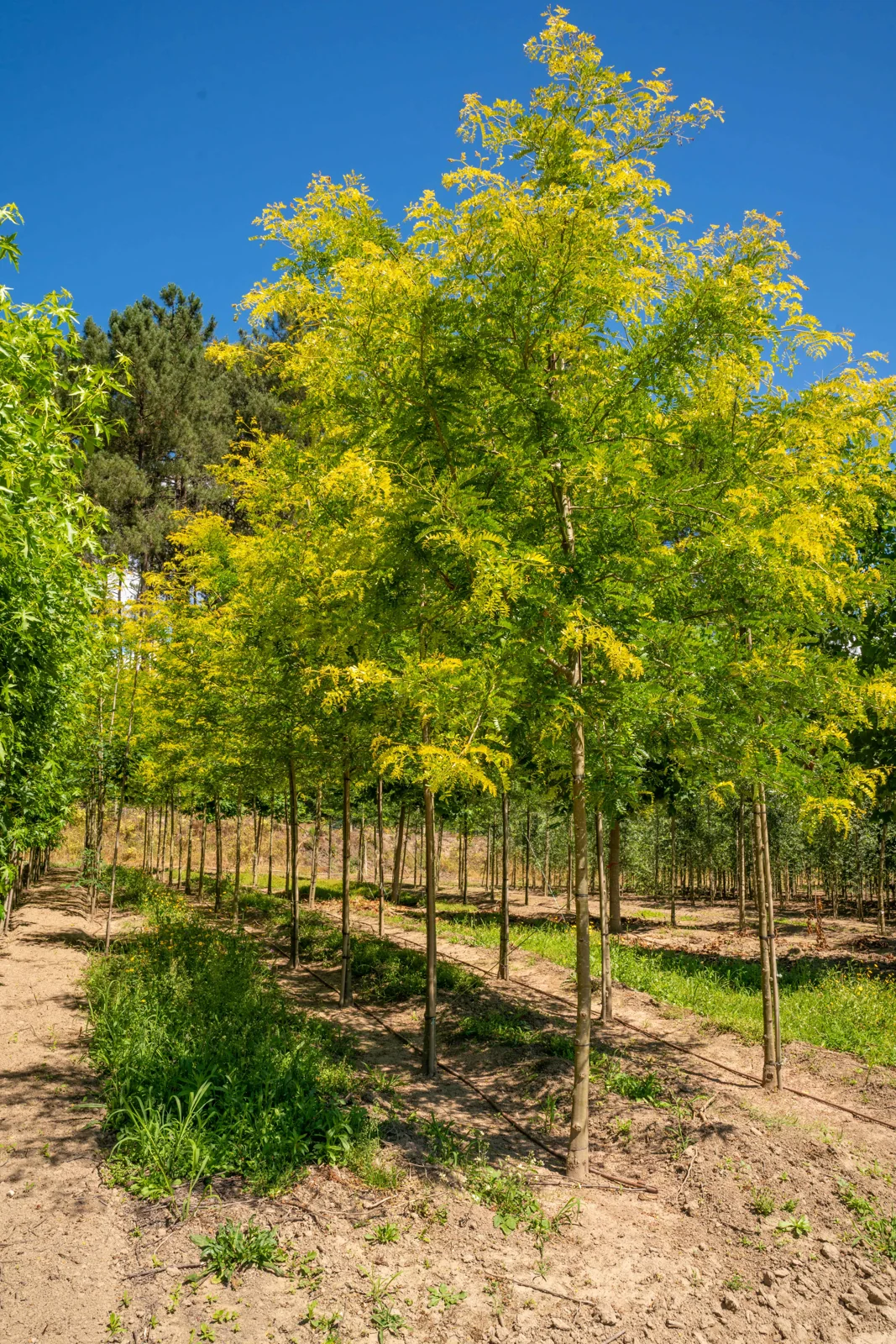
- Open crown casts a soft, dappled shade, not heavy canopy
- Effectively thornless and pod-free, safe for terraces and paths
Key Facts
About this Cultivar
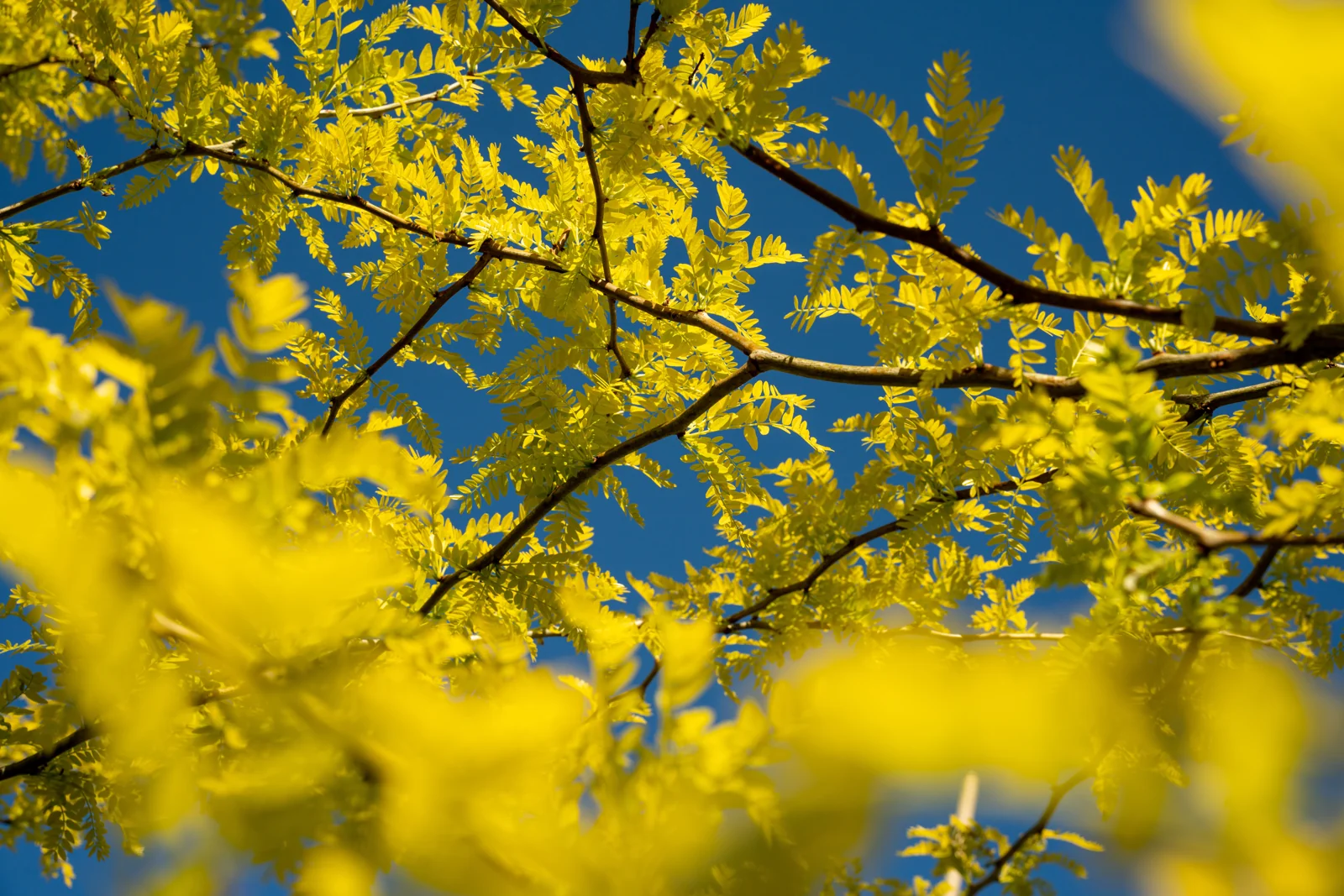
The defining feature of this cultivar is its foliage. The finely divided, fern-like compound leaves emerge yellow-gold in spring, hold a yellow-green cast through summer, and return to warm tones before leaf fall, giving a long season of luminous colour that the straight species does not provide. The crown is open and rounded, projecting a light, dappled…
Read more
Show less
The defining feature of this cultivar is its foliage. The finely divided, fern-like compound leaves emerge yellow-gold in spring, hold a yellow-green cast through summer, and return to warm tones before leaf fall, giving a long season of luminous colour that the straight species does not provide. The crown is open and rounded, projecting a light, dappled shade that allows underplanting and lawn beneath it, unlike the heavier canopy of the plane (plátano de sombra, Platanus x acerifolia) it can replace on streets and in squares. Like other selected forms, it is effectively thornless, removing the principal objection to the species in public and residential settings.
Climate performance is broad. The tree withstands the hot, dry summers of the Mediterranean coast (Levante) and the wide diurnal swings of the continental interior (meseta), where its high frost hardiness, well below the winter minima of central Spain, removes the late-frost risk that limits more tender alignment trees. Heat and reflected radiation from paving are tolerated without scorch on the foliage held in full sun, which also keeps the golden colour at its strongest.
Water demand is modest once the tree is established. It needs regular irrigation through its first two or three summers to build the root system; thereafter it carries prolonged summer drought and tolerates irrigation cut-off, behaviour that suits the water-use planning now required in many landscape submissions (proyecto de ajardinamiento).
Site tolerance is wide. The deep, adaptable root system performs in alkaline and calcareous soils, in sandy and clay substrates, and in compacted urban ground, provided drainage is adequate, making it suited to confined planting pits and paved surfaces. It tolerates coastal salt and urban pollution, and as a leguminous tree it sits outside the Xylella fastidiosa host range that constrains specification of Olea and several other Mediterranean genera, a useful position where demarcation pressure narrows the palette.
Advice on this species
Want to know more about Gleditsia triacanthos 'Sunburst'?
Tell us about your project and we'll advise you on this species — where it thrives, which size makes sense, and what to expect once planted.
- Produção própria
- Exemplares adultos
- Resposta em 1–2 dias
Sem compromisso · orçamento personalizado