

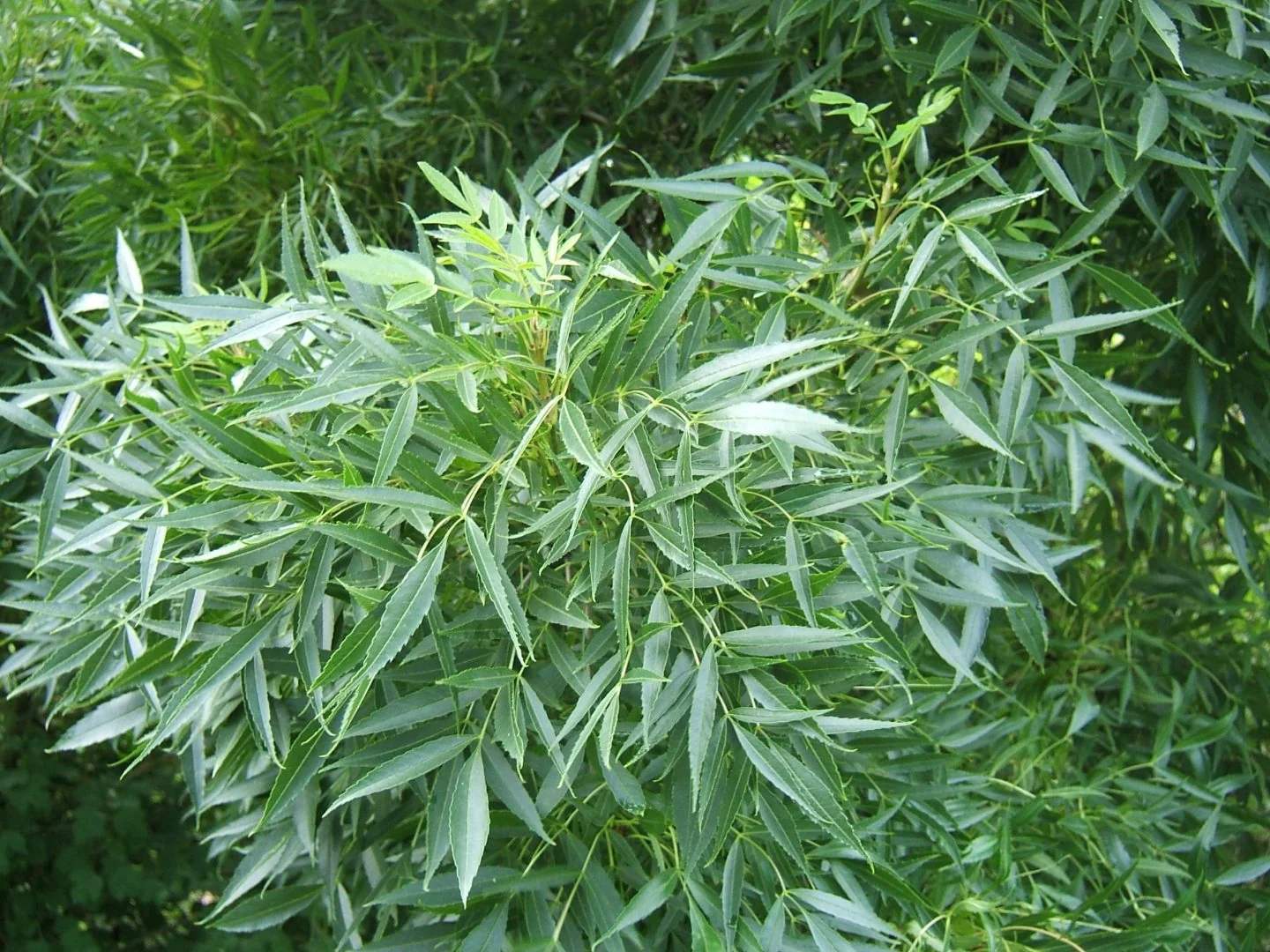
A native Iberian shade tree for dry-summer gardens
Narrow-leaved Ash · Fraxinus angustifolia
An autochthonous Iberian ash specified for riparian corridors, urban avenues, and shade structures across continental and Mediterranean Spain. Its deep root system and drought tolerance suit projects from the meseta interior to the southern littoral.
- Native Iberian species, at home in dehesa and riparian settings
- Reliable across Costa del Sol, Costa Blanca, Balearics, and inland Spain
- Hardy well below minus 15 C; tolerant of alkaline clay and loam
About this Species
Fraxinus angustifolia is native to southern Europe and North Africa, with a continuous natural range across much of the Iberian peninsula. For a landscape professional preparing a pliego de condiciones, this is a credentialed especie autóctona, which streamlines specification under comunidad autónoma autochthonous-species mandates and places the tree on…
Read more
Show less
Fraxinus angustifolia is native to southern Europe and North Africa, with a continuous natural range across much of the Iberian peninsula. For a landscape professional preparing a pliego de condiciones, this is a credentialed especie autóctona, which streamlines specification under comunidad autónoma autochthonous-species mandates and places the tree on familiar ground for municipal servicios de parques y jardines.
The species reaches 15 to 25 m at maturity with a rounded, spreading crown of 10 to 15 m, growing fast in its early decades. The narrow, pinnate foliage casts moderately dense shade and turns clear yellow in autumn, useful where seasonal interest is part of the visual programme but not at the expense of canopy performance through the long Iberian summer. Spring flowering in March and April is inconspicuous and produces no significant litter load.
Climate envelope is broad. Hardiness extends to roughly minus 20 C, covering the coldest meseta winters in Castilla and Aragón, while heat and drought tolerance carry it through Mediterranean coastal and southern interior conditions. Establishment requires regular irrigation through the first two to three summers; once the deep pivoting root system is anchored, mature specimens hold form under restricted irrigation regimes and through the prolonged summer dry typical of the Levante and inland Andalucía. Moderate salt tolerance allows use on coastal alignments without front-line exposure.
Soil tolerance is wide: loamy, clay, and well-drained substrates are all accepted, and the species evolved alongside seasonally flooded riparian corridors, which gives it useful capacity on heavy soils that defeat drier-adapted alternatives such as Celtis australis or Pinus pinea. Phytosanitary profile is moderate; ash dieback (Hymenoscyphus fraxineus) is the relevant watch-point across Europe, though F. angustifolia has shown more partial tolerance than F. excelsior. The species sits outside the principal Xylella fastidiosa host list.
For avenue, riparian restoration, and large shade applications across most of Spain, it is a defensible specification anchored in native-range performance.



Advice on this species
Want to know more about Fraxinus angustifolia?
Tell us about your project and we'll advise you on this species — where it thrives, which size makes sense, and what to expect once planted.
- Produção própria
- Exemplares adultos
- Resposta em 1–2 dias
Sem compromisso · orçamento personalizado