

A cool-climate cathedral tree for the Spanish uplands
European Beech · Fagus sylvatica
The temperate broadleaf specimen for projects in the cornisa cantábrica and the Pyrenean foothills, Fagus sylvatica excels where summer humidity holds and soils retain moisture, delivering a dense, structural canopy across cool-summer Atlantic Spain.
- Suits the Atlantic north, Sierra de Guadarrama, and Catalan pre-Pyrenees
- Needs deep, free-draining soil and reliable summer moisture
- Hardy to roughly minus 30 °C, comfortable through the hardest winters
About this Species
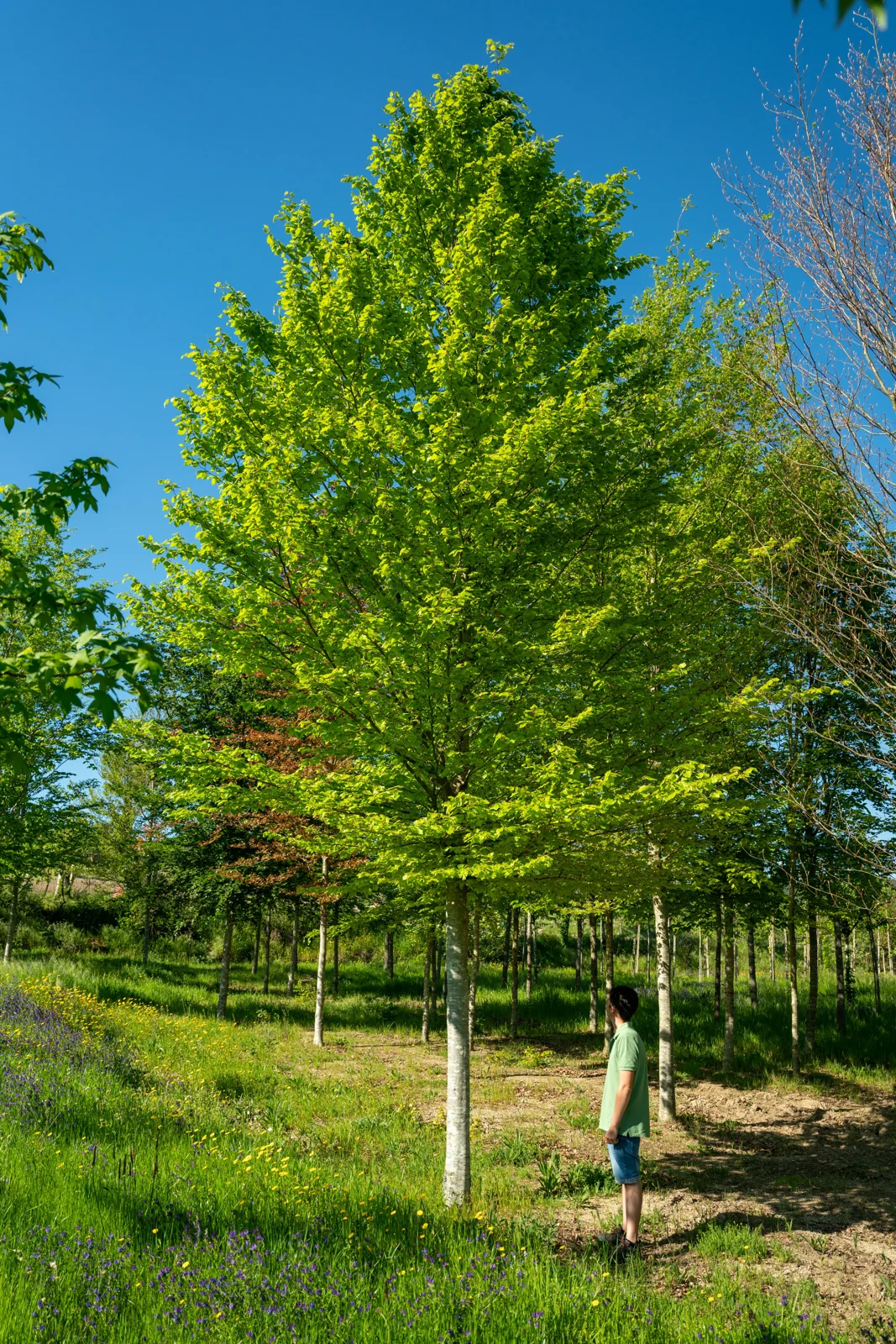
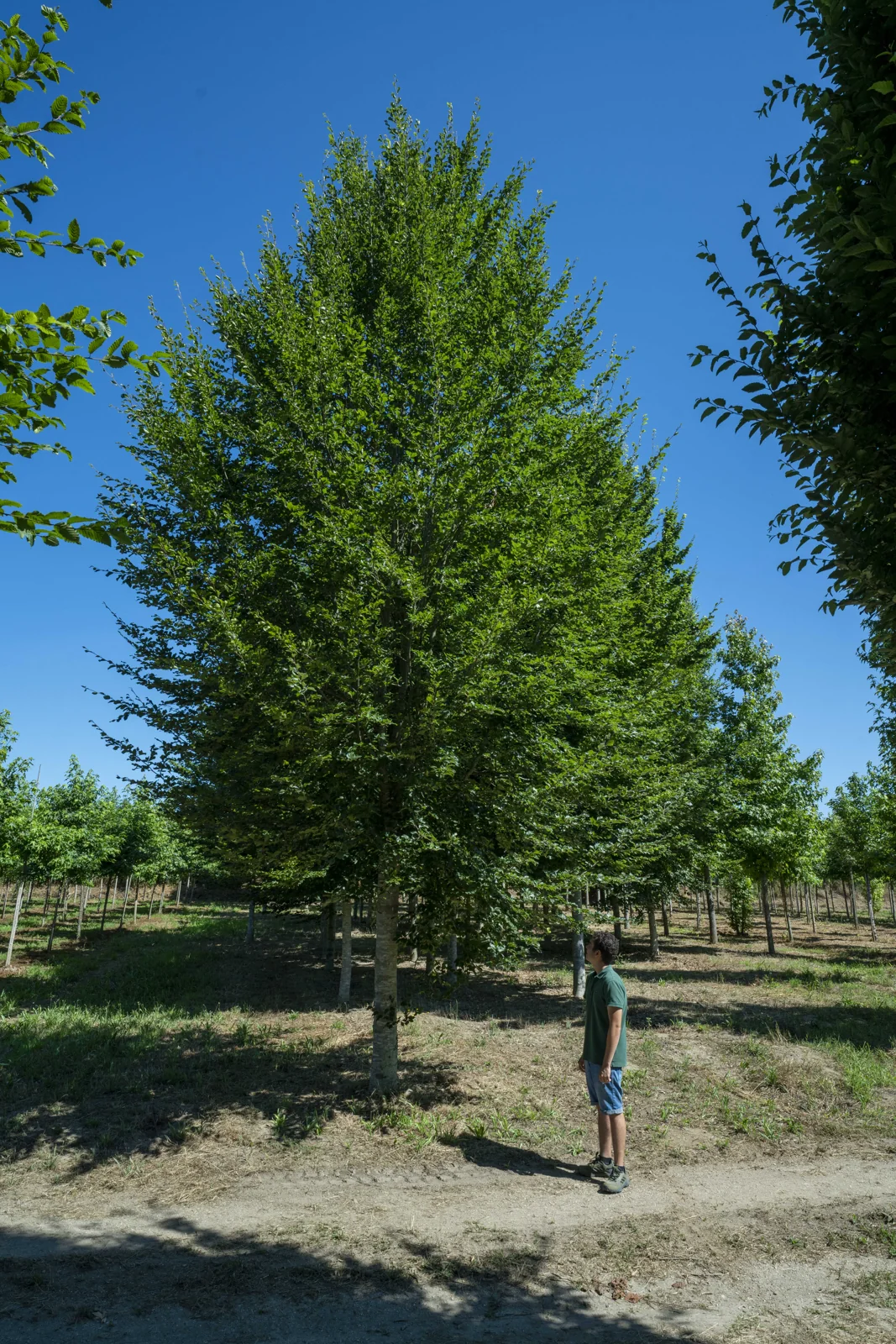
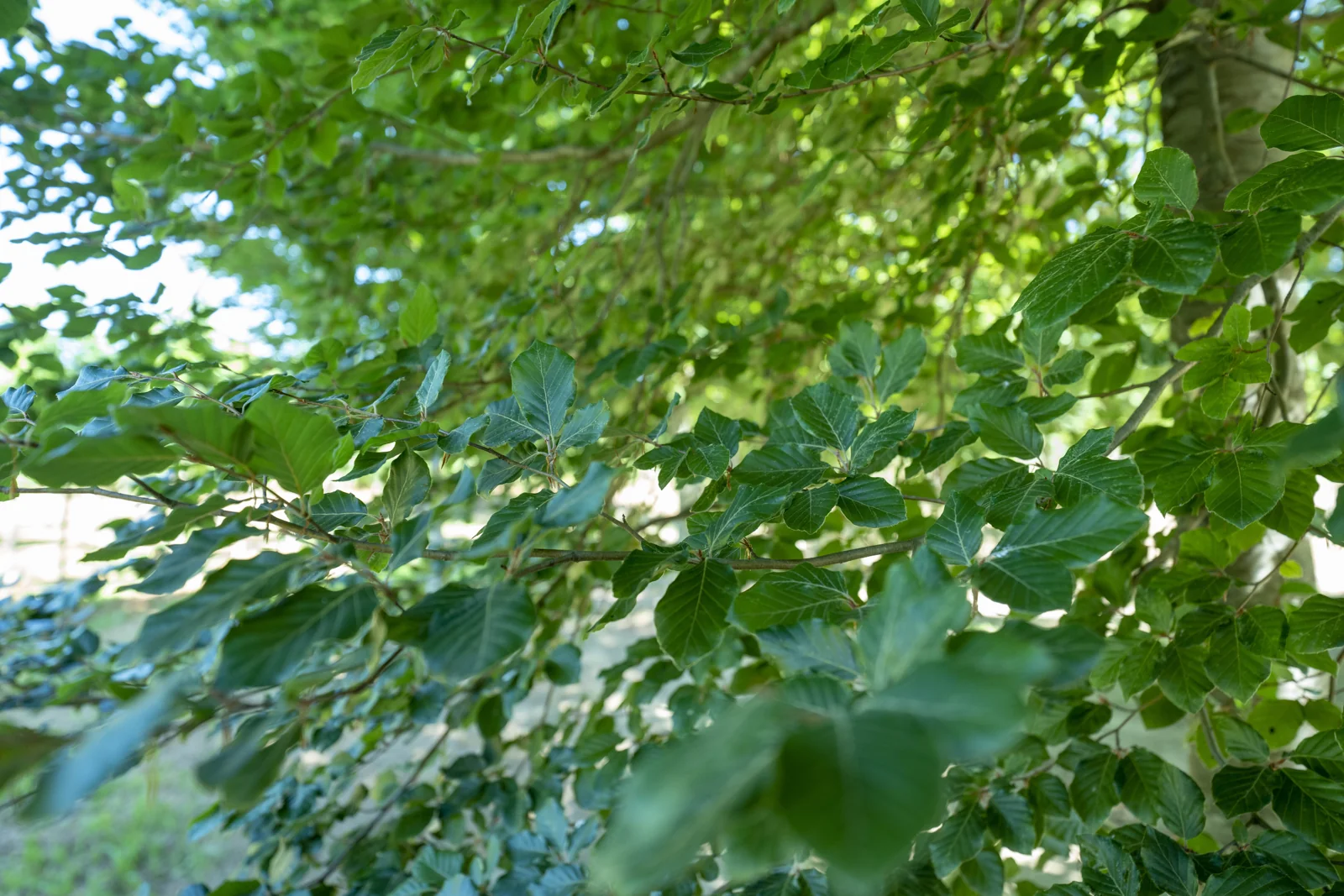
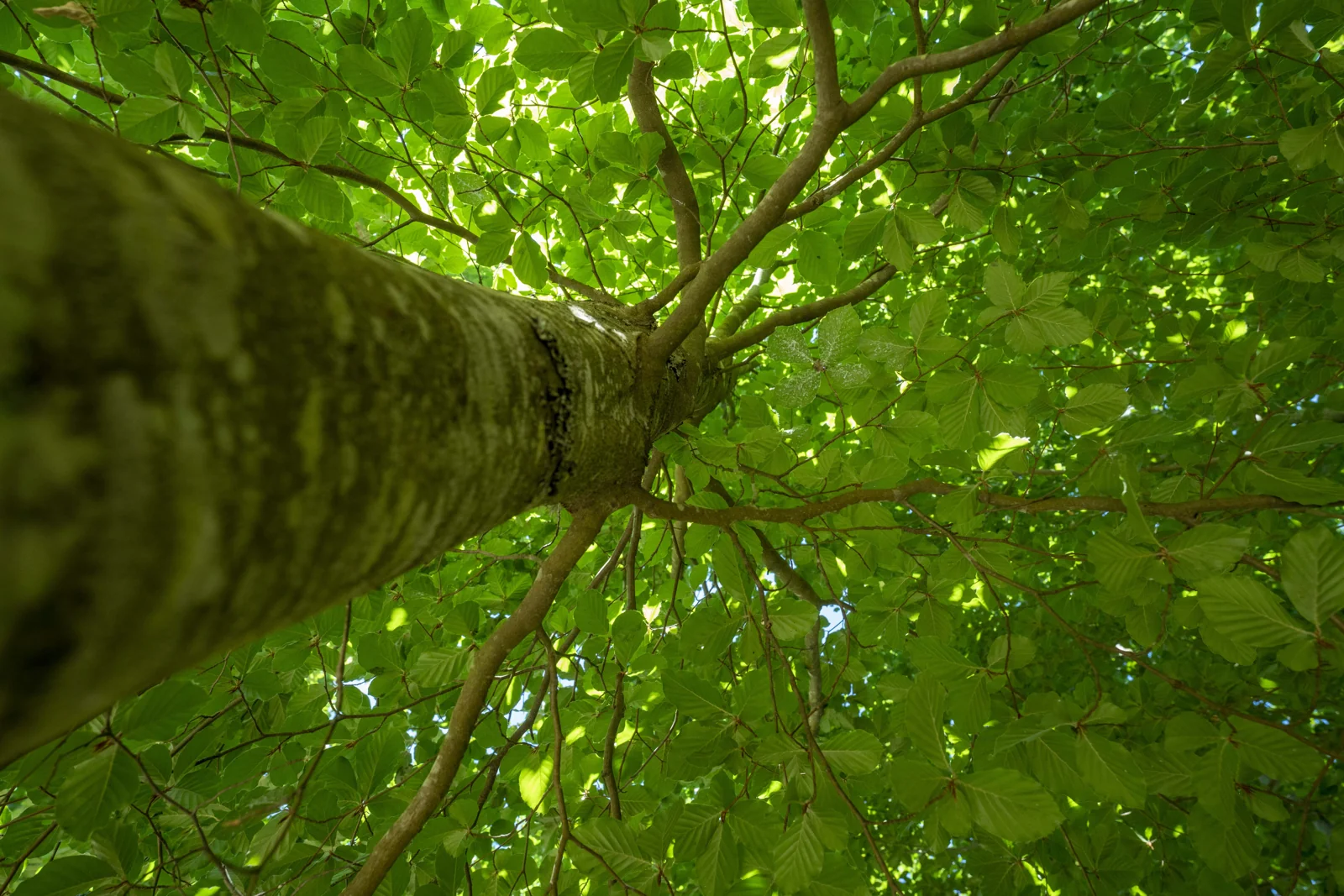
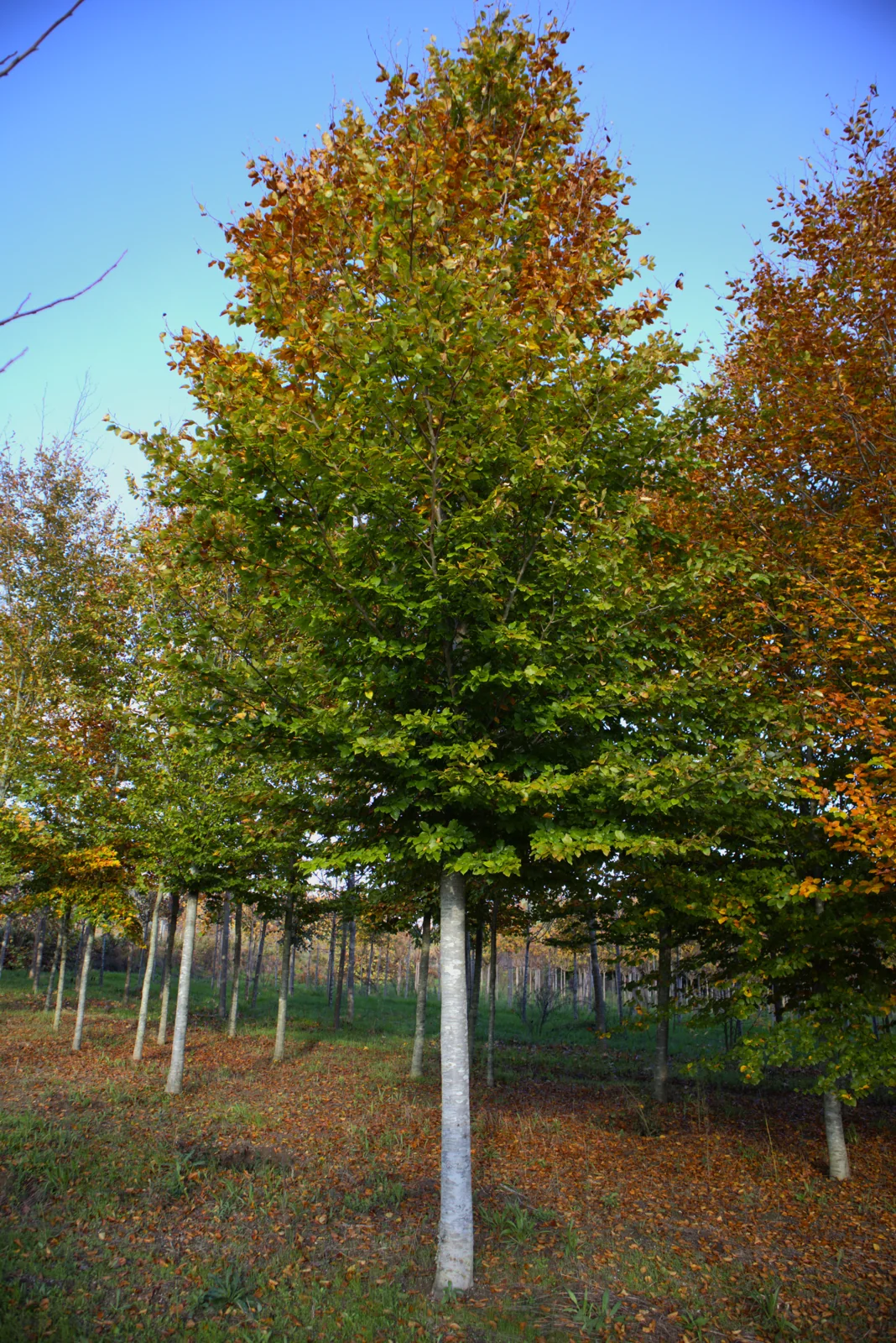
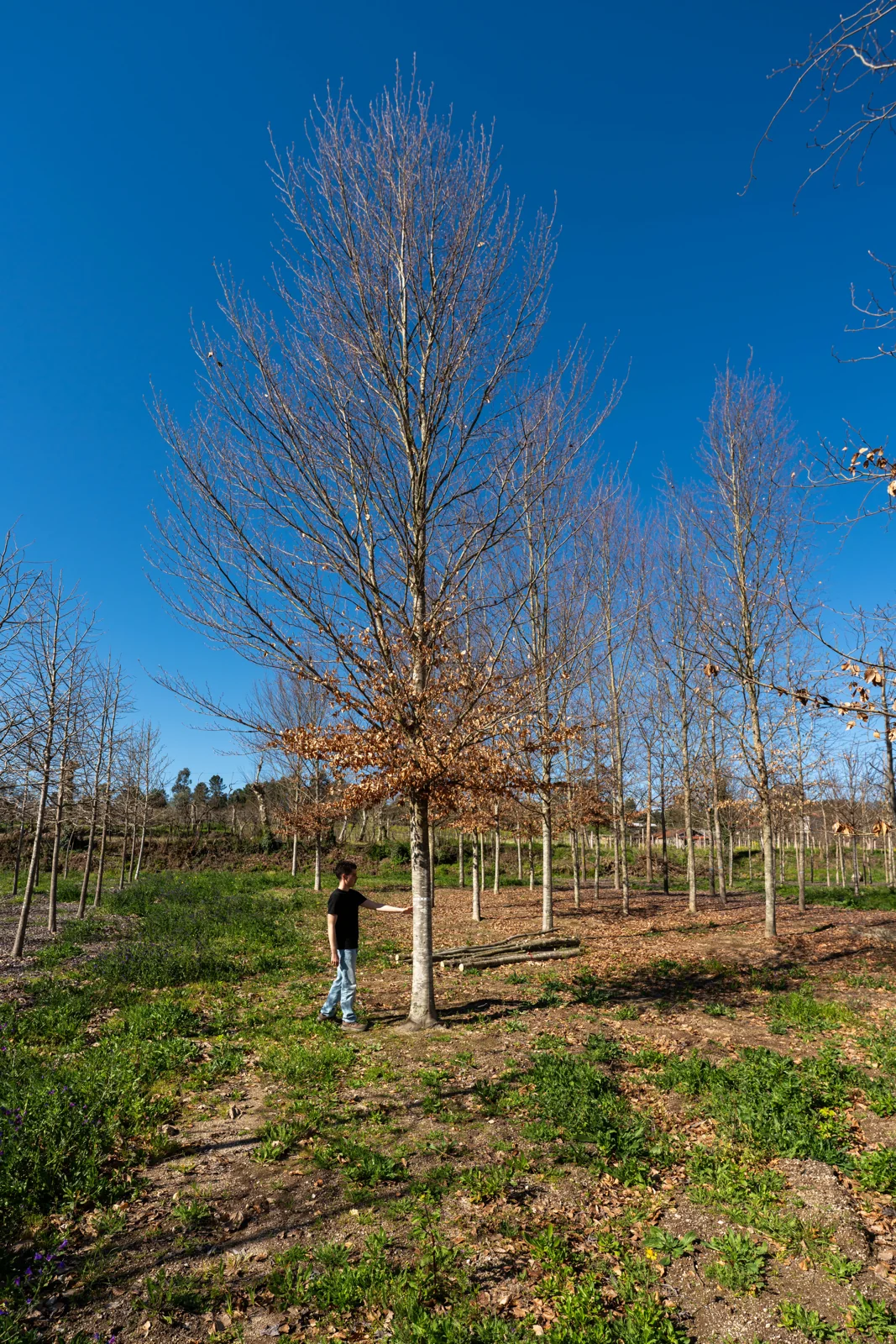
Mature specimens reach 20 to 30 m with a dense, oval to rounded crown and a short, columnar trunk that carries smooth dark grey bark ageing to an elephant-hide texture. The glossy elliptic leaves flush a pale spring green, hold a deep summer green, and turn golden bronze in autumn before marcescent leaves persist through winter on younger growth. Growth is…
Read more
Show less
Mature specimens reach 20 to 30 m with a dense, oval to rounded crown and a short, columnar trunk that carries smooth dark grey bark ageing to an elephant-hide texture. The glossy elliptic leaves flush a pale spring green, hold a deep summer green, and turn golden bronze in autumn before marcescent leaves persist through winter on younger growth. Growth is slow to medium, reaching specification calibre over decades rather than years.
Climate fit inside Spain is narrow and should be respected. The species is reliably hardy to roughly minus 25 °C and performs across Galicia, Asturias, Cantabria, the Basque Country, and the wetter Pyrenean valleys, where cool humid summers and 800 to 1500 mm of annual rainfall reproduce its native montane habitat in the Cantabrian range. It tolerates neither the prolonged summer drought of the Mediterranean littoral and the Levante, nor the combined aridity and heat of the meseta interior and the semi-arid southeast, where it scorches and declines under irrigation cut-off.
Water demand stays moderate to high throughout the tree's life. First three summers require sustained irrigation to establish the shallow, plate-like root system; mature trees draw heavily on soil moisture and respond poorly to imposed drought, with crown dieback often the first symptom. It prefers free-draining, neutral to mildly acidic loams with high organic matter, tolerates calcareous substrates where rainfall is adequate, and fails on compacted urban clays and waterlogged sites.
The disease profile is unremarkable in Iberian conditions, with no Xylella host status and only occasional pressure from beech bark disease, Phytophthora on poorly drained sites, and incidental aphid or scale activity. Specification weight comes from form and longevity: a wide-canopied lawn or parque specimen, a high-pruned avenue tree on generous root volumes, or a clipped hedge that retains russet winter foliage. For Mediterranean and continental Spanish sites, Quercus ilex or Celtis australis will perform where this species cannot.



Advice on this species
Want to know more about Fagus sylvatica?
Tell us about your project and we'll advise you on this species — where it thrives, which size makes sense, and what to expect once planted.
- Produção própria
- Exemplares adultos
- Resposta em 1–2 dias
Sem compromisso · orçamento personalizado