

A sculptural specimen for cool, humid Spanish gardens
European Beech ‘Pendula’ · Fagus sylvatica ‘Pendula’
A pendulous cultivar of European beech for projects in the cornisa cantábrica and cooler mid-altitude inland Spain, where summers stay moderate and soils hold moisture. Specified as a singular focal tree, not a group planting.
- Suits the Atlantic north, the Sierra de Guadarrama foothills, and the Catalan pre-Pyrenees
- Asks for cool summers, regular rainfall, and deep acid-to-neutral well-drained soil
- Needs steady water through establishment and a cool, moist site
Key Facts
About this Cultivar
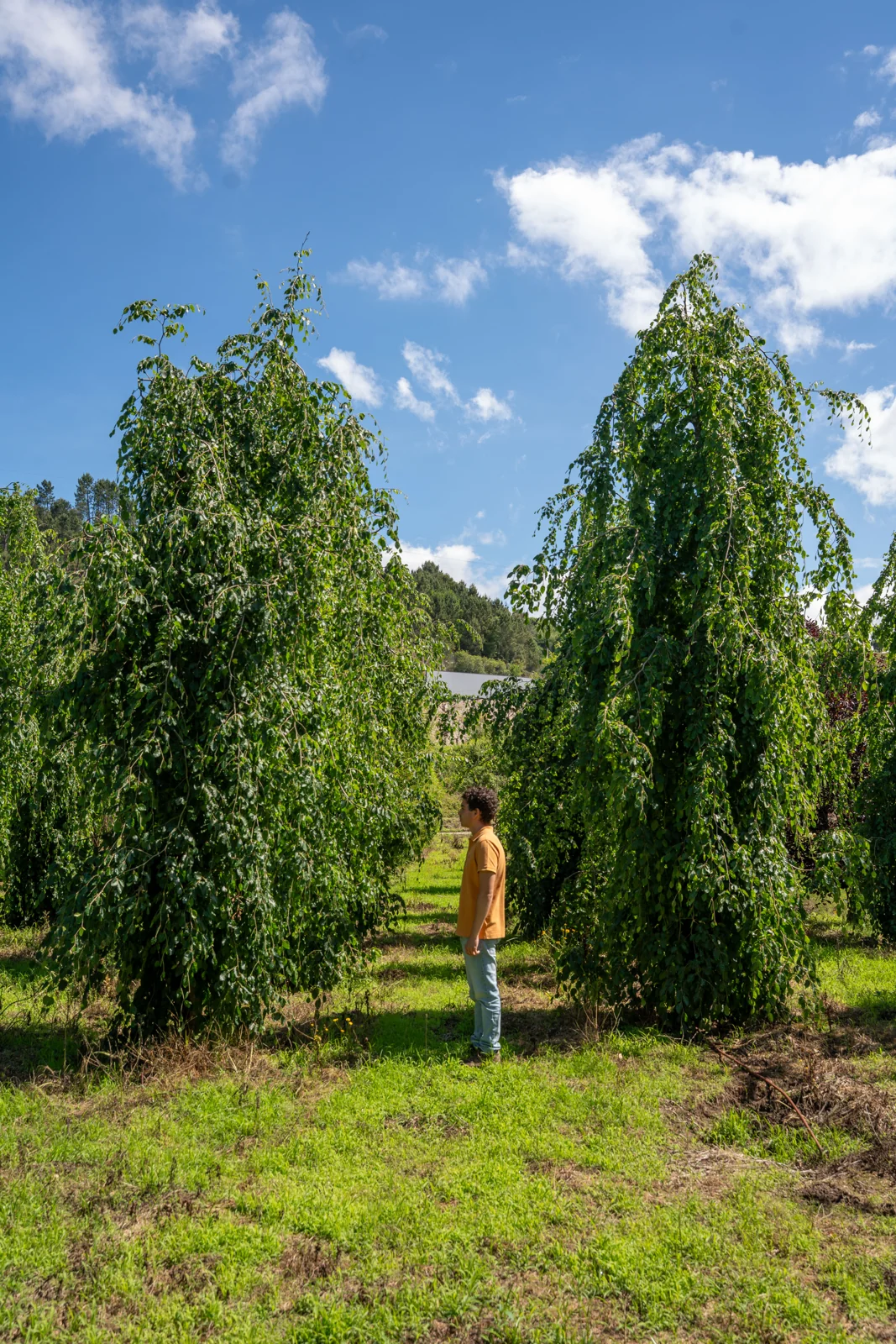
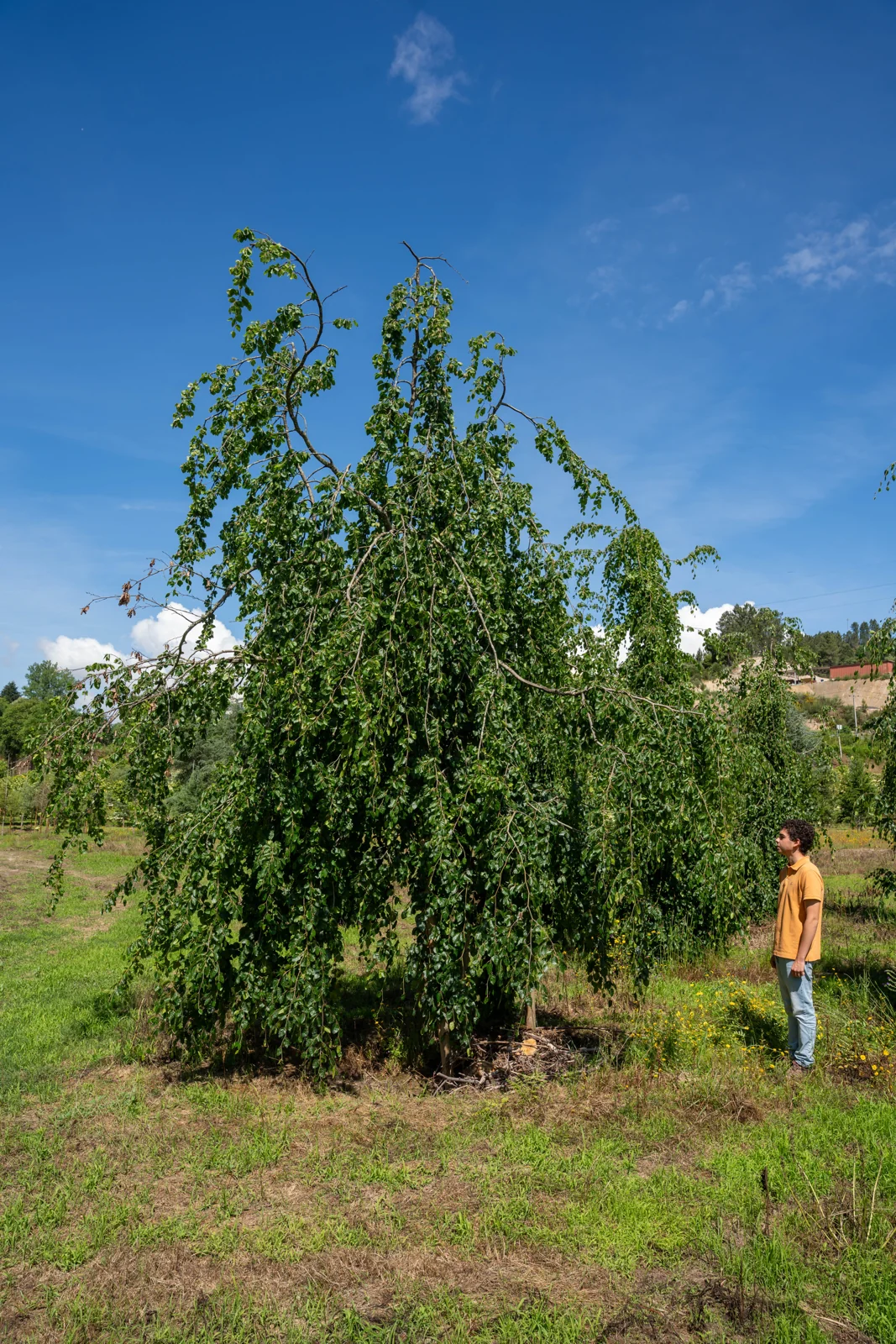
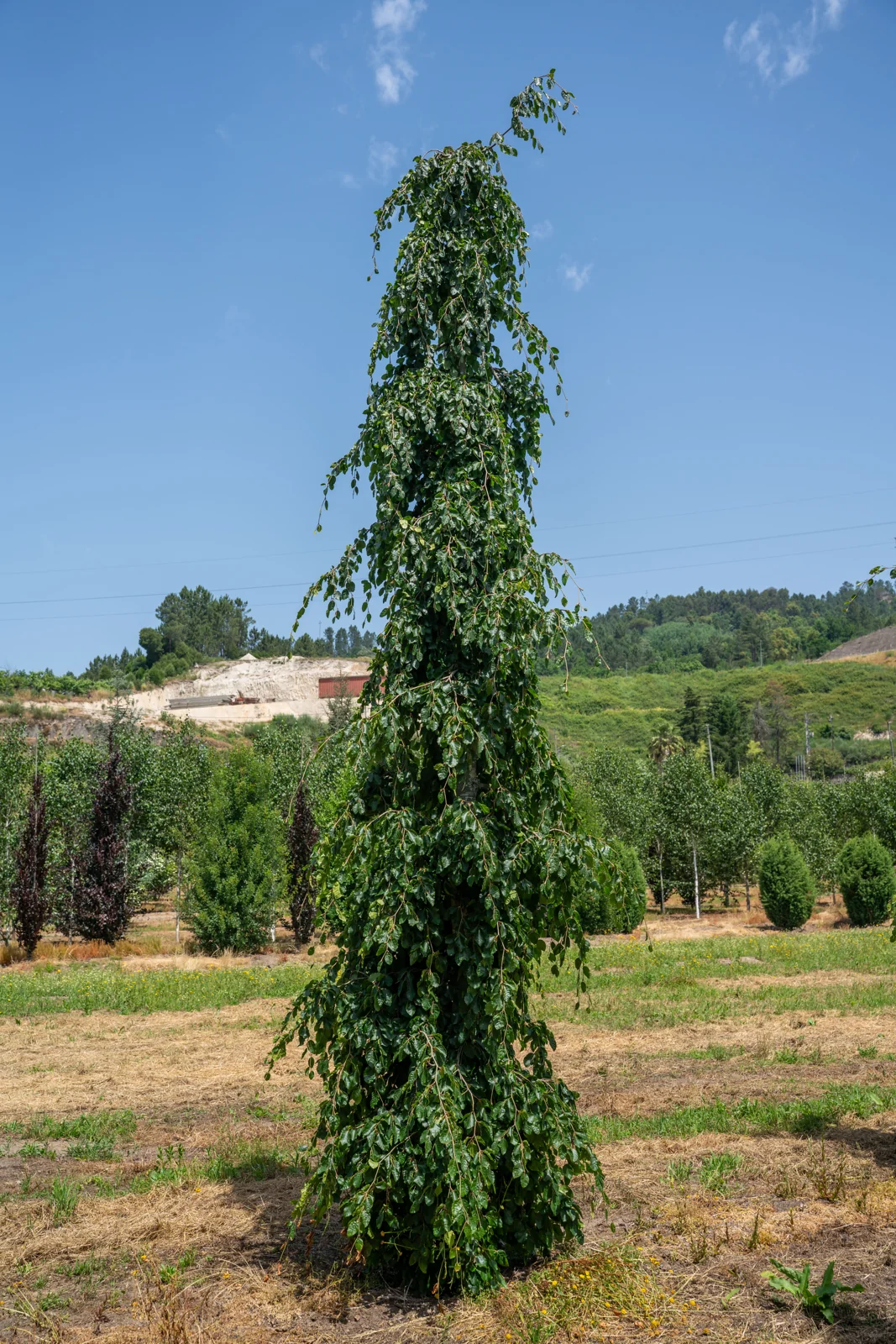
Fagus sylvatica 'Pendula' is a slow-growing weeping selection of the European beech (haya), reaching 15 to 20 m in height with a spread of 15 to 25 m at maturity. The crown is broad, dense, and sculptural, with long arching branches that descend to the ground unless trained clear; each specimen develops a distinct silhouette governed by early formation,…
Read more
Show less
Fagus sylvatica 'Pendula' is a slow-growing weeping selection of the European beech (haya), reaching 15 to 20 m in height with a spread of 15 to 25 m at maturity. The crown is broad, dense, and sculptural, with long arching branches that descend to the ground unless trained clear; each specimen develops a distinct silhouette governed by early formation, which is why it is specified as a single focal tree rather than in repetition.
The climatic envelope is narrower than the straight species and considerably narrower than the Mediterranean shortlist a Spanish project usually draws from. It performs reliably across the humid Atlantic northwest (cornisa cantábrica), in Galicia, Asturias, Cantabria, and the Basque Country, where cool summers, regular rainfall, and acidic loams match its requirements. Mid-altitude sites in northern Castilla y León, the Pyrenean foothills, and the wetter zones of the Sistema Central are workable where summer drought is moderated by elevation or aspect. Winter cold is not the constraint: the species is hardy to roughly -30 °C. The constraints are summer heat above 32 to 34 °C combined with soil moisture deficit, and dry alkaline substrates.
This means the cultivar is not a candidate for Mediterranean coastal, Levante, or semi-arid southeast projects, nor for the hottest interior meseta sites without dependable summer irrigation and deep, fertile, slightly acidic soil. Water demand stays moderate to high through the life of the tree; restricting irrigation in a hot summer produces leaf scorch and premature defoliation, and repeated drought stress shortens longevity.
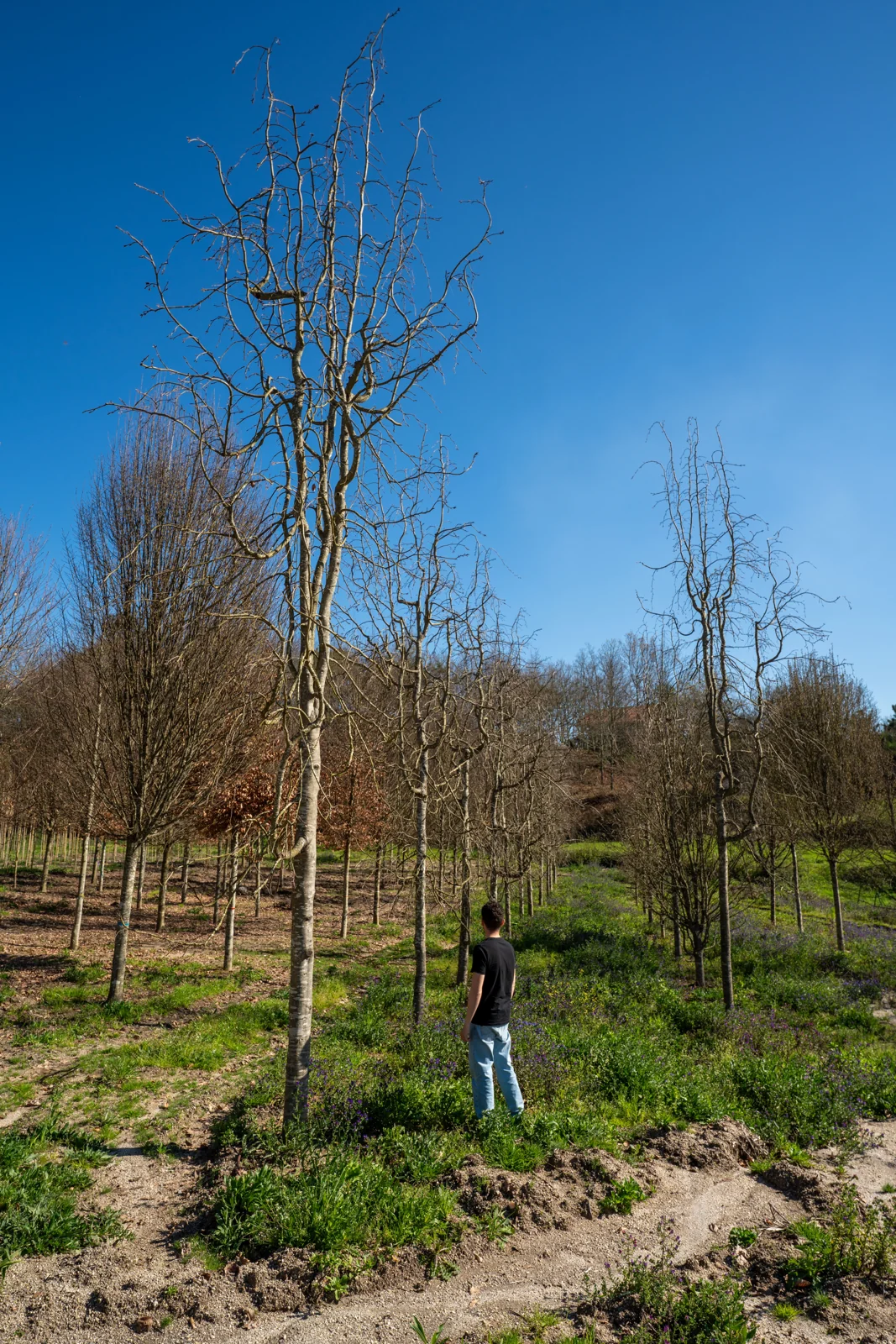
The foliage is glossy mid-green through the season, turning copper and bronze in autumn, a seasonal asset that registers in northern Spanish palettes where deciduous colour is read against an evergreen background, less so on the Mediterranean side. Smooth grey bark holds the visual programme through winter alongside the bare arching scaffold.
Specify as a single focal specimen in parks, historic gardens, large institutional grounds, and private estates with the soil depth and irrigation budget to sustain it. Allow a clear footprint of at least 15 m diameter; this is not a tree for tight pits or paved settings.
Advice on this species
Want to know more about Fagus sylvatica 'Pendula'?
Tell us about your project and we'll advise you on this species — where it thrives, which size makes sense, and what to expect once planted.
- Produção própria
- Exemplares adultos
- Resposta em 1–2 dias
Sem compromisso · orçamento personalizado