

A familiar hedgerow tree given the stature of a specimen
Common Hawthorn · Crataegus monogyna
An autochthonous small tree for naturalistic and restoration registers across Spain, Crataegus monogyna (espino albar) earns specification on dehesa peripheries, hedgerow reconstructions, and woodland-edge transitions where a thorny, drought-hardened native carries the planting.
- Hardy across the Costa del Sol, Balearics, Empordà and Castilian interior
- Tolerates alkaline clay, chalk and sandy coastal soils with honest drainage
- Drip irrigation for two to three summers; largely self-sufficient thereafter
About this Species
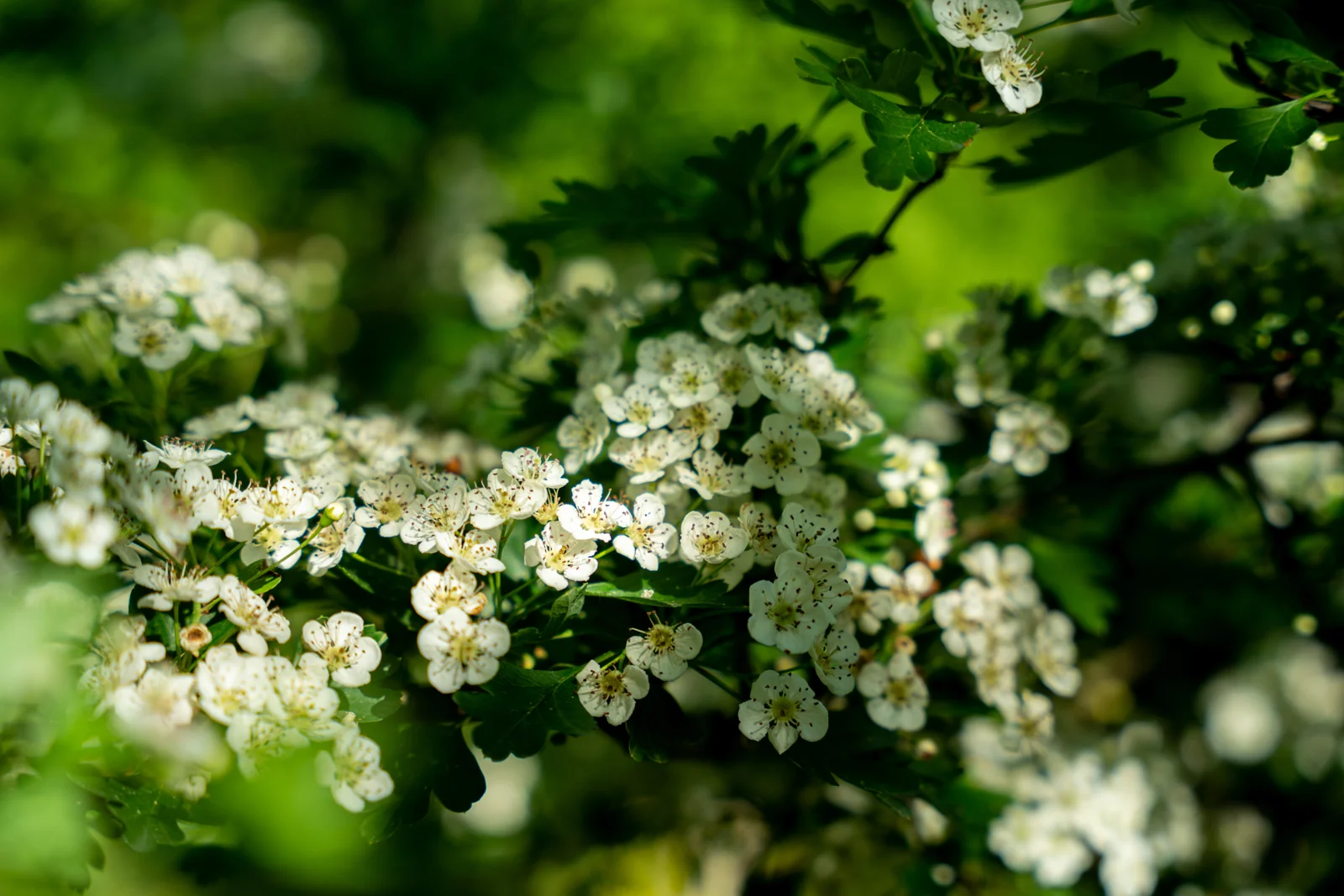
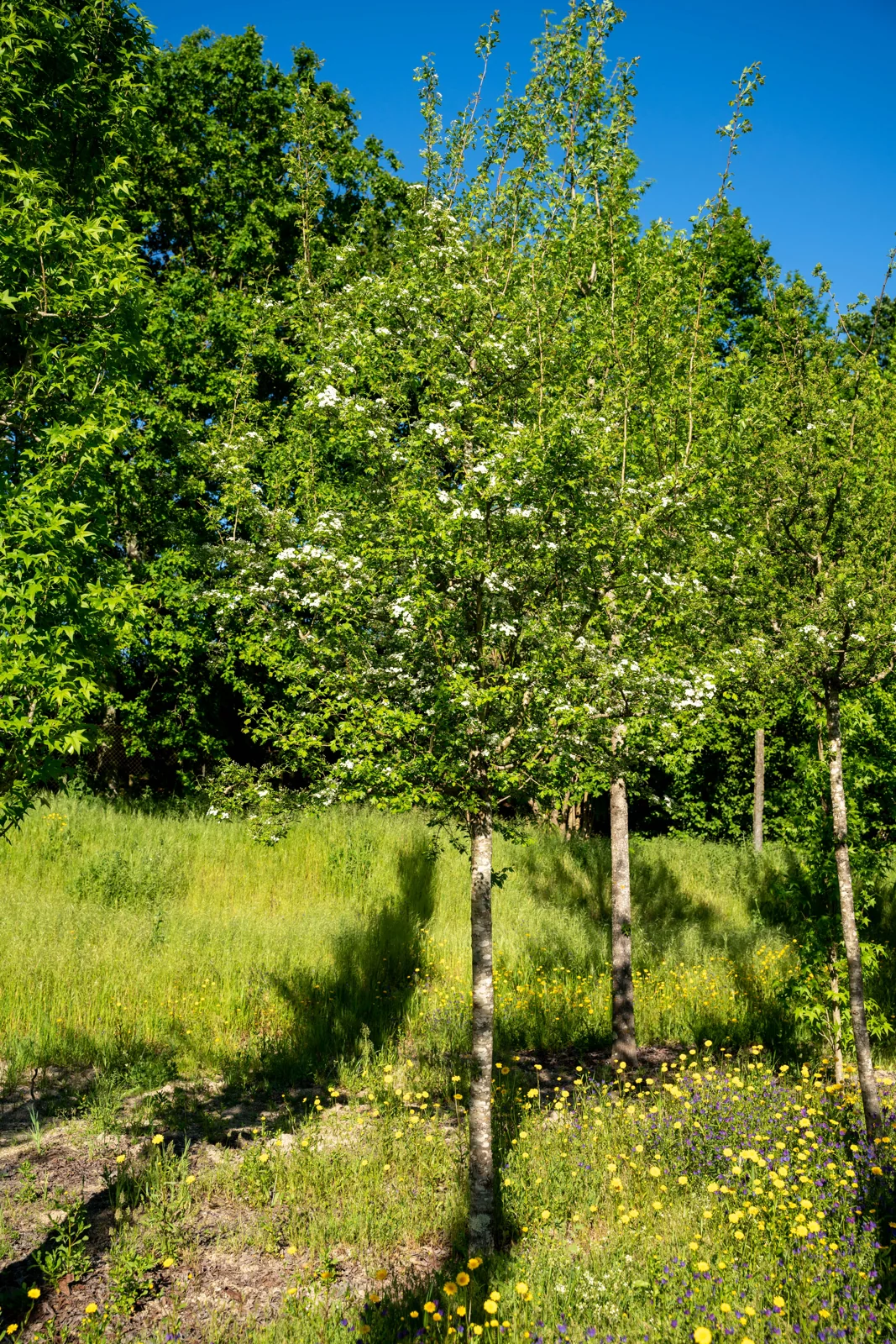
Reaching 5 to 10 metres at maturity with a rounded crown spreading 4 to 8 metres, Crataegus monogyna sits at the small-tree scale where many Spanish projects need a deciduous native counterpoint to the evergreen Iberian palette. Its thorny twigs, deeply lobed dark green foliage, fragrant white flowers in May and June, and persistent red haws from late…
Read more
Show less
Reaching 5 to 10 metres at maturity with a rounded crown spreading 4 to 8 metres, Crataegus monogyna sits at the small-tree scale where many Spanish projects need a deciduous native counterpoint to the evergreen Iberian palette. Its thorny twigs, deeply lobed dark green foliage, fragrant white flowers in May and June, and persistent red haws from late summer give the species four points of seasonal interest on a single specimen.
Native across Europe, north-west Africa, and Western Asia, the species is autochthonous in much of Spain and adapts to the country's principal climate envelopes. It performs reliably on the cornisa cantábrica and in continental Castilla and Aragón, where its frost hardiness well below the meseta minima removes any winter risk. On Mediterranean coastal projects and through interior Andalucía it carries the long summer drought once established, drawing on a deep root system rather than supplementary irrigation, though it reaches its functional limit in the sureste aridity of Almería and inland Murcia.
The reader designing in Spain should read it as a smaller, deciduous companion to encina (Quercus ilex) and alcornoque (Quercus suber) on the periphery of dehesa-style plantings, comparable in landscape role to Celtis australis and Sorbus domestica but at a more modest scale. Soil tolerance is broad: well-drained loams, heavy clays, the calcareous and chalky substrates common across the central plateau, and the acidic soils of the Atlantic strip all suit it. It accepts full sun or light shade and tolerates wind exposure.
Maintenance is low: thorny dense growth tolerates hard clipping when used in hedgerow restoration, and the species needs no formative training when grown as a free specimen. As a member of the Rosaceae it sits within the host range of Erwinia amylovora (fire blight) and warrants the same routine surveillance specified for Pyrus, Malus, and other ornamental rosaceous trees in Spanish landscape plantings. It is not listed among the principal hosts of Xylella fastidiosa under current Spanish demarcations.



Advice on this species
Want to know more about Crataegus monogyna?
Tell us about your project and we'll advise you on this species — where it thrives, which size makes sense, and what to expect once planted.
- Produção própria
- Exemplares adultos
- Resposta em 1–2 dias
Sem compromisso · orçamento personalizado