

A spring-flowering specimen for cooler Spanish gardens
Japanese Dogwood ‘Venus’ · Cornus kousa ‘Venus’
A tri-hybrid flowering dogwood for projects sited in the humid Atlantic northwest of Spain or in cooler upland gardens elsewhere on the peninsula, where acidic soils and a moderated summer envelope let its ornamental phases register fully.
- Thrives in the Atlantic north, Sierra foothills, and the cool Tramuntana valleys
- Wants fresh, slightly acidic, well-drained soil for its best growth
- Steady deep watering for three seasons; modest summer water thereafter on cooler sites
Key Facts
About this Cultivar
Cornus × 'Venus' is a trigeneric hybrid of C. kousa, C. nuttallii and C. kousa subsp. chinensis, developed for the scale of its floral display and the steadier vigour of the cross. In Spain it reads as a refined specimen tree for situations where Cornus kousa types are already plausible: gardens of the cornisa cantábrica (the Atlantic strip), inland sites…
Read more
Show less
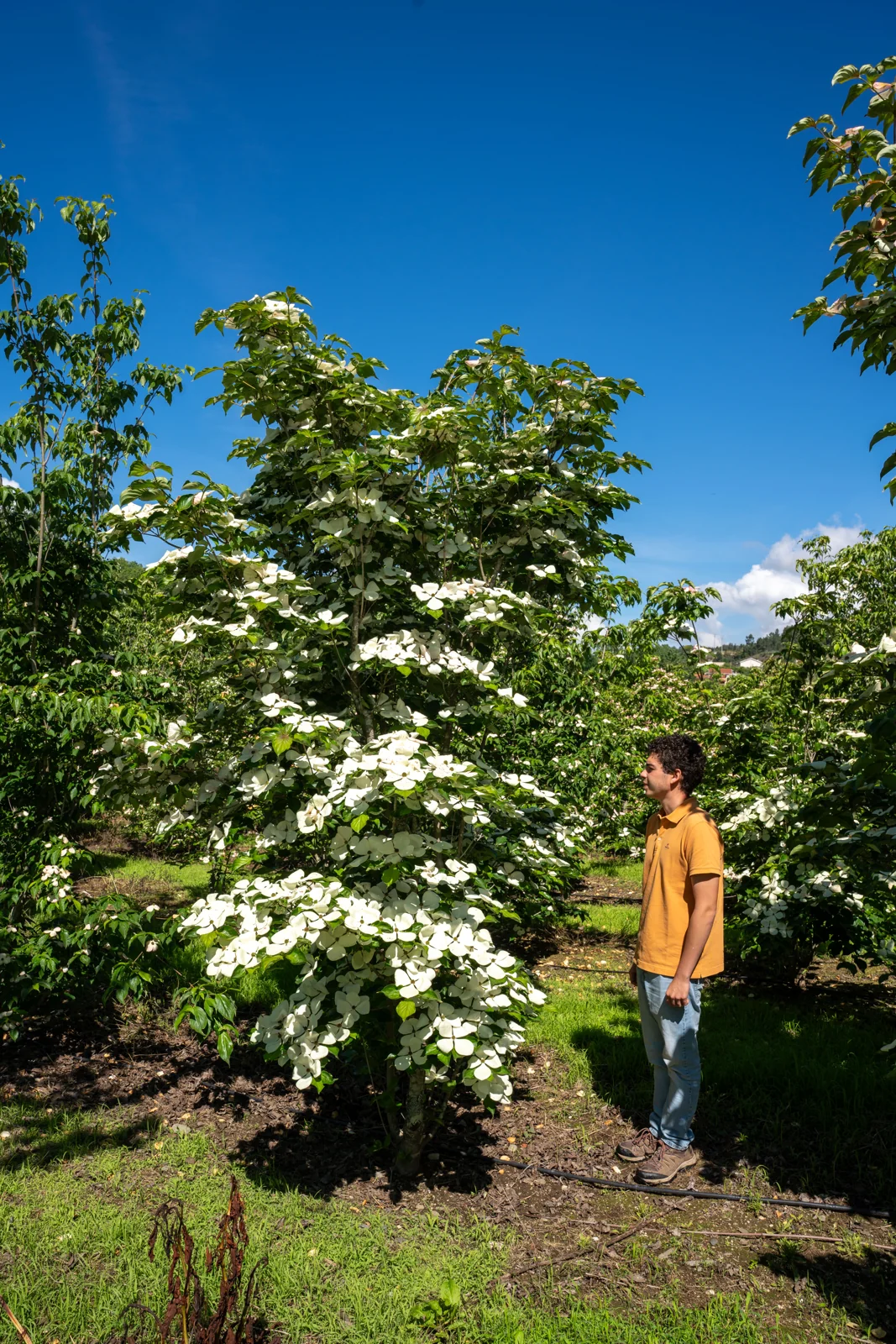
Cornus × 'Venus' is a trigeneric hybrid of C. kousa, C. nuttallii and C. kousa subsp. chinensis, developed for the scale of its floral display and the steadier vigour of the cross. In Spain it reads as a refined specimen tree for situations where Cornus kousa types are already plausible: gardens of the cornisa cantábrica (the Atlantic strip), inland sites in Galicia and the western foothills of the Pyrenees, and irrigated private projects on acidic substrates elsewhere on the peninsula. Mature dimensions settle around 5 to 7 metres in height and 4 to 6 metres across, with a rounded, evenly balanced crown that benefits from being placed where it can be read from a single principal vantage.
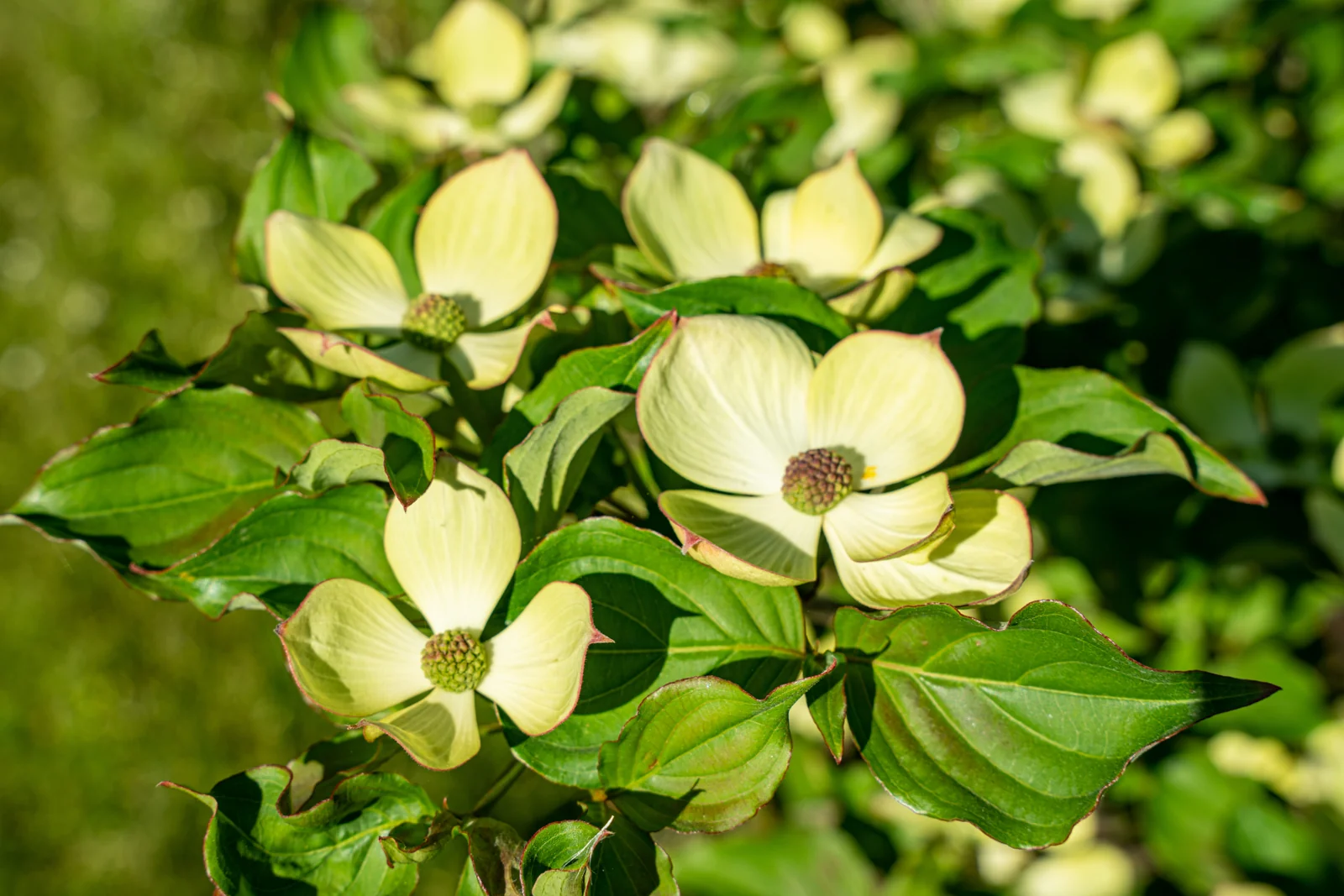
The defining ornamental phase is the late-spring flowering, when broad white bracts of around 12 centimetres in diameter cover the canopy after the leaves have emerged. Glossy green summer foliage shifts to deep red and purple in autumn, and the globose red drupes carry interest into the early cold season and feed local bird populations.
Climatically the cultivar is reliable to roughly minus 23 degrees Celsius, which places it within tolerance of most Iberian winters except the harshest meseta cold pockets. The water envelope is the binding constraint for Spanish specification: drought tolerance is moderate once established, not absolute, and the tree will not perform under sureste aridity or on prolonged irrigation cut-off. Plan for supplementary water across the first three summers and through any unusually dry mature seasons.
Soil requirement is the second constraint. Fertile, fresh, slightly acidic substrates with reliable drainage suit it; the calcareous and gypsiferous soils of the Ebro valley and much of the southeast do not. Pest and disease pressure is low under correct siting, and maintenance reduces to formative thinning to preserve the natural rounded silhouette.
Advice on this species
Want to know more about Cornus kousa 'Venus'?
Tell us about your project and we'll advise you on this species — where it thrives, which size makes sense, and what to expect once planted.
- Produção própria
- Exemplares adultos
- Resposta em 1–2 dias
Sem compromisso · orçamento personalizado