

A spring-flowering small tree for the cooler Spanish garden
Flowering Dogwood ‘Rubra’ · Cornus florida ‘Rubra’
A pink-bracted form of Cornus florida for landscape projects in the cornisa cantábrica, Galicia interior, and cool acid-soil pockets of northern Spain, where humid summers and lime-free soils give the cultivar its honest performance envelope.
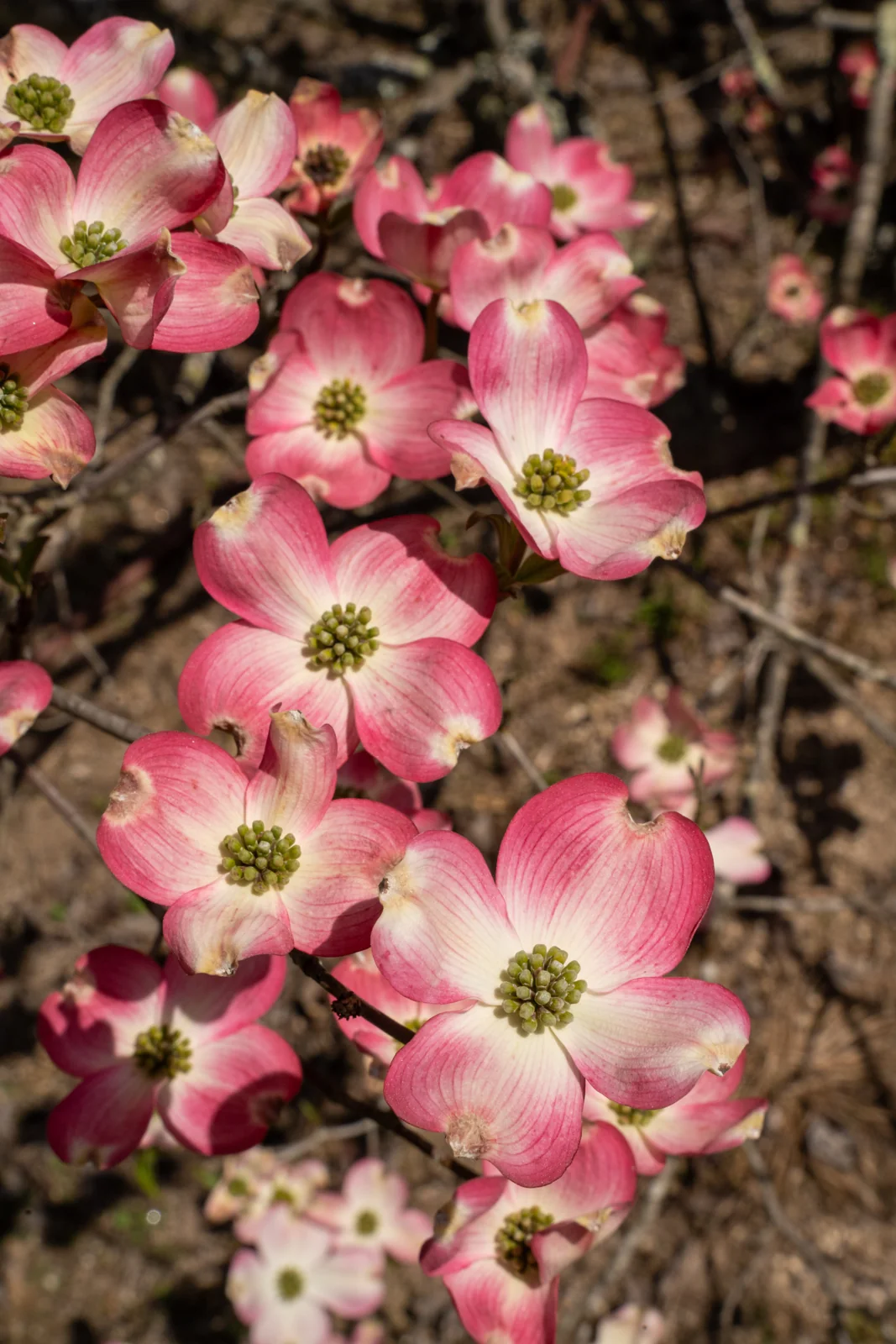
- Rose-pink to rosy-scarlet spring bracts hold for several weeks before leaves
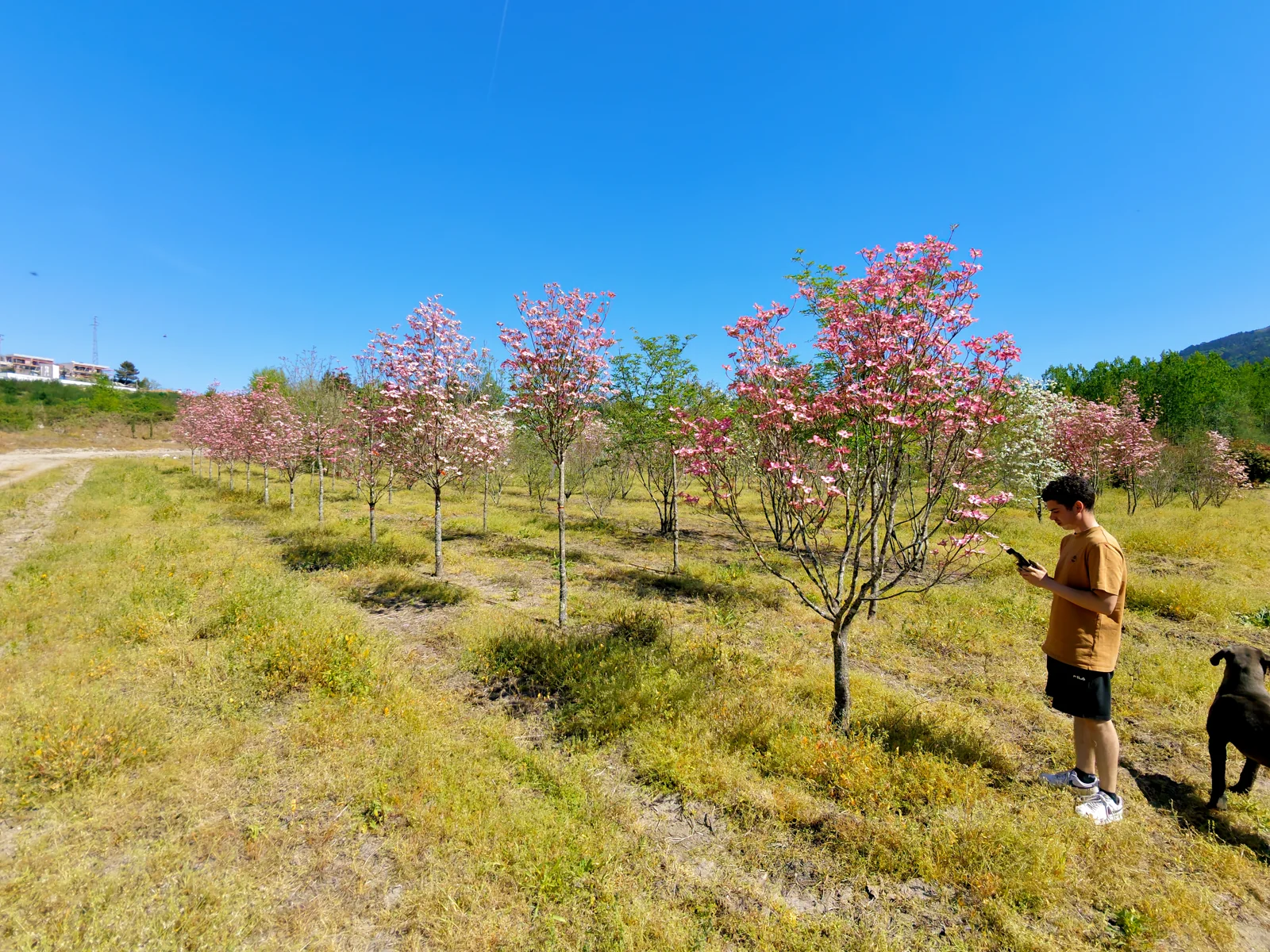
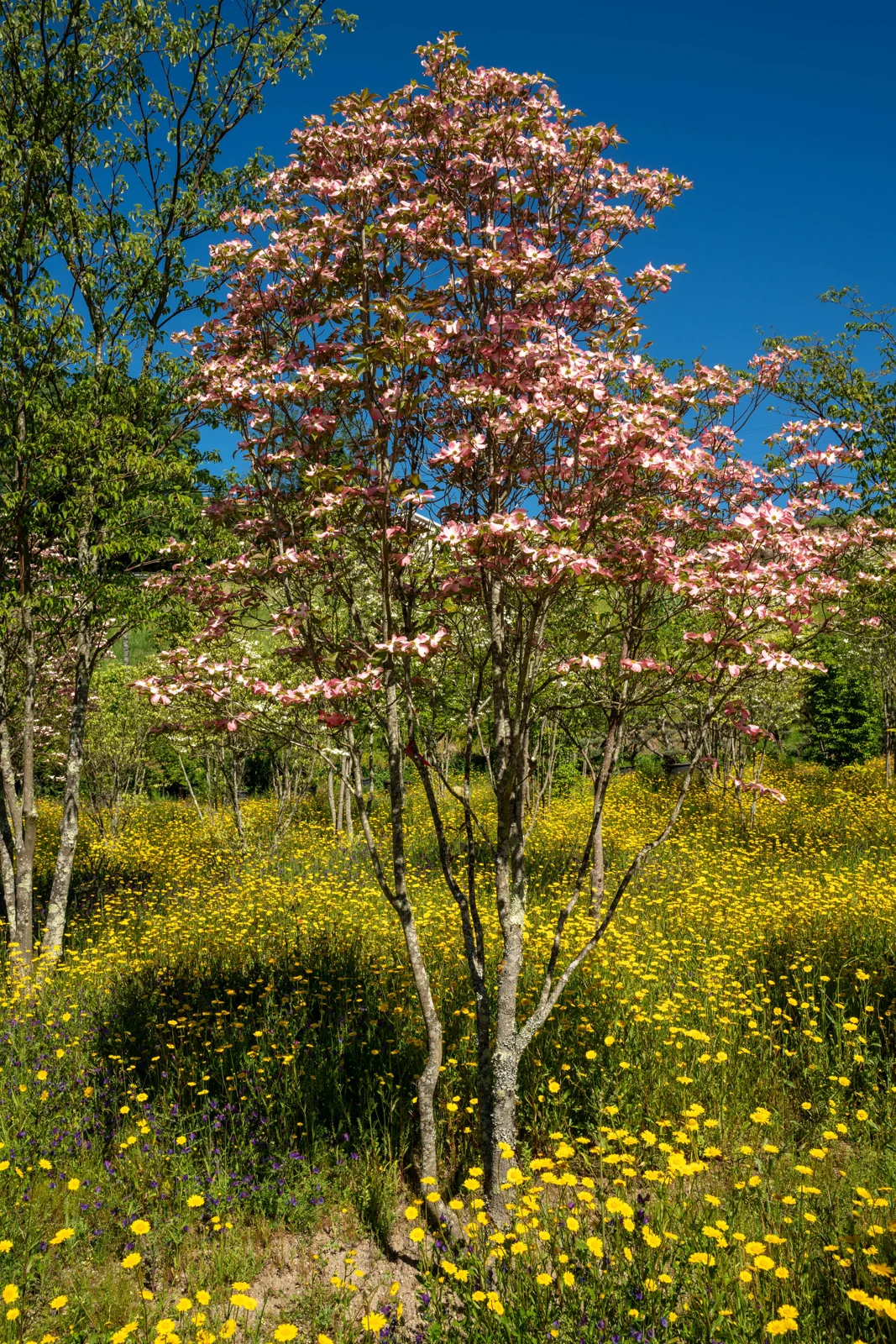
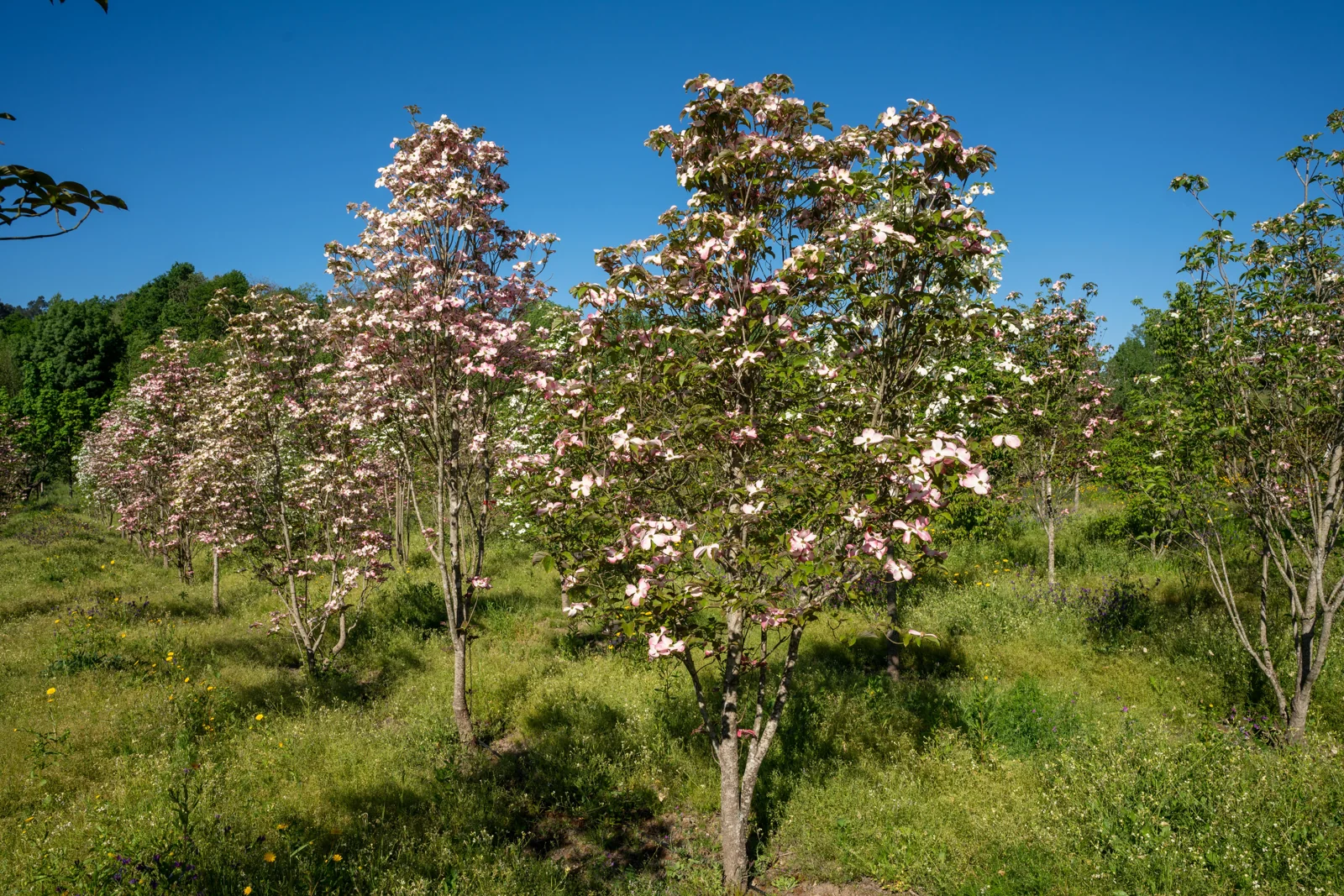
- Mature size around 6 to 8 m tall and 4 to 6 m wide
- Best suited to the Atlantic north, Catalan interior and Sierra de Guadarrama foothills
Key Facts
About this Cultivar
Cornus florida 'Rubra' is the pink to rose-red bracted selection of the eastern North American flowering dogwood. The four large bracts surround the true inflorescence and open before the leaves in spring, replacing the white of the type with shades from soft pink to rose-scarlet. Mature size in cultivation settles at 6 to 8 m in height and 4 to 6 m in…
Read more
Show less
Cornus florida 'Rubra' is the pink to rose-red bracted selection of the eastern North American flowering dogwood. The four large bracts surround the true inflorescence and open before the leaves in spring, replacing the white of the type with shades from soft pink to rose-scarlet. Mature size in cultivation settles at 6 to 8 m in height and 4 to 6 m in spread, with a broad-spreading habit that suits an understory specimen role rather than a street-tree alignment.
The cultivar's working envelope inside Spain is narrow. It performs reliably in the humid Atlantic northwest (cornisa cantábrica), Galicia interior, and the cool acid-soil valleys of the Pyrenean foothills, where cool summers, regular rainfall, and lime-free substrates match its native eastern North American conditions. It is not a tree for hot calcareous Mediterranean Spain, the Levante coast, the southern meseta, or the semi-arid southeast; high pH, summer aridity, and reflected heat all push it past its tolerance.
Plant in slightly acidic, well-drained soils high in organic matter, in partial shade where afternoon sun is reduced. Water demand is moderate and continuous through the first three summers, and the cultivar will not tolerate an extended irrigation cut-off once established. Disease pressure includes spot anthracnose, powdery mildew, and various leaf spots; 'Rubra' shows moderate resistance to spot anthracnose. The genus sits outside the current Xylella fastidiosa host range relevant to Spanish demarcations.
Specify as an isolated specimen or in small groupings near patios, woodland edges, or the cooler quadrants of a private garden, where the rose-pink spring bracts and the red to purple autumn foliage carry two distinct seasonal phases. Red drupes follow into late summer and feed songbirds. Where the project sits clearly outside the cultivar's climatic envelope, Cercis siliquastrum or a tolerant Magnolia will give the spring presence on more forgiving terms.
Advice on this species
Want to know more about Cornus florida 'Rubra'?
Tell us about your project and we'll advise you on this species — where it thrives, which size makes sense, and what to expect once planted.
- Produção própria
- Exemplares adultos
- Resposta em 1–2 dias
Sem compromisso · orçamento personalizado