

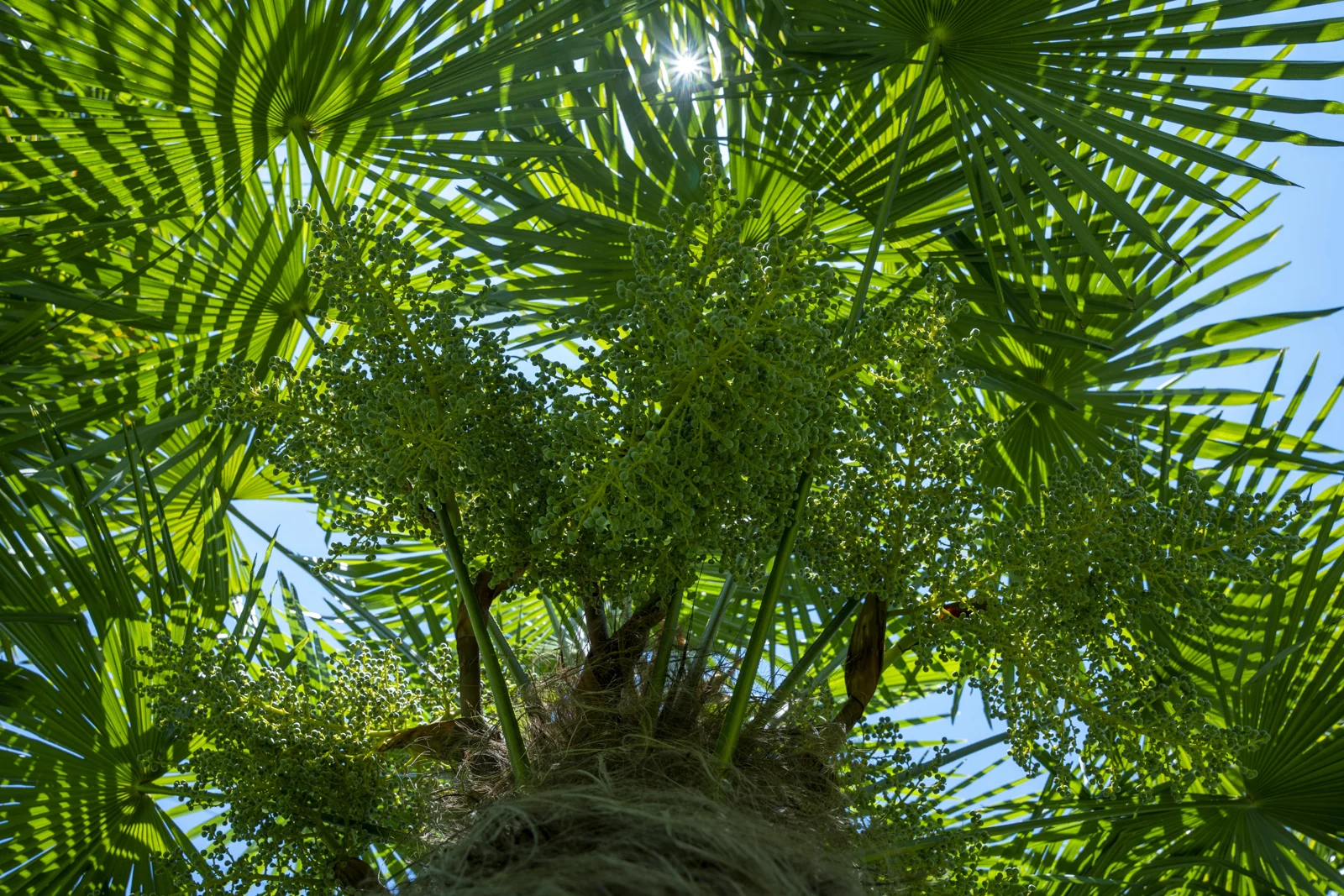
The hardiest fan palm for a Spanish garden
Chusan Palm · Chamaerops excelsa
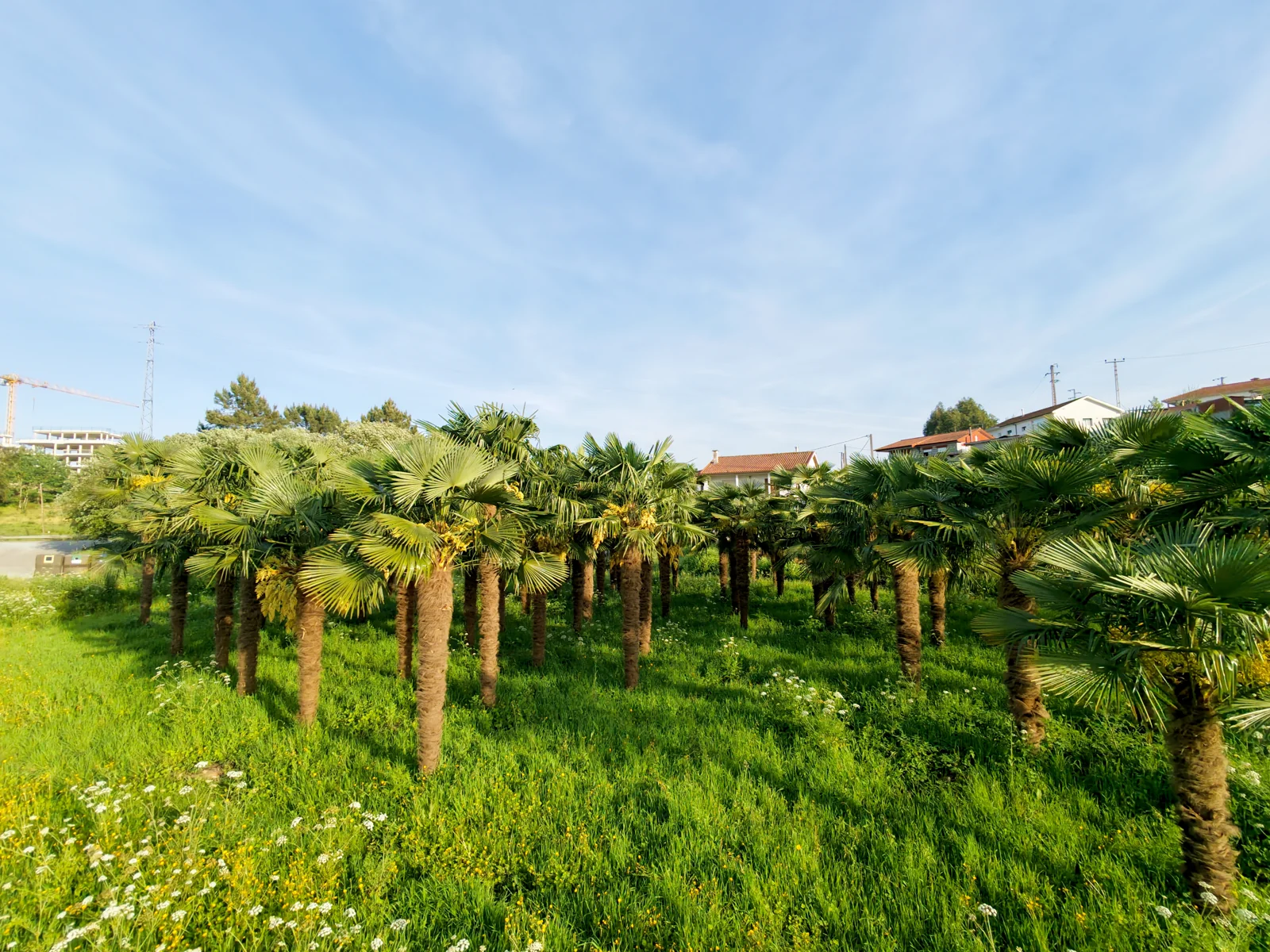
The hardiest palm in routine European specification, Trachycarpus fortunei carries clear vertical structure into Spanish projects where Phoenix would freeze in the meseta or sit exposed to Rhynchophorus ferrugineus on the coast.
- Hardy from the Costa del Sol to the Sierra de Guadarrama
- Modest summer water for three seasons; self-sufficient on coastal sites thereafter
- The cold-hardiest of the ornamental palms grown in Europe
About this Species
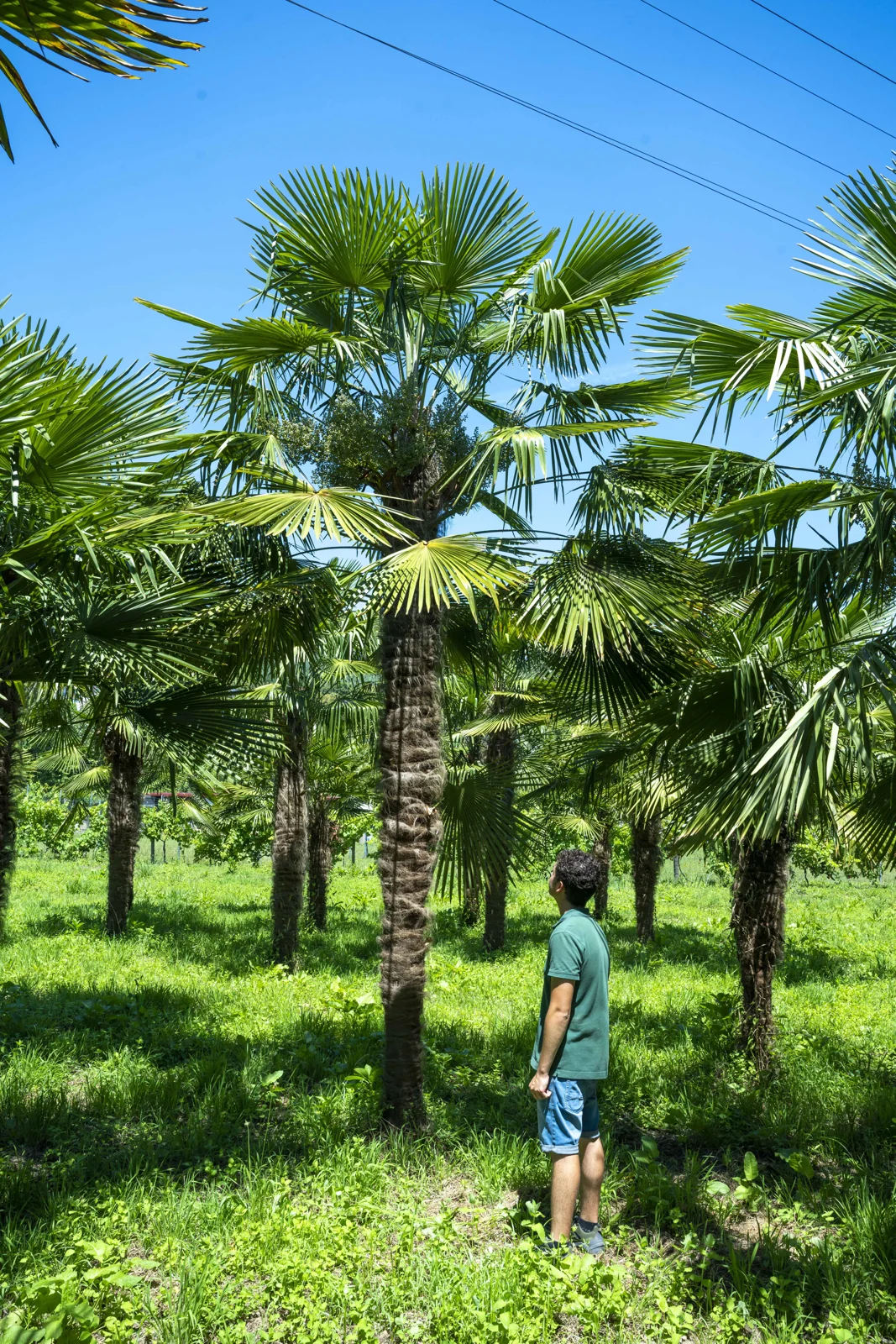
Trachycarpus fortunei, still catalogued in the Iberian trade under the synonym Chamaerops excelsa or Palmera excelsa, is the most cold-tolerant palm in routine European specification. Its fan-shaped fronds and slender, fibre-clad trunk give a strict vertical accent without the mass of Phoenix canariensis or Washingtonia. For projects requiring palm…
Read more
Show less
Trachycarpus fortunei, still catalogued in the Iberian trade under the synonym Chamaerops excelsa or Palmera excelsa, is the most cold-tolerant palm in routine European specification. Its fan-shaped fronds and slender, fibre-clad trunk give a strict vertical accent without the mass of Phoenix canariensis or Washingtonia. For projects requiring palm character outside the frost-free coastal belt, it is the default first choice.
Reliable hardiness extends to roughly -12 °C once established, with mature specimens recorded surviving harder episodes when sheltered from desiccating north winds. The species performs across Mediterranean coastal Spain and the Levante, the wealthy littorals of the Costa del Sol, Costa Blanca, and Balearics, and reaches usable hardiness limits in cooler Greater Madrid and meseta sites where Phoenix is unviable. The humid cornisa cantábrica suits it well, given acidic to neutral soils and the cool summers it tolerates more readily than other palms.
Water demand is moderate. Two to three establishment summers with regular irrigation are required; once rooted, the species draws on a fibrous, relatively shallow root mass and tolerates extended summer drought without canopy collapse, though prolonged drought slows the already slow growth rate. Soils should be free-draining: loamy or sandy substrates are preferred, alkaline calcareous meseta soils are accepted, and waterlogged clays should be avoided or amended. Mature spread stays compact at two to four metres, which suits confined urban pits and courtyard plantings.
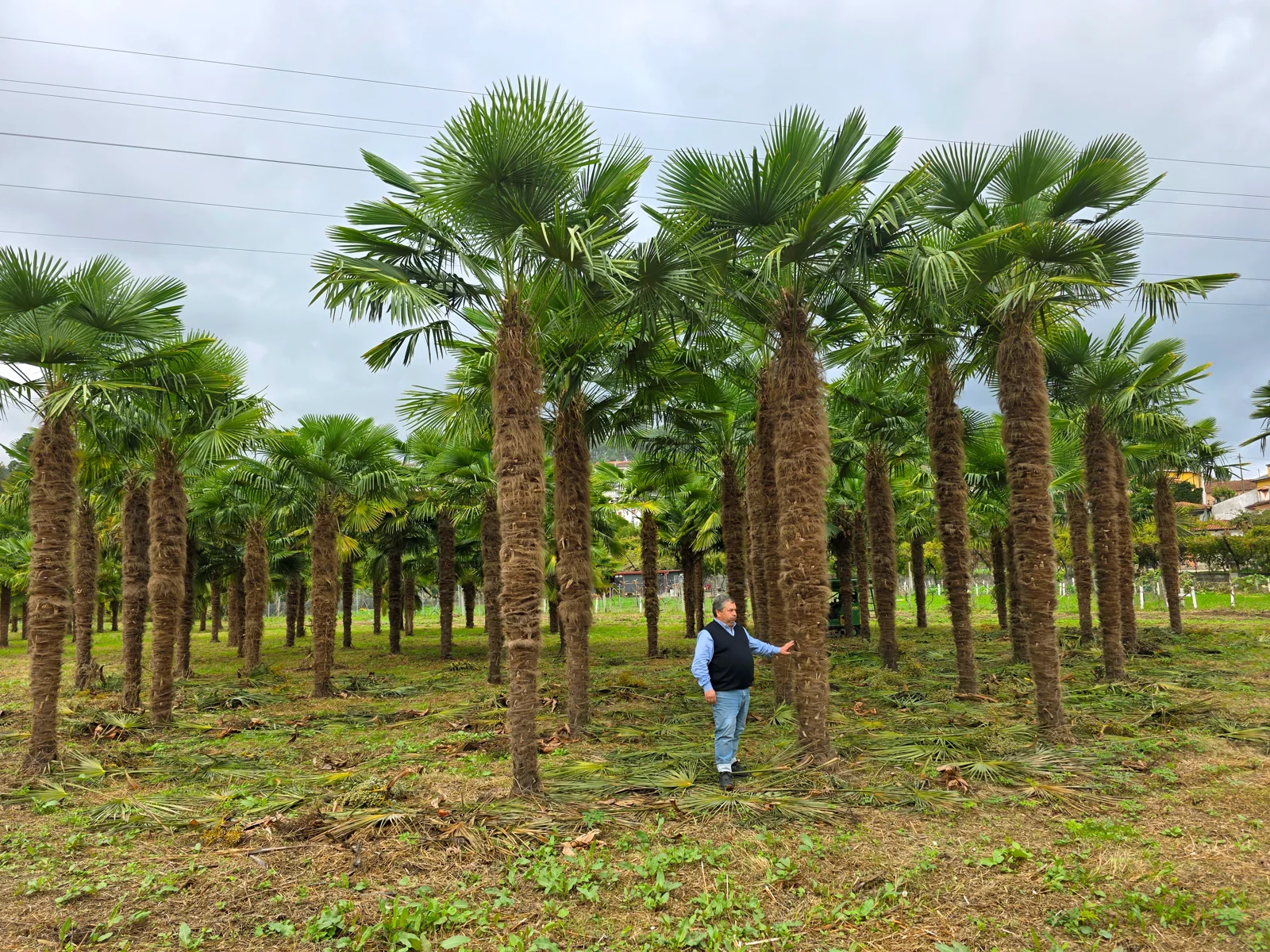
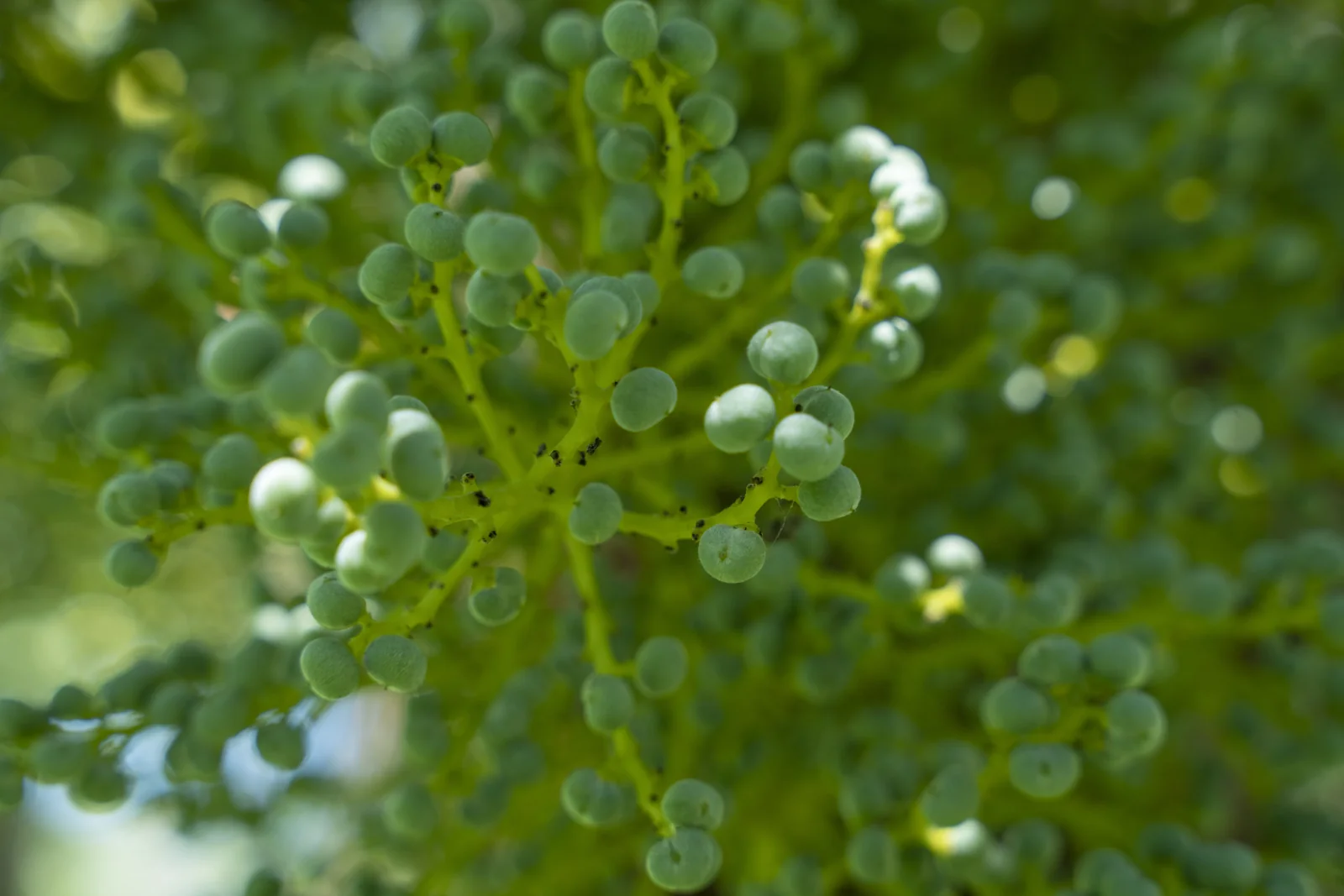
Phytosanitary profile is a structural argument for this species in Spain. Rhynchophorus ferrugineus under surveillance and active control across coastal Spain has compromised Phoenix specifications across multiple comunidades autónomas; Trachycarpus fortunei is not a primary host and offers continuity of palm character where Phoenix can no longer be safely planted. Growth is slow, with mature heights of six to twelve metres typically reached over decades, which means specifying mature stock is the only way to deliver immediate vertical effect. Crown is evergreen, low-litter, and dioecious, so unwanted fruit fall can be controlled by sex selection where it matters.



Advice on this species
Want to know more about Chamaerops excelsa?
Tell us about your project and we'll advise you on this species — where it thrives, which size makes sense, and what to expect once planted.
- Produção própria
- Exemplares adultos
- Resposta em 1–2 dias
Sem compromisso · orçamento personalizado