

A small flowering specimen for the dry-garden patio
Judas Tree · Cercis siliquastrum
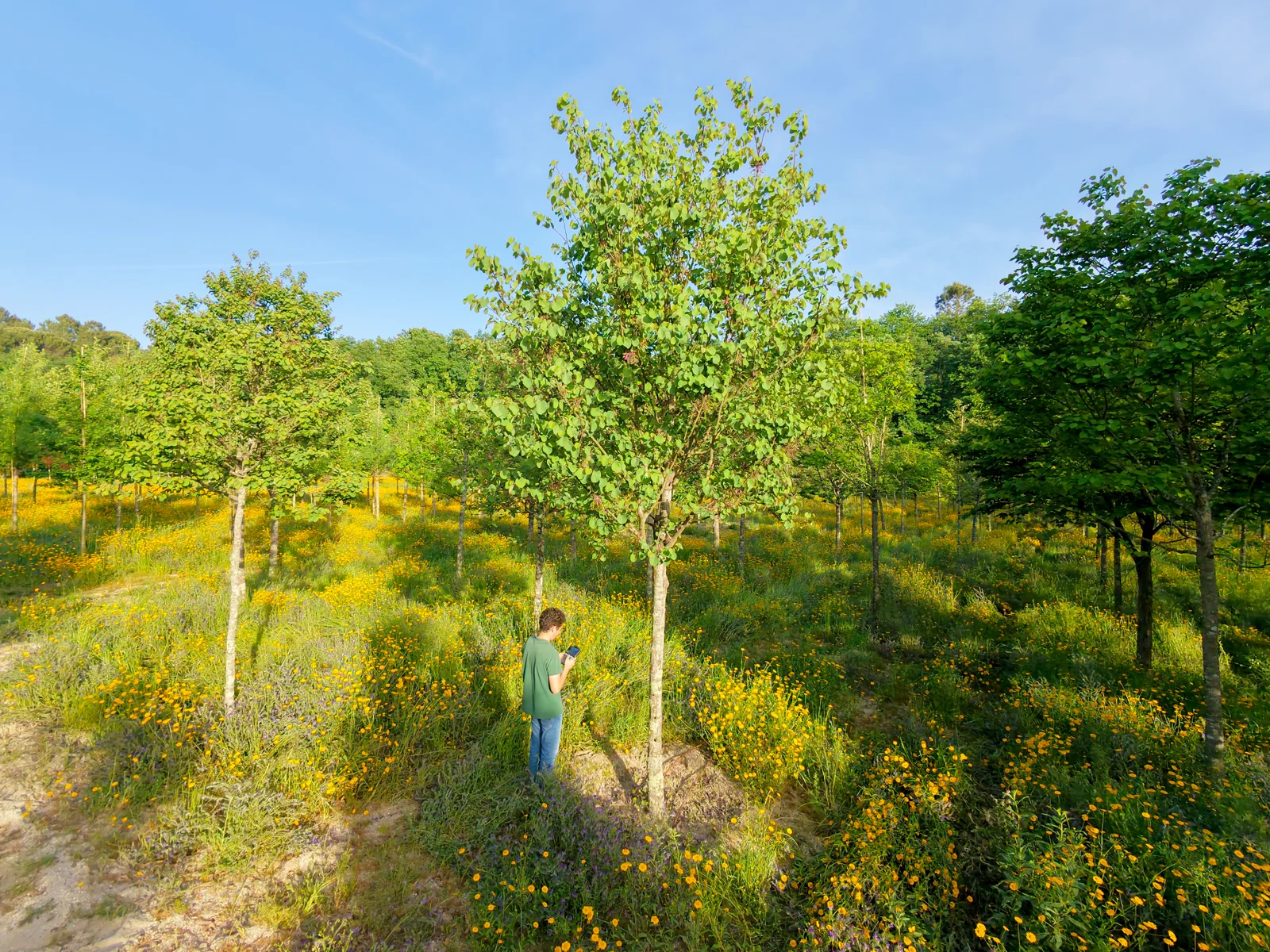
A small Mediterranean understory tree specified across Spain for spring colour on bare wood, multi-stem character, and a temperament suited to the alkaline, well-drained soils of most Iberian project sites.
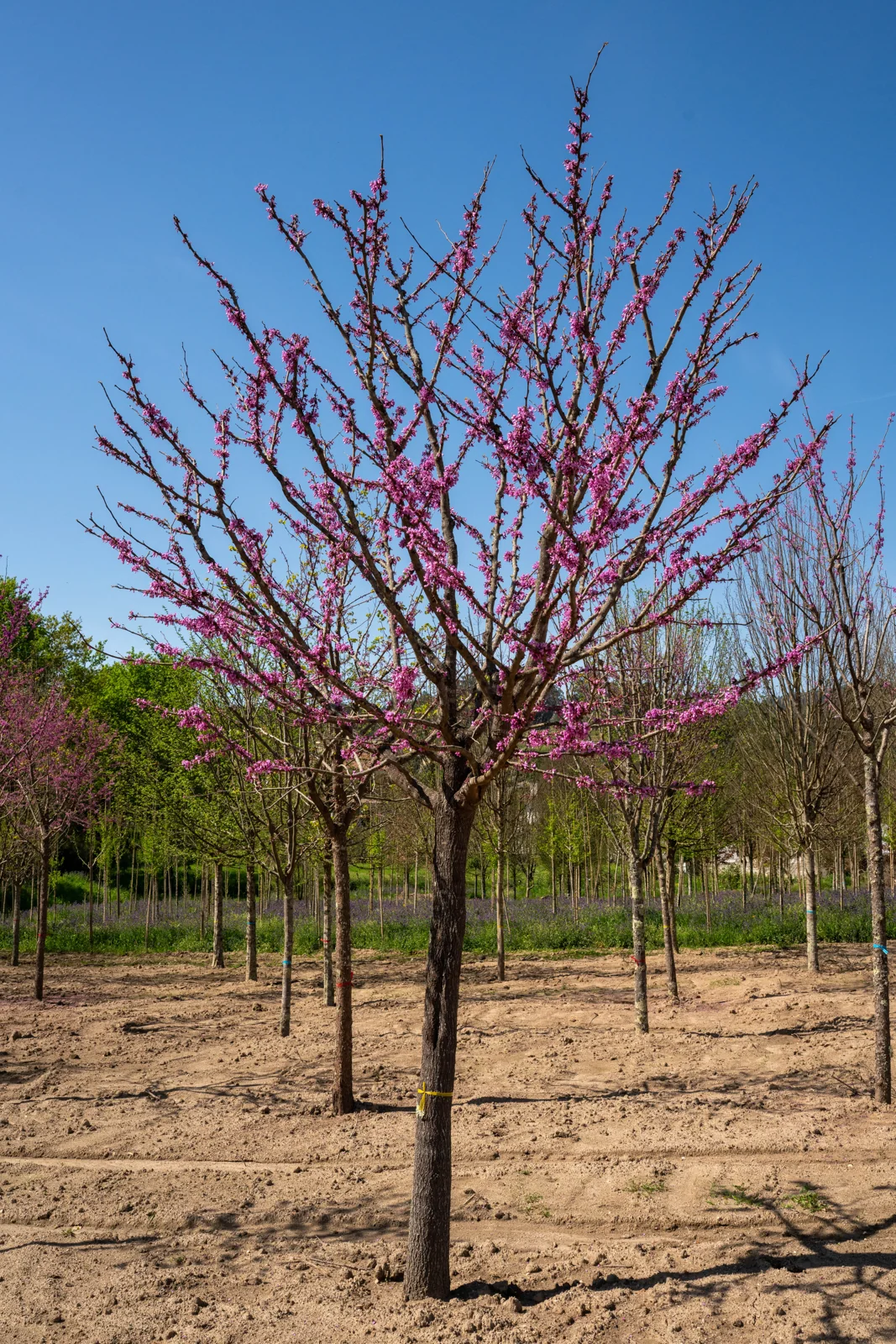
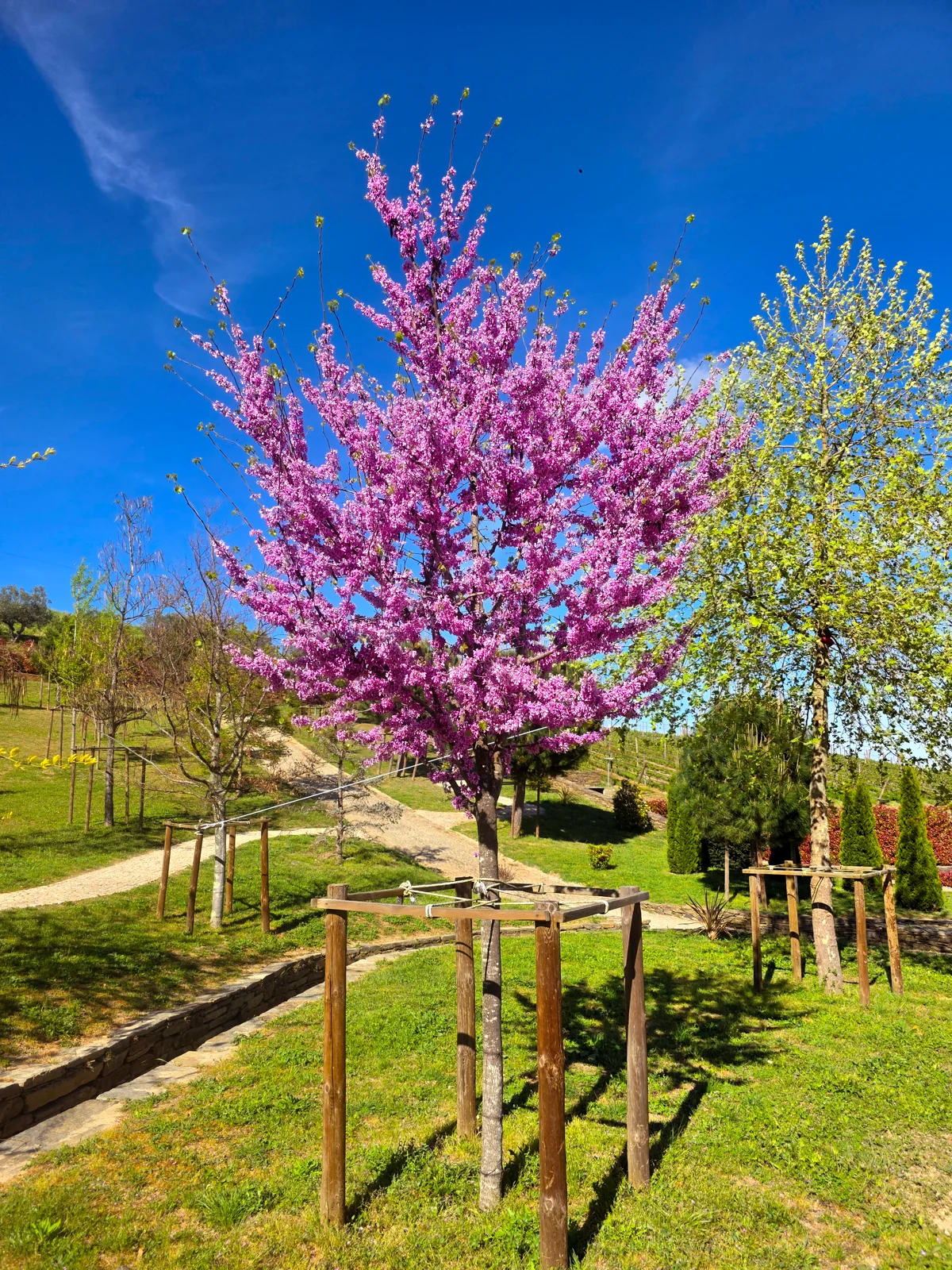
- Rose-purple spring bloom on bare branches, before the foliage emerges
- Suits a walled patio, finca courtyard, or the edge of an olive terrace
- Thrives on the Costa Blanca, the Balearics, and the Catalan coast in alkaline soils
About this Species
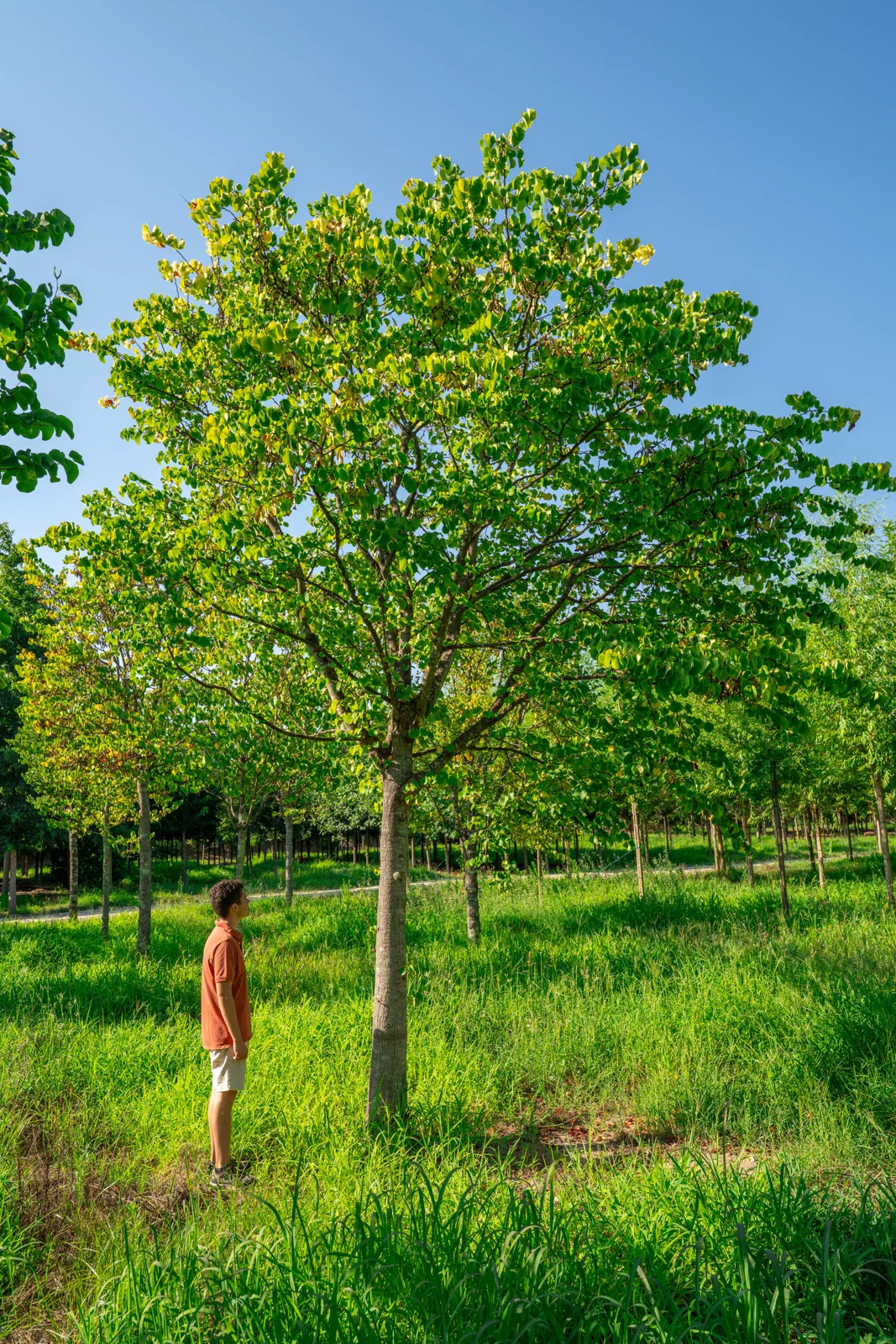
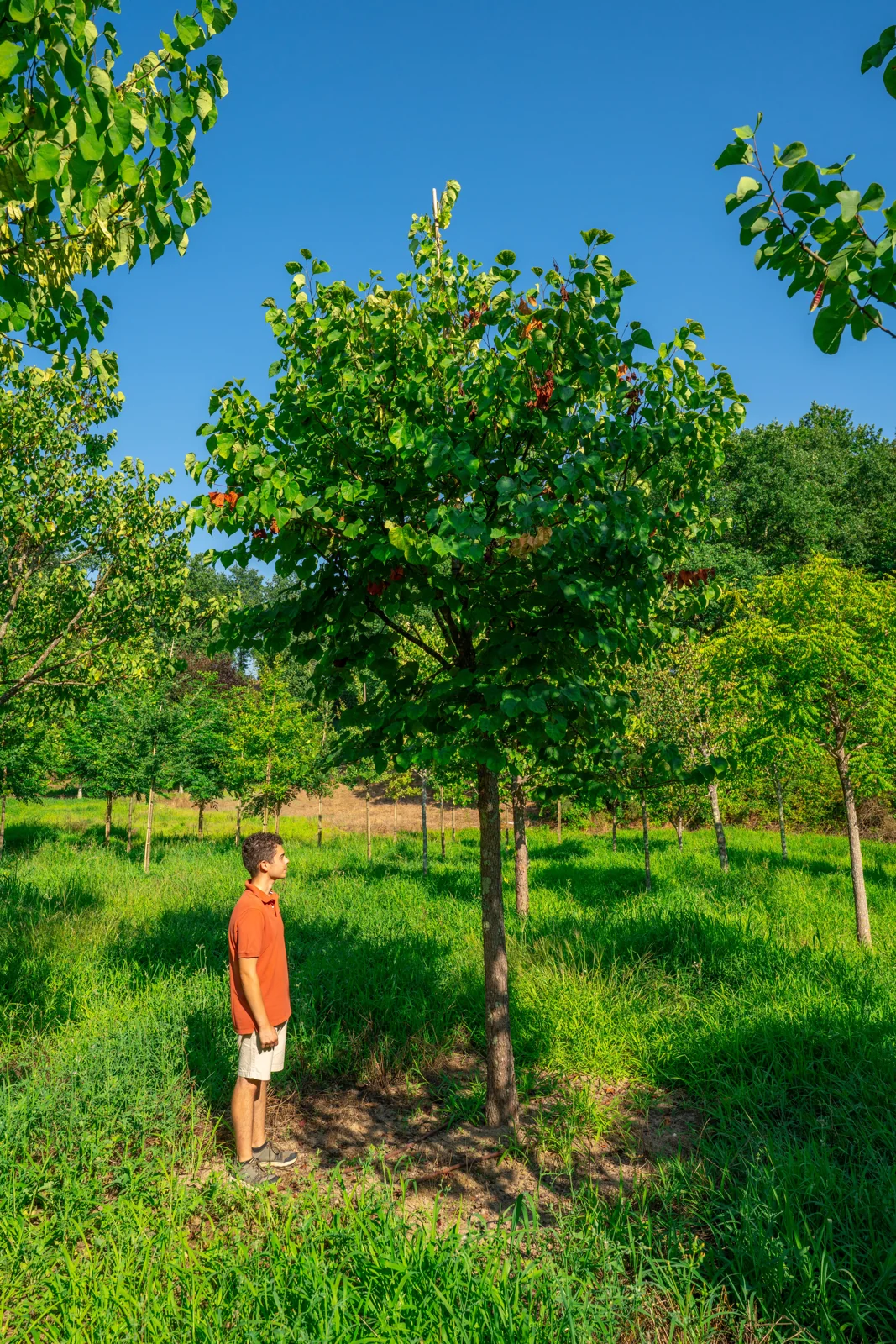
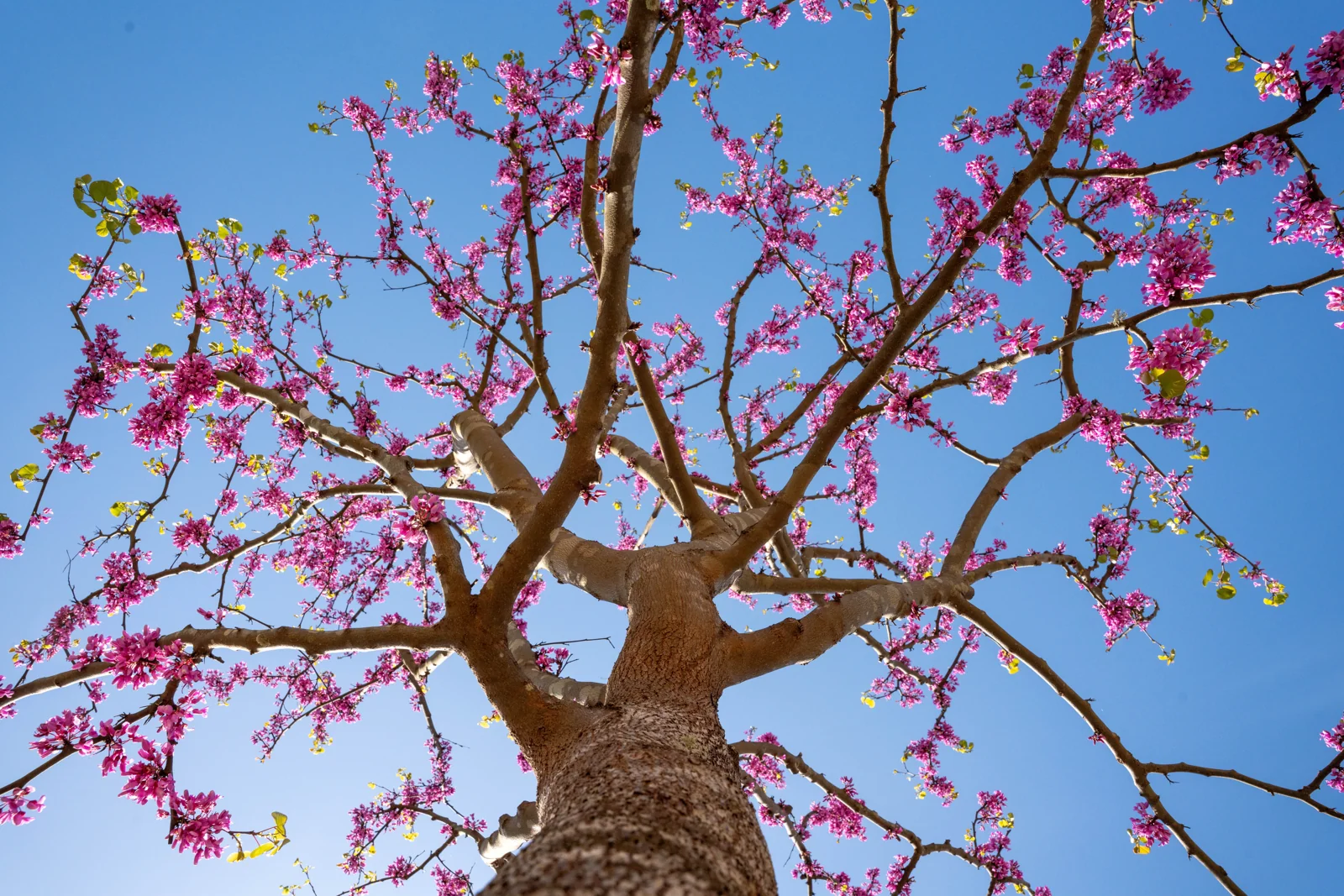
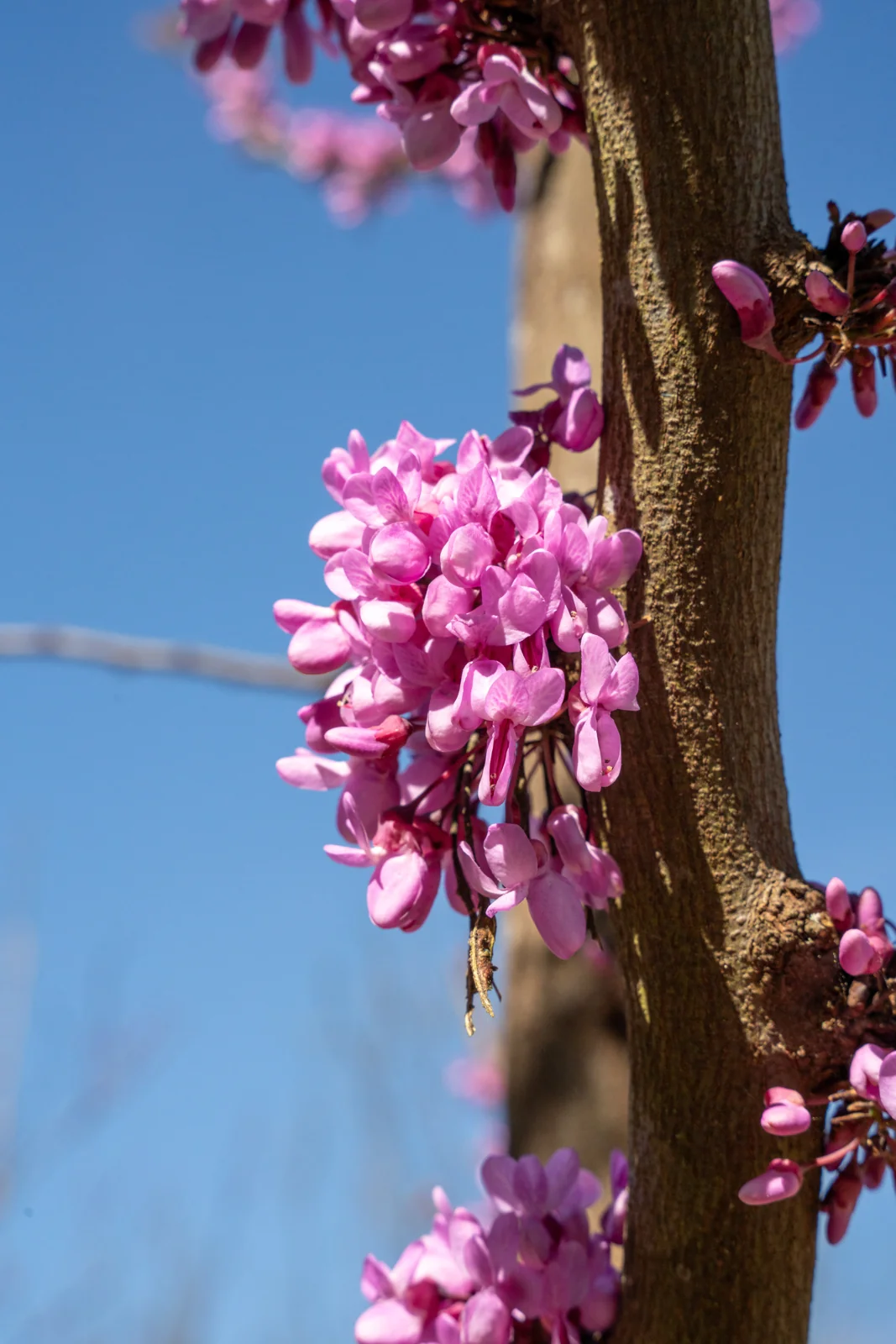
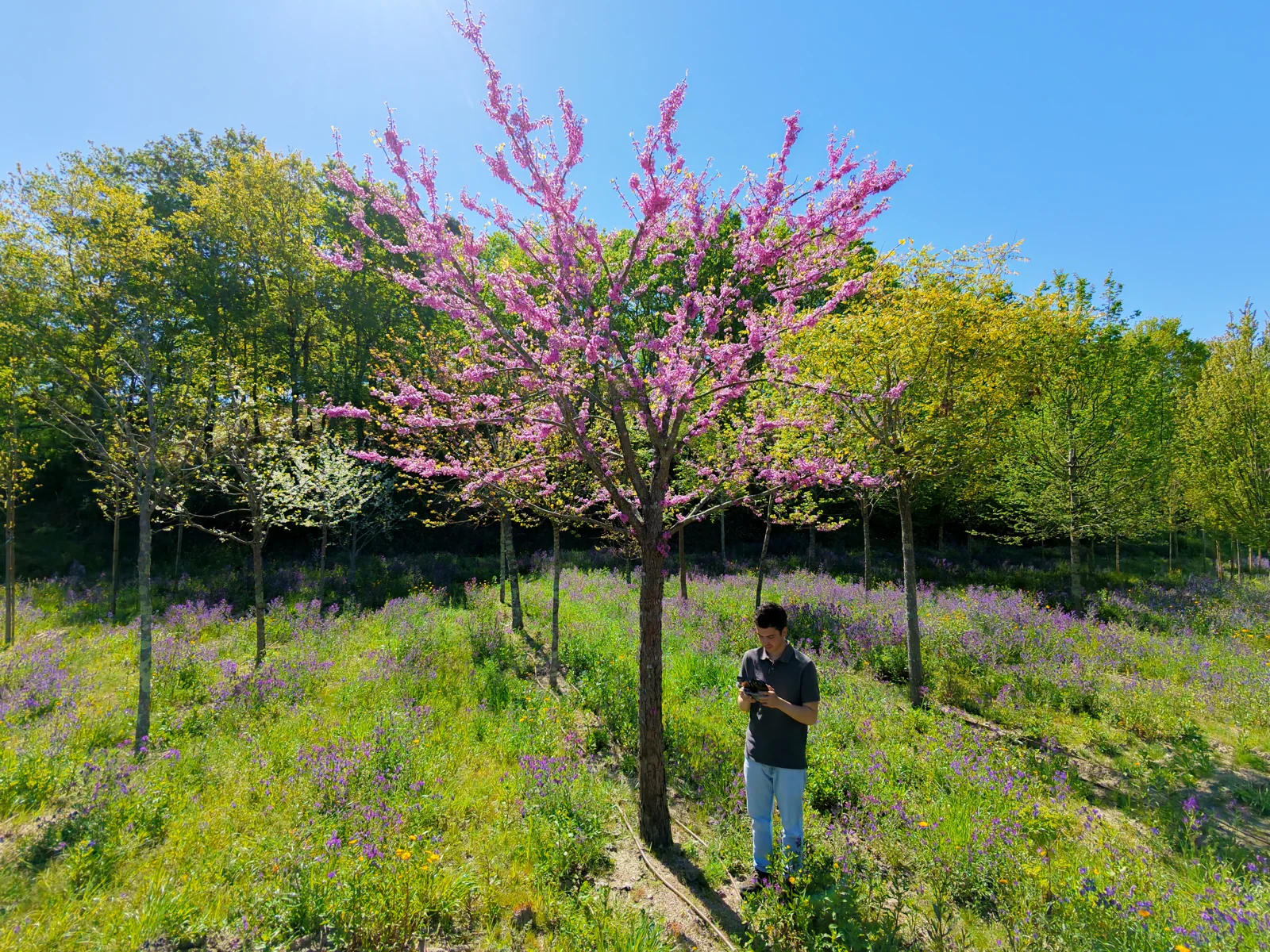
In the Spanish specifier's vocabulary, Cercis siliquastrum sits near almendro (Prunus dulcis) and jacaranda as a small flowering accent, but with a distinct niche: a low, often multi-stem deciduous tree of five to ten metres at maturity, with rose-purple flowers borne directly on bare wood and even on the trunk in April and May. The cauliflory is the…
Read more
Show less
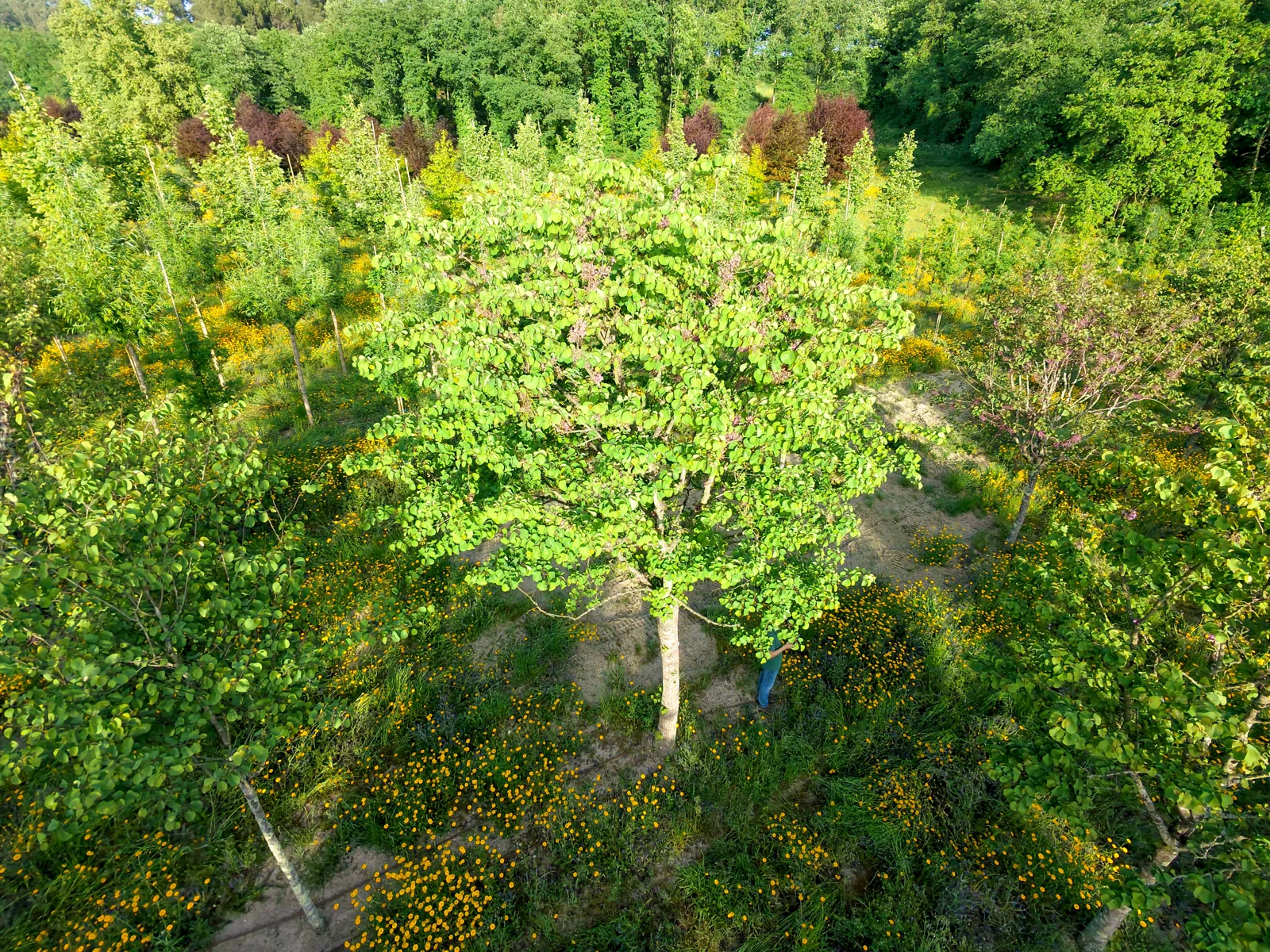
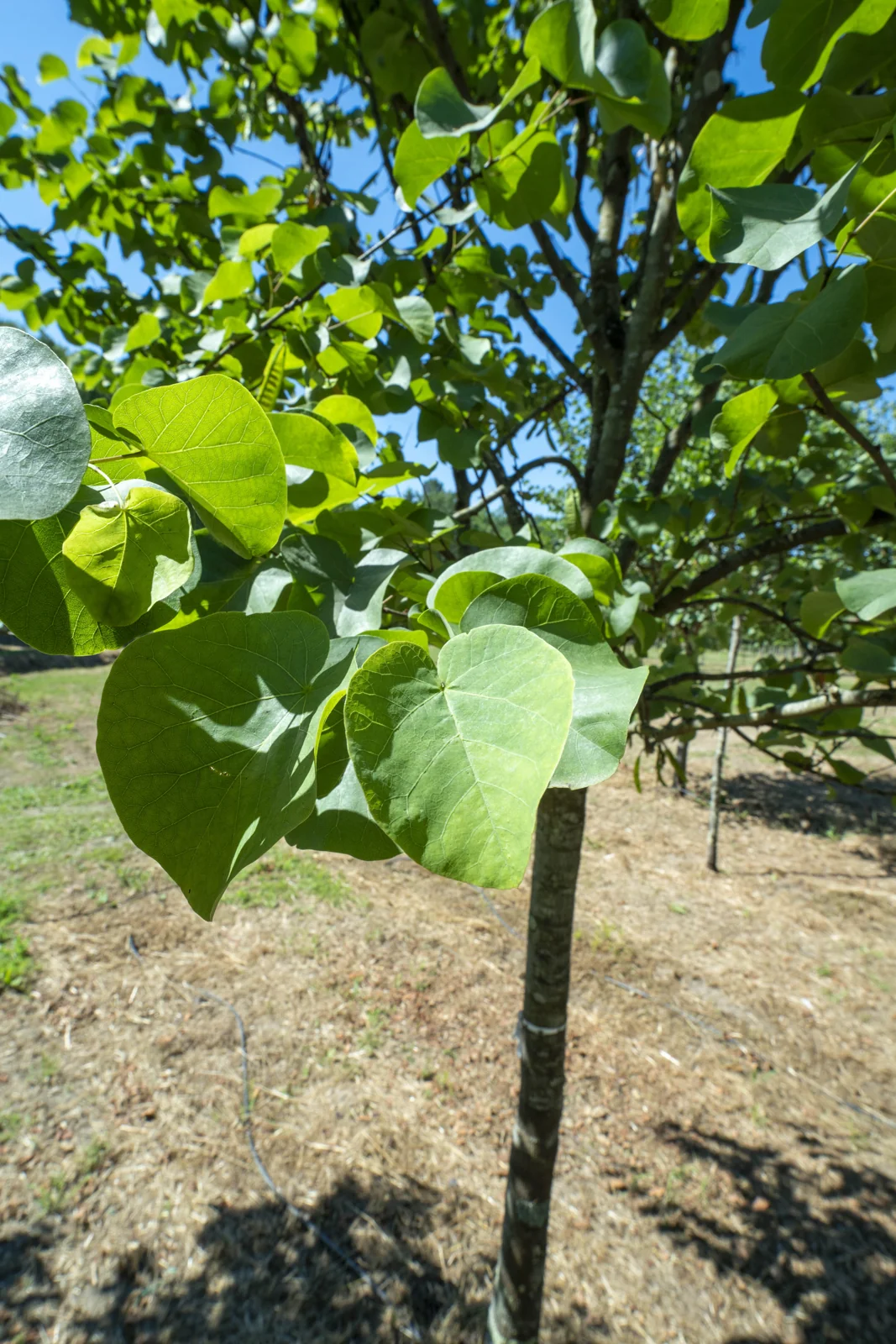
In the Spanish specifier's vocabulary, Cercis siliquastrum sits near almendro (Prunus dulcis) and jacaranda as a small flowering accent, but with a distinct niche: a low, often multi-stem deciduous tree of five to ten metres at maturity, with rose-purple flowers borne directly on bare wood and even on the trunk in April and May. The cauliflory is the species' signature. Cordate leaves emerge bronze-red, mature to deep green, and turn pale yellow in autumn; flat purple pods follow and persist into winter, extending the ornamental programme beyond the bloom.
Hardiness reaches around minus 18 °C, which covers Mediterranean coastal projects, the meseta interior including the colder Castilian winters, and the milder pockets of the cornisa cantábrica. The species takes full sun in the Levante and tolerates part shade in the Atlantic northwest, where flowering is later and less profuse. Water demand is moderate through the first two or three summers and becomes low once established; mature specimens hold their canopy through the typical Iberian summer drought without supplementary irrigation, which simplifies water-use planning in the proyecto de ajardinamiento.
Soil tolerance is broad on the alkaline side, which is the practical point for most Iberian projects: chalky and calcareous substrates suit it, loamy and clay soils are accepted provided drainage is real, and waterlogging is the one condition it will not forgive. The genus Cercis sits outside the Xylella fastidiosa host range, a positioning advantage in landscapes where Olea, Nerium, Polygala myrtifolia and Rosmarinus are constrained by demarcation. Canker is the principal disease watchpoint, with occasional verticillium wilt on stressed specimens.
The species resents disturbance once settled and is best moved with a generous, well-knit torrão; this is a property of the root system rather than of cultivation choice. It reads as a specimen or small-group anchor for courtyards, patio edges, residential frontages, and lighter avenue planting where a four to six metre crown is the right scale, and it is undersized for principal alignment work but well judged for secondary streets and the transitional spaces between hard landscape and softer planting.



Advice on this species
Want to know more about Cercis siliquastrum?
Tell us about your project and we'll advise you on this species — where it thrives, which size makes sense, and what to expect once planted.
- Produção própria
- Exemplares adultos
- Resposta em 1–2 dias
Sem compromisso · orçamento personalizado