

A patient cedar for an estate-scale garden
Cedar of Lebanon · Cedrus libani
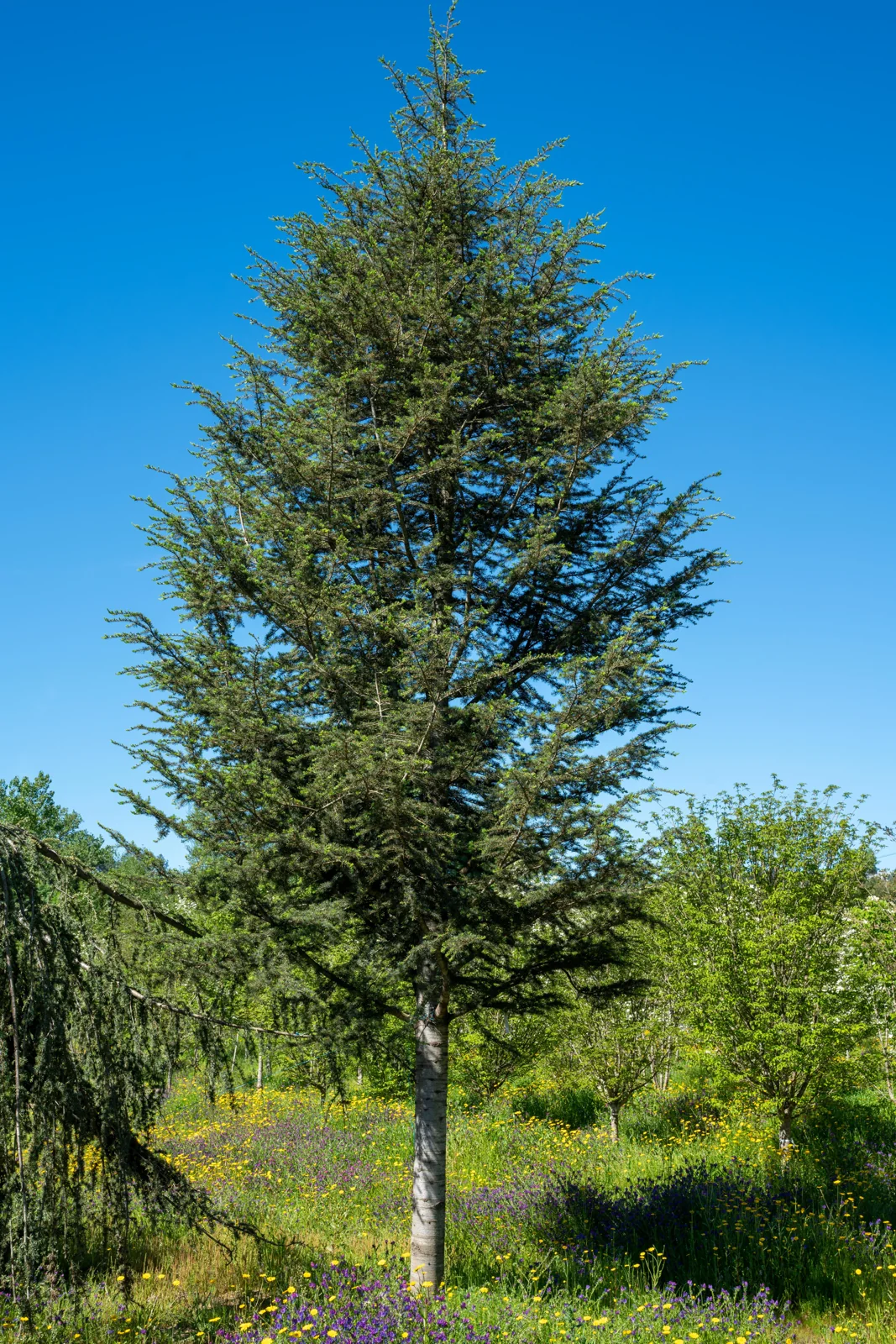
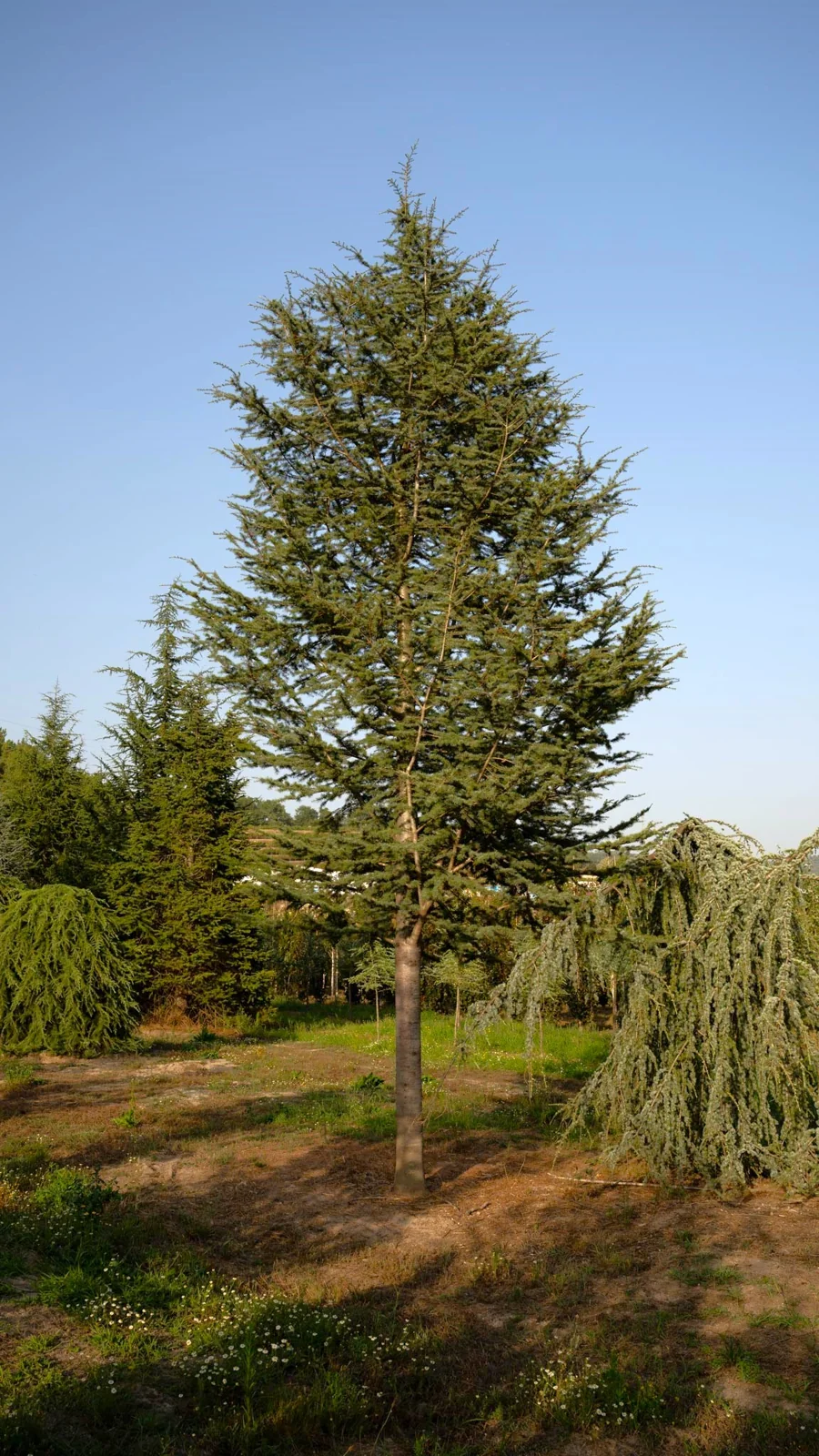
The structural evergreen for projects with a long horizon: a slow-growing conifer whose flat-topped, horizontally layered crown carries the visual weight of an Aleppo pine or mature alcornoque, with hardier winter performance.
- Settles into Sierra de Guadarrama foothills, the Catalan interior, and Mallorca's Tramuntana zone.
- At its best across continental, calcareous interiors with hot, dry summers.
- Modest summer watering for three to four seasons; self-sufficient thereafter.
About this Species
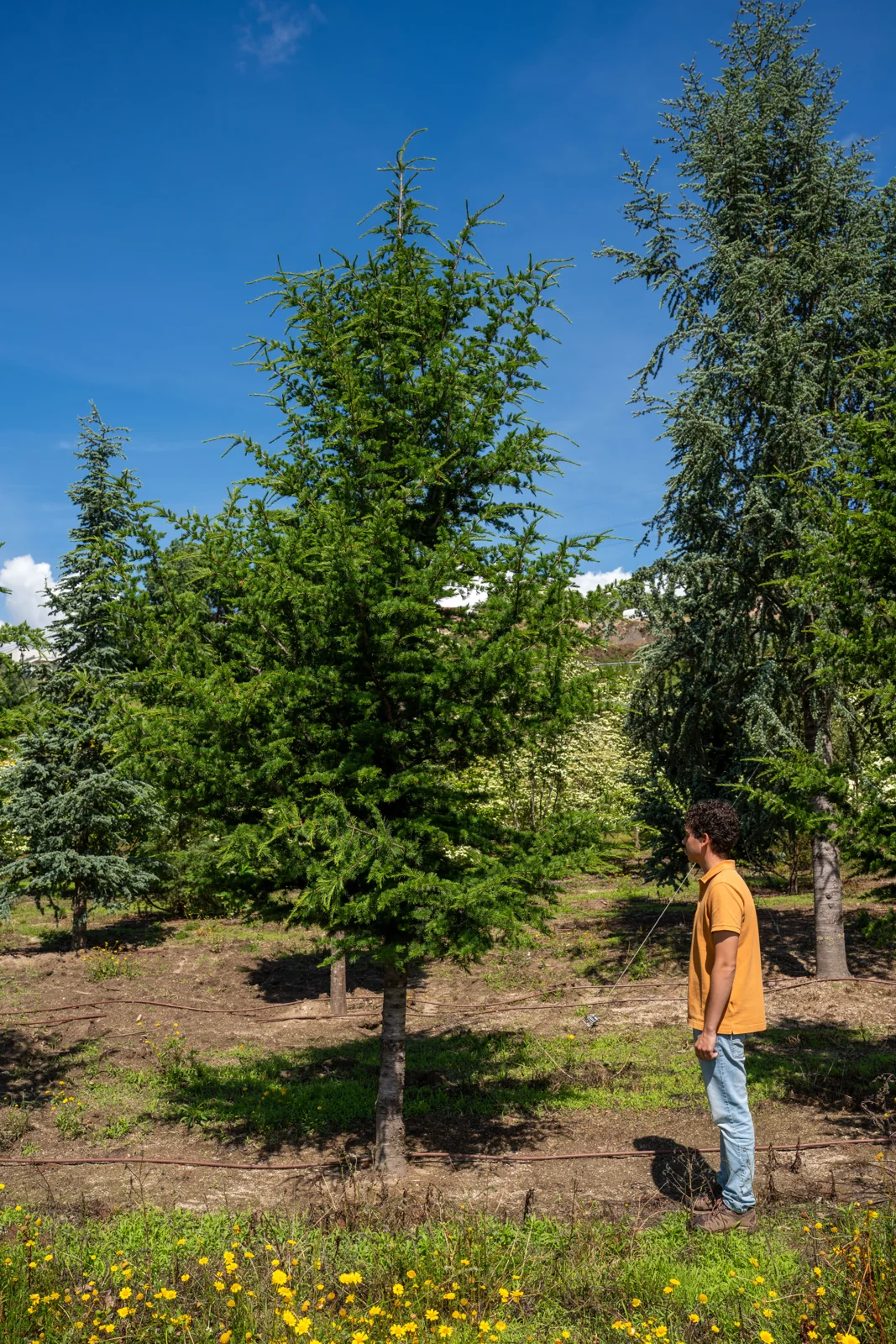
Specified where a single evergreen has to anchor a designed landscape over decades, the cedro del Líbano develops a heavy fissured trunk, sweeping horizontal branches, and a flattened crown that distinguishes it at maturity from the conical Cupressus sempervirens and the umbrella of Pinus pinea. In youth the habit is pyramidal; the flat-topped silhouette…
Read more
Show less
Specified where a single evergreen has to anchor a designed landscape over decades, the cedro del Líbano develops a heavy fissured trunk, sweeping horizontal branches, and a flattened crown that distinguishes it at maturity from the conical Cupressus sempervirens and the umbrella of Pinus pinea. In youth the habit is pyramidal; the flat-topped silhouette emerges only after several decades, which is why the species rewards estate gardens, public parks, and any pliego de condiciones written for a long design life.
The climatic envelope across Spain is wide on the cold end and narrower on the dry end. As the most winter-hardy of the true cedars, it tolerates minima of roughly minus eighteen degrees Celsius, which makes it reliable in the meseta interior where late spring frosts rule out less hardy conifers. On the Mediterranean coast and southern Atlantic it performs steadily, while in the semi-arid sureste it should be specified only on irrigated sites.
Water demand is moderate during the establishment phase, typically the first two to three summers after planting at large calibre, after which the deep root system supports the tree through normal Iberian summer-dry regimes without supplementary irrigation in coastal and southern Atlantic zones. Soil tolerance is broad, with a preference for deep, well-drained loams; the species accepts the alkaline and calcareous substrates common across Spanish project sites, but is intolerant of waterlogging and of poorly drained urban pits.
The phytosanitary profile is clean by Spanish standards: the genus sits outside the host range of Xylella fastidiosa and outside the principal pine-affecting concerns under surveillance in the peninsula, which is part of why it reads as a defensible long-term specification on sites where Olea or Platanus would require additional framing. Tip blight and root rot are the recognised pressures, both manageable through site selection. The foliage is short, stiff, dark green to glaucous, fragrant when handled, and dense enough to cast deep shade; the winter silhouette holds the planting when deciduous structure drops out of the scheme.



Advice on this species
Want to know more about Cedrus libani?
Tell us about your project and we'll advise you on this species — where it thrives, which size makes sense, and what to expect once planted.
- Produção própria
- Exemplares adultos
- Resposta em 1–2 dias
Sem compromisso · orçamento personalizado