

A sculptural weeping cedar for the Mediterranean garden
Deodar Cedar ‘Pendula’ · Cedrus deodara ‘Pendula’
A trained pendulous cultivar of the Himalayan cedar for solitary focal use in parks and large gardens across Spain, where its cascading branches and blue-green foliage carry a project all year.
- Reliable across the Costa del Sol, Costa Blanca, Balearics, and the Catalan coast
- Hardy through Greater Madrid and the Sierra foothills to about minus fifteen Celsius
- Modest deep watering for the first three summers; largely self-sufficient thereafter
Key Facts
About this Cultivar
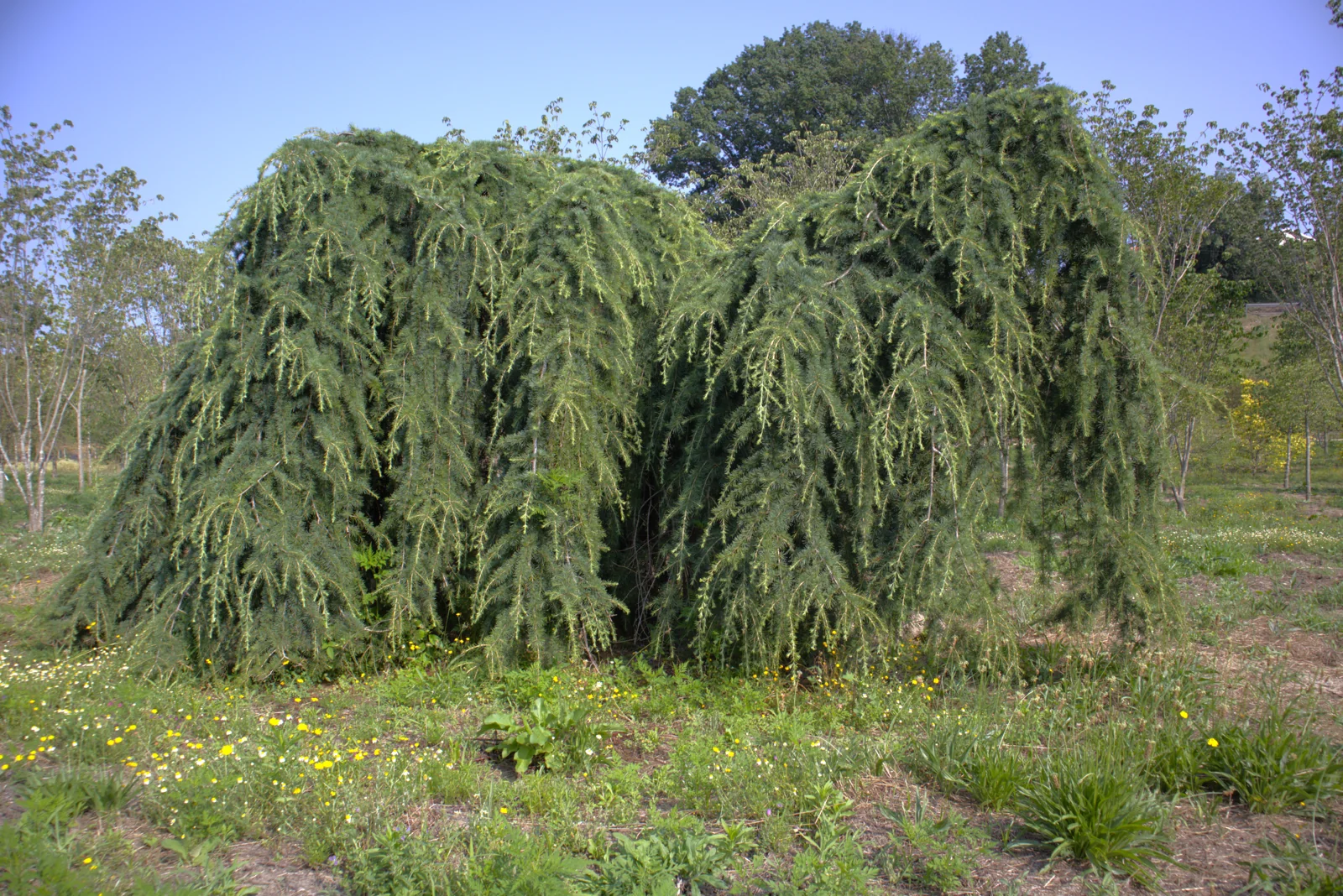
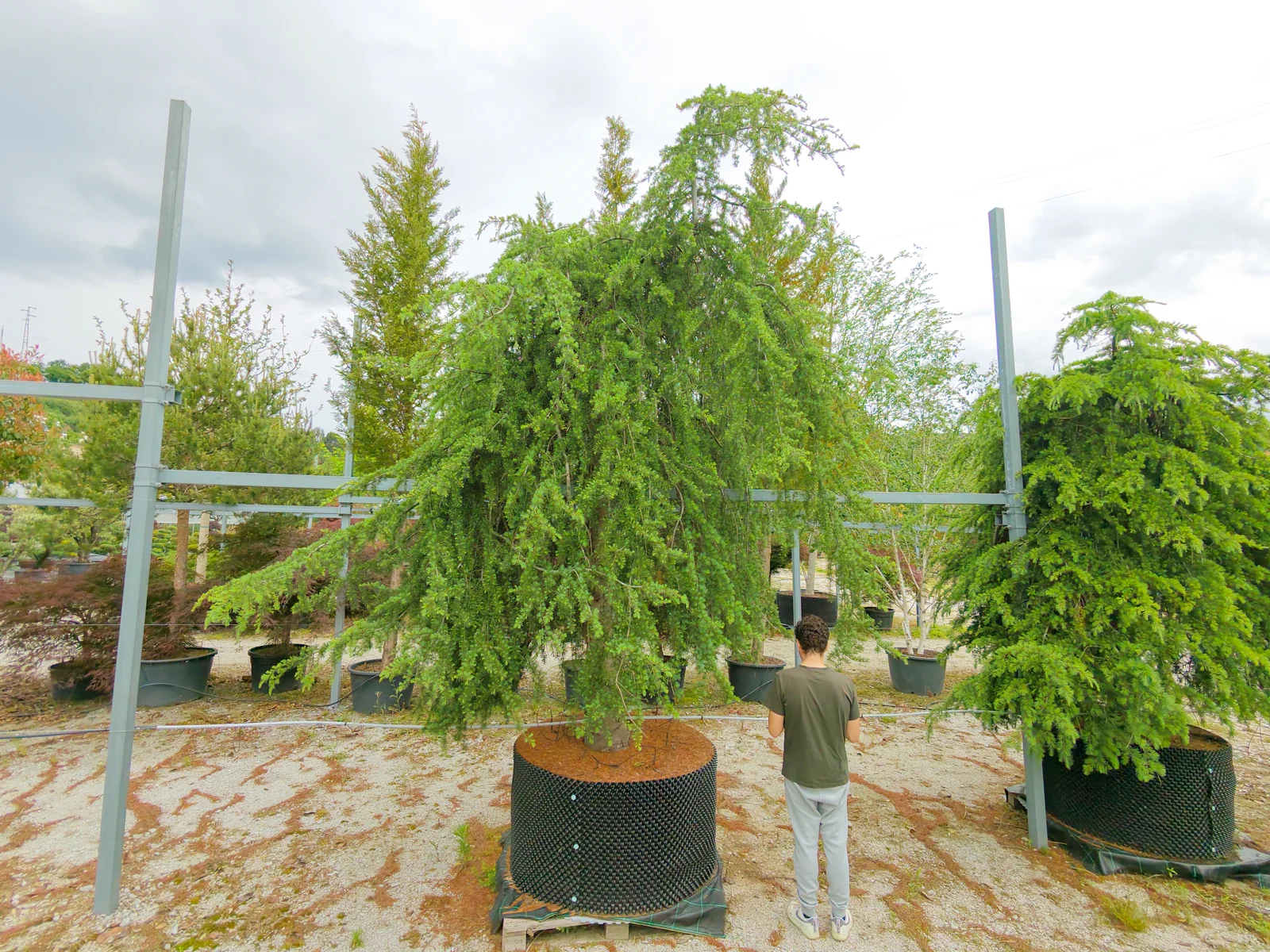
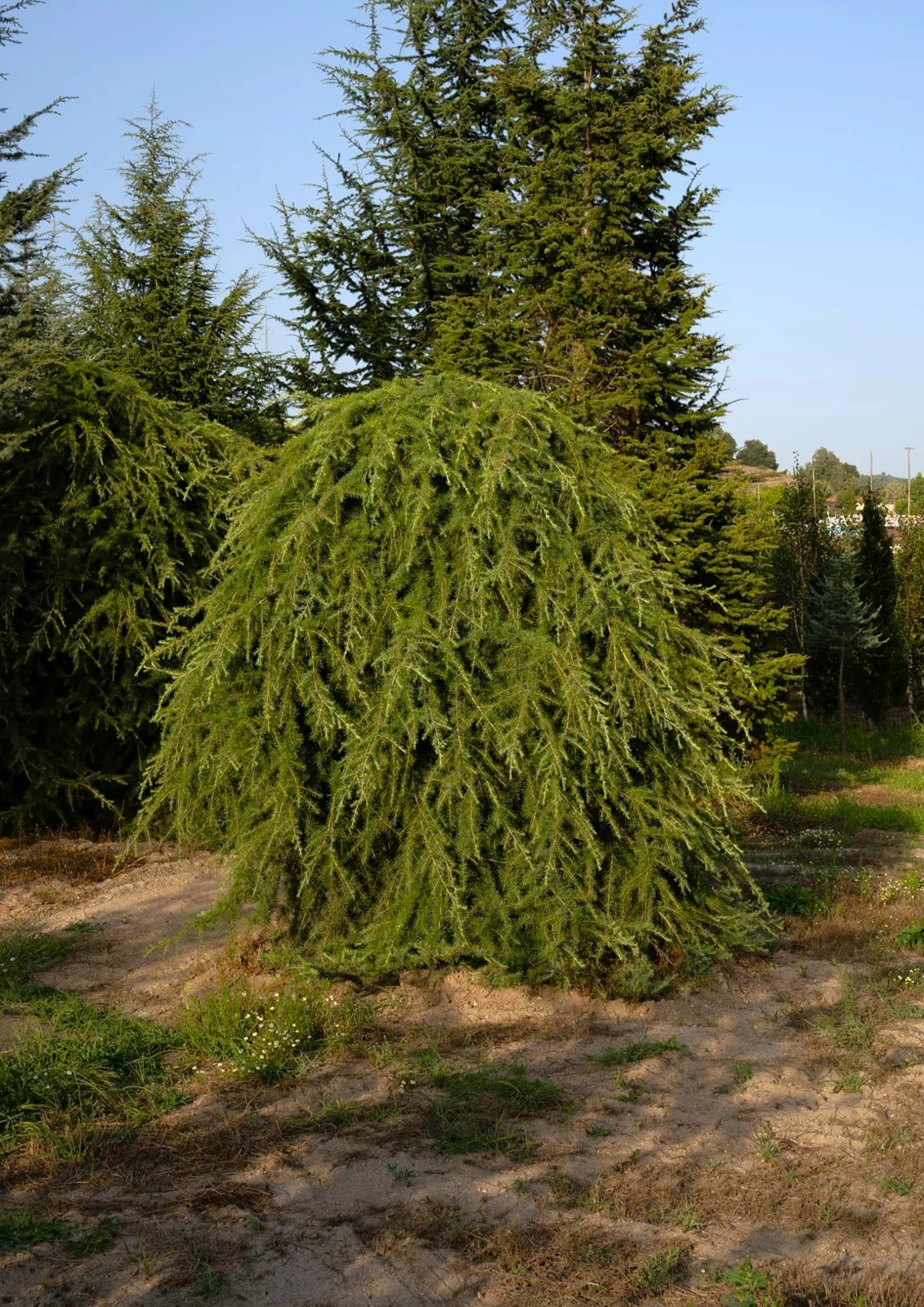
Cedrus deodara 'Pendula' is the strongly weeping selection of the deodar cedar, with long flexible branchlets that fall in graceful curtains from a leader that must be trained upright. Final dimensions depend entirely on that training: held low, the cultivar reads as a 2 to 3 metre sculptural shrub; tutored as a tree, it reaches 6 to 10 metres in height…
Read more
Show less
Cedrus deodara 'Pendula' is the strongly weeping selection of the deodar cedar, with long flexible branchlets that fall in graceful curtains from a leader that must be trained upright. Final dimensions depend entirely on that training: held low, the cultivar reads as a 2 to 3 metre sculptural shrub; tutored as a tree, it reaches 6 to 10 metres in height with a spread that often exceeds it. The persistent needles are densely set in clusters and carry a grey-green to blue-green cast that reads cool against warm Spanish hardscape.
Climatically the cultivar is reliable across the Mediterranean coastal strip, the milder pockets of the cornisa cantábrica, and the southern Atlantic projects around Seville and the Aljarafe. Winter hardiness sits in the order of minus twelve to minus fifteen degrees Celsius once established, which makes it usable across most of Spain but marginal at the cold limit of the central plateau (meseta), where late spring frosts on young growth are the practical risk to plan for.
Water behaviour is moderate rather than absolute. The species takes deep, fertile, well-drained soils best, tolerates acidic to alkaline reaction, and accepts sandy or clay textures provided drainage is reliable; standing wet kills it. Through the first two to three summers it needs steady supplementary irrigation, after which the deep root system carries it through short drought episodes. In the semi-arid southeast and on saline coastal sites it stays dependent on irrigation and is not the right specification.
The cultivar is not currently within the host range of Xylella fastidiosa and carries no serious pest or disease pressure relevant to Spanish projects, which sets it apart cleanly from Olea and Polygala myrtifolia alternatives in demarcated zones. Use it as a solitary focal piece in the pliego de condiciones, on a lawn, beside water, or against a long axial view, where the weeping habit can be read in full. Hedging or massed planting wastes the cultivar; one well-placed specimen is the brief.
Advice on this species
Want to know more about Cedrus deodara 'Pendula'?
Tell us about your project and we'll advise you on this species — where it thrives, which size makes sense, and what to expect once planted.
- Produção própria
- Exemplares adultos
- Resposta em 1–2 dias
Sem compromisso · orçamento personalizado