

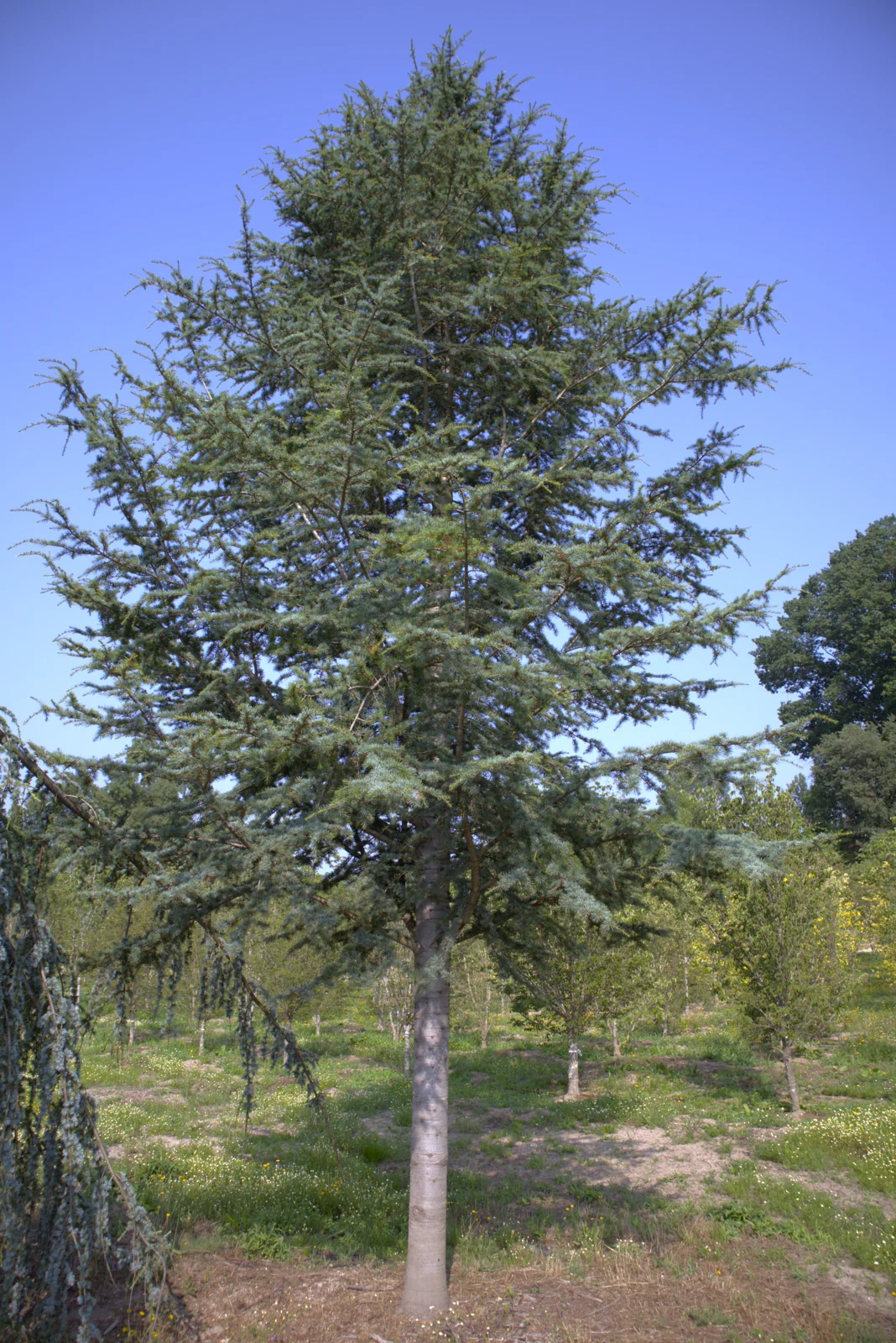
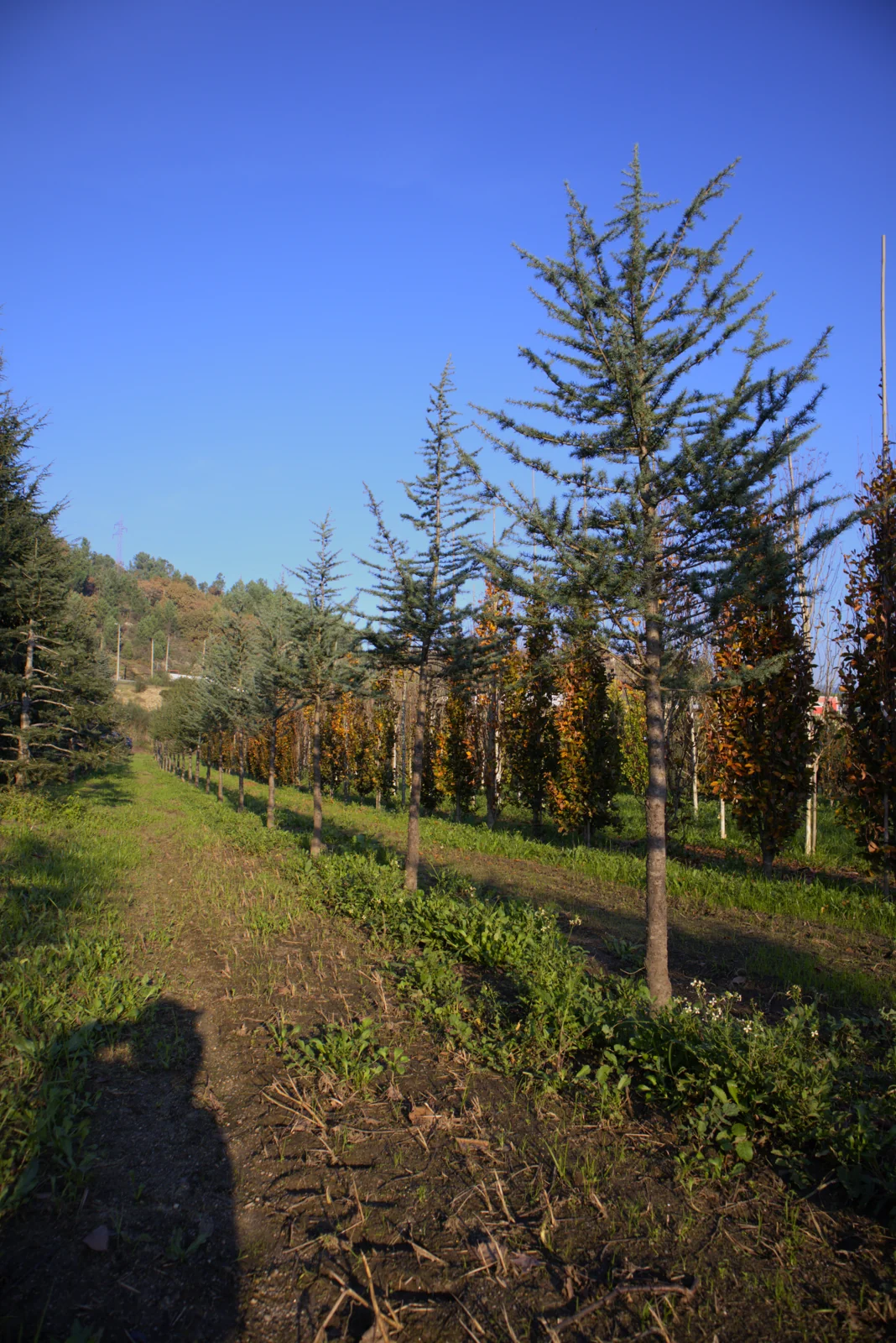
A long-lived evergreen with the blue silhouette of Atlas mountains
Atlas Cedar · Cedrus atlantica
A long-lived North African conifer for projects that need a singular evergreen anchor across most of mainland Spain. Specify Cedrus atlantica where the brief calls for a plátano de sombra in scale but an evergreen silhouette in season.
- Thrives from the Costa del Sol and Balearics to the Sierra de Guadarrama foothills
- Deep slow soak once weekly for the first two or three summers; self-sufficient thereafter
- Prefers well-drained loamy or sandy soil with shelter from salt-laden wind
About this Species
Cedrus atlantica is a true cedar from the Atlas and Rif mountains of Morocco and Algeria, where it forms montane forests between roughly 1,200 and 2,200 m. In cultivation it develops a loose pyramidal habit when young, opening with age into a broad, flat-topped crown carried on long horizontal limbs. Needles are short and stiff, held in tufted whorls on…
Read more
Show less
Cedrus atlantica is a true cedar from the Atlas and Rif mountains of Morocco and Algeria, where it forms montane forests between roughly 1,200 and 2,200 m. In cultivation it develops a loose pyramidal habit when young, opening with age into a broad, flat-topped crown carried on long horizontal limbs. Needles are short and stiff, held in tufted whorls on dwarf shoots, and range from sea-green to the silver-blue of the Glauca Group. Mature specimens reach 25 to 35 m in height with a spread of 10 to 15 m, asking for the open ground a pino piñonero would also need.
The species is reliably hardy to roughly minus 18 to minus 20 °C, which carries it across the meseta interior of Castilla, Aragón, and the northern submeseta without protection, and through Mediterranean coastal and southern Atlantic conditions with comfort. Performance is reliable from Galicia and the cornisa cantábrica through to the inland Levante and Andalucía; the principal limit is the semi-arid southeast, where shallow, gypsiferous soils and very low rainfall begin to compromise establishment.
Drought tolerance rests on a deep root system that, once established after two to three irrigated summers, supports the tree through prolonged summer dry periods without supplementary water. The species prefers deep, well-drained loams and accepts sandy substrates; it dislikes waterlogging and heavy compaction, which restricts use in tight urban pits and recommends it instead for parks, fincas, institutional grounds, and the open settings of masía catalana or carmen granadino restorations. Xylella fastidiosa is not a concern for the genus Cedrus.
Growth is medium, with annual shoot extension of up to 60 cm under good conditions, so target calibre is reached over years rather than seasons; this is a tree planted as a generational structural element, not a quick fill. Disease and pest pressure in Spanish conditions is low, with occasional tip blight and the risk of branch breakage under heavy wet snow on exposed meseta sites. For specification, treat it as a singular focal evergreen of cathedral scale, used one at a time or in widely spaced groups along a principal axis.



Advice on this species
Want to know more about Cedrus atlantica?
Tell us about your project and we'll advise you on this species — where it thrives, which size makes sense, and what to expect once planted.
- Produção própria
- Exemplares adultos
- Resposta em 1–2 dias
Sem compromisso · orçamento personalizado