

A woodland anchor for cool, inland Spain
European Hornbeam · Carpinus betulus
A medium deciduous tree of structural restraint, the carpe europeo is specified across northern and central Spain for reliable winter hardiness, tolerance of heavy soils, and a clean fluted habit.
- Suits cool inland Spain: the Cantabrian north, Catalan pre-Pyrenees, Guadarrama foothills
- Dense pleated canopy on muscled grey bark gives year-round structure
- Tolerates heavy clay and seasonally damp ground better than beech
About this Species
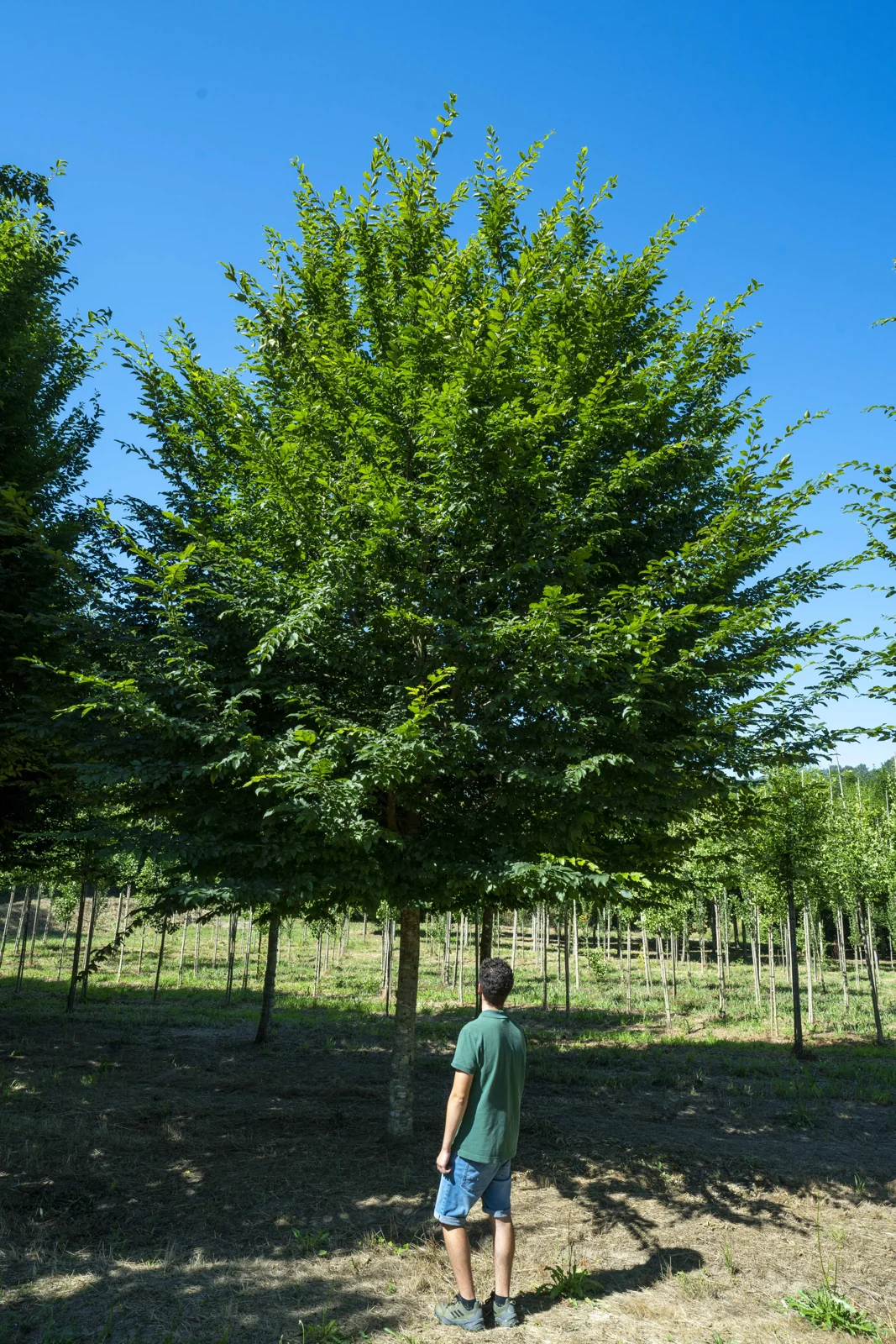
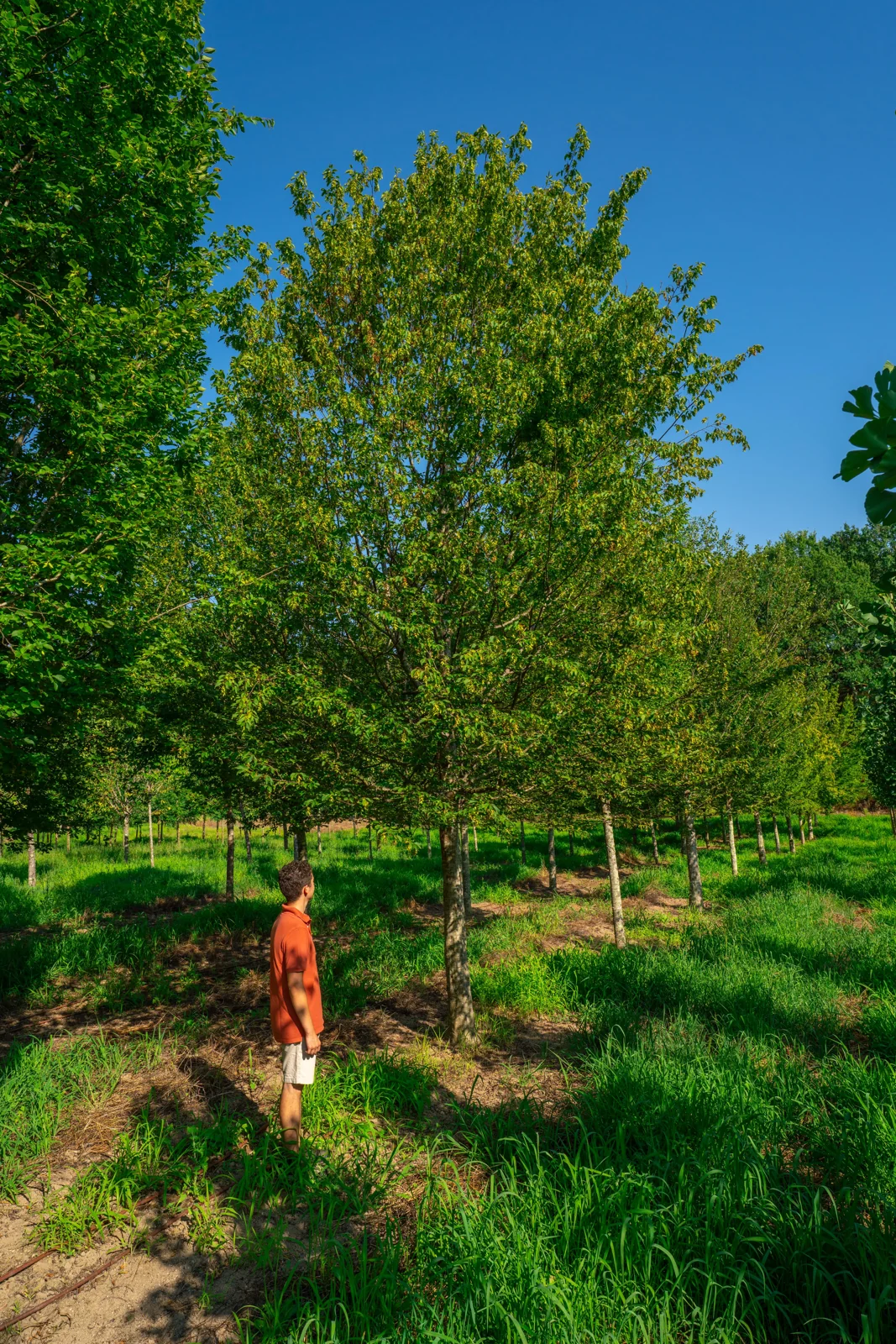
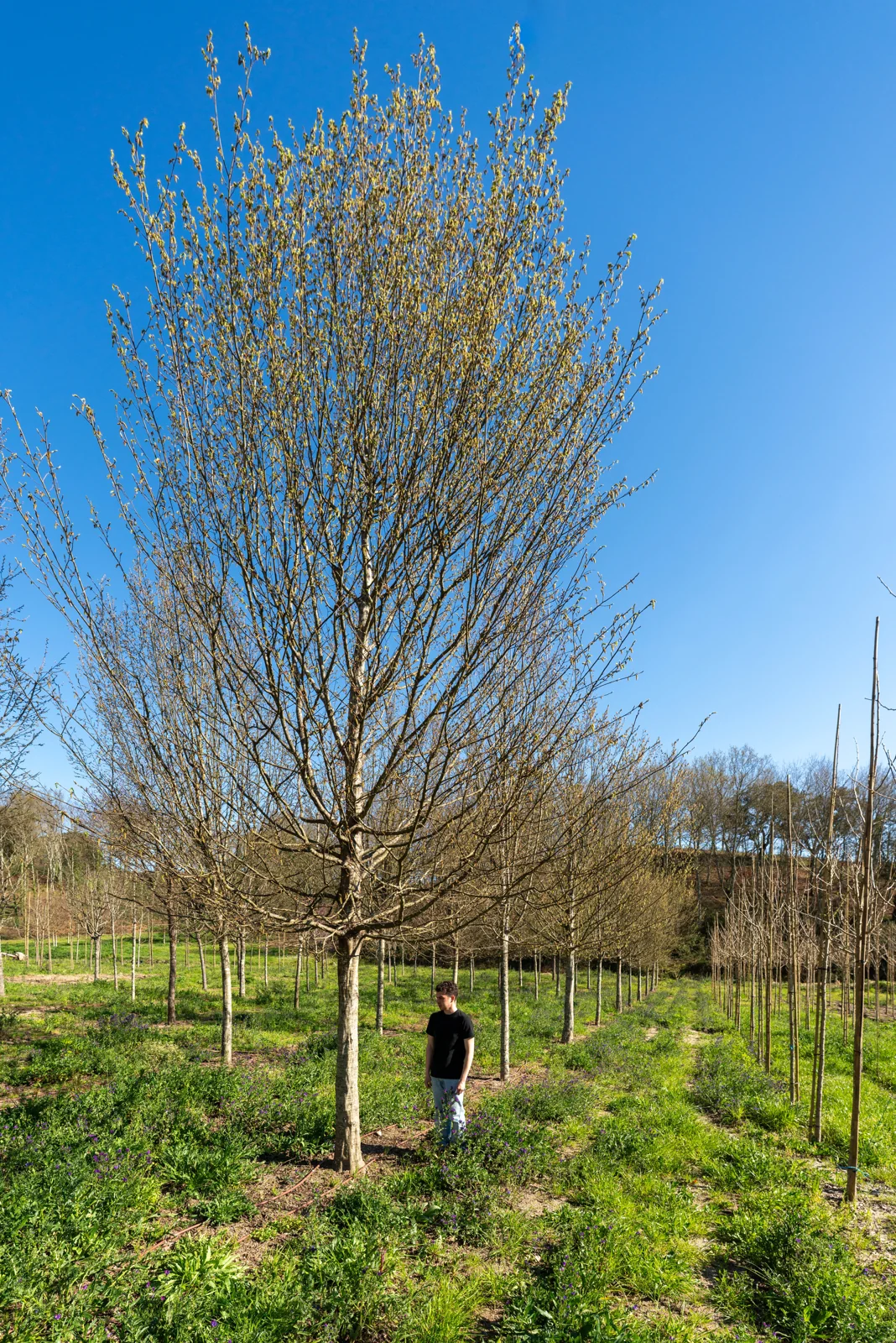
Within the Spanish specification context, carpe europeo occupies the structural niche that Fagus sylvatica fills further north: a medium upright to oval crown reaching 15 to 25 m at maturity, carrying dense, doubly serrated foliage on slender, fluted limbs. The smooth grey bark develops the muscle-like fluting that distinguishes the genus and remains a…
Read more
Show less
Within the Spanish specification context, carpe europeo occupies the structural niche that Fagus sylvatica fills further north: a medium upright to oval crown reaching 15 to 25 m at maturity, carrying dense, doubly serrated foliage on slender, fluted limbs. The smooth grey bark develops the muscle-like fluting that distinguishes the genus and remains a year-round visual asset. Unlike beech, hornbeam tolerates heavy and seasonally wet clays, which expands its usable site range across northern Spain considerably.
The species is reliably winter hardy to roughly minus 25 to minus 28 °C, which places it inside any Spanish continental envelope, including the colder reaches of the meseta and the high parameras of Castilla y León and Aragón where late spring frosts disqualify many ornamentals. Summer performance is solid across the cornisa cantábrica and inland Galicia, and acceptable across the central and southern meseta under conventional landscape irrigation. It is not the right specification for the semi-arid southeast (Almería, Murcia, inland Alicante) nor for exposed coastal sites: salt tolerance is low and persistent aridity shortens its useful life.
Establishment requires consistent moisture through the first two to three summers; once anchored, mature trees draw on a wide, moderately shallow root system that copes with summer drought episodes provided winter recharge is adequate. The species sits outside the Xylella fastidiosa host list confirmed for Spain, which gives it a clear position alongside Olea, Polygala myrtifolia and certain Quercus in demarcated zones. No serious insect or disease pressures are recorded; foliage holds clean through the season with little foliar disease.
On clay, loam and moderately chalky substrates the crown closes within ten to twelve years at urban planting calibres, delivering substantial shade without the surface-root and Ceratocystis concerns that follow plátano de sombra (Platanus × acerifolia) in Spanish urban contracts. The species accepts hard pruning and historically anchored the clipped bosquet hedges of the French formal tradition; for tight street pits, the fastigiate selections ('Fastigiata', 'Frans Fontaine') hold a narrow architectural column. Autumn foliage turns clear yellow, briefly, before falling clean.



Advice on this species
Want to know more about Carpinus betulus?
Tell us about your project and we'll advise you on this species — where it thrives, which size makes sense, and what to expect once planted.
- Produção própria
- Exemplares adultos
- Resposta em 1–2 dias
Sem compromisso · orçamento personalizado