

A formal upright hornbeam for cooler Spanish gardens
European Hornbeam ‘Fastigiata’ · Carpinus betulus ‘Fastigiata’
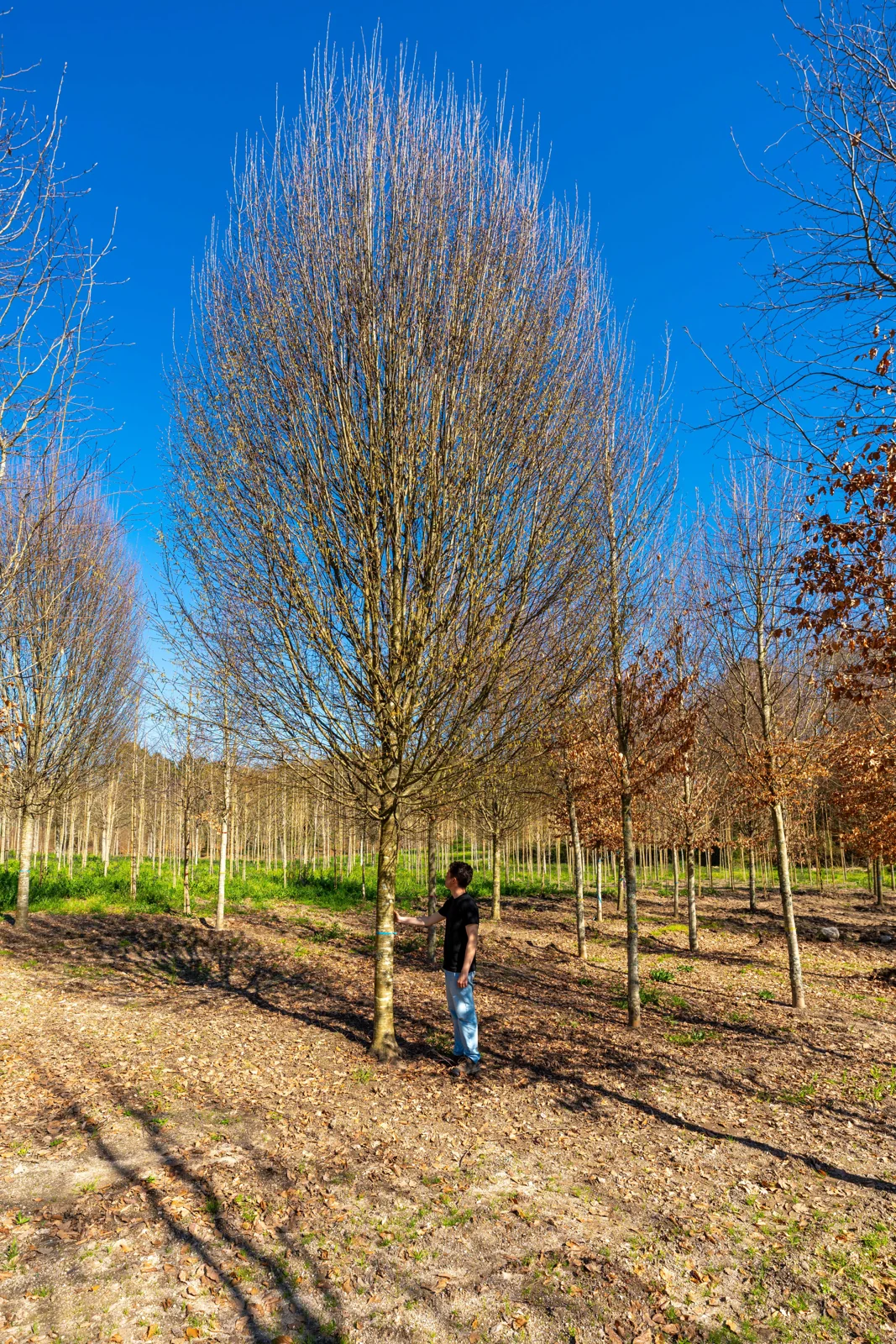
A columnar hornbeam selection for confined alignments and screening on Spanish urban projects, holding a tight oval-pyramidal habit at 10 to 15 m while tolerating heavy clays, pollution, and the cold winters of the meseta.
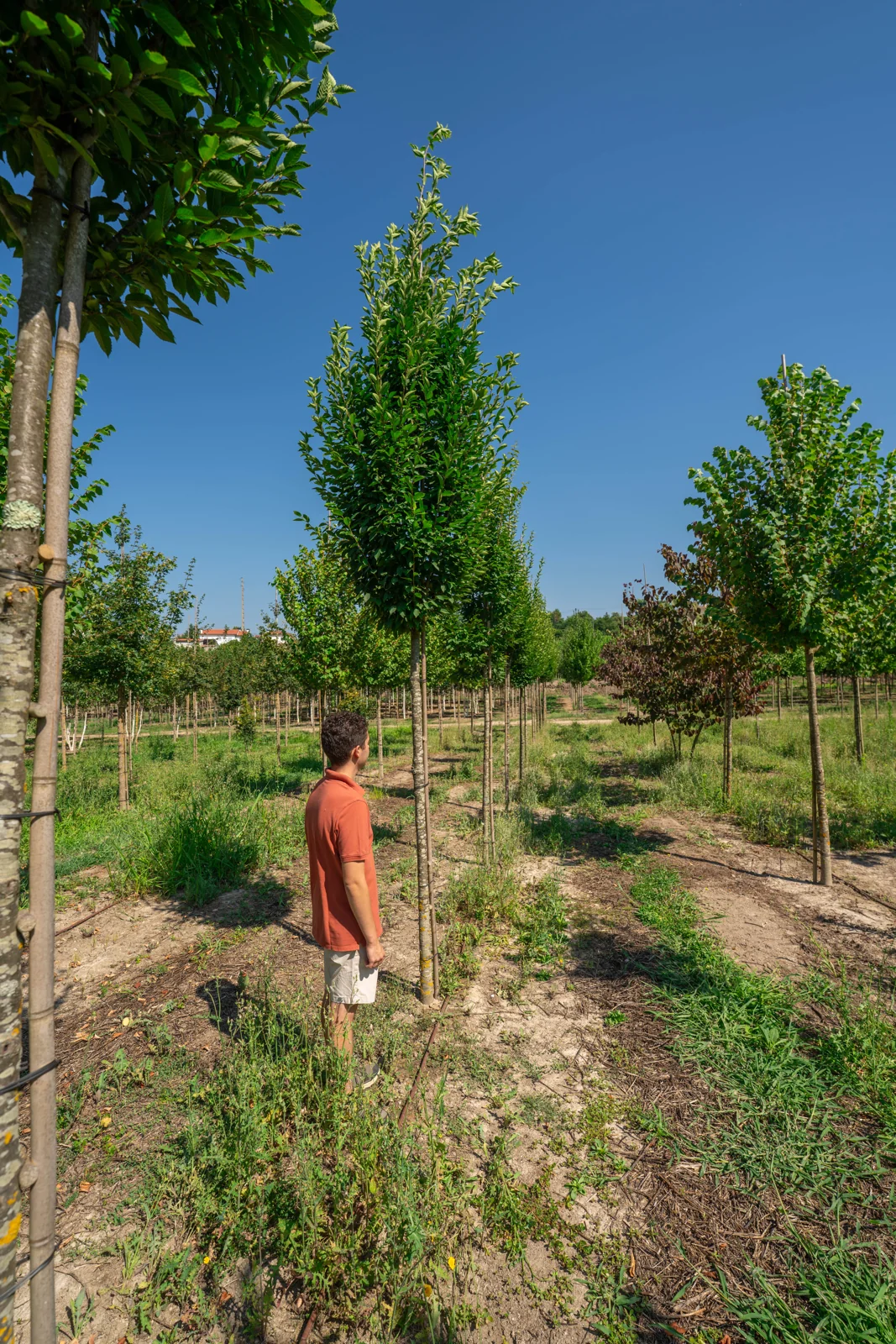
- Narrow upright habit suits courtyards, driveways, and gardens with limited width
- Best in cooler Spanish gardens: Atlantic north, Catalan pre-Pyrenees, Madrid sierras
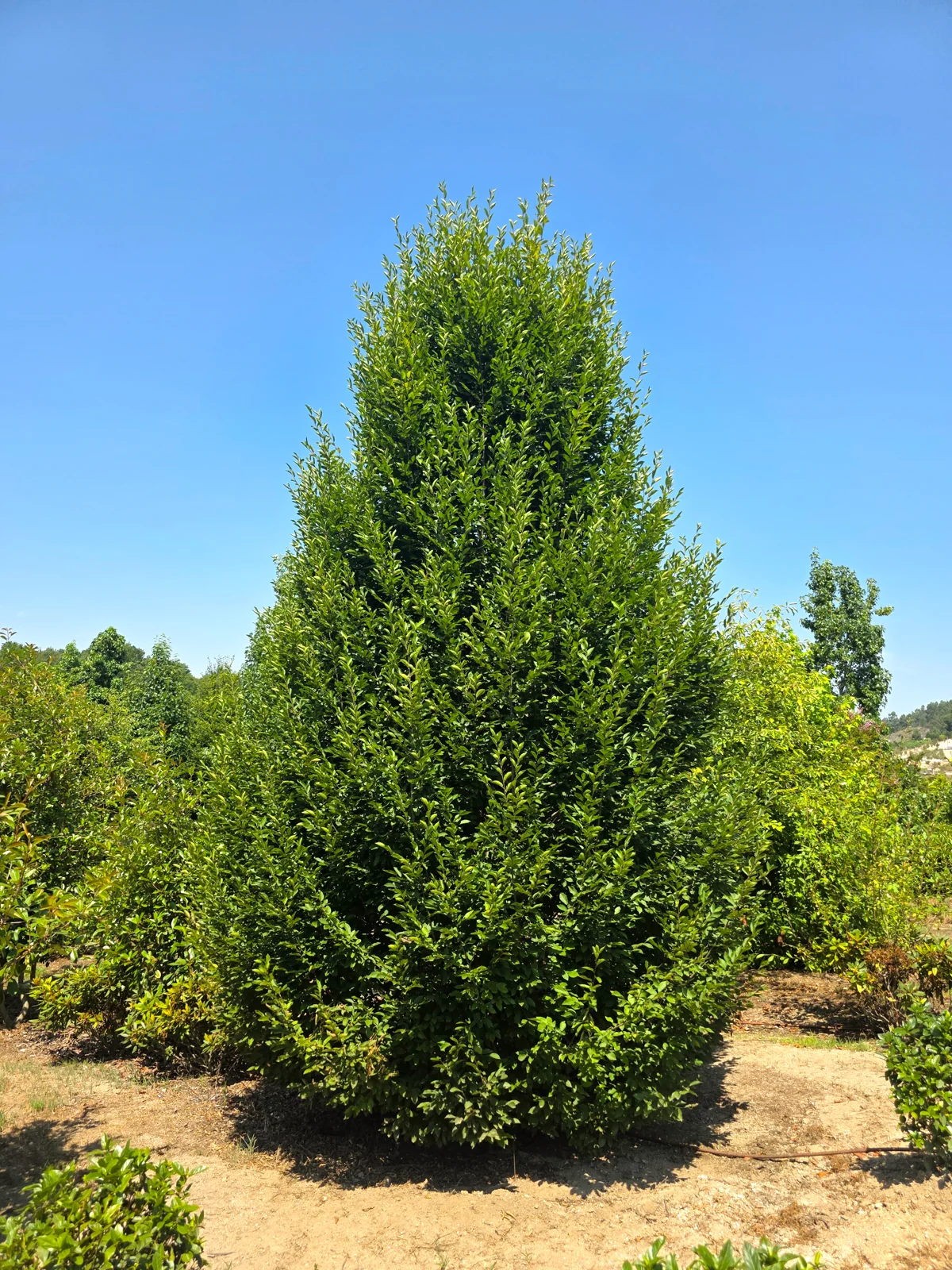
- Holds a tight oval-pyramidal line, broadening only slowly with age
Key Facts
About this Cultivar
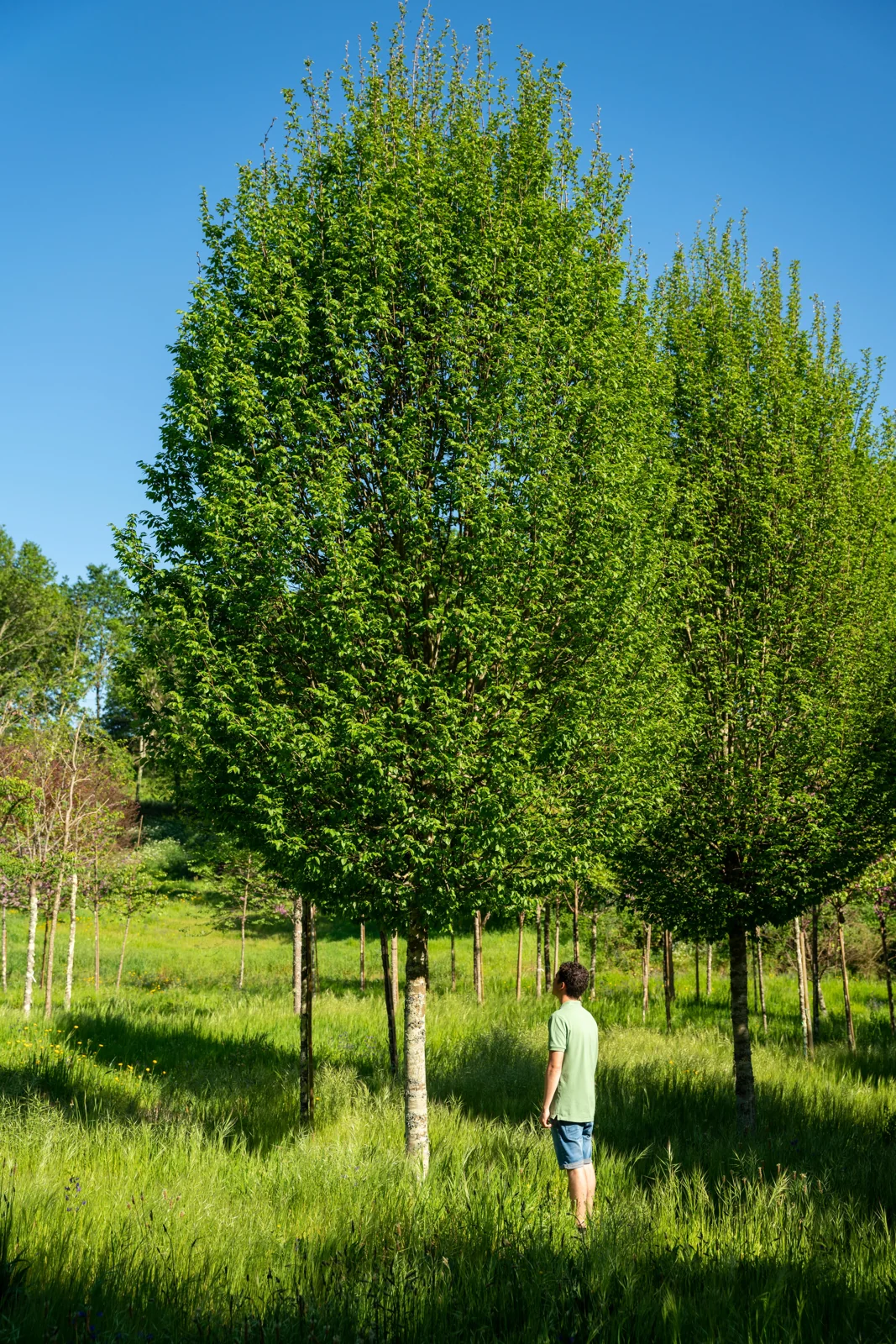
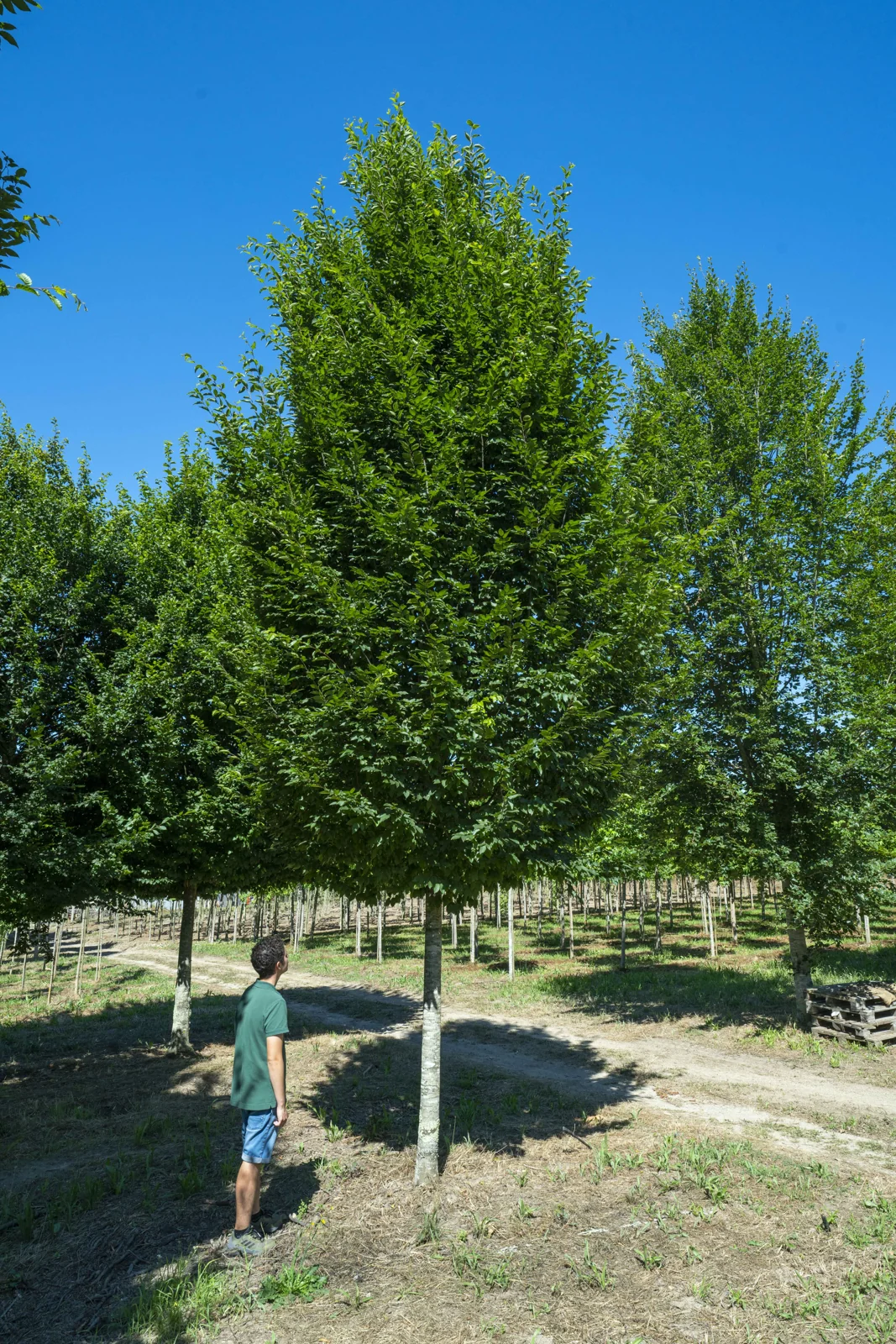
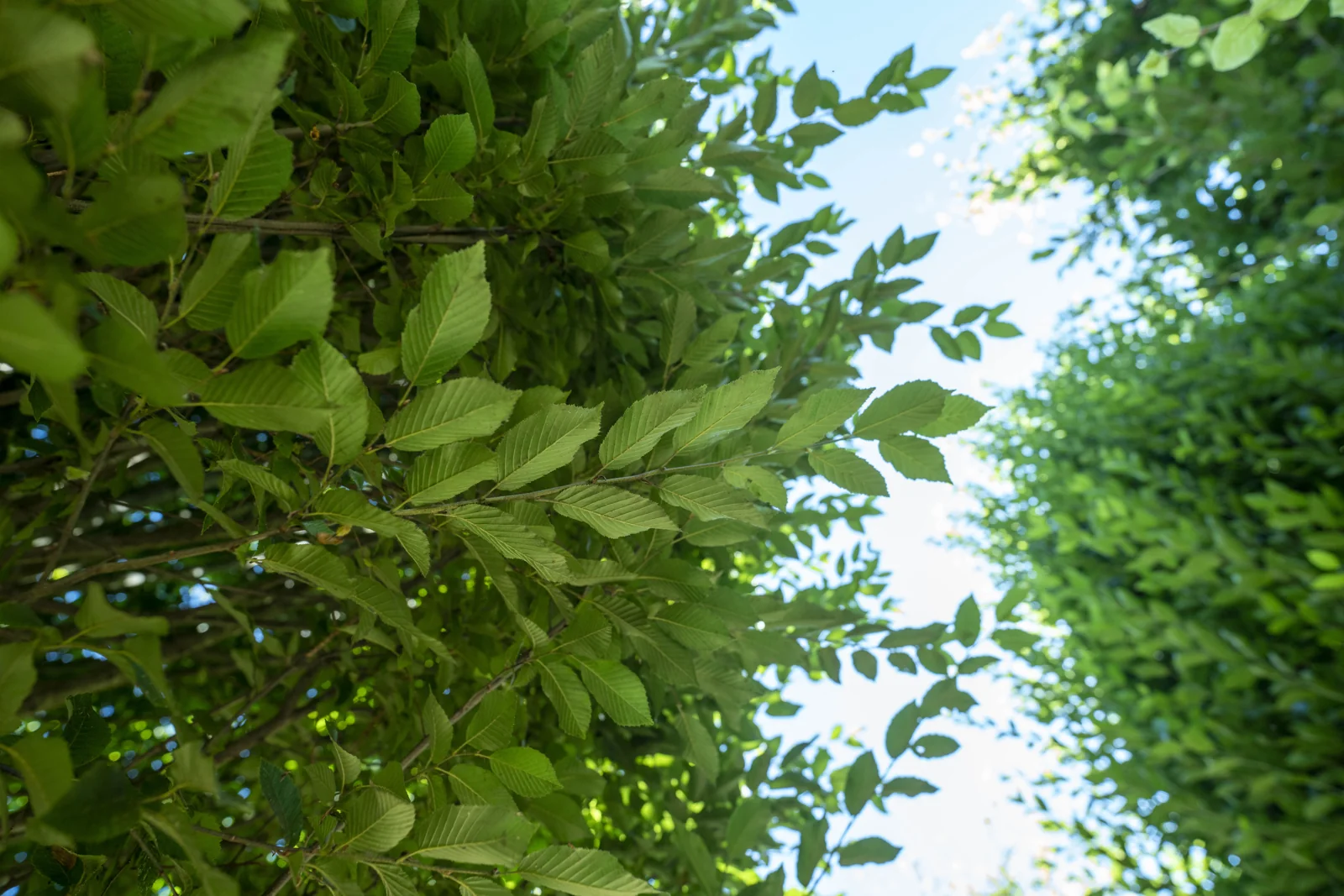
'Fastigiata' is the standard columnar selection of Carpinus betulus, holding a tight, oval-pyramidal crown that broadens gradually with age rather than spreading at maturity like the species type. At 15 to 20 years it carries a dense screen of dark green, doubly serrate foliage on erect branches, reaching roughly 10 to 15 m in height with a 4 to 6 m…
Read more
Show less
'Fastigiata' is the standard columnar selection of Carpinus betulus, holding a tight, oval-pyramidal crown that broadens gradually with age rather than spreading at maturity like the species type. At 15 to 20 years it carries a dense screen of dark green, doubly serrate foliage on erect branches, reaching roughly 10 to 15 m in height with a 4 to 6 m spread. The fluted grey trunk and golden-yellow autumn turn are inherited species traits; the architectural verticality is what the cultivar contributes.
The species is hardy to roughly minus 30 °C, which places 'Fastigiata' beyond the cold limit of any Spanish project, including the late frosts of the central meseta and the continental winters of Castilla y León or Aragón. It performs reliably across the Atlantic cornisa cantábrica, where cool wet summers suit it, and across inland Mediterranean Spain where summer heat is buffered by adequate soil moisture. On the hot dry coastal Levante and in the semi-arid southeast it requires irrigation through summer; it is not a candidate for unirrigated specification in those zones.
Water demand is moderate throughout establishment and into maturity: two to three summers of regular irrigation are needed to anchor the root system, after which the tree carries normal Atlantic and continental rainfall without supplementary water. The species tolerates heavy clay, alkaline and acidic soils, and compacted urban substrates; the Levante limitation is heat and aridity, not pH. Disease and pest pressure is low under Spanish conditions, and the genus sits outside the principal Xylella fastidiosa host range relevant to current demarcation.
The narrow habit makes 'Fastigiata' a working alignment tree where plátano de sombra is too broad and Cupressus sempervirens too solid, and a structural screen where wind resistance matters. It tolerates formative pruning and hard reduction, holding the architectural line over decades, and a portion of marcescent foliage persists through winter to give continued screen value. Maintenance is low: little routine work beyond shape pruning, scheduled from late summer to mid-winter to avoid sap bleeding.
Advice on this species
Want to know more about Carpinus betulus 'Fastigiata'?
Tell us about your project and we'll advise you on this species — where it thrives, which size makes sense, and what to expect once planted.
- Produção própria
- Exemplares adultos
- Resposta em 1–2 dias
Sem compromisso · orçamento personalizado