

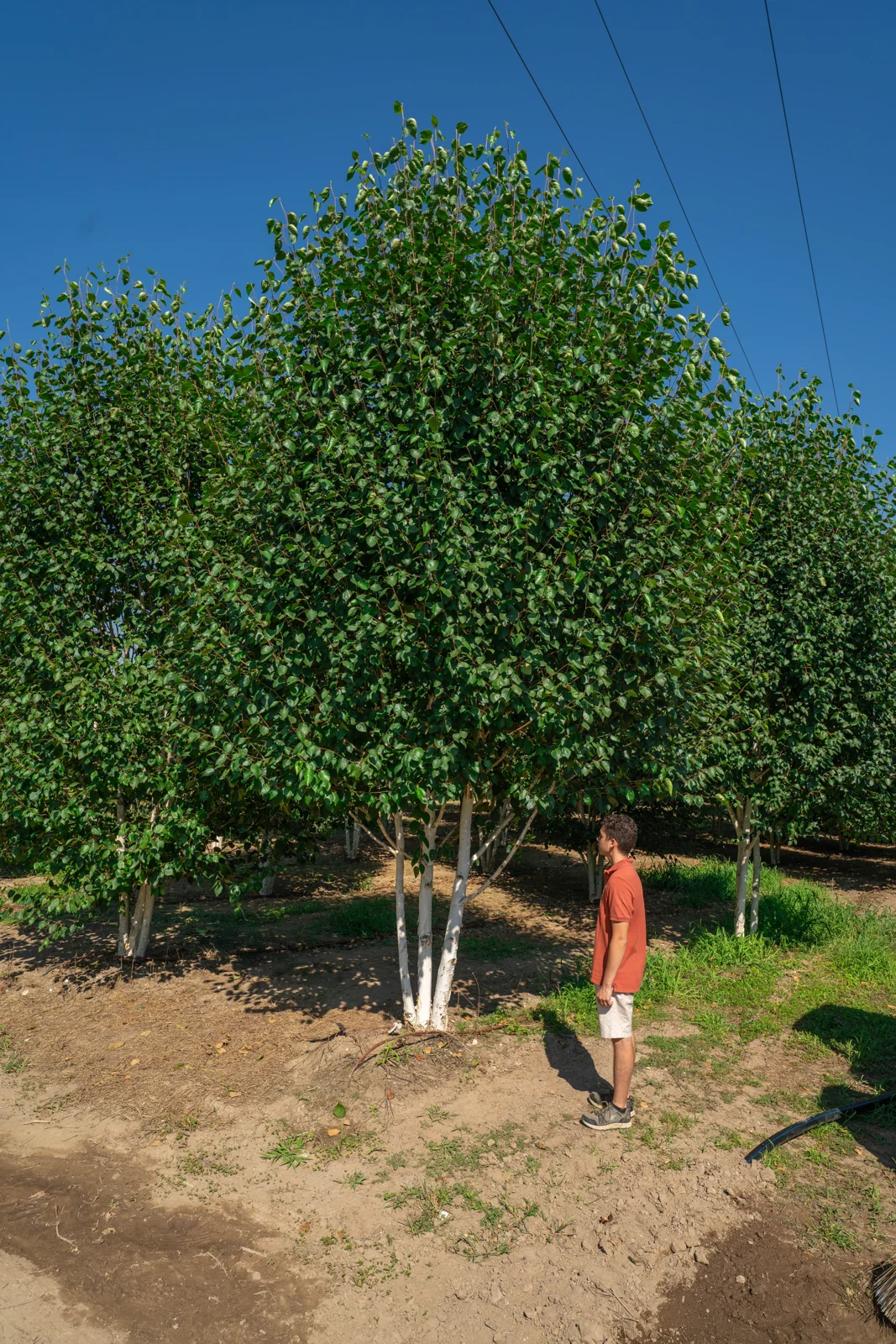
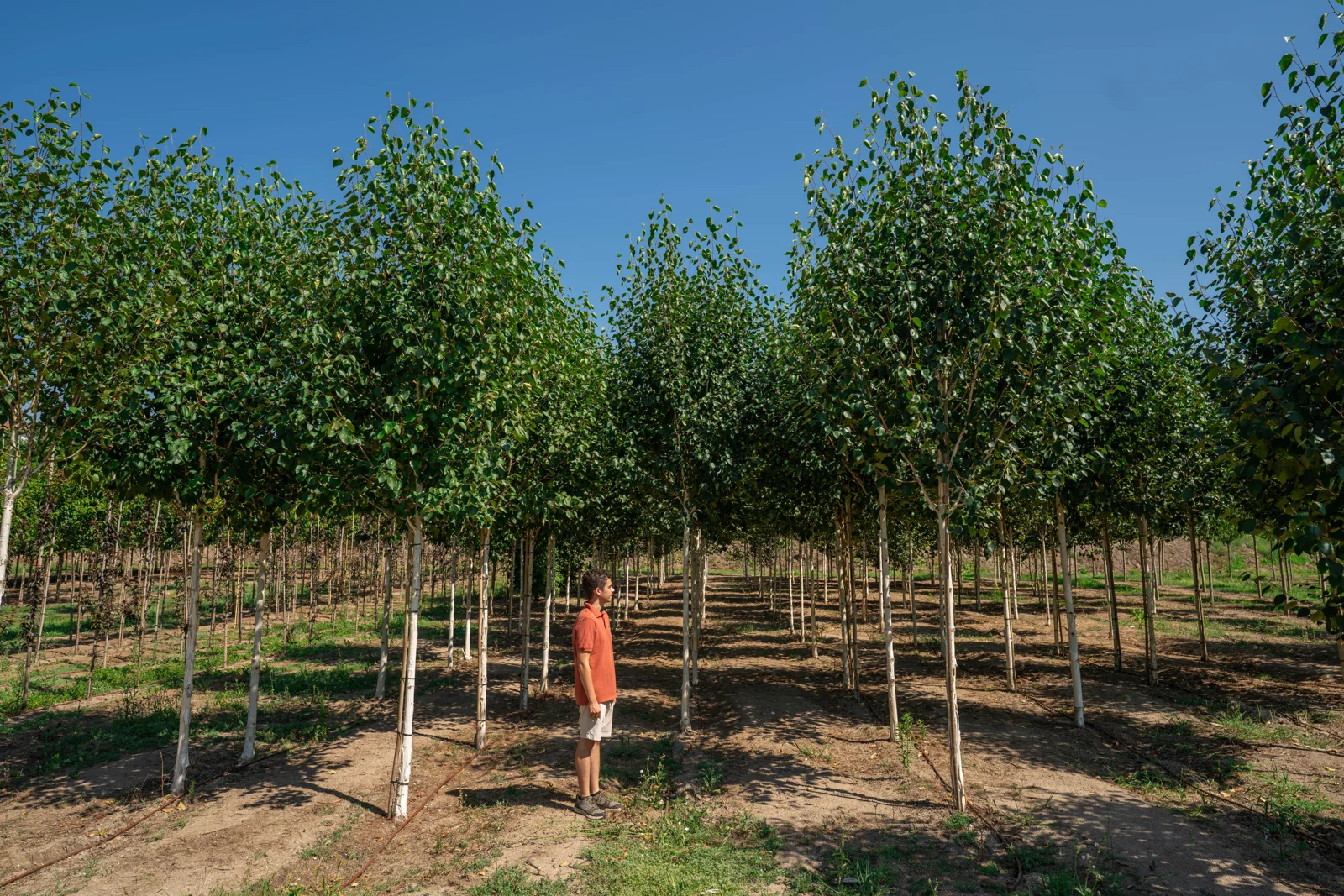
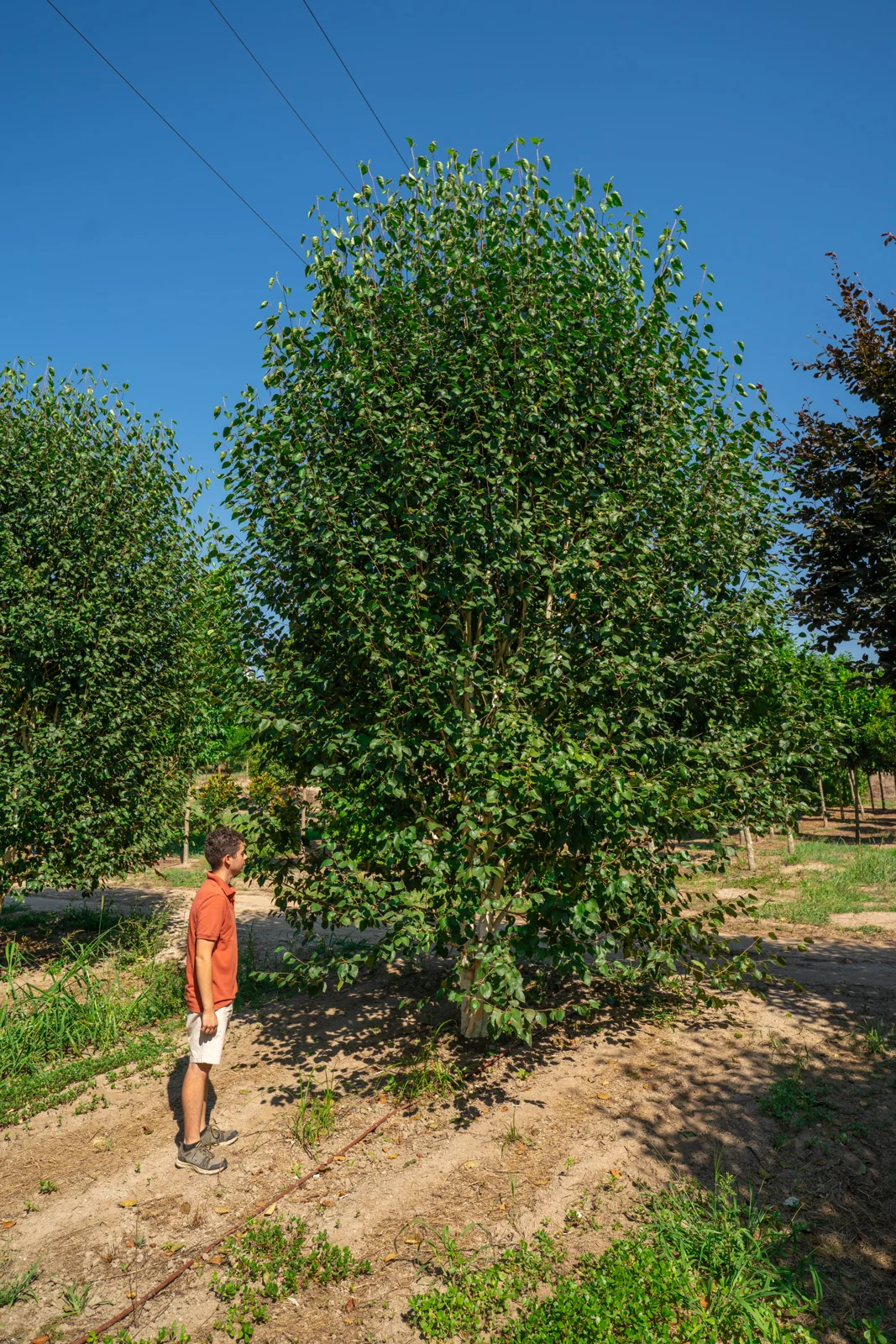
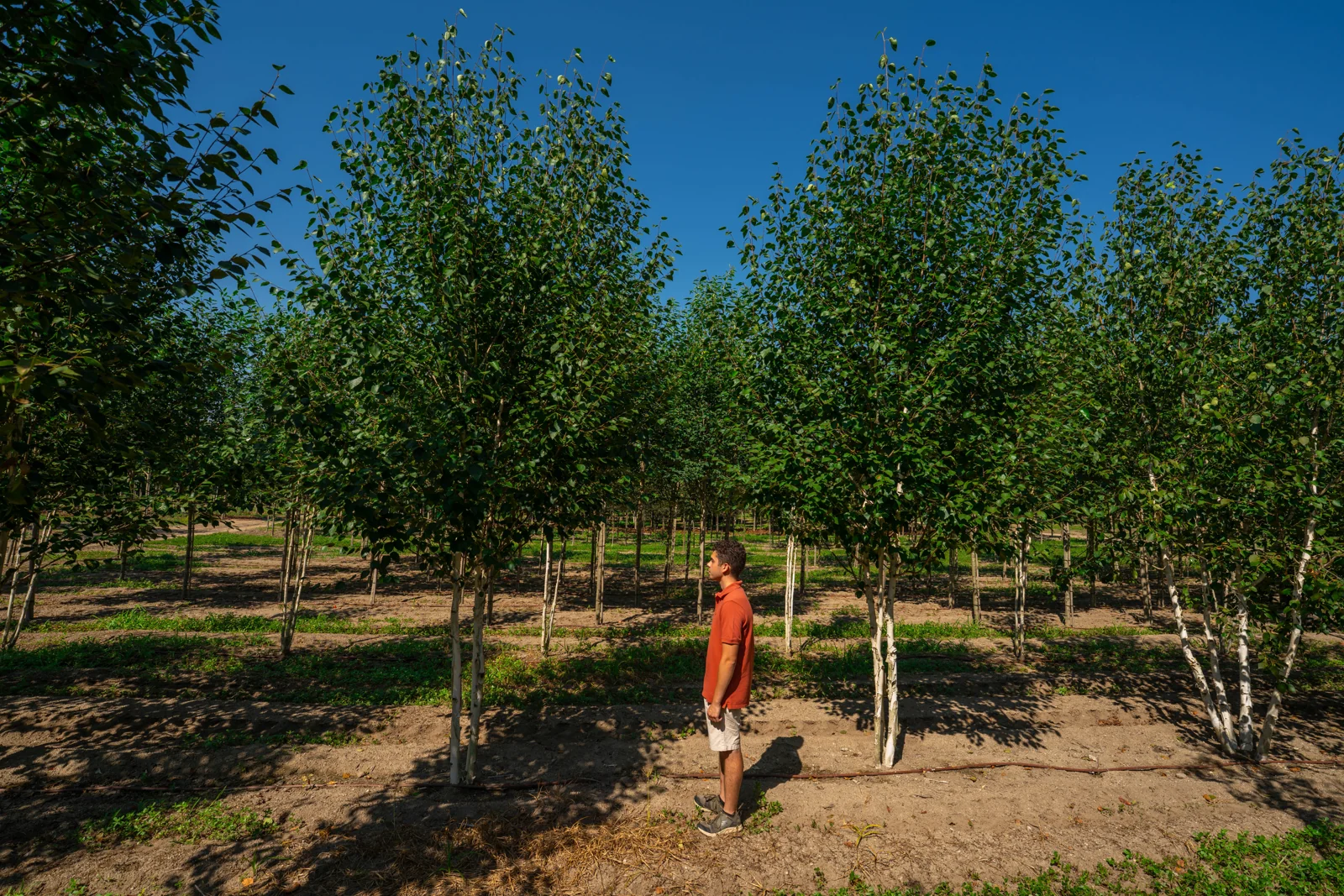
White-stemmed Himalayan birch for green Spain and shaded patios
Himalayan Birch ‘Jacquemontii’ · Betula utilis ‘Jacquemontii’
A white-barked deciduous specimen tree for cool, humid Spanish project zones: the cornisa cantábrica, upland Pyrenean settings, and irrigated estates inland. Specify it where winter silhouette and autumn colour carry the planting programme.
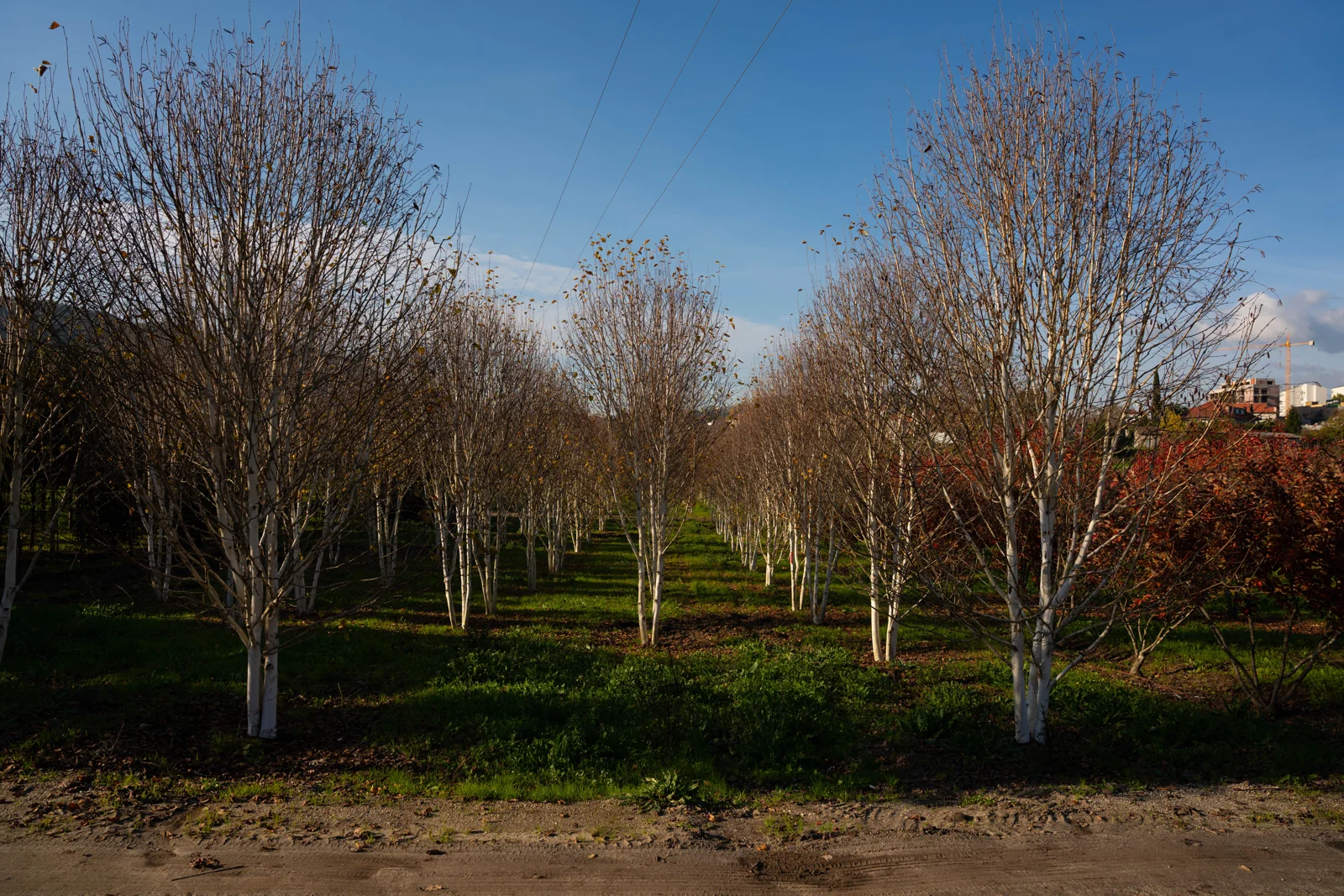
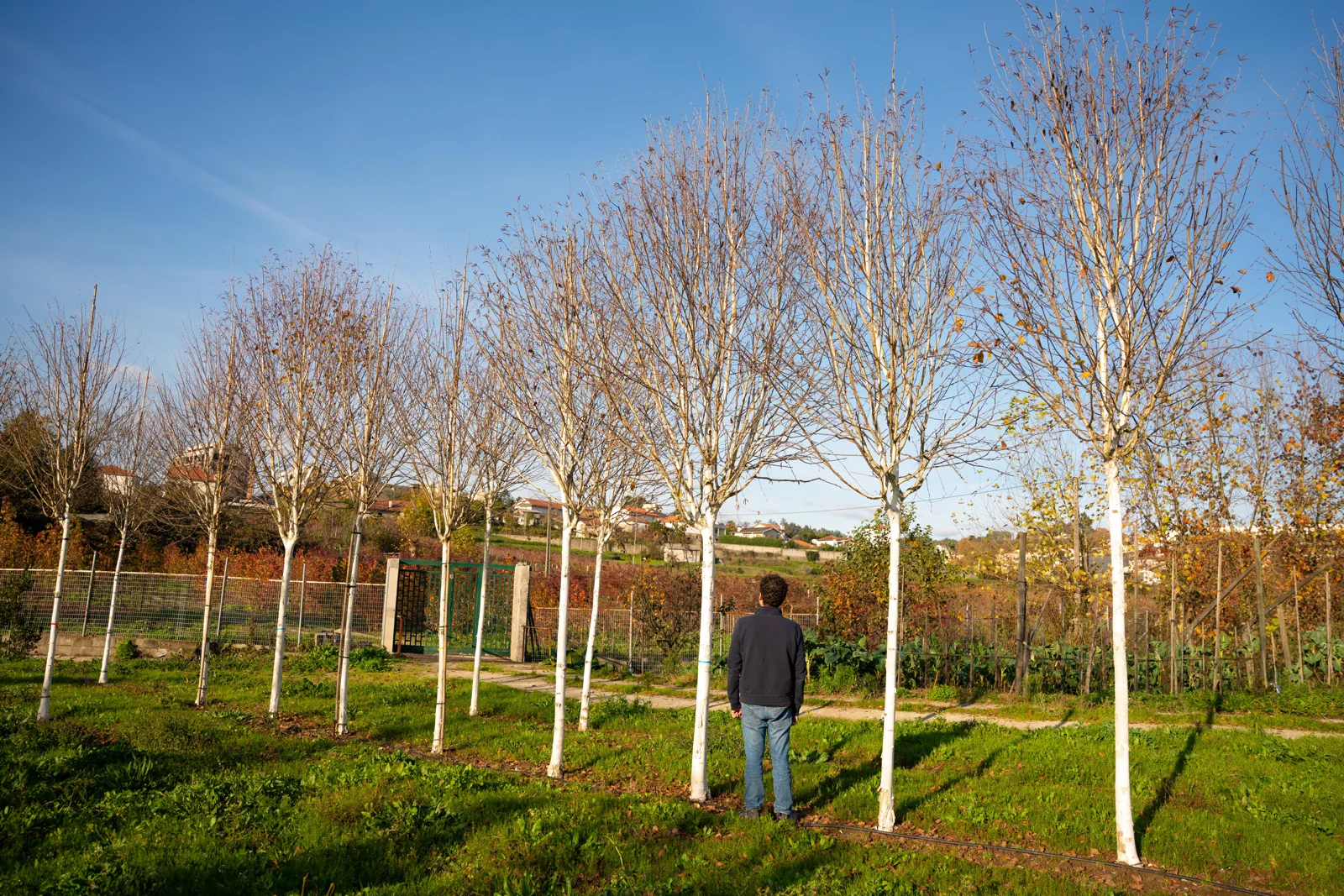
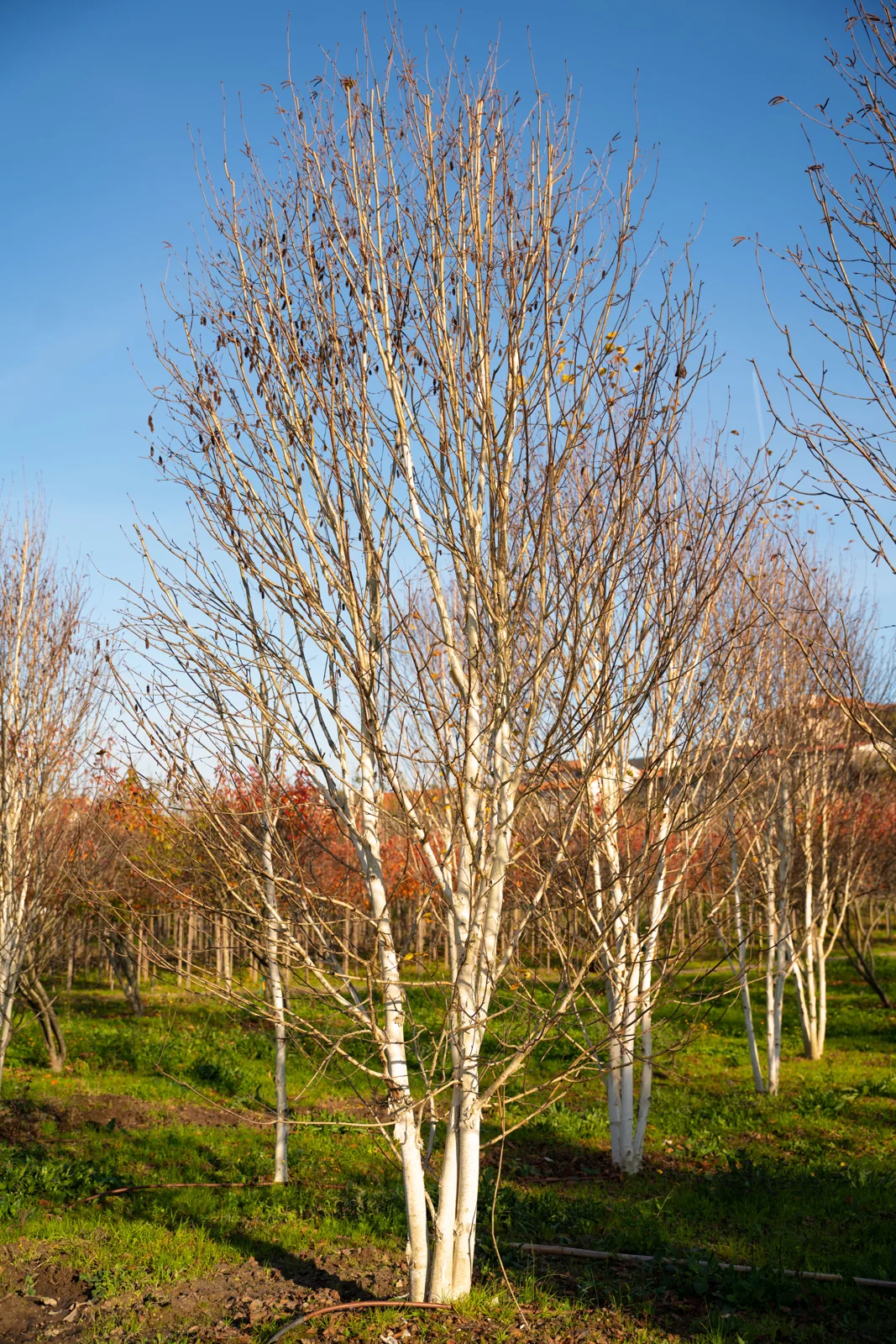
- Pure white peeling bark, at its best in winter against a dark backdrop
- Best suited to the green north of Spain, the Pyrenean foothills, and upland sierra estates
- Elsewhere, plant only in shaded courtyards with moisture-retentive soil and summer irrigation
Key Facts
About this Cultivar
Betula utilis 'Jacquemontii' is the white-bark selection of the Himalayan birch (abedul del Himalaya), distinguished from the straight species by chalk-white bark that peels in thin horizontal sheets and holds its colour through the winter months. Mature specimens reach 12 to 18 m in height with a spread of 6 to 10 m, forming an open pyramidal-to-oval…
Read more
Show less
Betula utilis 'Jacquemontii' is the white-bark selection of the Himalayan birch (abedul del Himalaya), distinguished from the straight species by chalk-white bark that peels in thin horizontal sheets and holds its colour through the winter months. Mature specimens reach 12 to 18 m in height with a spread of 6 to 10 m, forming an open pyramidal-to-oval crown of fine-textured foliage. Where Platanus or Tilia would carry a project on mass and shade, 'Jacquemontii' carries it on bark, transparency, and winter silhouette.
The species is native to the cool, humid montane forests of the Himalaya and western China, and its specification envelope in Spain follows that origin closely. It performs reliably across the Atlantic strip (cornisa cantábrica): Galicia, Asturias, Cantabria, the Basque Country, and the cooler western edge of Castilla y León, where summers stay moderate and soils retain moisture. Upland Pyrenean projects suit it for the same reasons. Hardiness reaches well below winter minimums encountered on the peninsula, with documented tolerance below -20 °C, so cold is not the limiting factor. Summer heat is.
Heat tolerance is low and drought tolerance is low, both inherited unchanged from the parent species. On hot inland sites in Castilla-La Mancha, Andalucía, Murcia, or the Levante, the tree is heat-stressed without sustained irrigation, and heat-stressed birches become vulnerable to bronze birch borer. The honest brief is to specify 'Jacquemontii' only where the project can guarantee cool root zones and consistent soil moisture through the summer, or where the local climate provides them. Once established, mature trees still require irrigation through any prolonged Iberian summer drought.
Soils may be acidic, sandy, or clay, provided drainage is reliable and moisture is consistent. Light catkin display in March and April is incidental; the specification reasons are bark, the golden autumn colour before leaf-drop, and the bare winter form. The species sits outside the known host range of Xylella fastidiosa, which simplifies coordination with the pliego de condiciones on sites within demarcation zones. For Spanish projects on the Atlantic strip or in cooler interior settings, it functions as the structural white-bark specimen no Mediterranean alternative provides.
Advice on this species
Want to know more about Betula utilis 'Jacquemontii'?
Tell us about your project and we'll advise you on this species — where it thrives, which size makes sense, and what to expect once planted.
- Produção própria
- Exemplares adultos
- Resposta em 1–2 dias
Sem compromisso · orçamento personalizado