

A four-season small tree for the cooler Spanish garden
Juneberry · Amelanchier lamarckii
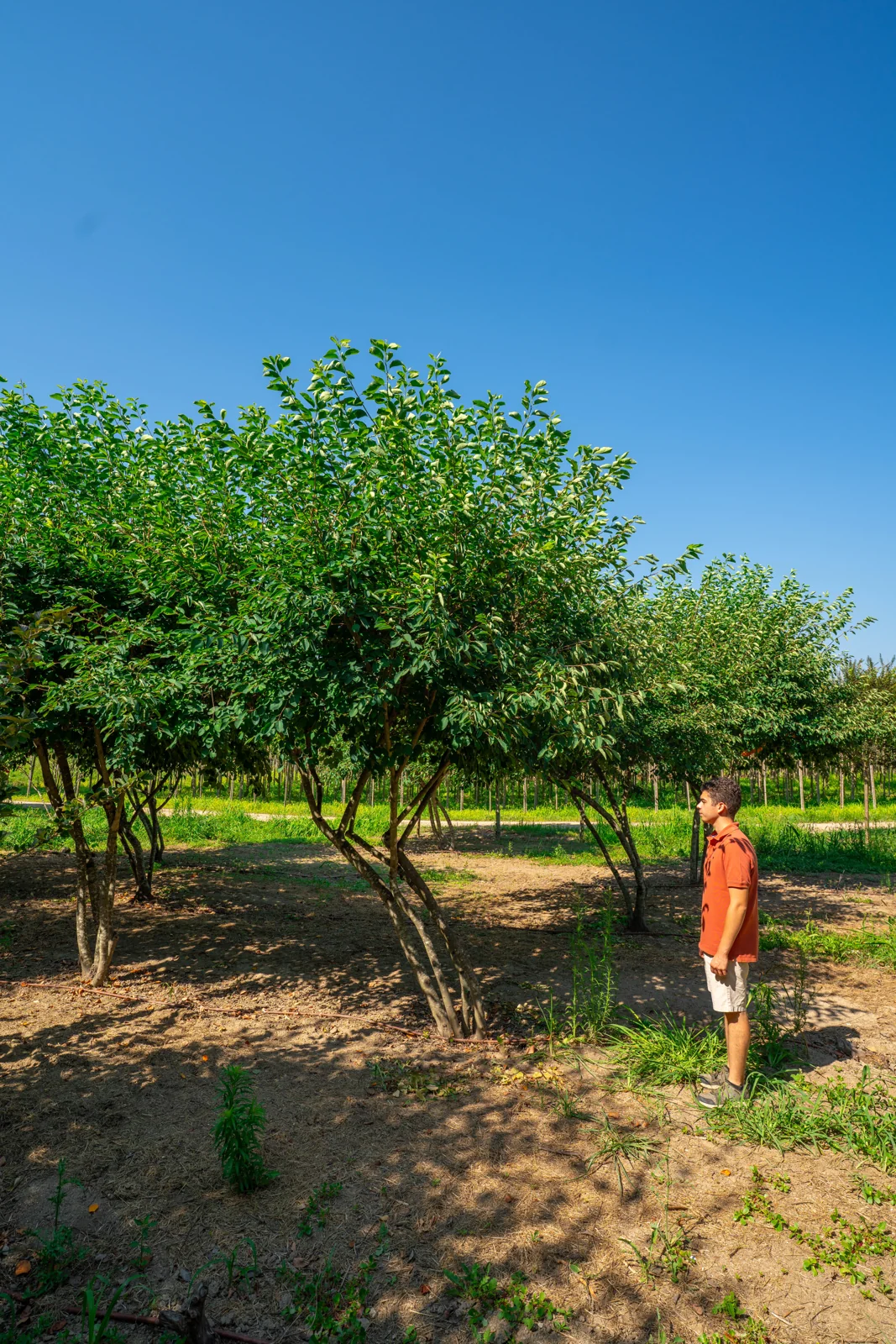
A small multi-stem feature tree for projects across the Atlantic northwest and the cooler interior, where a 6 to 10 m specimen suits residential patios, university campuses, and the edge of a plaza.
- Thrives in Galicia, Cantabria, Pyrenean foothills and the Sierra de Guadarrama
- Moderate summer water in the first three seasons; thereafter largely self-sufficient
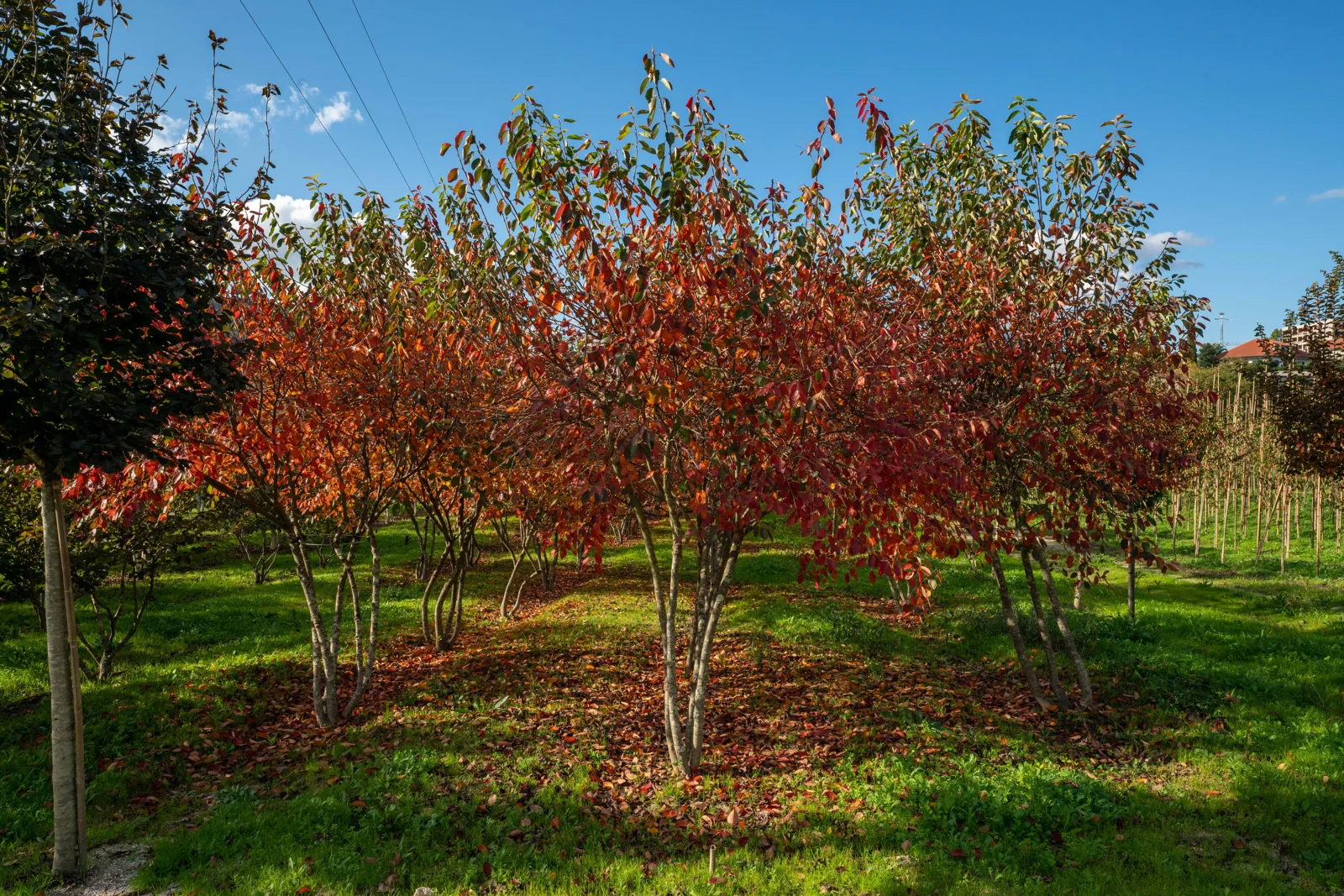
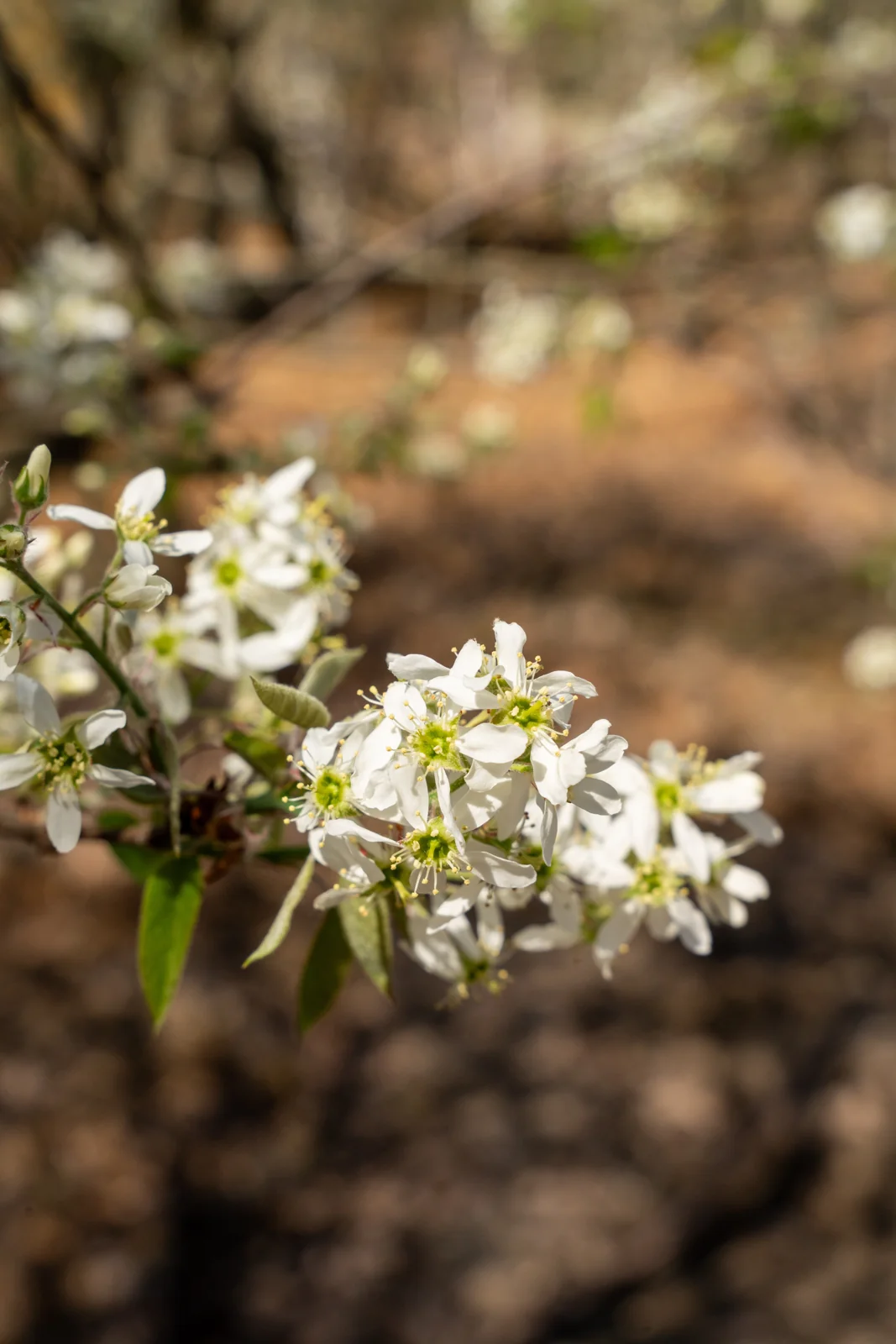
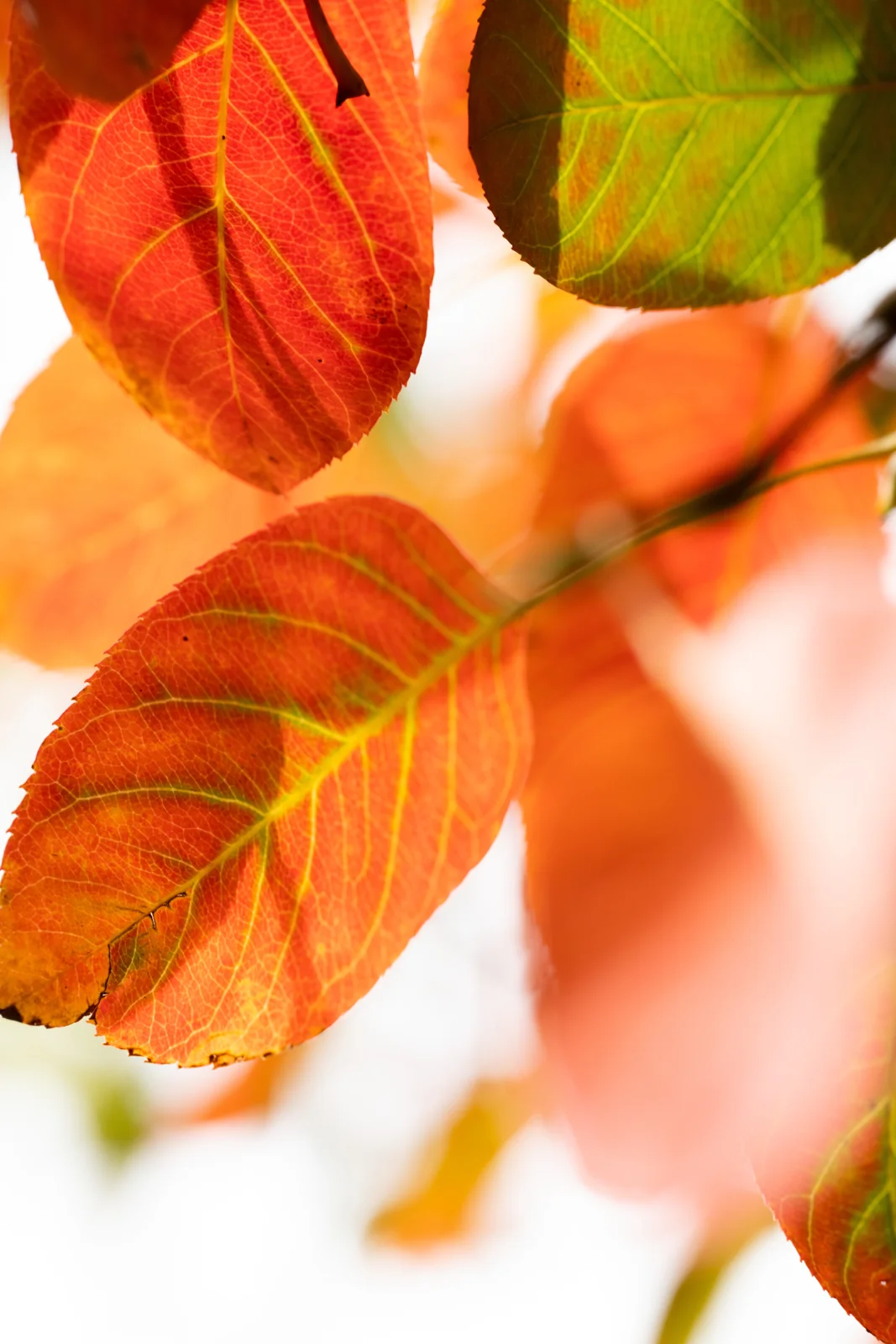
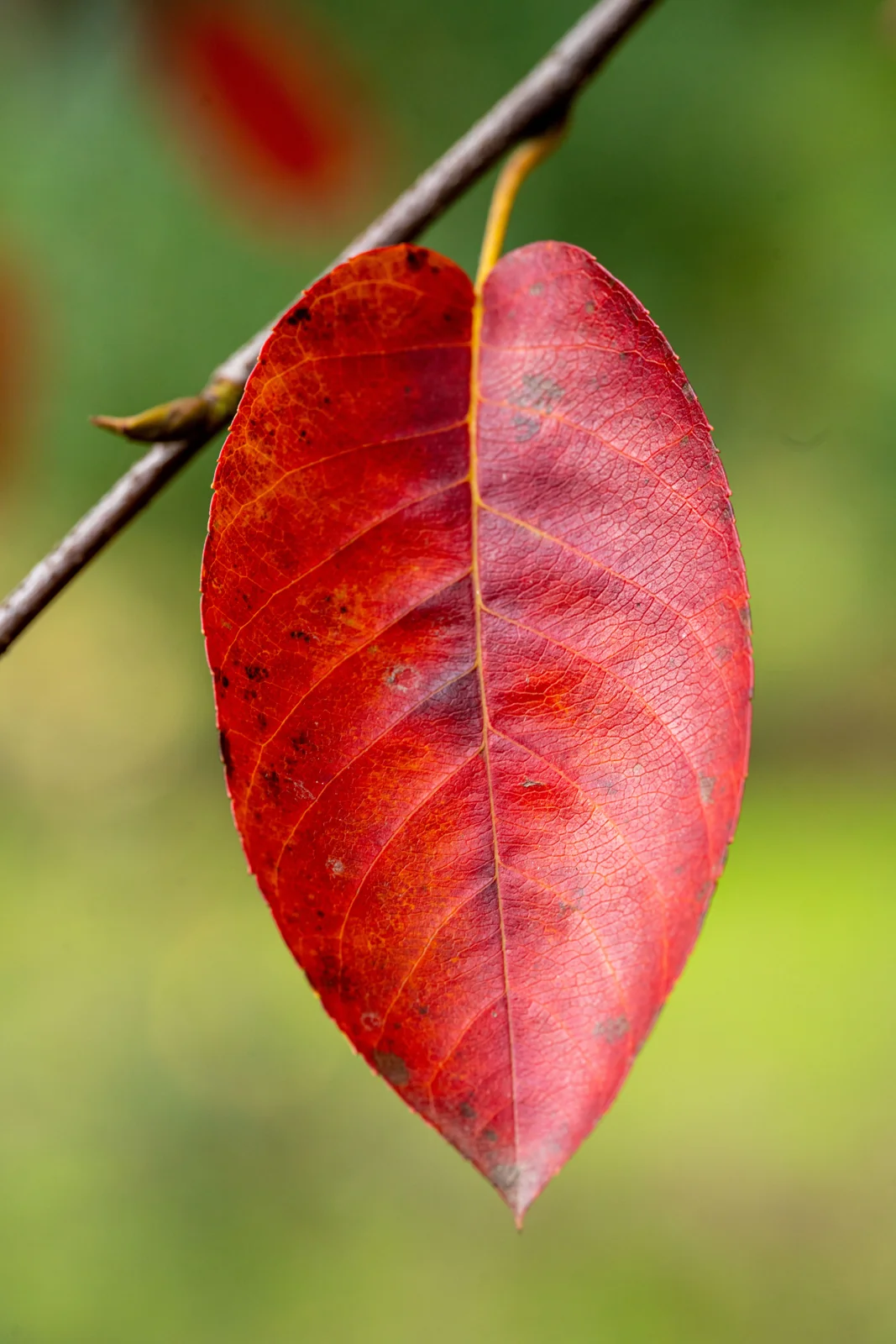
- Four seasons of interest: blossom, berries, clean summer green, orange-red autumn
About this Species
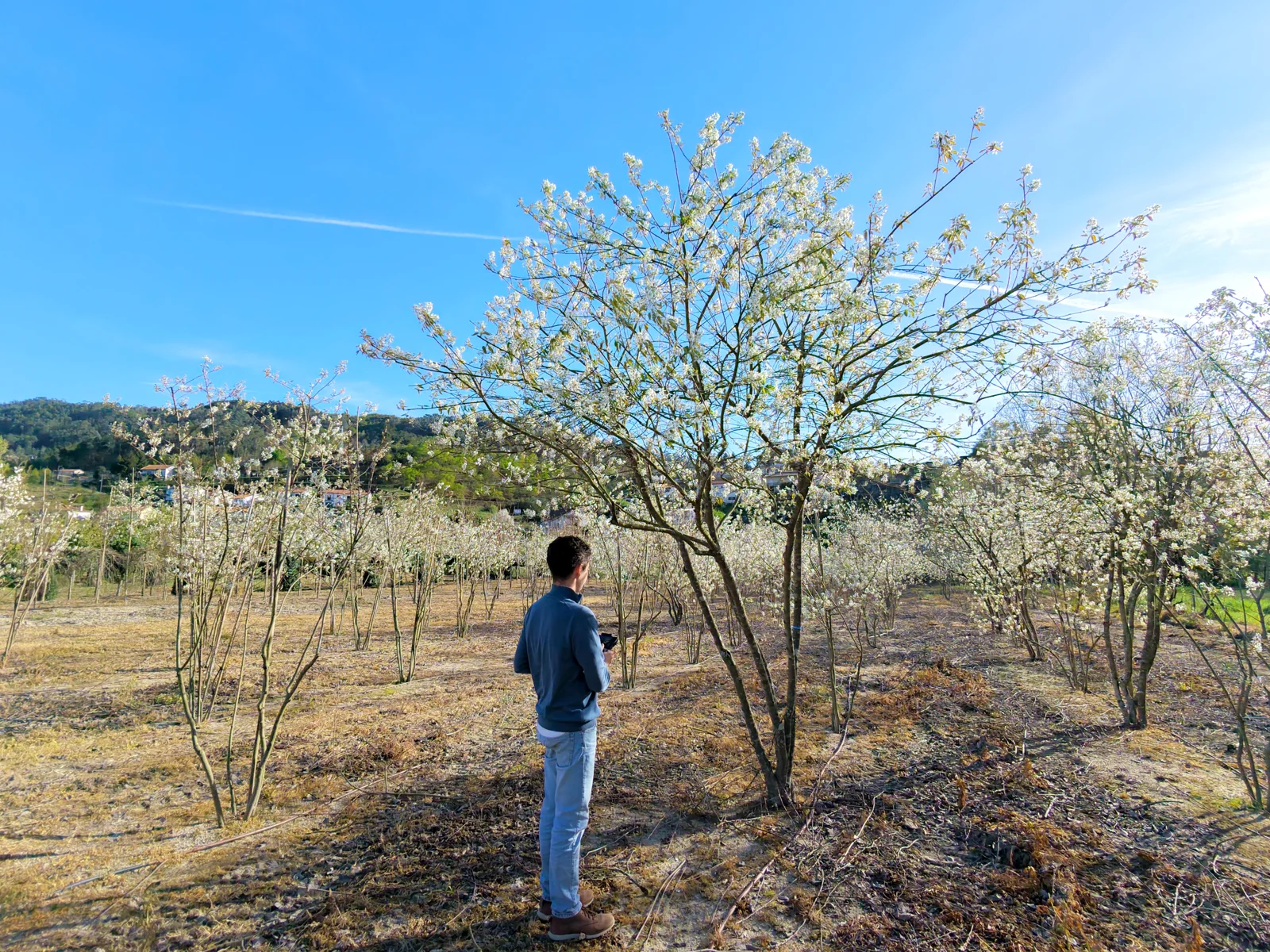
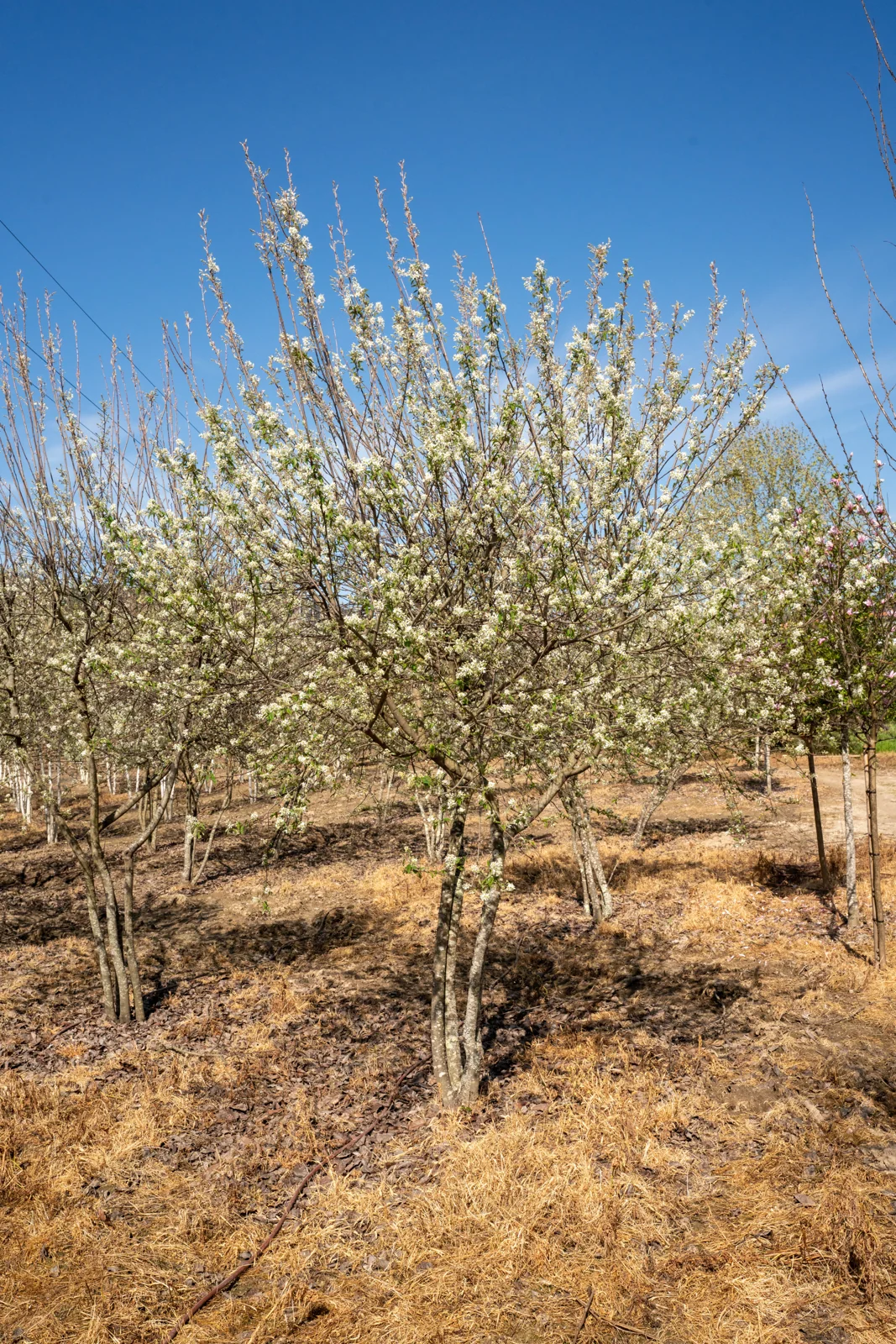
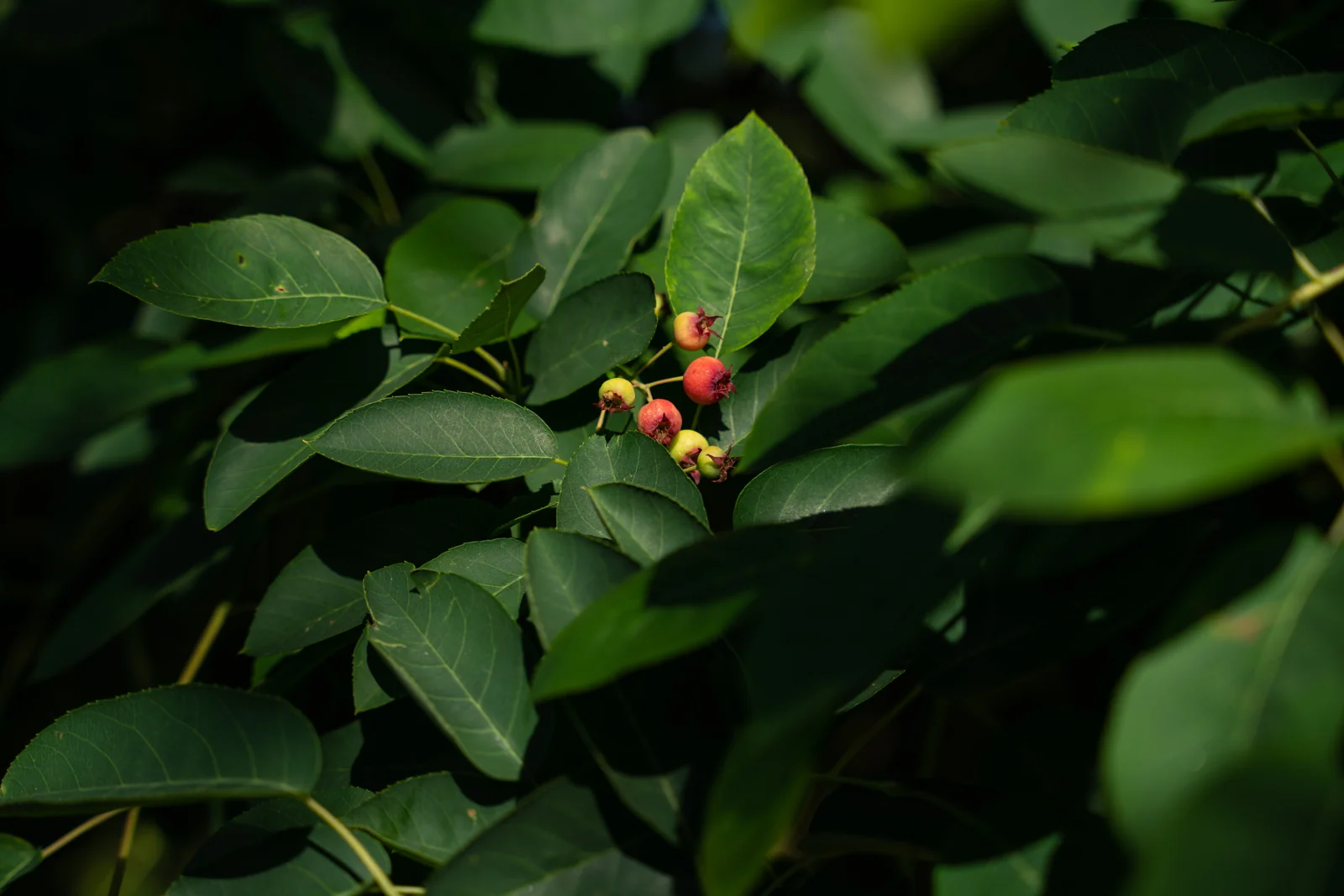
Amelanchier lamarckii, the snowy mespilus or guillomo de Lamarck, is a four-season ornamental specified where temperate conditions allow it to perform. The crown opens with white racemes in March and April against bronze-purple emerging foliage, mid-summer carries small purple-black fruits that birds clear before they fully ripen, and autumn turns the…
Read more
Show less
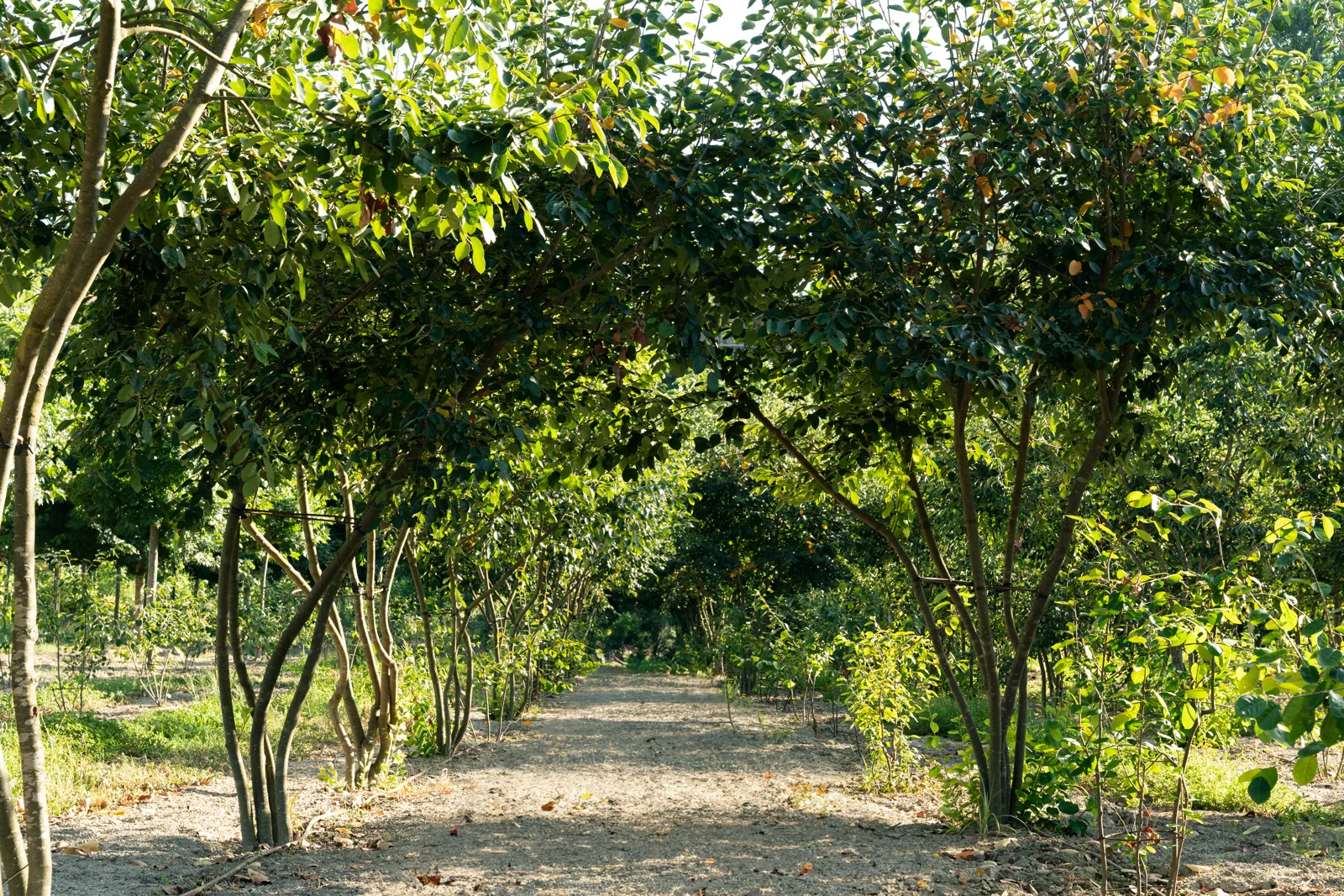
Amelanchier lamarckii, the snowy mespilus or guillomo de Lamarck, is a four-season ornamental specified where temperate conditions allow it to perform. The crown opens with white racemes in March and April against bronze-purple emerging foliage, mid-summer carries small purple-black fruits that birds clear before they fully ripen, and autumn turns the canopy red and orange. Form is naturally multi-stem and upright, typically specified at 250 to 400 cm in three to five stems.
The Spanish climatic envelope is northern and elevated. It sits comfortably across the cornisa cantábrica, Galicia, the Pyrenean foothills, the cooler half of the meseta, and the Sierra de Guadarrama, where cool summers and reliable winter chilling produce the strongest flowering and autumn colour. On the Mediterranean coast and the meseta sur it requires partial shade and supplementary irrigation; specifying it in full sun south of Madrid without water will end in scorch and early defoliation.
Soil preference is slightly acidic to neutral, well-drained loam. It tolerates moderately alkaline conditions better than Acer rubrum, which is the standard alternative for four-season colour, but is unreliable on the deep limestone soils common around Burgos and the eastern Ebro. Hardiness is not a constraint anywhere on the peninsula; the species takes well below the coldest recorded Spanish winters.
At mature height the tree reads as a feature rather than a canopy: scale suits residential infill, the planted patio of a refurbished building, university and corporate campus settings, and a plaza edge where a single specimen anchors a seating arrangement. Disease profile is clean for the genus: fire blight (Erwinia amylovora) is a theoretical risk shared by Rosaceae but is not a recurring problem on Amelanchier in cultivation, and the species sits outside the host range of Xylella fastidiosa. Maintenance is light once established, limited to formative pruning that maintains the multi-stem habit.



Advice on this species
Want to know more about Amelanchier lamarckii?
Tell us about your project and we'll advise you on this species — where it thrives, which size makes sense, and what to expect once planted.
- Produção própria
- Exemplares adultos
- Resposta em 1–2 dias
Sem compromisso · orçamento personalizado