

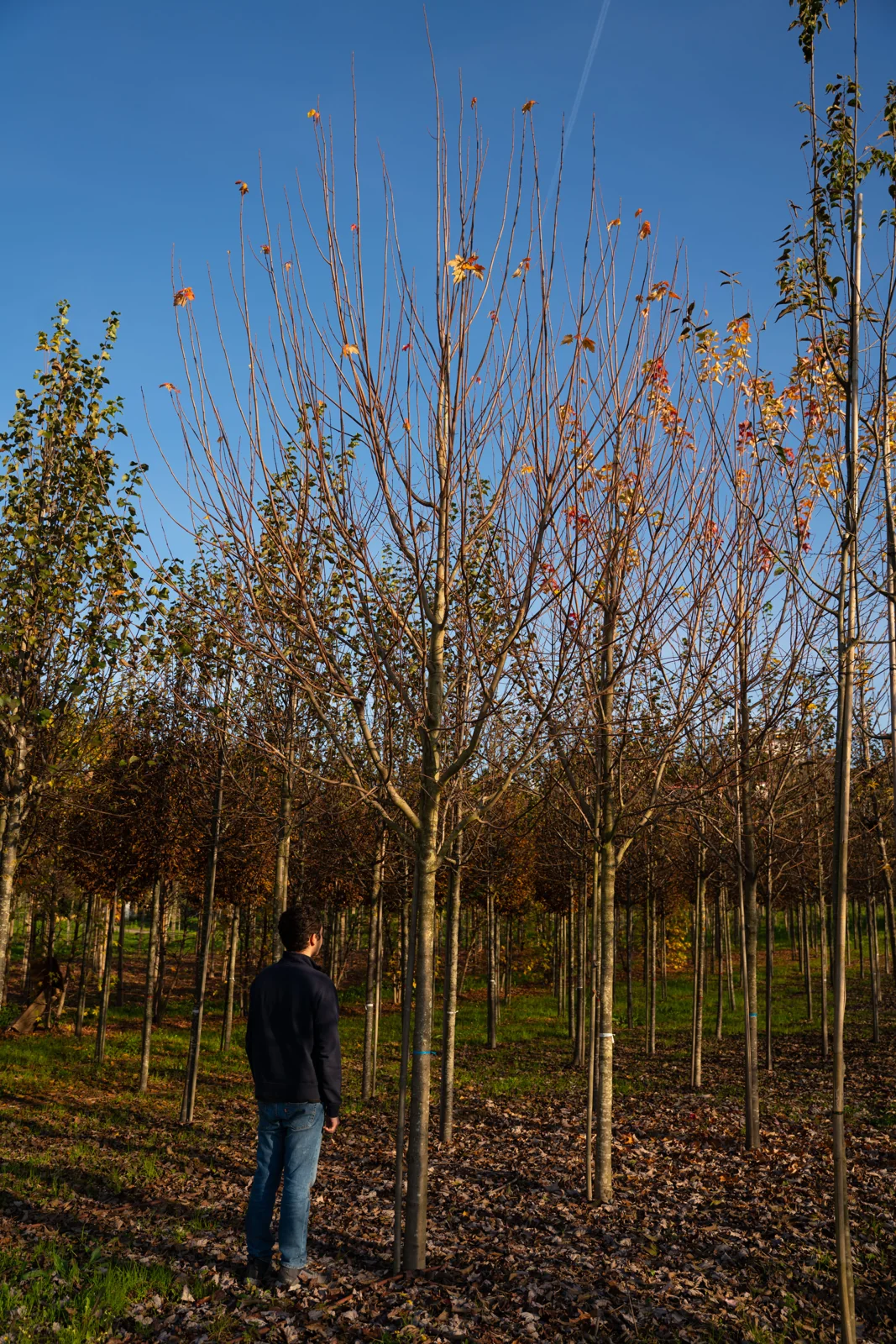
Scarlet autumn for Spain’s acid-soil regions only
Red Maple · Acer rubrum
The North American red maple, specified for its benchmark scarlet autumn colour and early red flowers, gives its best on acidic ground, so in Spain soil chemistry and site selection guide where it succeeds.
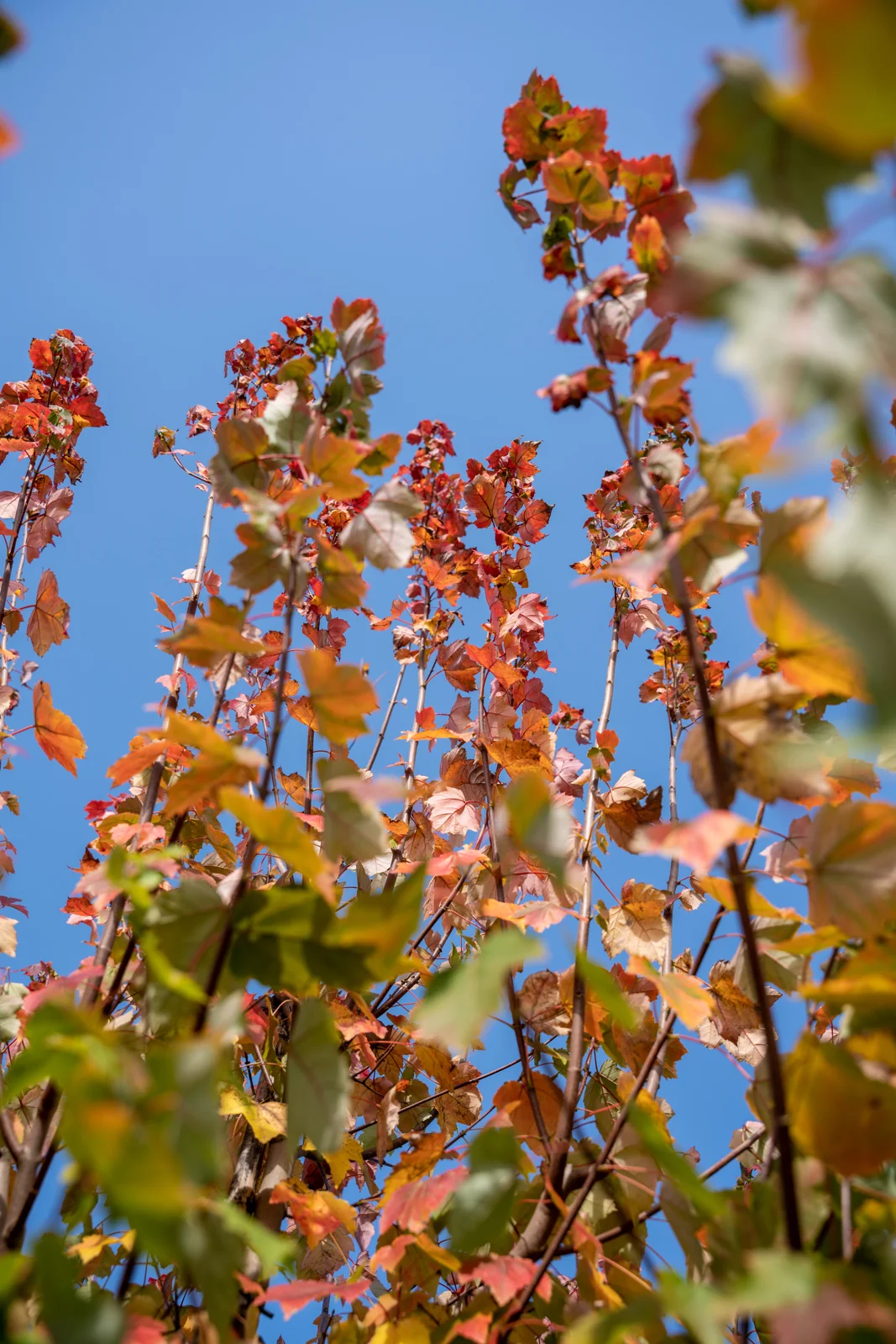
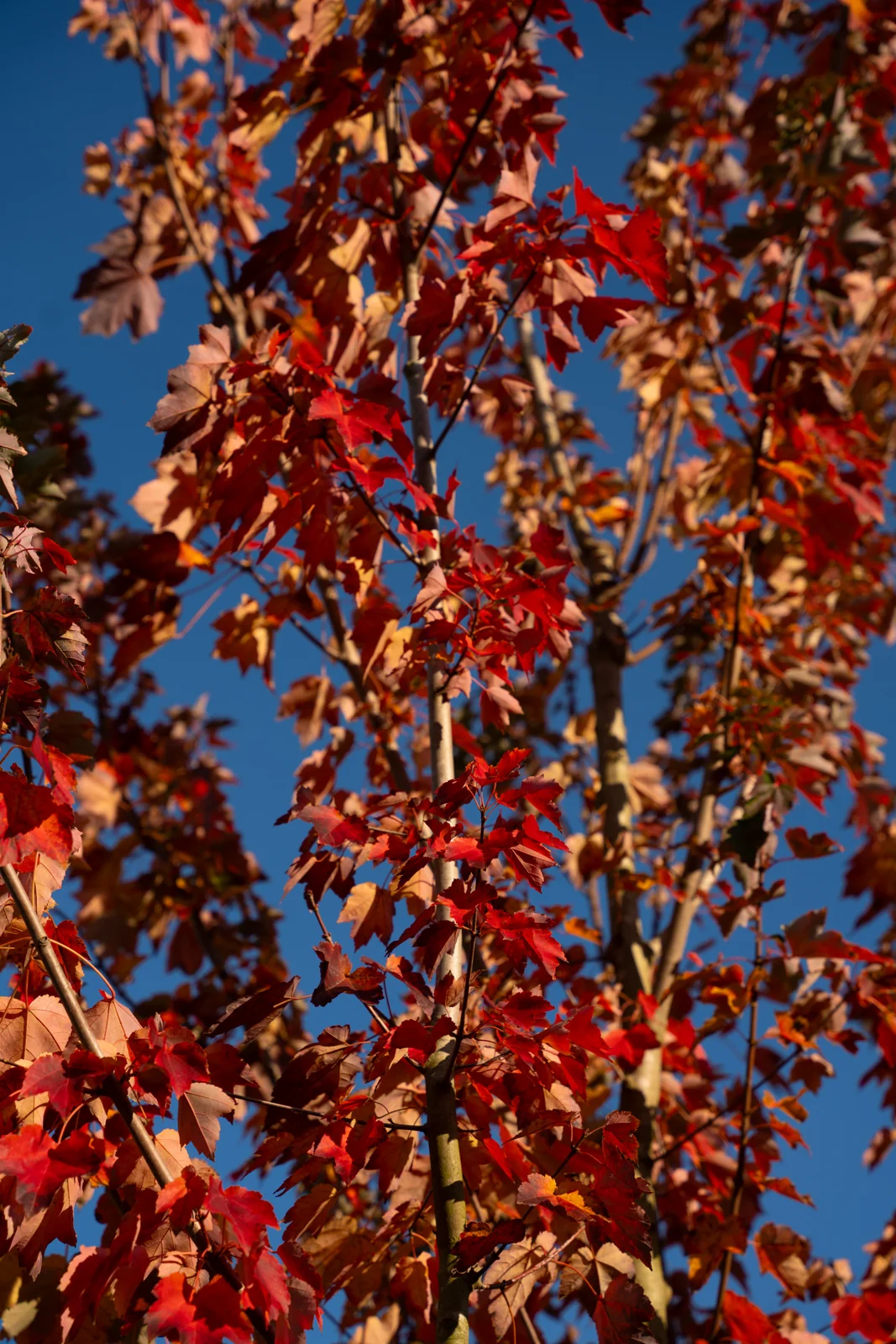
- Brilliant scarlet autumn colour, two to three weeks at peak
- Gives its best colour on acidic, silicate soils
- Suits Galicia, Asturias, and the silicate sierras of central Spain
About this Species
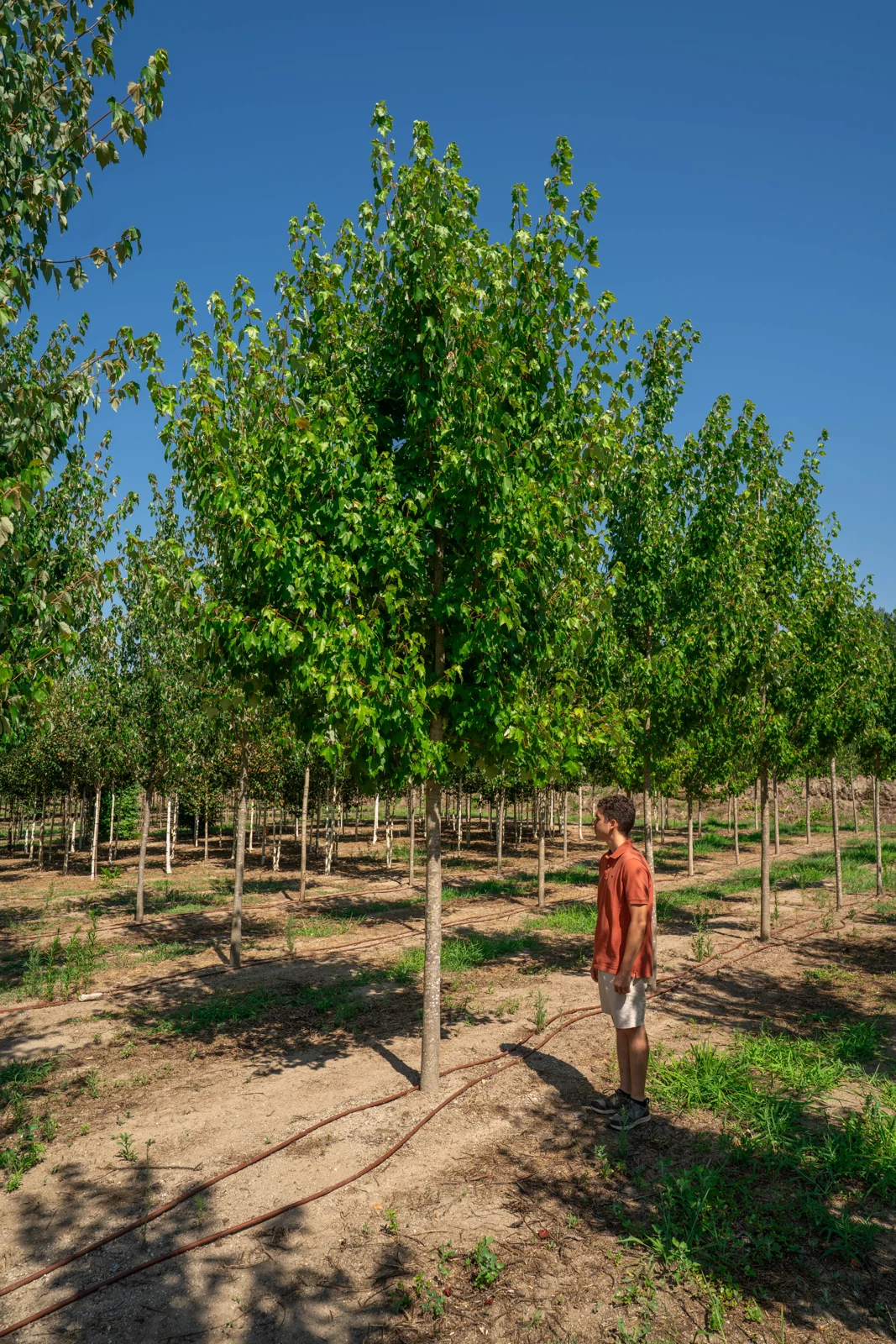
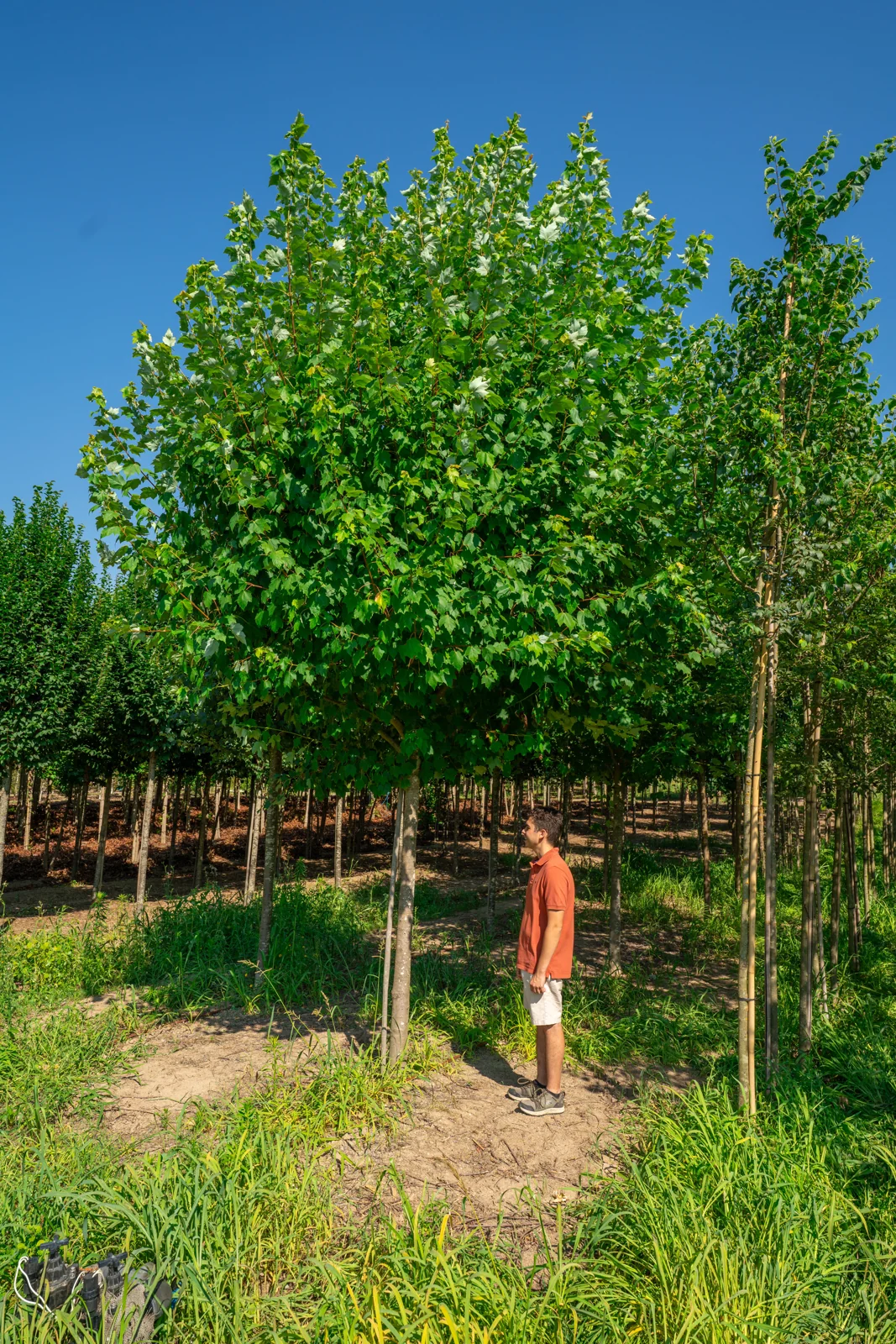
Reaching 18 to 25 m at maturity with a rounded to upright crown and 9 to 15 m spread, arce rojo americano is among the fastest-growing maples available to specifiers, putting on reliable annual extension once established. The autumn display is the species' defining trait: foliage turns vivid scarlet, sometimes orange, in a more saturated register than Acer…
Read more
Show less
Reaching 18 to 25 m at maturity with a rounded to upright crown and 9 to 15 m spread, arce rojo americano is among the fastest-growing maples available to specifiers, putting on reliable annual extension once established. The autumn display is the species' defining trait: foliage turns vivid scarlet, sometimes orange, in a more saturated register than Acer platanoides or Acer pseudoplatanus achieve in Iberian conditions. Small clusters of red flowers open on bare wood in March and April, before leaf-out, giving a short but legible early-season interest.
The specification constraint that decides everything is soil chemistry. Acer rubrum is calcifuge, and on the calcareous and alkaline substrates that cover most of the peninsula, the meseta, the valle del Ebro, the Levante, the sureste, and much of Andalucía, foliage develops severe manganese and iron chlorosis that no irrigation regime corrects. The species specifies cleanly only on acidic ground: Galicia and the cornisa cantábrica, the granitic central sierras (parts of Gredos, Guadarrama, Sierra de Gata), and the Sierra Morena silícea.
Where the project sits outside these acidic zones, container culture in an acidic substrate is the practical workaround; the species does not adapt to high-pH open ground at landscape scale. On suitable sites it tolerates seasonally wet conditions to an unusual degree, performing where many ornamental species fail, which makes it a strong candidate for low-lying parkland, retention-basin margins, and ground subject to winter waterlogging.
Hardy to roughly minus 35 °C at the cold end of its range, the species carries no climatic concern across Spanish winters; the meseta's late spring frosts are well within its tolerance. Roots run shallow and dense, with surface-mat behaviour that excludes underplanting and warrants a 4 to 5 m setback from paving and services. Specify into parks, campus grounds, and large private gardens on acidic ground; in calcareous Spain, reach instead for Acer campestre, Celtis australis, or Fraxinus angustifolia.



Advice on this species
Want to know more about Acer rubrum?
Tell us about your project and we'll advise you on this species — where it thrives, which size makes sense, and what to expect once planted.
- Produção própria
- Exemplares adultos
- Resposta em 1–2 dias
Sem compromisso · orçamento personalizado