

A small Japanese maple that holds fire red through summer
Japanese Maple ‘Fireglow’ · Acer palmatum ‘Fireglow’
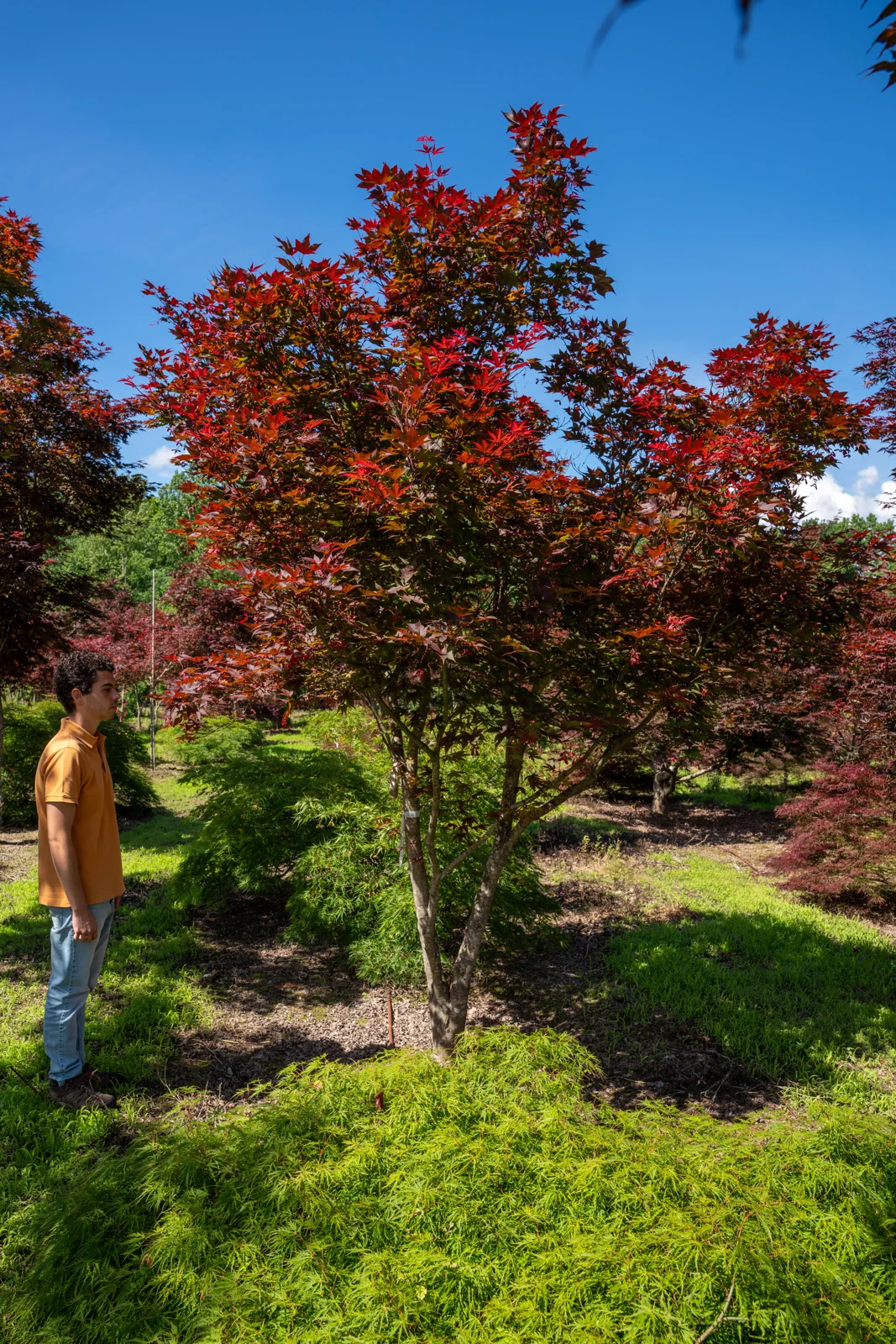
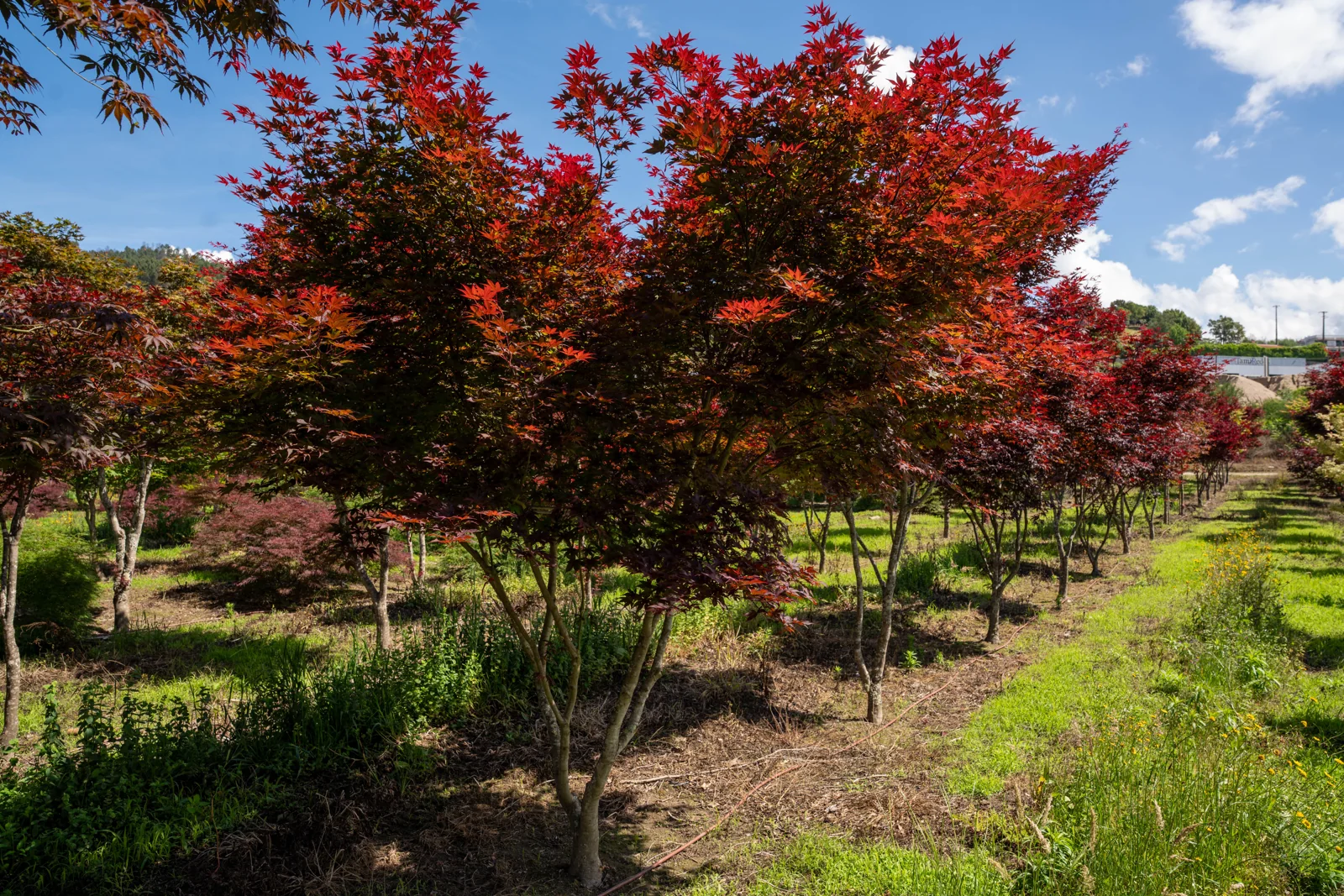
An Acer palmatum cultivar selected for fire red colour held from spring flush through autumn, without the summer bronzing that affects 'Bloodgood' under prolonged dry heat. Specified as a focal specimen for private gardens, urban courtyards, and partial shade compositions on Spanish projects.
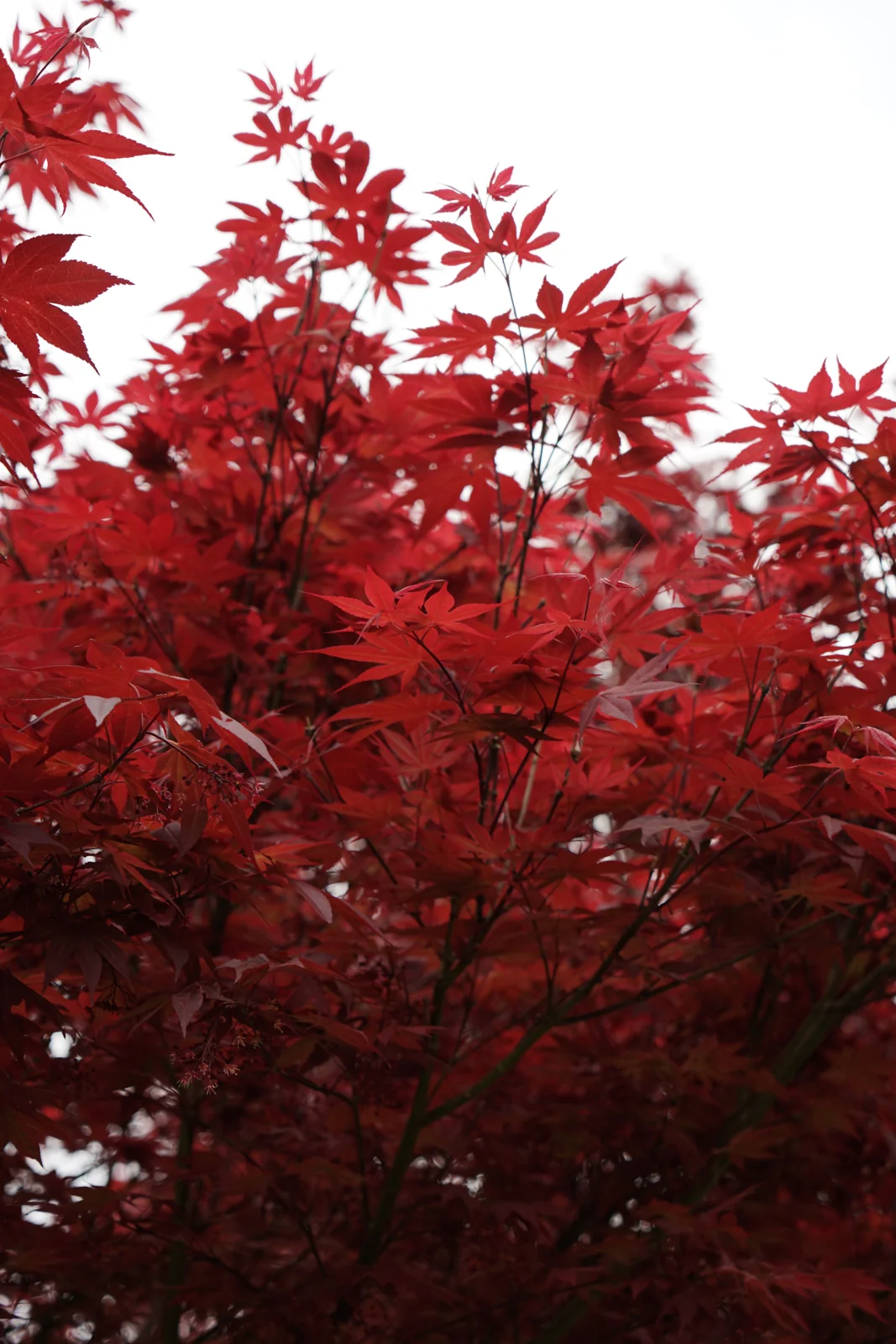
- Fire red foliage from spring through summer into orange and scarlet autumn
- Reaches around 3 to 4 m in height and spread, suited to a contained garden
- Partial shade essential across most of Spain; afternoon shade non negotiable on the Mediterranean coast
Key Facts
About this Cultivar
Within the purple Acer palmatum group already widely held in the Spanish trade (Atropurpureum, Bloodgood, Sherwood Flame), 'Fireglow' separates itself by the brightness and the stability of its red. The hue reads as live flame or coal rather than deep burgundy, and it sustains through summer without the dulling bronze that affects Bloodgood under hot dry…
Read more
Show less
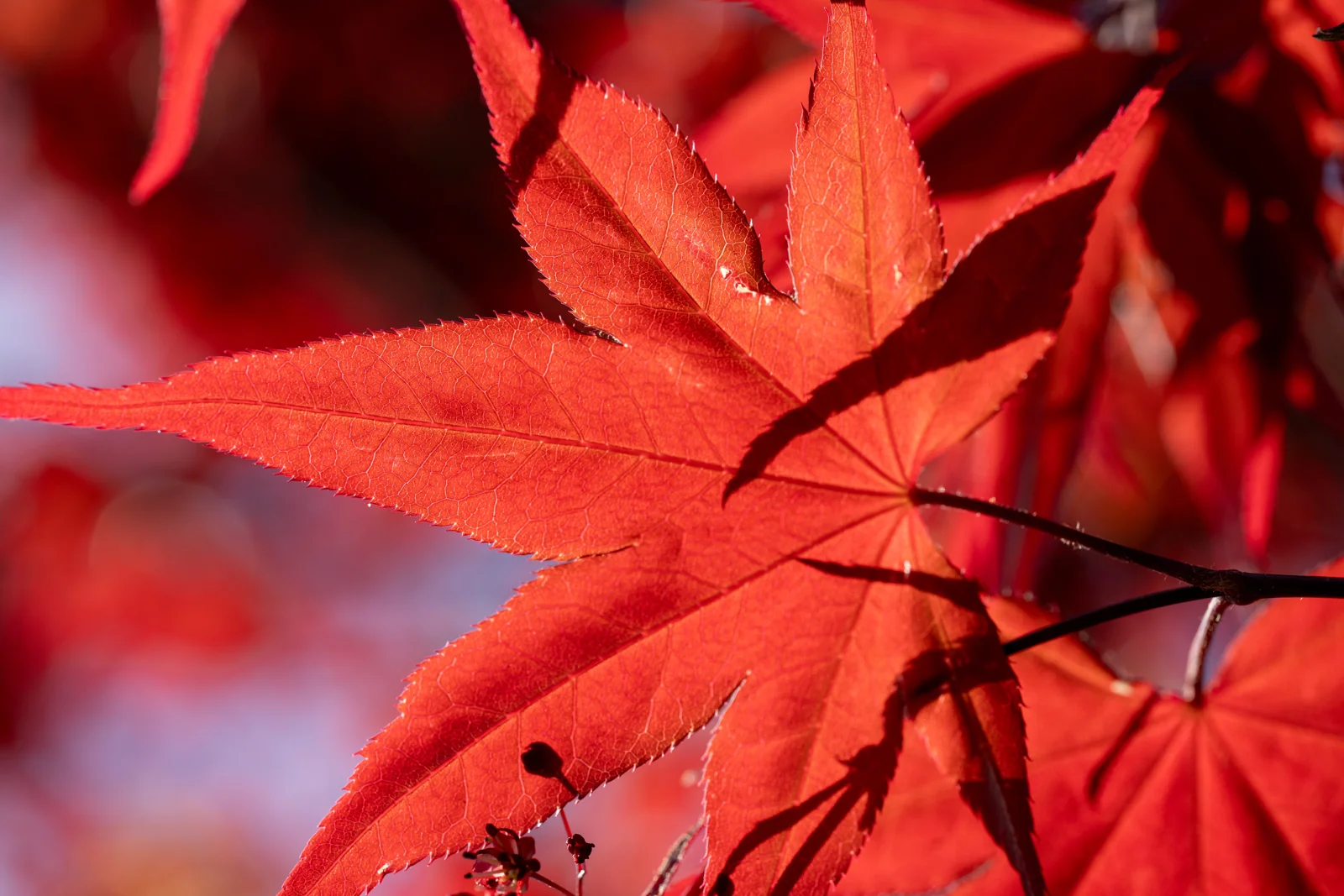
Within the purple Acer palmatum group already widely held in the Spanish trade (Atropurpureum, Bloodgood, Sherwood Flame), 'Fireglow' separates itself by the brightness and the stability of its red. The hue reads as live flame or coal rather than deep burgundy, and it sustains through summer without the dulling bronze that affects Bloodgood under hot dry conditions. The leaf is regular palmate, five to seven lobed, on an upright rounded habit; this is not the laceleaf cultivar group and not a weeping form.
Mature dimensions sit at 3 to 4 m in height and spread, placing the cultivar in the focal specimen role rather than the alignment or structural canopy role. Growth rate is slightly above the average for purple cultivars at around 20 to 25 cm per year in favourable conditions, advancing the timeline to project calibre. The crown architecture remains clean and erect, suitable for the central setting of a Catalan masia courtyard, a Mediterranean coastal villa garden, or a contained urban patio in Madrid or Barcelona.
Climate performance across Spain is conditional on light and substrate. The cultivar requires partial shade, the cooled side of a taller canopy or a wall orientation that filters mid-afternoon sun, across most of the peninsula. Conditions on the cornisa cantabrica (the Atlantic northwest) and the higher reaches of the Sierra de Guadarrama and the Pyrenean foothills come closest to the cultivar's optimum, with diffuse light and atmospheric humidity. On the Mediterranean coastal strip, the Costa del Sol, the Costa Blanca, and the Balearics, supplementary shade from a higher canopy is essential to preserve leaf integrity and colour. Full exposure in the meseta interior or the semi-arid southeast produces marginal scorch and a dulling of the red.
Soil tolerance is the principal limit. The cultivar requires an acidic to mildly acidic, free draining, organic substrate; the alkaline calcareous soils that dominate large parts of Spain trigger iron chlorosis and stunted development, which restricts unmodified ground specification (specification document, pliego de condiciones) and pushes the cultivar into corrected pits or large planters in those contexts. The cold range reaches approximately minus 15 degrees C on mature wood, covering the meseta norte and the Pyrenean piedmont without significant risk. Disease resistance is moderate, with watchfulness required against Verticillium on poorly drained sites and against scale insects under sustained drought stress; the cultivar sits outside the host range of the regulated Xylella fastidiosa genera, which simplifies coordination with the regional government (comunidad autonoma) phytosanitary regime. Autumn colouring carries the summer red into orange and scarlet, holding into late November in Atlantic and pre-Pyrenean sites and providing a defensible seasonal interest claim in projects where autumn colour is a programme criterion.
Advice on this species
Want to know more about Acer palmatum 'Fireglow'?
Tell us about your project and we'll advise you on this species — where it thrives, which size makes sense, and what to expect once planted.
- Produção própria
- Exemplares adultos
- Resposta em 1–2 dias
Sem compromisso · orçamento personalizado