

A slow, weeping laceleaf maple for a sheltered patio
Japanese Maple ‘Dissectum’ · Acer palmatum ‘Dissectum’
A laceleaf cultivar of Acer palmatum specified as a slow, low focal specimen for sheltered courtyard schemes and patios interiores across Spain, where afternoon shade and an acid-to-neutral root run can be engineered.
- Slow growth to two or three metres, ideal for compact gardens
- Finely dissected foliage with strong yellow to scarlet autumn colour
- Best in a sheltered, north-facing patio or shaded inner courtyard
Key Facts
About this Cultivar
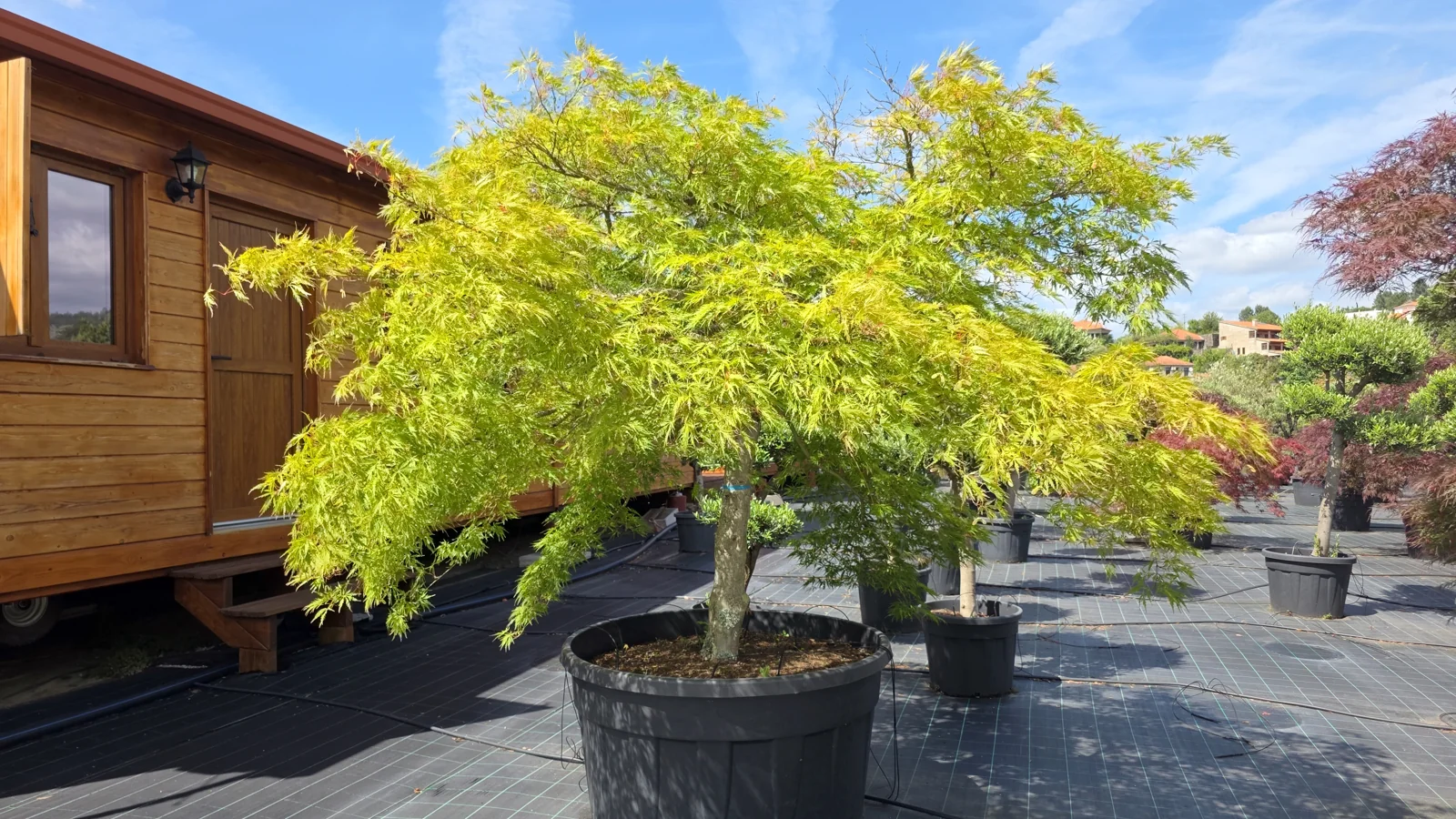
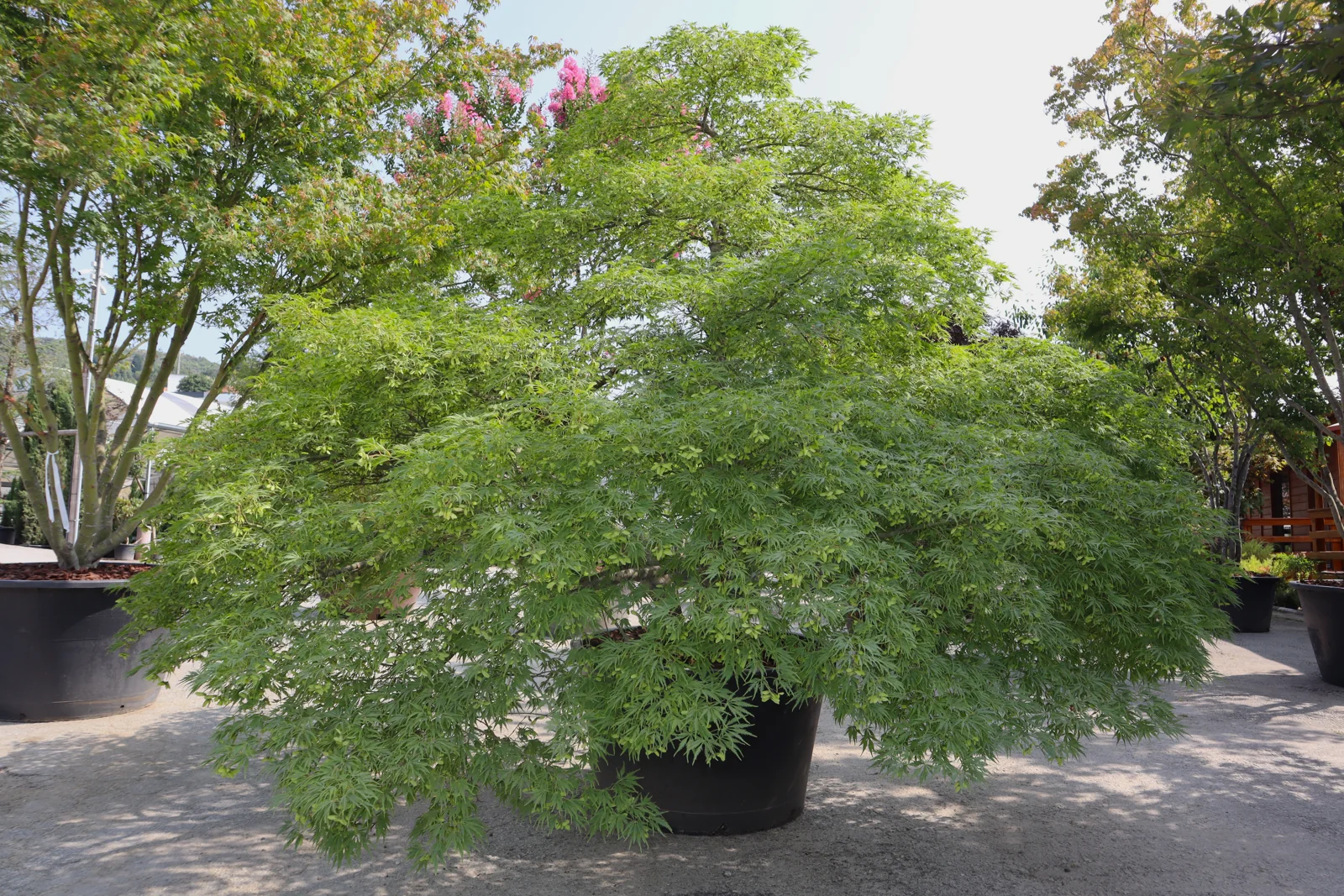
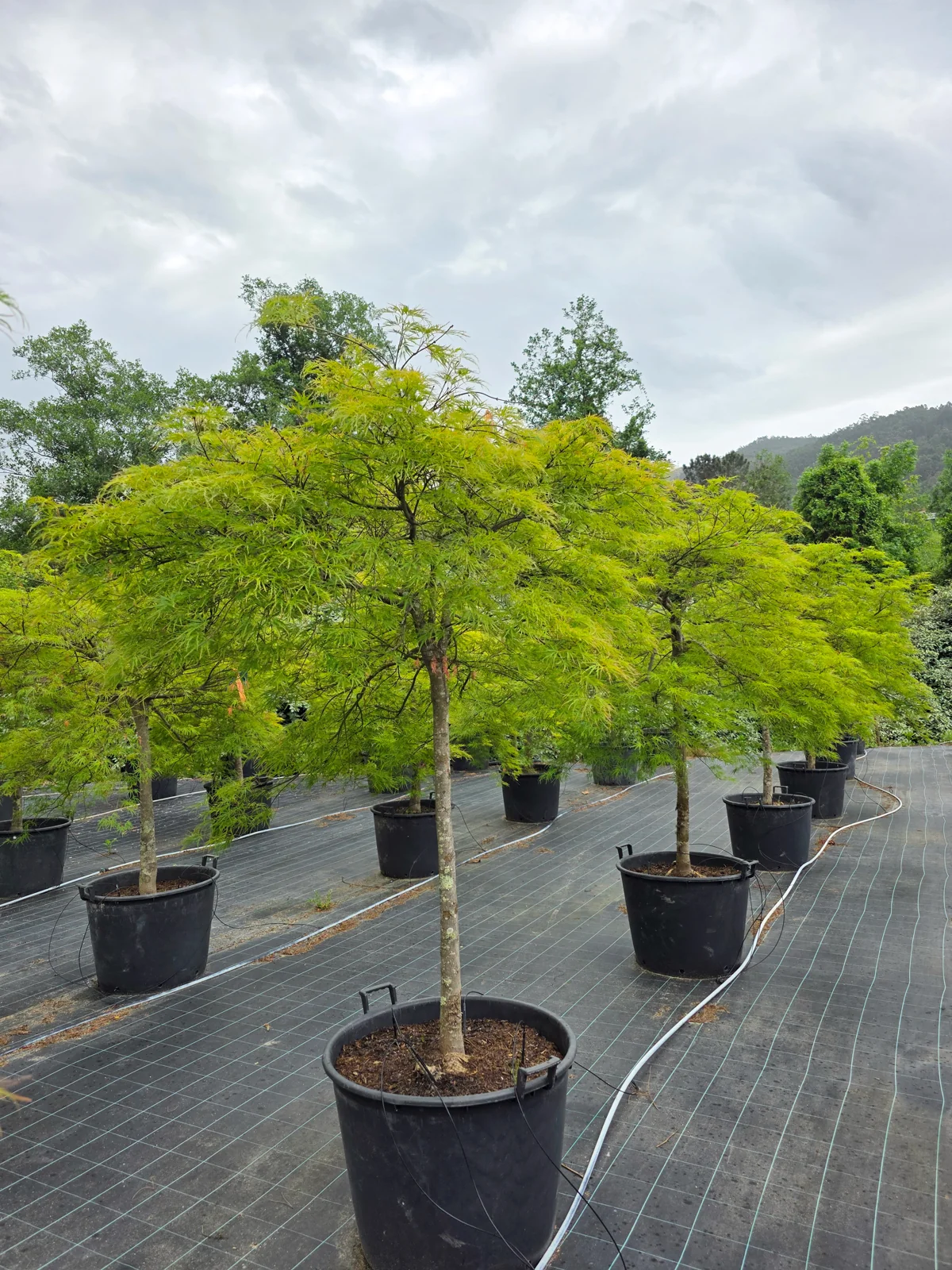
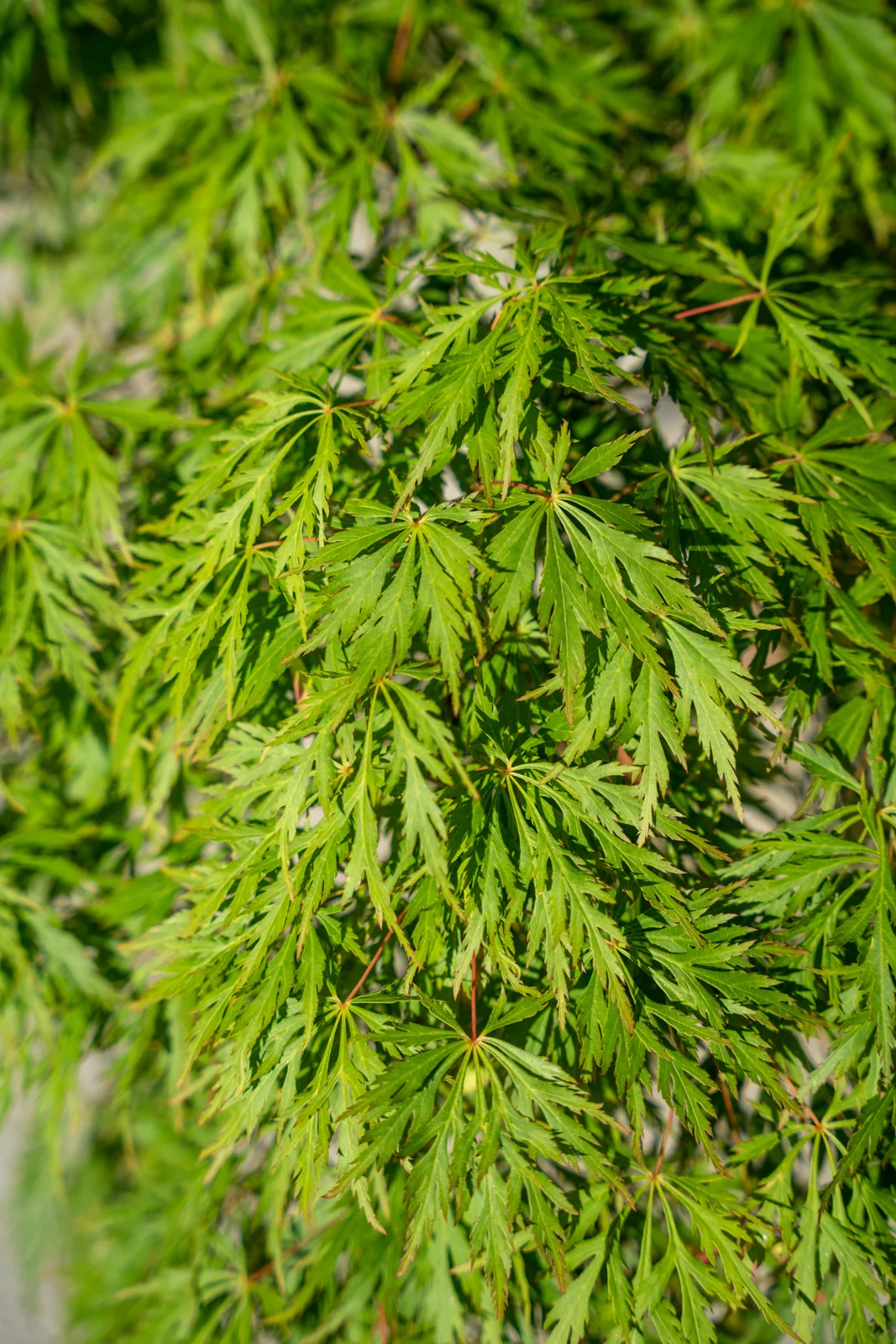
'Dissectum' is the dissected-leaf form of the Japanese maple (arce japonés), reaching only 2 to 3 metres in height and a similar spread at maturity. Its habit is mounded and pendulous, with finely cut foliage that flushes green in spring, deepens through summer, and turns through yellow, orange and scarlet before leaf fall. The slow rate of extension,…
Read more
Show less
'Dissectum' is the dissected-leaf form of the Japanese maple (arce japonés), reaching only 2 to 3 metres in height and a similar spread at maturity. Its habit is mounded and pendulous, with finely cut foliage that flushes green in spring, deepens through summer, and turns through yellow, orange and scarlet before leaf fall. The slow rate of extension, typically a few centimetres of new wood per year on established specimens, allows the framework to be read clearly even in a small footprint.
The cultivar's climatic envelope inside Spain is narrow. It performs reliably across the cornisa cantábrica (Galicia, Asturias, Cantabria, Basque Country), where cool summers, regular rainfall and acidic soils match its requirements. In Mediterranean coastal, meseta and southeastern projects, the laceleaf foliage scorches readily under direct afternoon sun and dry wind once temperatures exceed roughly 32 °C, so siting is restricted to patios interiores, carmen-style enclosures or north-facing courtyards where shade and humidity are buffered.
Soil chemistry is the second specification constraint. The cultivar requires an acid-to-neutral, free-draining substrate rich in organic matter; the calcareous and gypsiferous soils common across much of central and southern Spain induce chlorosis and decline. On such sites, install in a raised bed, a generous container, or an excavated pit backfilled with an amended acidic mix, and irrigate with low-carbonate water. Water demand is moderate and steady rather than tolerant of cut-off: the shallow fibrous root system does not buffer prolonged summer drought.
In specification terms, 'Dissectum' functions as a focal piece rather than structure, anchoring a water feature, a stone composition, or the corner of a paved patio. It pairs naturally with mosses, ferns and low evergreens, and reads at a scale closer to a sculptural shrub than a tree. Maintenance is light: a structural thin in late winter to lift the canopy and expose the branch architecture is usually the only intervention required, alongside mulch renewal to keep the root run cool.
Advice on this species
Want to know more about Acer palmatum 'Dissectum'?
Tell us about your project and we'll advise you on this species — where it thrives, which size makes sense, and what to expect once planted.
- Produção própria
- Exemplares adultos
- Resposta em 1–2 dias
Sem compromisso · orçamento personalizado