

A burgundy laceleaf maple for a sheltered Spanish patio
Japanese Maple ‘Dissectum Garnet’ · Acer palmatum ‘Dissectum Garnet’
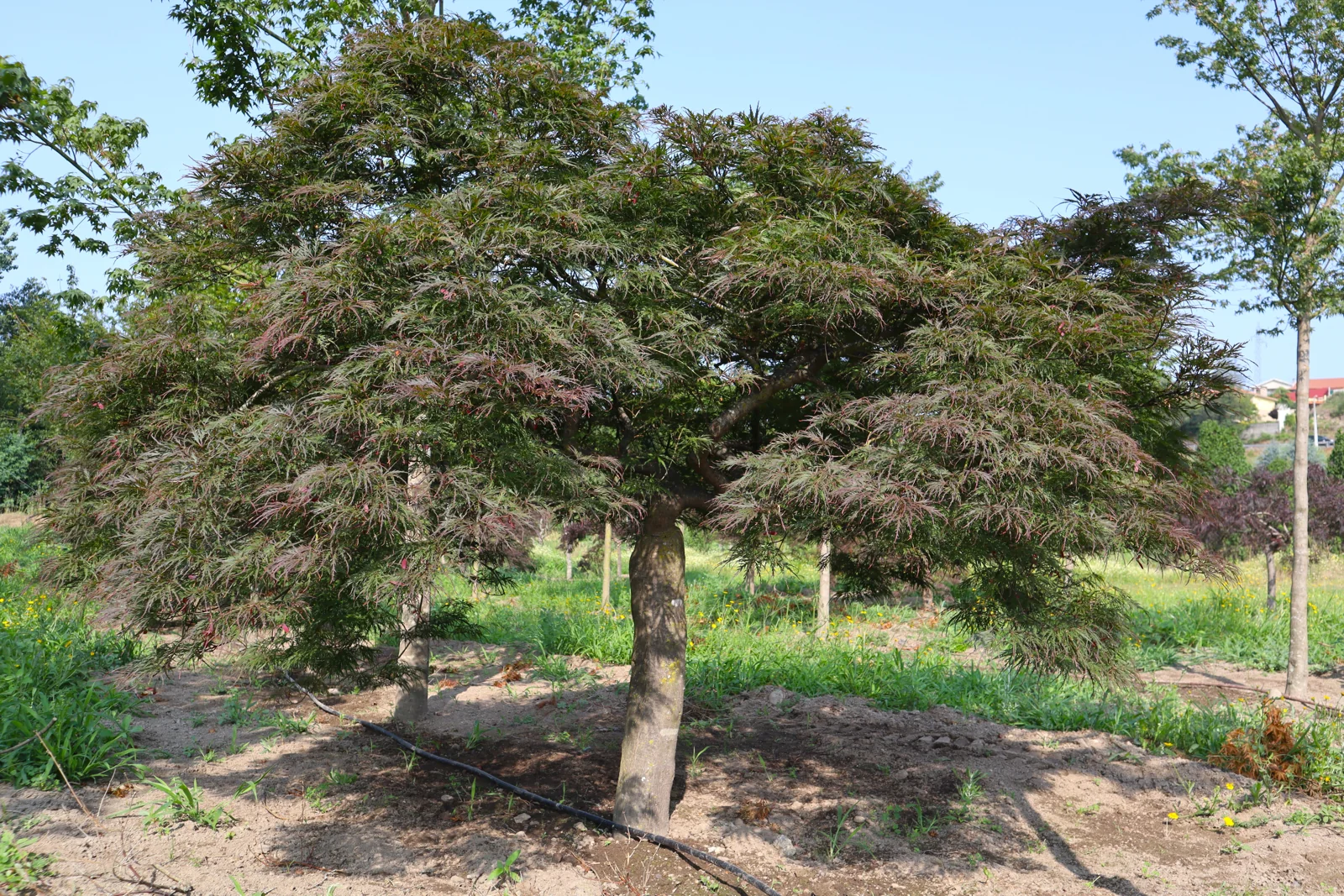
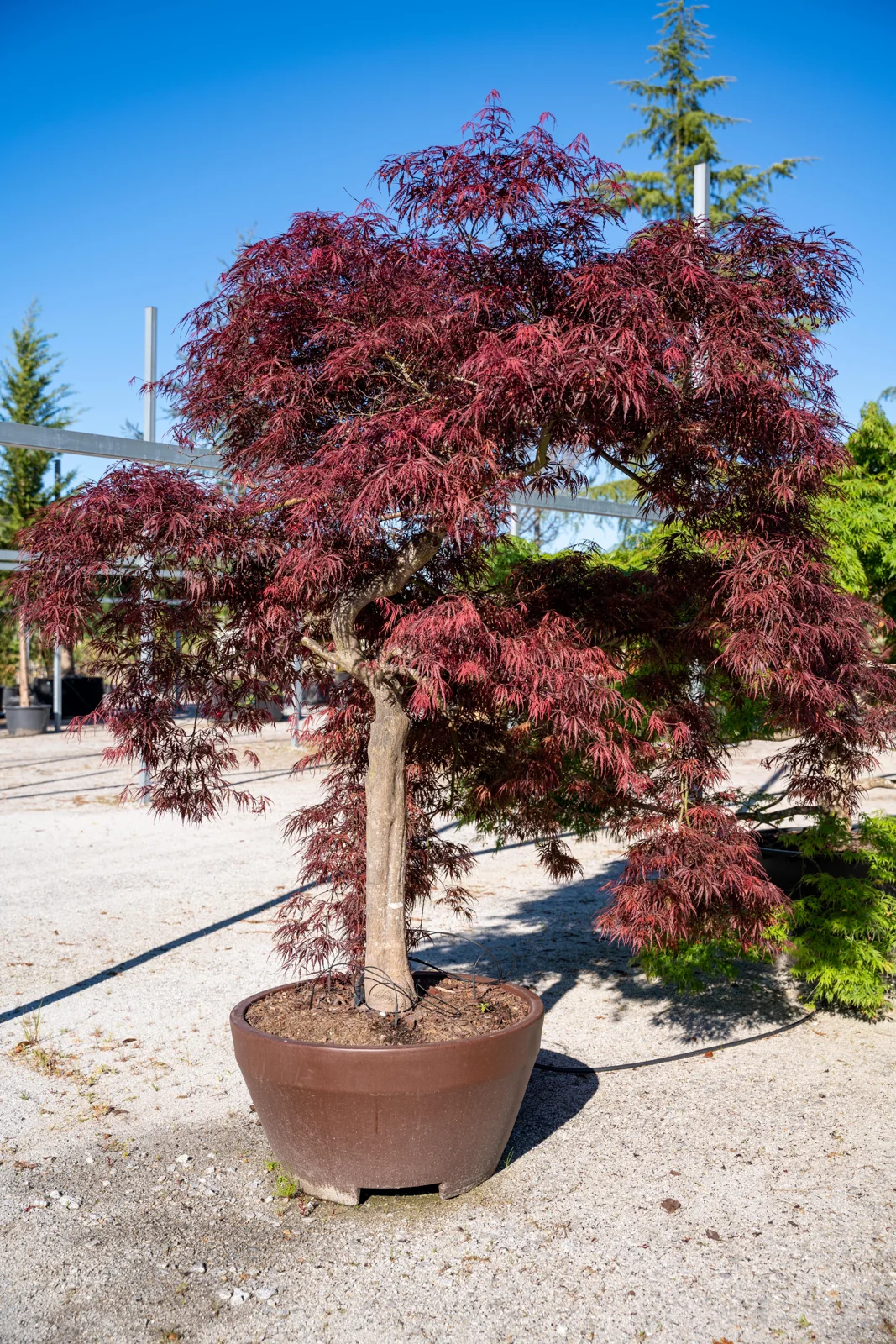
A weeping, mound-forming cultivar of Acer palmatum with deeply dissected wine-red foliage that holds its colour from spring through summer. A focal piece for walled patios (patios cordobeses, jardín andaluz), contained urban courtyards, and container culture on sheltered terraces.
- Burgundy laceleaf foliage from spring, holding through summer to crimson autumn
- Around 2 to 3 m tall by 3 to 4 m at twenty years
- Thrives in partial shade with gentle morning sun
Key Facts
About this Cultivar
Compared to the green-leaved 'Dissectum' that holds reference status in Spanish specification for laceleaf cultivars, 'Dissectum Garnet' carries the same cascading dome architecture and finely cut leaf in a deep burgundy that establishes at bud-break and remains stable through the high summer before turning to crimson and burnt orange in October. The mature…
Read more
Show less
Compared to the green-leaved 'Dissectum' that holds reference status in Spanish specification for laceleaf cultivars, 'Dissectum Garnet' carries the same cascading dome architecture and finely cut leaf in a deep burgundy that establishes at bud-break and remains stable through the high summer before turning to crimson and burnt orange in October. The mature crown settles at roughly 2 to 3 m in height by 3 to 4 m in spread after some twenty years of slow extension growth, making the cultivar a defensible specification for small-format projects where stature and shade are not the brief.
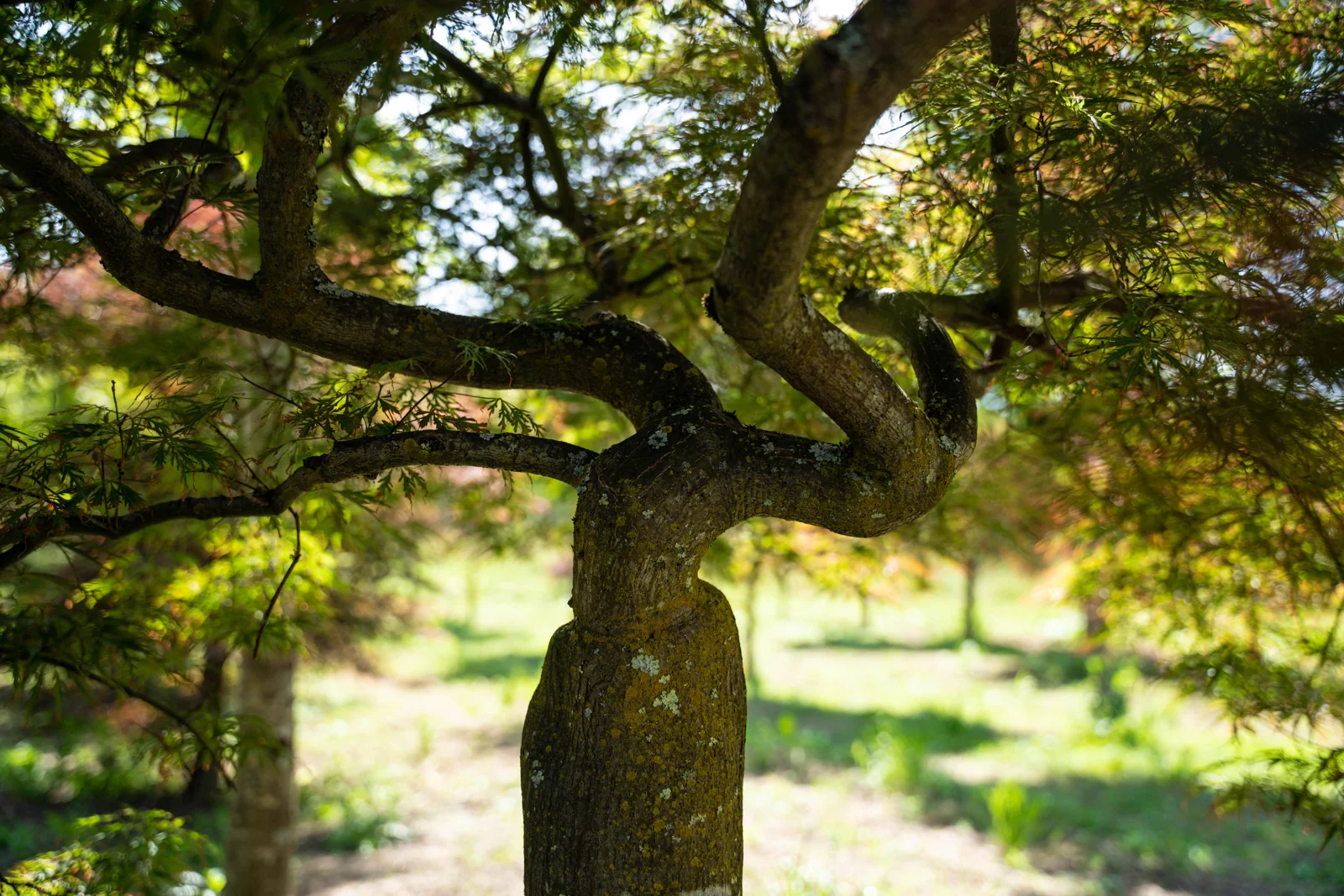
Growth rate is slow, so the credible plant comes from the nursery as a multi-year specimen with the torrão consolidated through repeated engorda cycles, not as a planting that will develop on site. The professional case is the deliberate focal piece: a single specimen beside water in a hotel courtyard, an accent in a walled patio of the Andalusian type, the structural anchor of a low composition of ferns and acid-loving shrubs under light overhead canopy in a Catalan masía garden. It does not suit alignment (alineación), hedging, or volumetric mass planting.
Substrate requirements are strict and define the climatic envelope inside Spain. The species needs fresh, free-draining, humus-rich soils on the acid to neutral side; the alkaline calcareous profiles characteristic of much of the Mediterranean coast and the meseta interior do not hold it. The correct exposure is partial shade with morning sun. In Galicia, the cornisa cantábrica, the Empordà and the Catalan pre-Pyrenees it performs reliably under light overhead cover; on the Costa del Sol, the Costa Blanca and the Balearics it needs a sheltered courtyard position with afternoon shade; in the meseta interior and the semi-arid southeast it is restricted to walled patios and north aspects, because under full Spanish sun on calcareous ground the limb scorches and the wine colour fades.
Hardiness reaches approximately -15 °C, comfortably below the working minima of any Spanish project location. Acer palmatum sits outside the host range of Xylella fastidiosa and is unaffected by the phytosanitary pressures (red palm weevil, pine wilt nematode, Ceratocystis platani) that shape much of Spanish street-tree specification, which simplifies project documentation in demarcated zones. Maintenance is restricted to a winter sanitary prune for dead interior wood; the cascading habitus does not tolerate formative pruning.
Advice on this species
Want to know more about Acer palmatum 'Dissectum Garnet'?
Tell us about your project and we'll advise you on this species — where it thrives, which size makes sense, and what to expect once planted.
- Produção própria
- Exemplares adultos
- Resposta em 1–2 dias
Sem compromisso · orçamento personalizado