

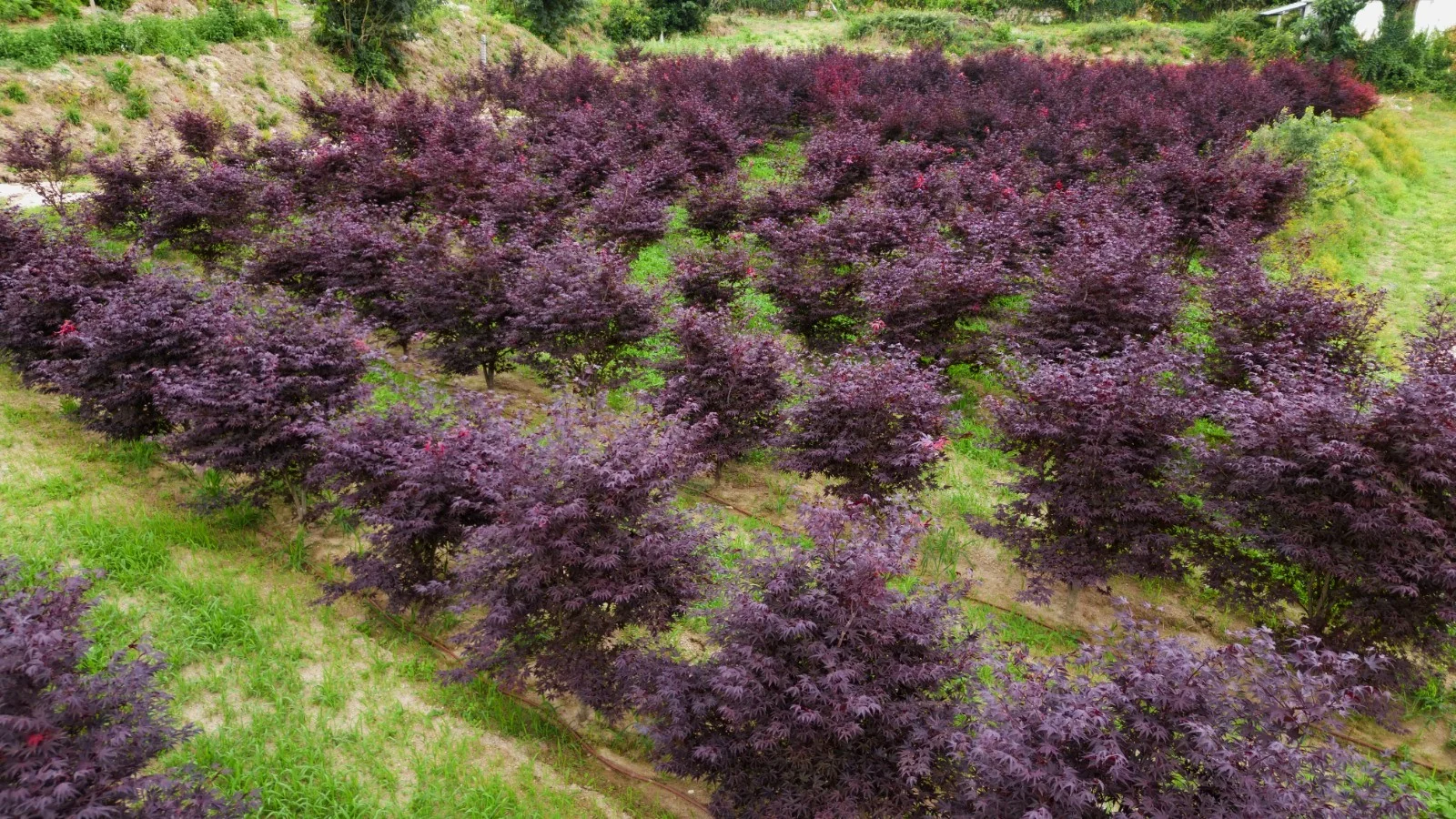
Wine-red Japanese maple for the sheltered patio
Japanese Maple ‘Bloodgood’ · Acer palmatum ‘Bloodgood’
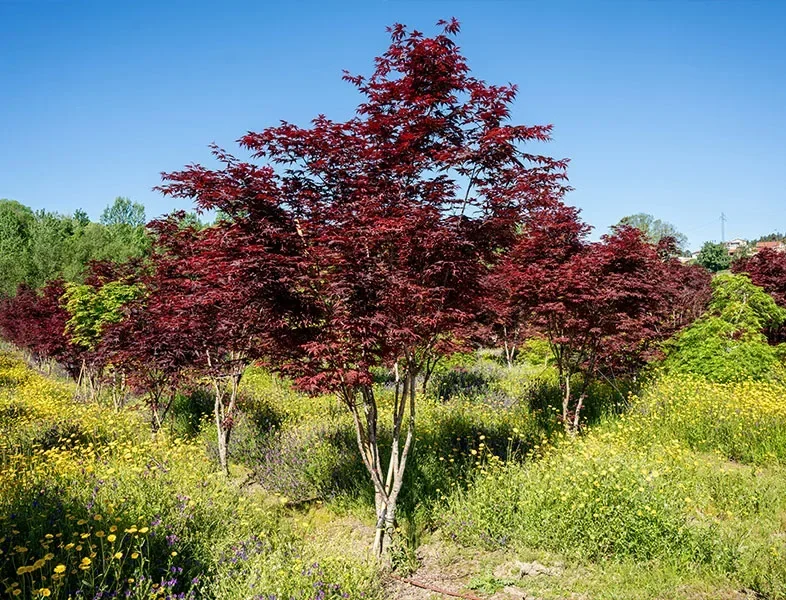
A small specimen maple for sheltered patios, atriums, and northern Spanish gardens. The deep wine-red foliage holds its colour through summer, giving a controlled focal point where Mediterranean palettes need a deciduous counterpoint.
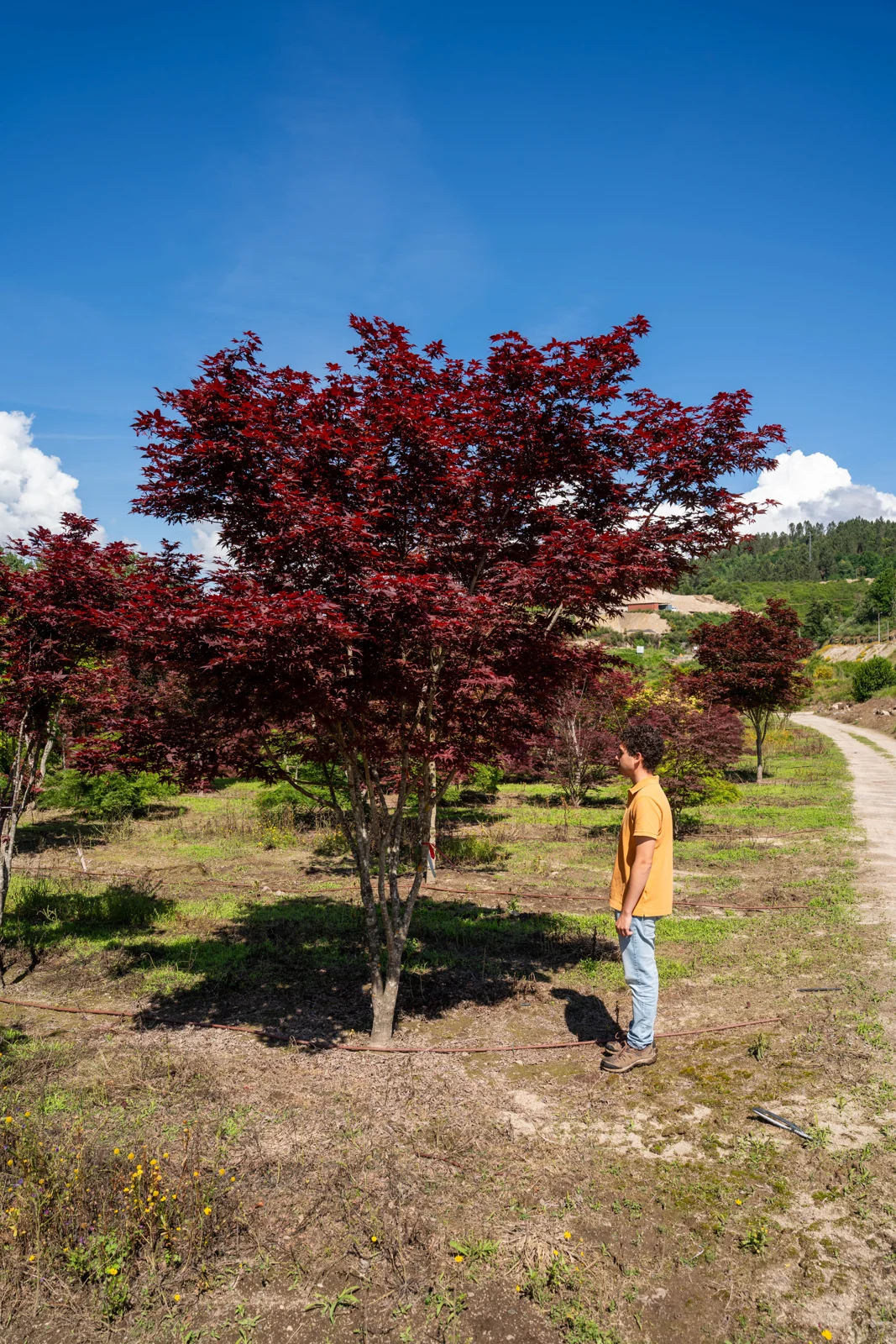
- Compact rounded crown reaching four to five metres tall and wide at maturity
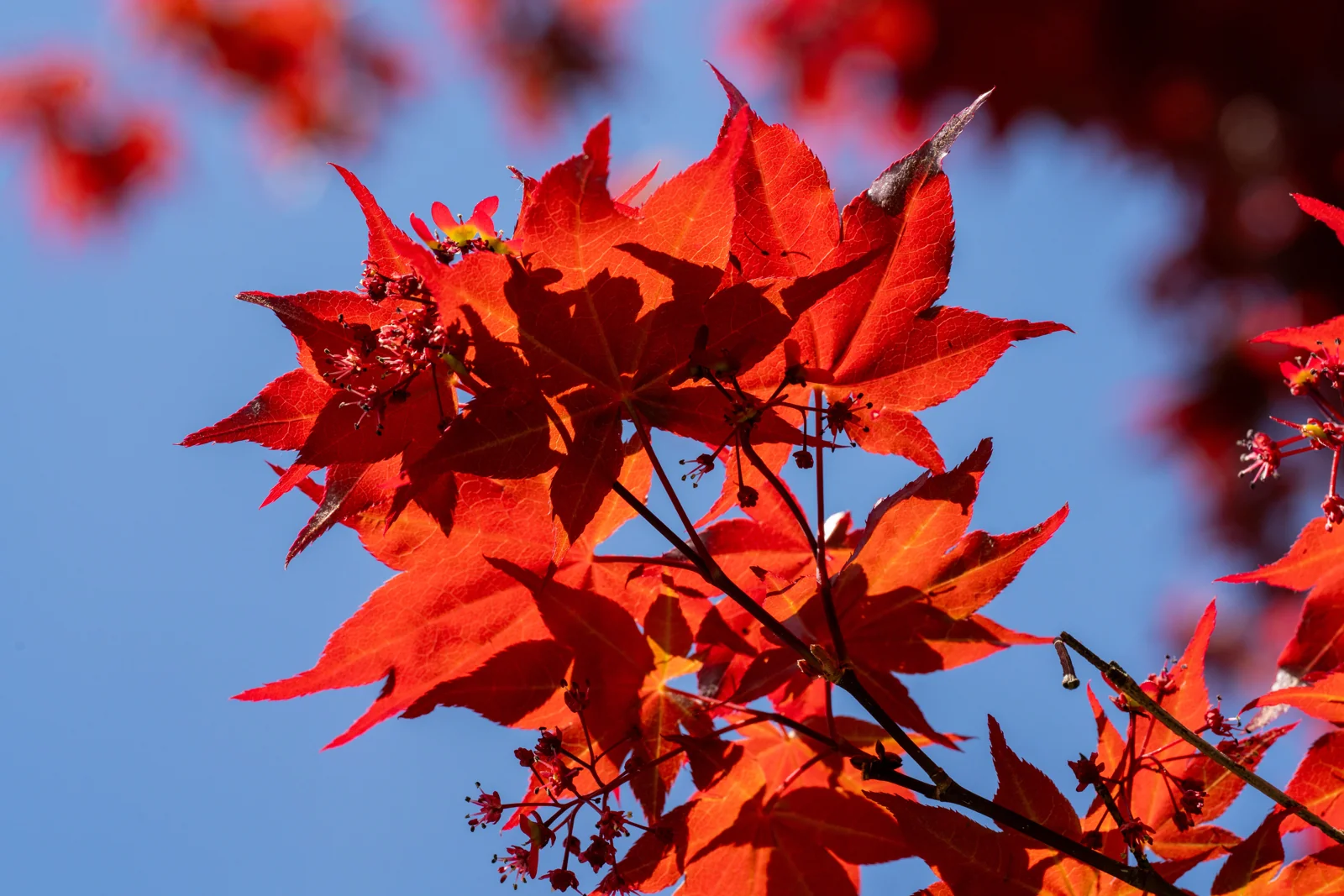
- Wine-red foliage holds its colour through summer, then turns bright red in autumn
- Best in cooler corners of Spain: Sierra de Guadarrama, Empordà, Mallorca's Tramuntana, Atlantic north
Key Facts
About this Cultivar
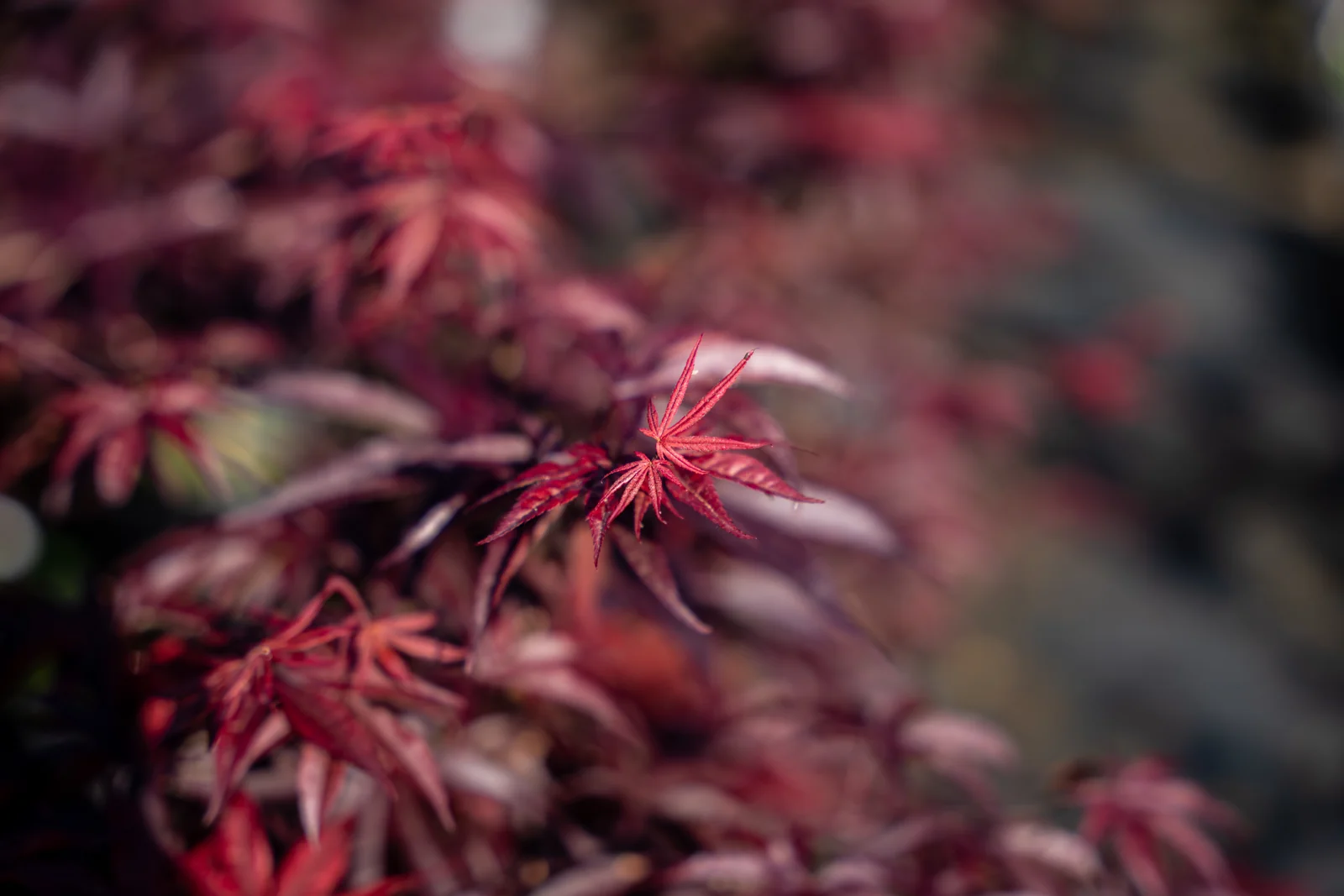
Acer palmatum 'Bloodgood' is a slow-growing deciduous selection from the Atropurpureum group, settling at four to five metres in height and spread with a rounded, well-formed crown. The cultivar is characterised by dark wine-red palmate foliage that holds its colour through summer better than the older Atropurpureum types, then shifts to a clearer scarlet…
Read more
Show less
Acer palmatum 'Bloodgood' is a slow-growing deciduous selection from the Atropurpureum group, settling at four to five metres in height and spread with a rounded, well-formed crown. The cultivar is characterised by dark wine-red palmate foliage that holds its colour through summer better than the older Atropurpureum types, then shifts to a clearer scarlet in autumn. Small red flowers in April and May are followed by winged samaras, both adding seasonal interest at close range rather than from a distance.
The species sits within a narrow climatic envelope inside Spain. It performs reliably across the humid Atlantic northwest (the cornisa cantábrica of Galicia, Asturias, Cantabria, and the Basque Country), where cool summers, acidic soils, and steady rainfall align with its native conditions in Japan and Korea. It is workable in the cooler interior valleys and in sheltered northern Madrid microclimates, but reaches its limits on the Mediterranean littoral and in the semi-arid southeast, where high summer radiation and alkaline substrates produce leaf scorch and chronic stress.
Water demand is moderate and continuous; this is not a drought-strategy tree. Establishment requires consistent soil moisture through the first three summers, and mature specimens still depend on supplementary irrigation across most of Spain outside the cornisa cantábrica. Soils should be well-drained, organically rich, and slightly acidic. Alkaline calcareous substrates common in the Ebro valley and the southeast induce chlorosis without amendment. Place in dappled or partial shade in any setting south of the Cantabrian arc, sheltered from drying summer winds.
'Bloodgood' is propagated by grafting and by cuttings, with a more compact habit than 'Atropurpureum' and cleaner colour retention. As a specimen for shaded courtyards, atrium plantings, container compositions, and Asian-themed schemes, the cultivar earns its position through colour discipline rather than scale.
Advice on this species
Want to know more about Acer palmatum 'Bloodgood'?
Tell us about your project and we'll advise you on this species — where it thrives, which size makes sense, and what to expect once planted.
- Produção própria
- Exemplares adultos
- Resposta em 1–2 dias
Sem compromisso · orçamento personalizado