

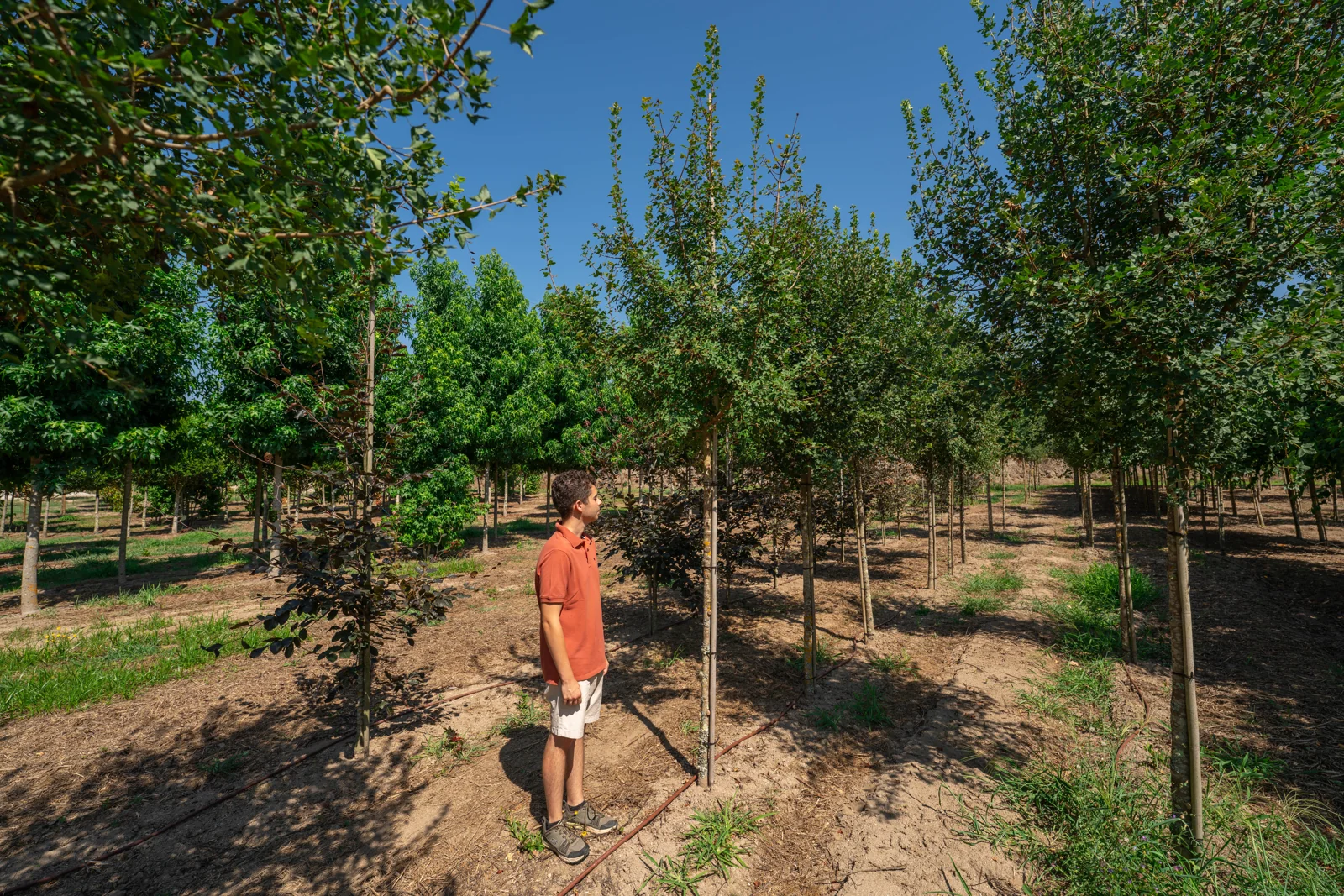
A small Mediterranean maple for the dry garden
Montpellier Maple · Acer monspessulanum
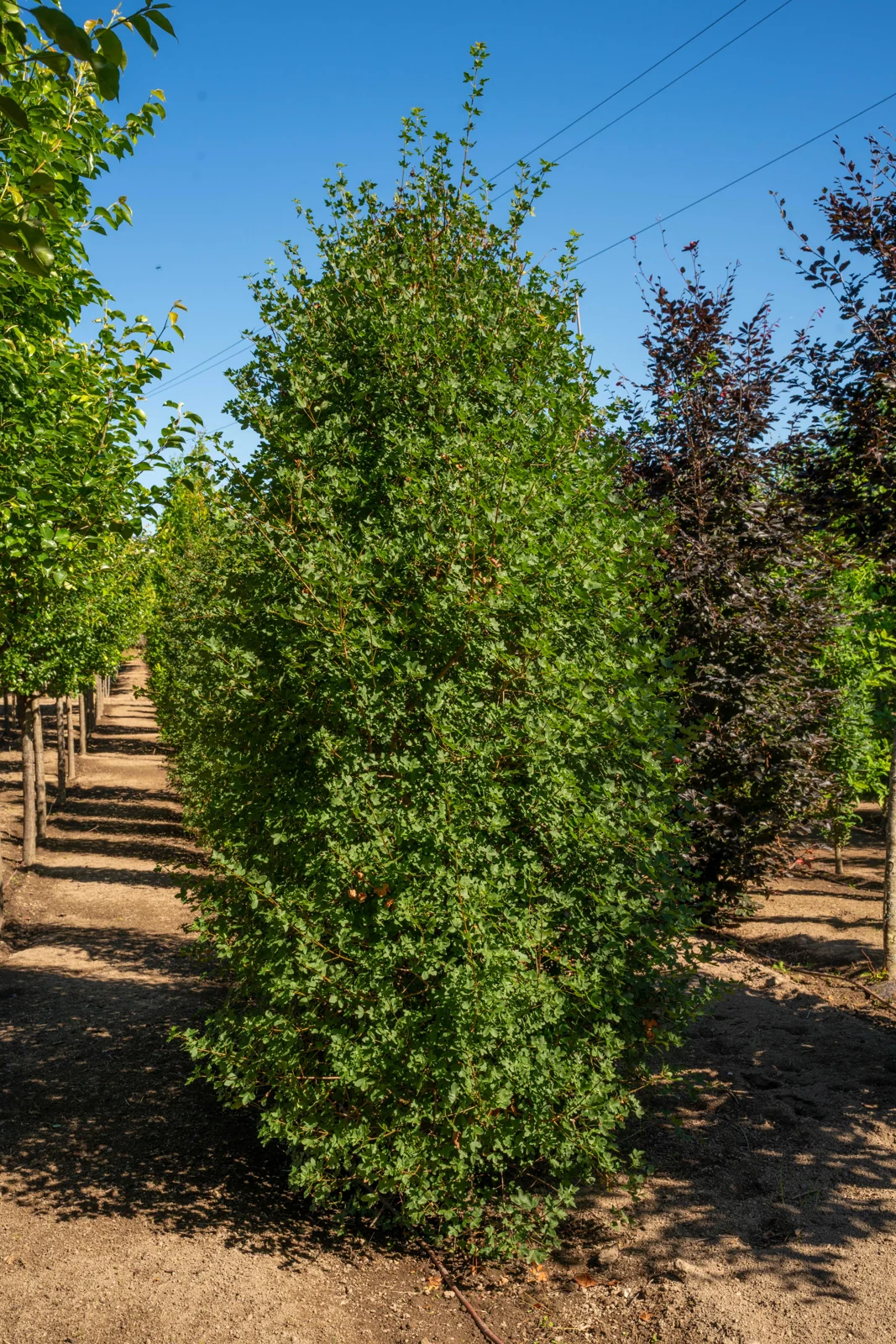
A small rounded native maple for hot, dry Spanish conditions where most other Acers struggle. Useful where a low-water canopy of restrained scale and dependable autumn colour is needed across Mediterranean coastal, Levante and meseta continental projects.
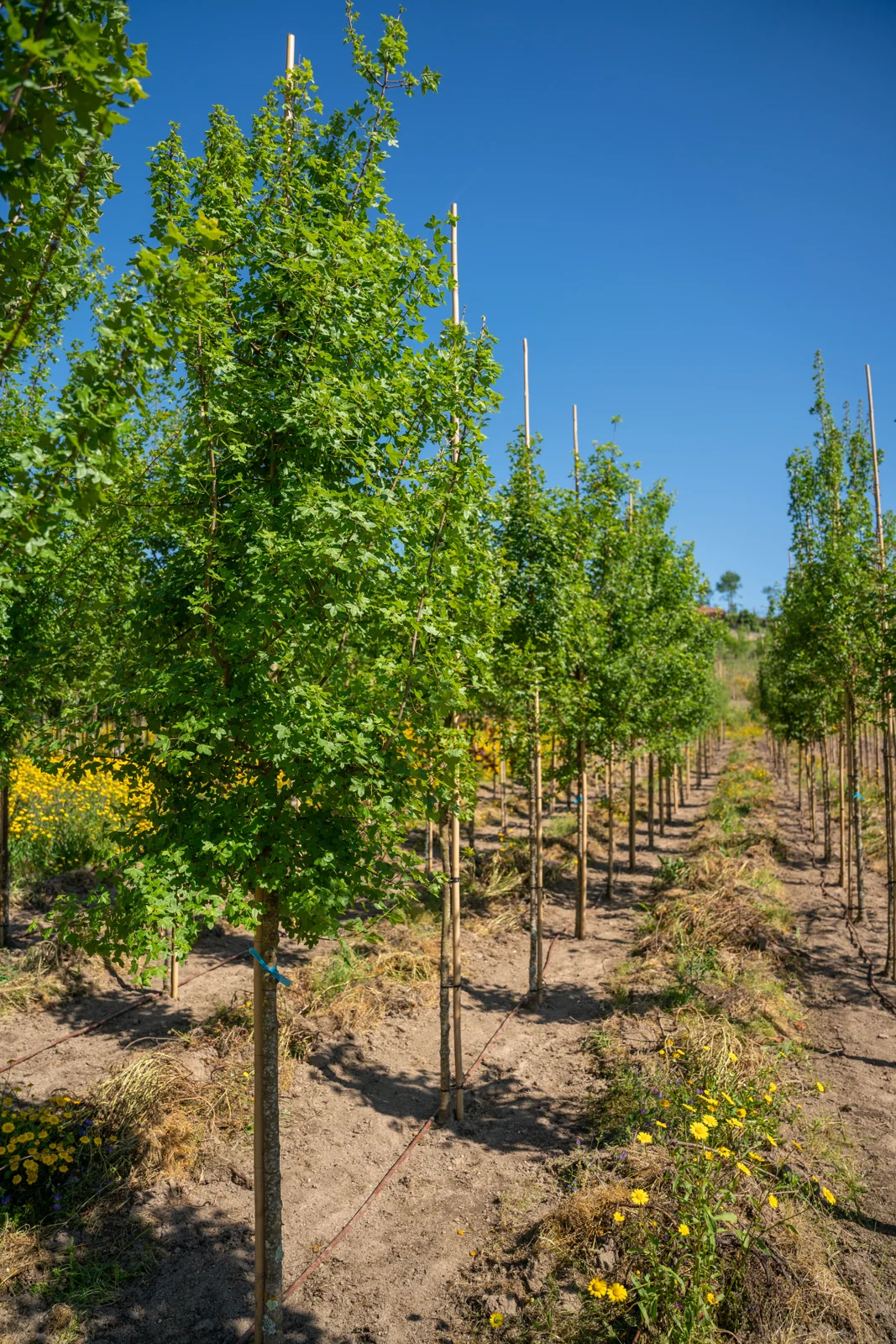
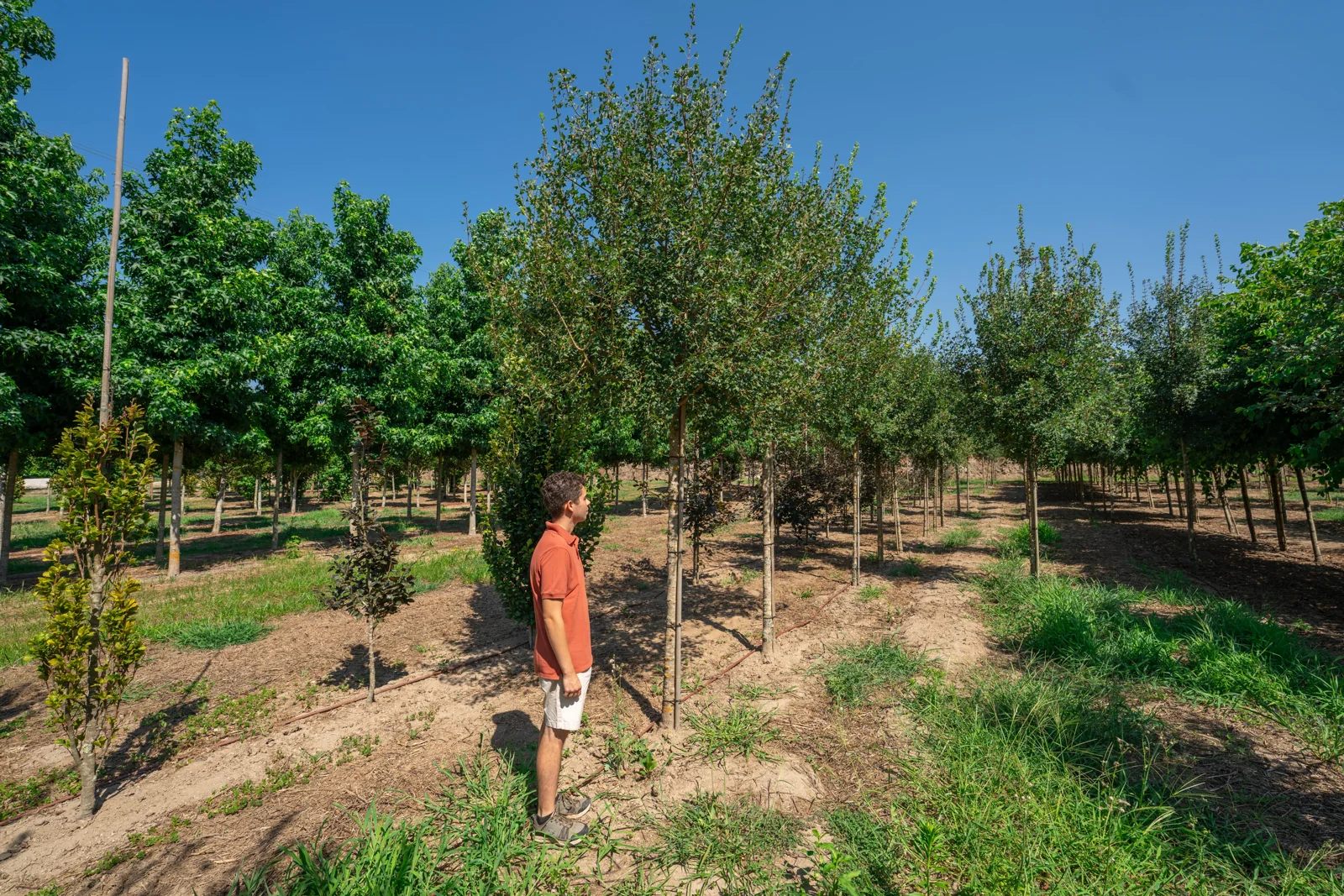
- Slow-growing to roughly 6 m in ten years, ultimately 5 to 10 m
- Native to Spain; reliable across the Mediterranean coast and the Balearics
- Warm orange autumn colour, often holding into November
About this Species
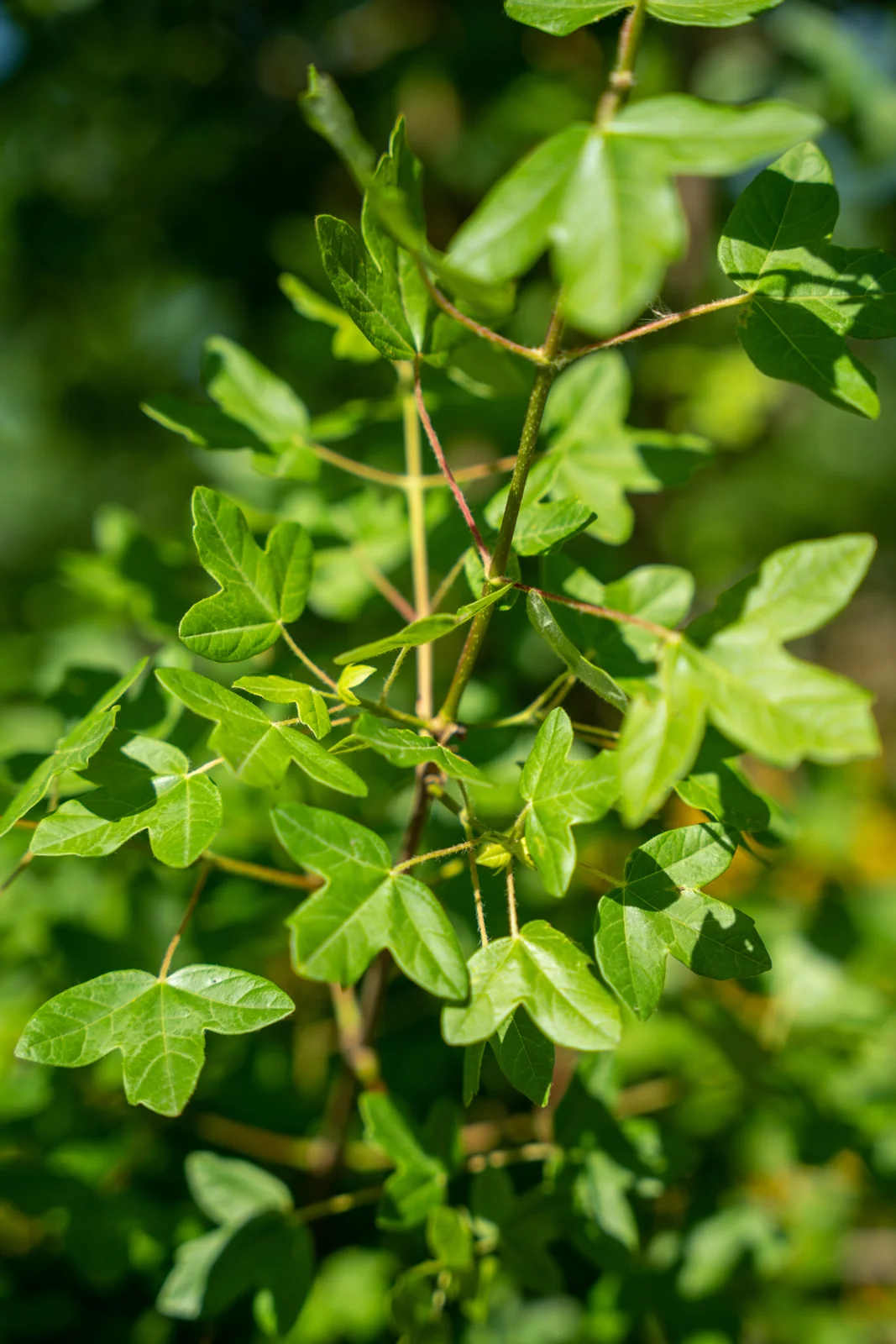
Acer monspessulanum is one of the few maples reliably suited to Spanish conditions outside the Atlantic northwest. Small (3 to 6 cm), three-lobed, leathery, glossy dark green leaves with reduced surface area and a waxy cuticle explain the species' tolerance of summer heat and prolonged drought, where Acer pseudoplatanus and Acer platanoides falter. Native…
Read more
Show less
Acer monspessulanum is one of the few maples reliably suited to Spanish conditions outside the Atlantic northwest. Small (3 to 6 cm), three-lobed, leathery, glossy dark green leaves with reduced surface area and a waxy cuticle explain the species' tolerance of summer heat and prolonged drought, where Acer pseudoplatanus and Acer platanoides falter.
Native across the Iberian peninsula, it qualifies as especie autóctona in most comunidades autónomas and reads naturally alongside encina, quejigo and almendro.
Mature height settles at 8 to 12 metres with a dense rounded crown 5 to 8 metres wide; growth is slow and the wood dense, so specimens hold their form without the structural defects of faster Acers. Winter hardiness reaches roughly -15 °C, covering Mediterranean coastal, Levante, southern Atlantic and meseta continental projects in Castilla, Aragón and the Ebro valley.
Bud-break is conservative, so late spring frost in the interior is rarely a specification risk.
Soils are not a limiting factor: the species thrives on alkaline, calcareous and gypsiferous substrates common across the Ebro basin and the southeast, and accepts compacted urban pits where drainage is functional. A deep, well-anchored root system supports survival through extended summer drought once the second or third growing season is past, and mature trees commonly cope without supplementary irrigation across most of Mediterranean Spain; below roughly 250 mm of annual rainfall, irrigation support remains advisable.
The genus appears on Xylella fastidiosa host listings, but the species itself shows no serious pest or pathogen pressure in current Iberian practice.
Greenish-yellow flowers in pendulous corymbs appear in April and May, followed by paired samaras with parallel, often overlapping wings. Foliage holds late, dropping in November and turning a clear orange that registers in northern and continental schemes without dominating Mediterranean palettes.
Smooth grey bark becomes finely fissured with age. The combination of compact stature, low water demand and native status makes it a defensible specification for street, plaza and patio projects requiring a deciduous canopy of restrained scale.



Advice on this species
Want to know more about Acer monspessulanum?
Tell us about your project and we'll advise you on this species — where it thrives, which size makes sense, and what to expect once planted.
- Produção própria
- Exemplares adultos
- Resposta em 1–2 dias
Sem compromisso · orçamento personalizado