

Frost-hardy columnar evergreen for formal structure and screening
English Yew ‘Fastigiata Robusta’ · Taxus baccata ‘Fastigiata Robusta’
Where a scheme needs a narrow vertical evergreen that holds its line through the German winter, this fastigiate yew supplies dense, dark, year-round structure. Native hardiness and deep shade tolerance make it dependable from inner-city courtyards to open parkland.
Key Facts
About this Cultivar
Among the few broadly hardy evergreens native to Germany, the yew (Europäische Eibe) carries no winter-hardiness risk a specifier need defend: it withstands roughly minus 23 degrees Celsius and performs reliably across every Klimaregion, from the Oberrheingraben (Upper Rhine valley) through the norddeutsche Tiefebene (northern German lowlands) and east of…
Read more
Show less
Among the few broadly hardy evergreens native to Germany, the yew (Europäische Eibe) carries no winter-hardiness risk a specifier need defend: it withstands roughly minus 23 degrees Celsius and performs reliably across every Klimaregion, from the Oberrheingraben (Upper Rhine valley) through the norddeutsche Tiefebene (northern German lowlands) and east of the Elbe, including the voralpenland (pre-Alpine foothills) above 400 metres. This removes the marginal-hardiness argument that constrains most Mediterranean stock.
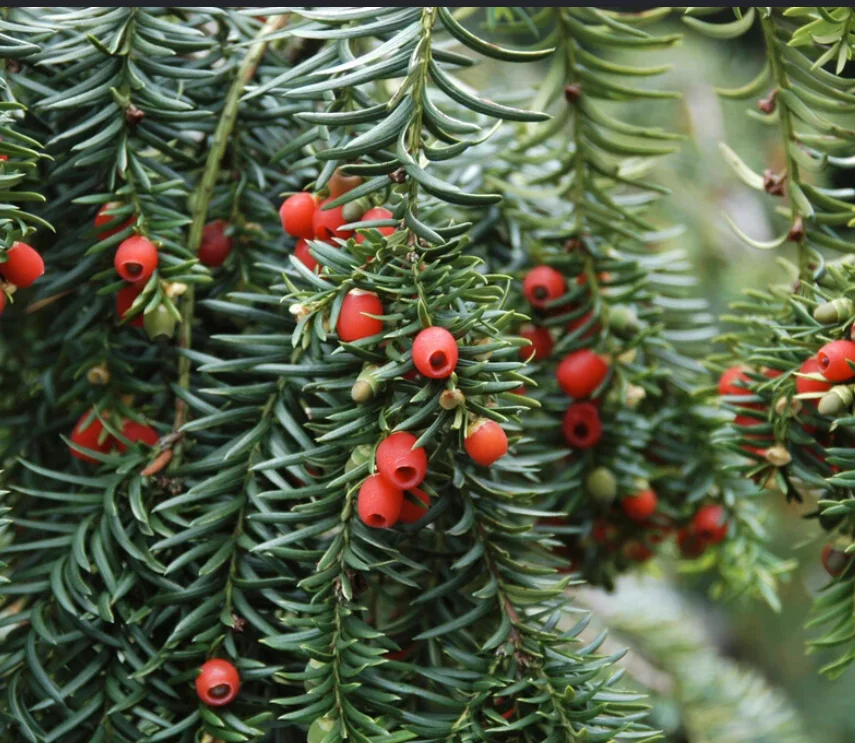
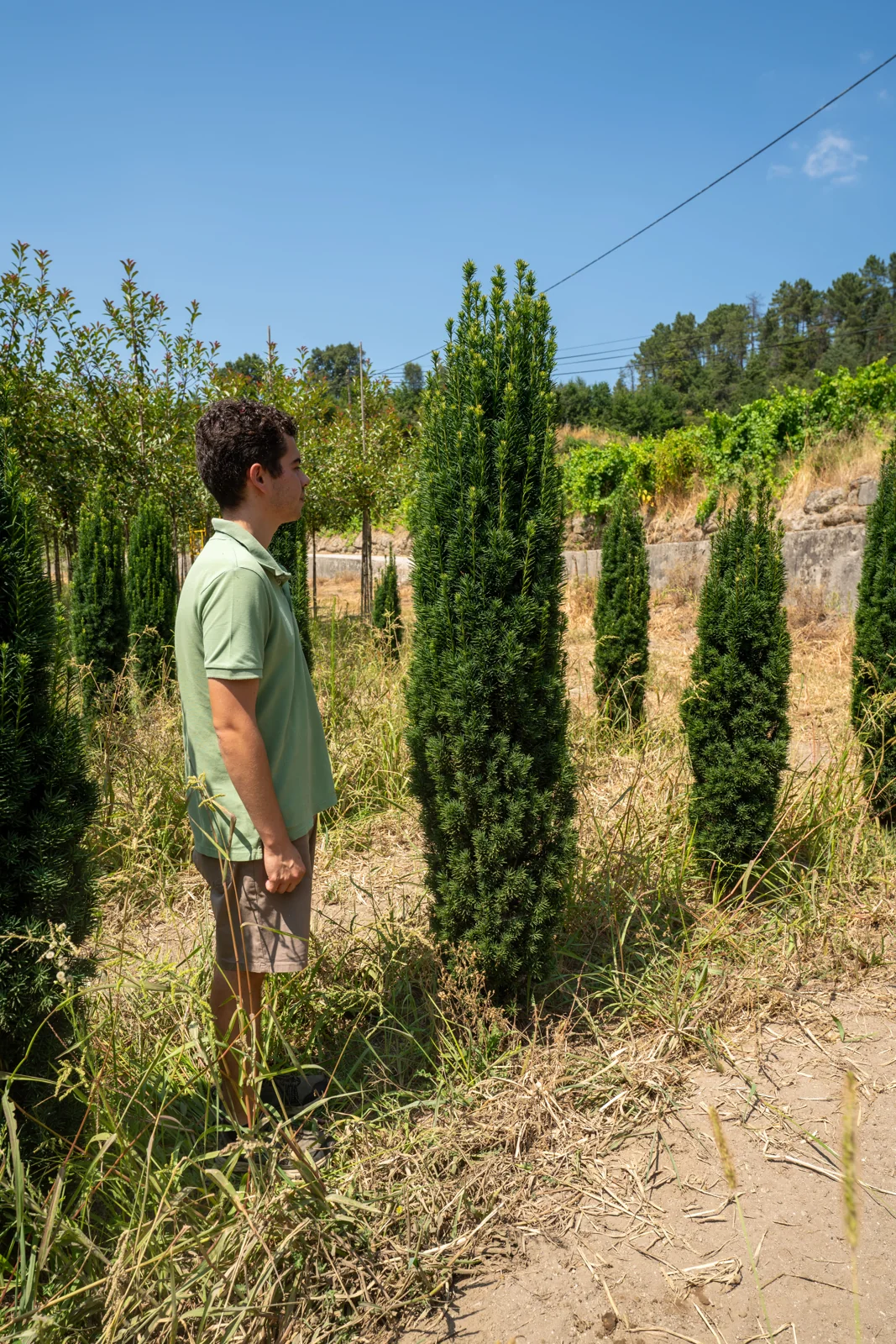
'Fastigiata Robusta' holds a tight, columnar habit (Habitusform), more compact and upright than the familiar 'Fastigiata', with densely packed ascending branches. The needles are dark, glossy, and longer than the type species, and female plants carry fleshy red arils into late summer. The narrow form gives vertical accent and a clean screening line where lateral spread must stay contained.
Slow growth and exceptional response to clipping make it the standard German subject for Formschnitt, hedging, and architectural structure. It tolerates deep shade as readily as full sun, a tolerance few evergreens of this stature share, which supports underplanting and shaded courtyard positions where most conifers thin out.
For site requirements (Standortansprüche), it performs on free-draining loams, calcareous substrates, and clay, tolerating chalk well, but it does not accept waterlogging: persistent wet or poorly drained ground causes root rot, so heavy soils need drainage. Drought and de-icing salt tolerance are moderate, and on confined urban root volumes establishment irrigation through the first summers is prudent.
The species is free of the phytosanitary pressures burdening Fraxinus, Buxus, and Aesculus, and resists the common pests and diseases of German planting. As an evergreen carrying full structure through the leaf-off half of the year, with proven longevity and the toxicity of all parts noted for sites with grazing stock, it functions as durable framework planting for formal and naturalistic schemes alike.
Advice on this species
Want to know more about Taxus baccata 'Fastigiata Robusta'?
Tell us about your project and we'll advise you on this species — where it thrives, which size makes sense, and what to expect once planted.
- Produção própria
- Exemplares adultos
- Resposta em 1–2 dias
Sem compromisso · orçamento personalizado