

Climate-resilient Stadtbaum for heat-stressed urban pits
Japanese Pagoda Tree ‘Regent’ · Sophora japonica ‘Regent’
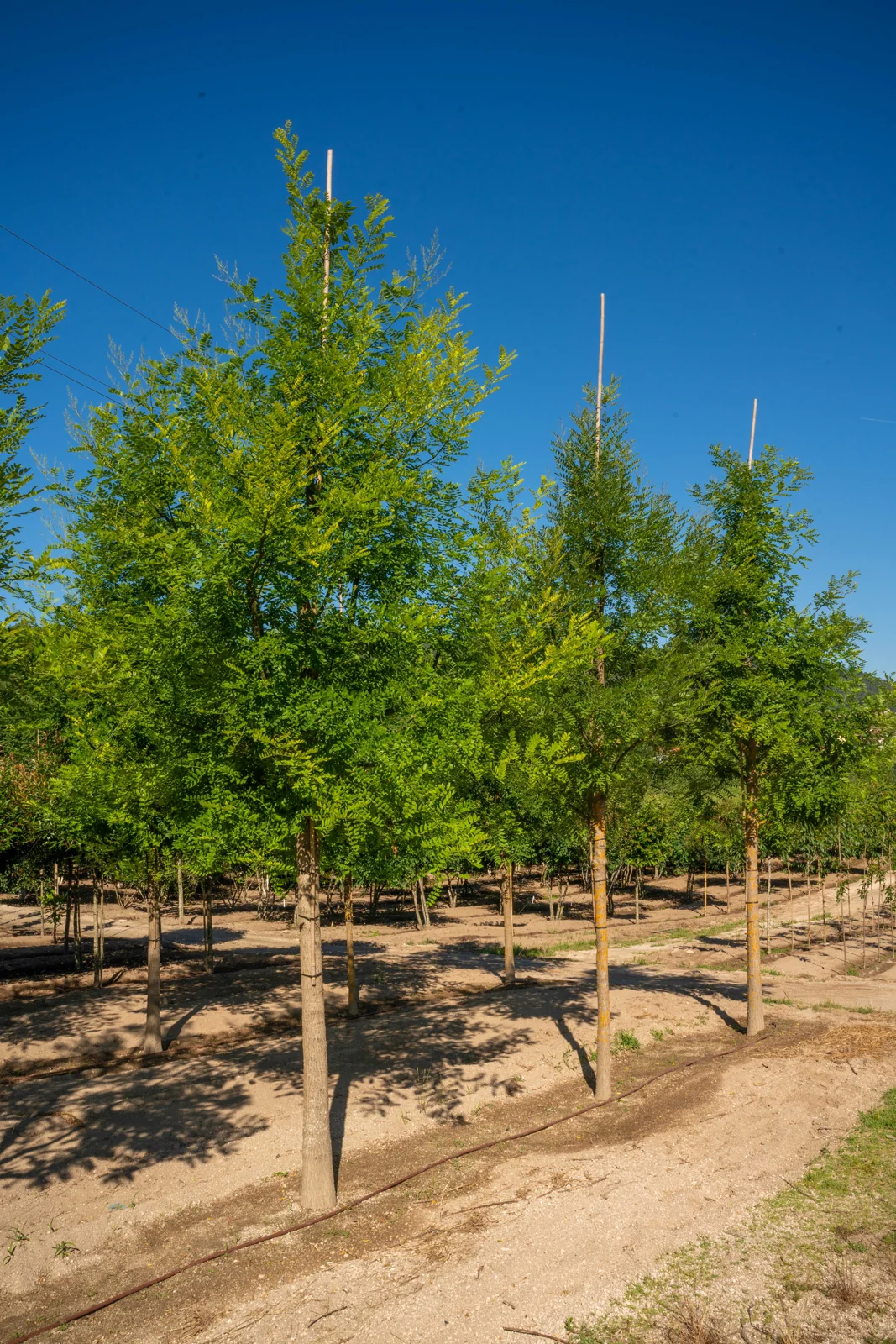
Specifiers reaching for a climate-adapted street tree will find a vigorous, uniform upright-oval crown, glossy compound foliage and proven tolerance of compacted soils, drought and air pollution, supported by hardiness that holds well beyond the milder German Klimaregionen.
About this Cultivar
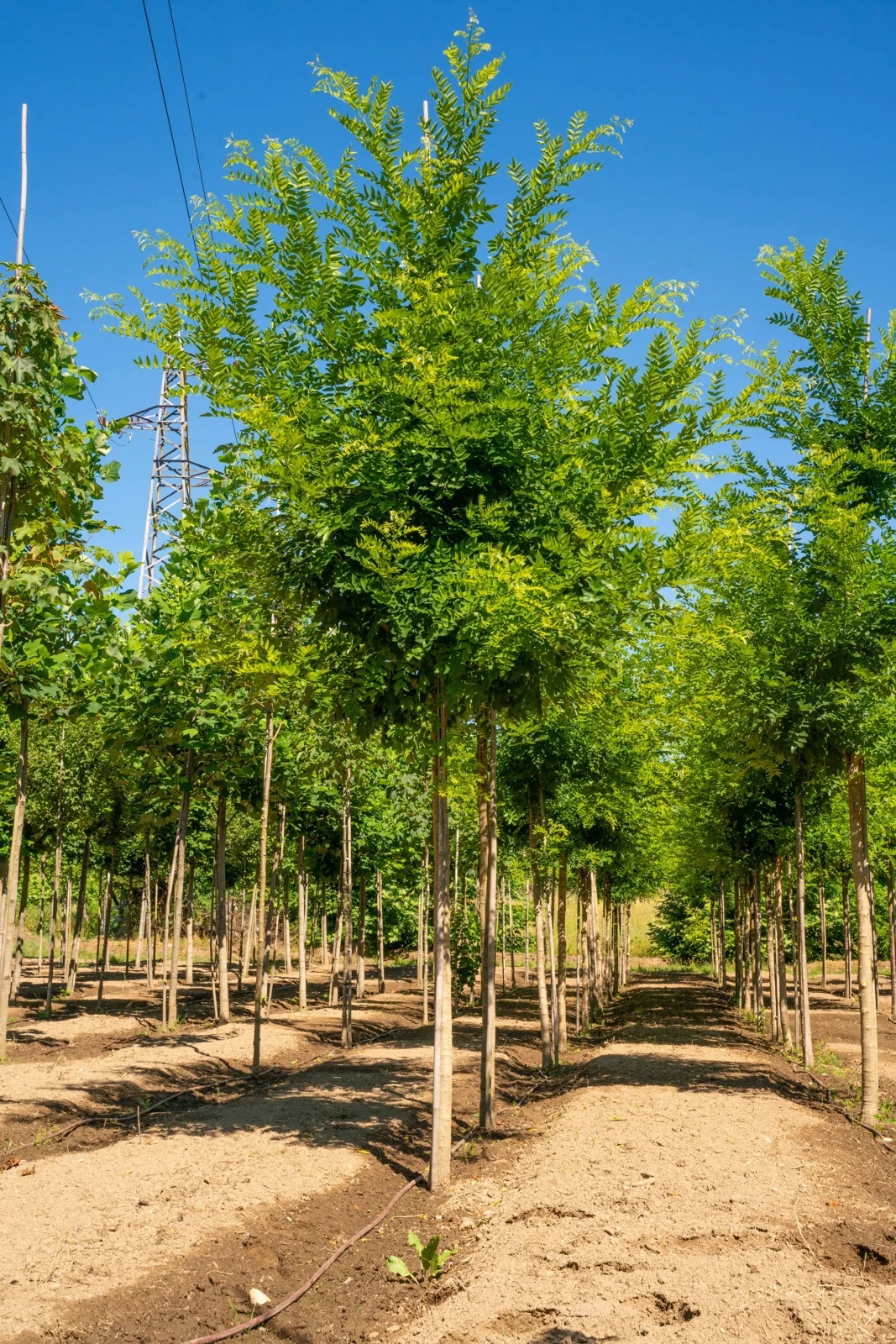
The cultivar carries a denser, more uniform upright-oval crown than seedling stock, with a half-open habit and finely divided (feathered) foliage that casts light, dappled shade rather than heavy cover. As a clonal selection it establishes faster and flowers earlier than seed-raised trees, reaching roughly 15 to 20 metres in height with a 12 to 15 metre…
Read more
Show less
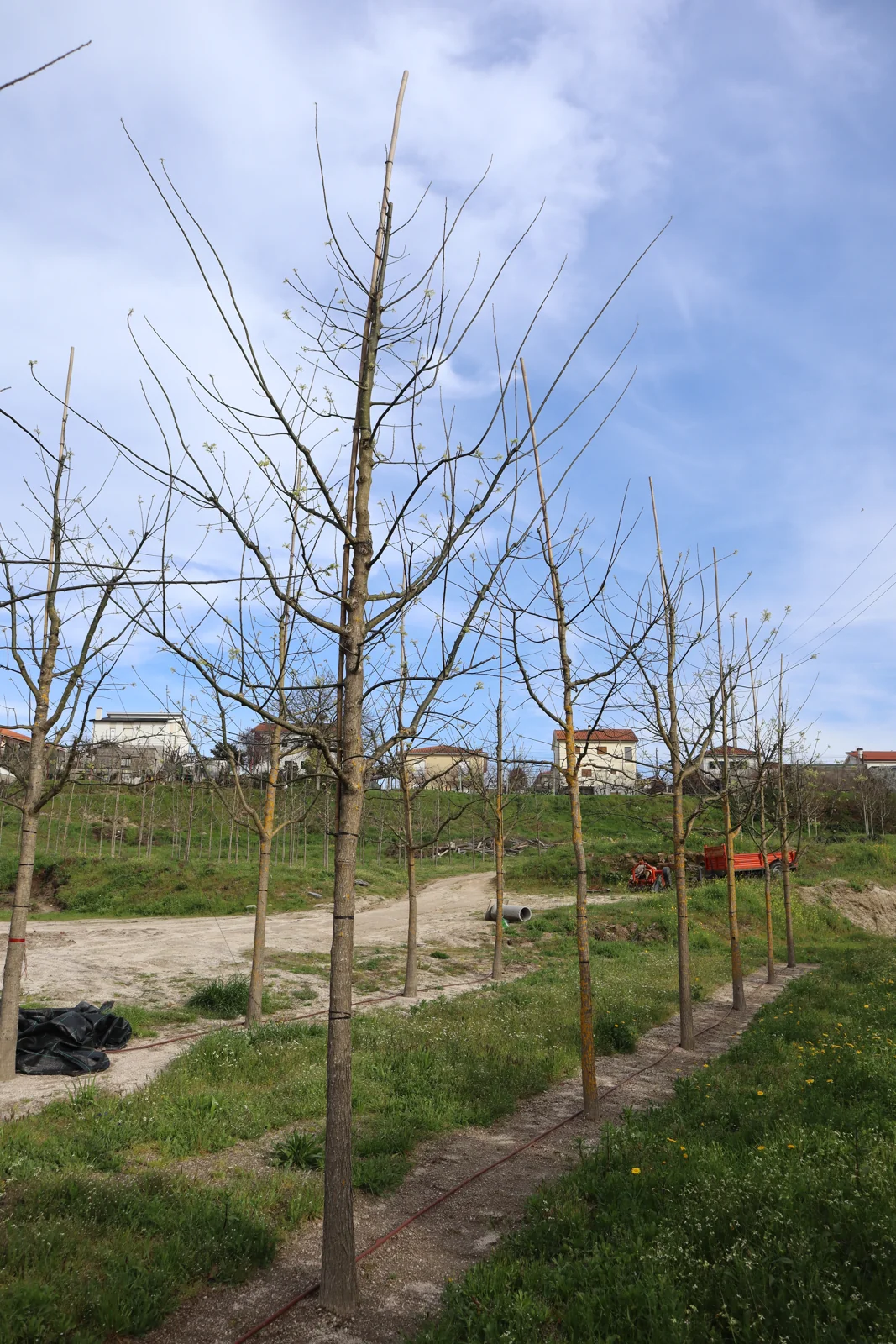
The cultivar carries a denser, more uniform upright-oval crown than seedling stock, with a half-open habit and finely divided (feathered) foliage that casts light, dappled shade rather than heavy cover. As a clonal selection it establishes faster and flowers earlier than seed-raised trees, reaching roughly 15 to 20 metres in height with a 12 to 15 metre spread at maturity. The regular crown architecture (Habitusform) suits the central-leader pruning regimes used on German Straßenbäume.
Winter hardiness (Winterhärte) is a genuine strength rather than a qualification: the species is reliably hardy to around minus 25 degrees Celsius, so performance is dependable not only in the Upper Rhine valley (Oberrheingraben) and the Lower Rhine basin (Niederrheinische Bucht) but across the northern German lowlands (norddeutsche Tiefebene) and east of the Elbe. Above 400 to 600 metres in the pre-Alpine foothills (Voralpenland), late frosts can shorten the flowering display, though the tree itself remains unharmed.
Urban-tree suitability (Stadtbaumeignung) is the core of the case. A deep, spreading root system gives reliable drought tolerance once established, and the species withstands the hot, dry summers of the 2018 to 2022 sequence that reshaped German planting priorities, alongside air pollution and moderate de-icing salt loads. This profile, combined with its place in the established Stadtbaum-Kanon alongside Gleditsia triacanthos and Acer x freemanii, makes it a defensible Zukunftsbaum candidate for the Klima-Artenmatrix and a credible entry on GALK-Straßenbaumliste terms.
On soil (Standortansprüche) it performs on free-draining loams and sands and tolerates calcareous, compacted substrates, asking only for good drainage; it does not accept prolonged waterlogging. As a member of the Fabaceae it sits outside the major phytosanitary pressures on Fraxinus, Platanus and Acer pseudoplatanus, making it a sound replacement candidate.
The creamy-white, lightly fragrant flower panicles open in mid to late summer when few large trees are in bloom, a clear specification asset for public space; autumn colour is a brief soft yellow.
Advice on this species
Want to know more about Sophora japonica 'Regent'?
Tell us about your project and we'll advise you on this species — where it thrives, which size makes sense, and what to expect once planted.
- Produção própria
- Exemplares adultos
- Resposta em 1–2 dias
Sem compromisso · orçamento personalizado