

Native riparian framework tree for wet and waterside sites
White Willow · Salix alba
A fast-growing native willow for moist ground, waterways, and water-management schemes, where its wide-spreading root system and pale silver-backed canopy hold riverbanks and detention basins that drier framework species cannot occupy.
About this Species
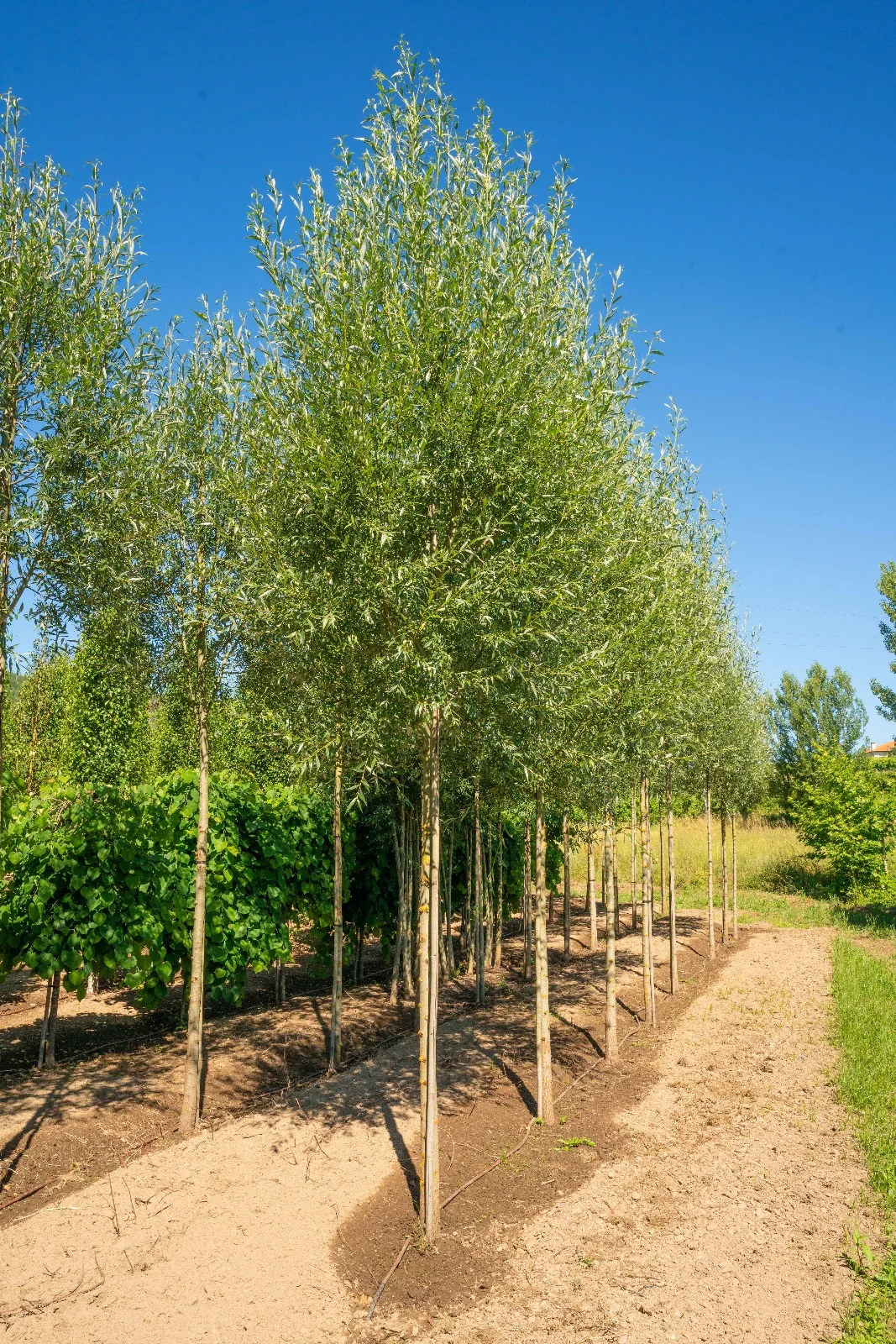
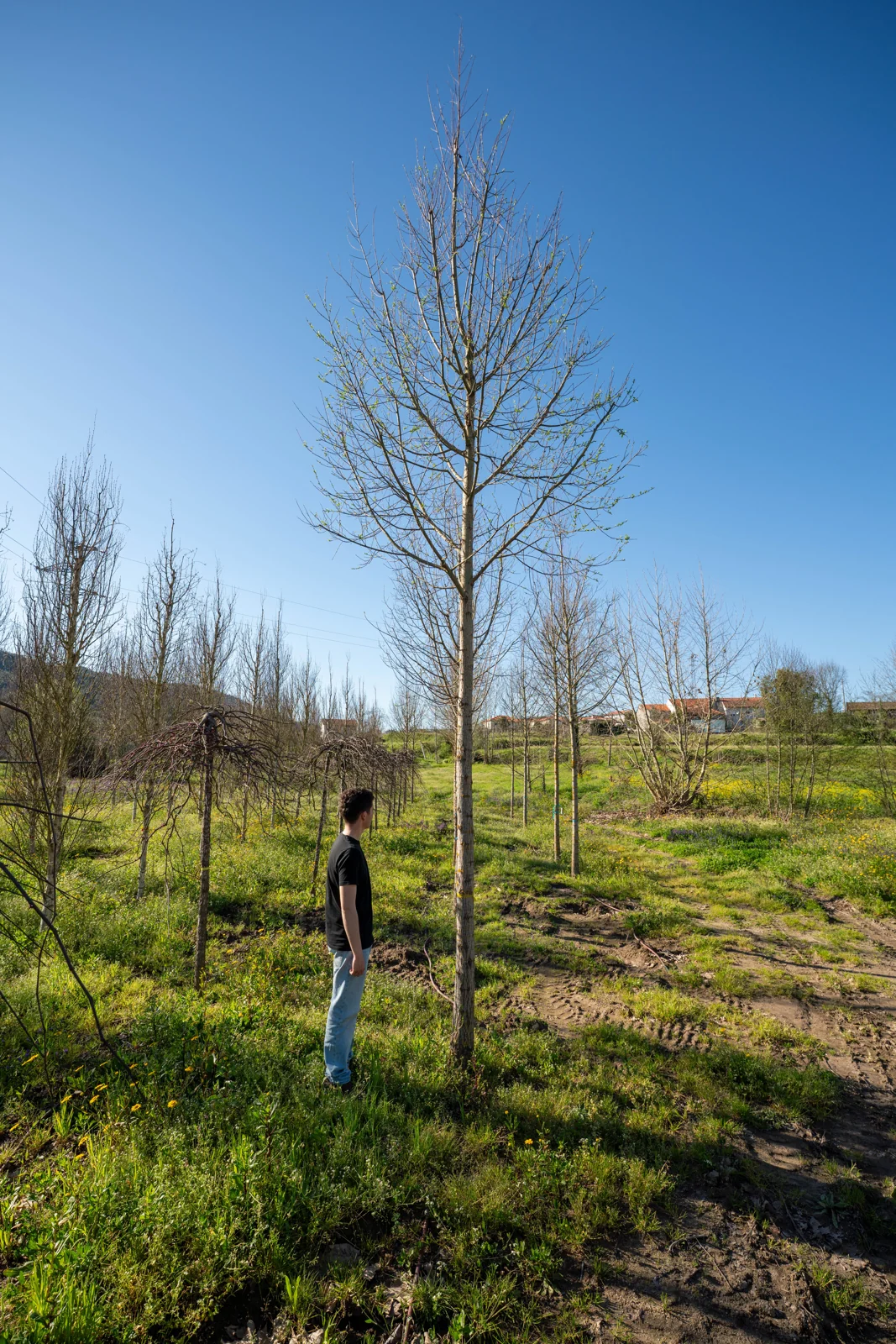
The white willow (Silberweide) is a fast-growing deciduous tree reaching 15 to 25 m with an open, often-leaning crown of 10 to 15 m spread. Its lanceolate leaves are dark green above and covered beneath with fine silky hairs, giving the canopy a silver cast that lifts in wind, while spring catkins and a clear yellow autumn turn add two seasons of interest.…
Read more
Show less
The white willow (Silberweide) is a fast-growing deciduous tree reaching 15 to 25 m with an open, often-leaning crown of 10 to 15 m spread. Its lanceolate leaves are dark green above and covered beneath with fine silky hairs, giving the canopy a silver cast that lifts in wind, while spring catkins and a clear yellow autumn turn add two seasons of interest. Fast extension growth means it reads as a mature framework tree within a few seasons of planting, which is its primary value on naturalistic and water-side schemes.
Winter hardiness (Winterhärte) is not a constraint: the species is native across Germany and reliably hardy well below minus 25 degrees Celsius, performing in every Klimaregion from the Upper Rhine valley (Oberrheingraben) to the pre-Alpine foothills (Voralpenland) and east beyond the Elbe without protection at any age. The specification question is not cold but water. White willow is intolerant of dry soils; it wants moist to wet, free-draining loams, clays, and riparian ground, and on drier Standort it needs reliable summer moisture or supplementary irrigation through establishment and beyond.
This governs its site role (Standortansprüche). The tree belongs on stream banks, pond and lake margins, floodplains, retention basins, and Stadtwald wetland edges, where its wide, moisture-seeking root system stabilises saturated ground. That same shallow, vigorous root behaviour (Wurzelverhalten), together with brittle wood prone to wind and ice damage and a heavy leaf and twig litter, rules it out of confined street pits: it is not a Straßenbaum and does not appear on the GALK-Straßenbaumliste.
Disease pressure is real and should inform siting and aftercare: the species is susceptible to willow anthracnose (Marssonina salicicola) and watermark disease (Brenneria salicis), both more troublesome on stressed or crowded specimens. Sited on open, moist ground with air movement, it is a robust, high-value tree for riparian planting, biodiversity margins, and the water-handling infrastructure now central to German climate-adaptive landscape practice.



Advice on this species
Want to know more about Salix alba?
Tell us about your project and we'll advise you on this species — where it thrives, which size makes sense, and what to expect once planted.
- Produção própria
- Exemplares adultos
- Resposta em 1–2 dias
Sem compromisso · orçamento personalizado