

Native framework oak for parks, avenues, and large open sites
English Oak · Quercus robur
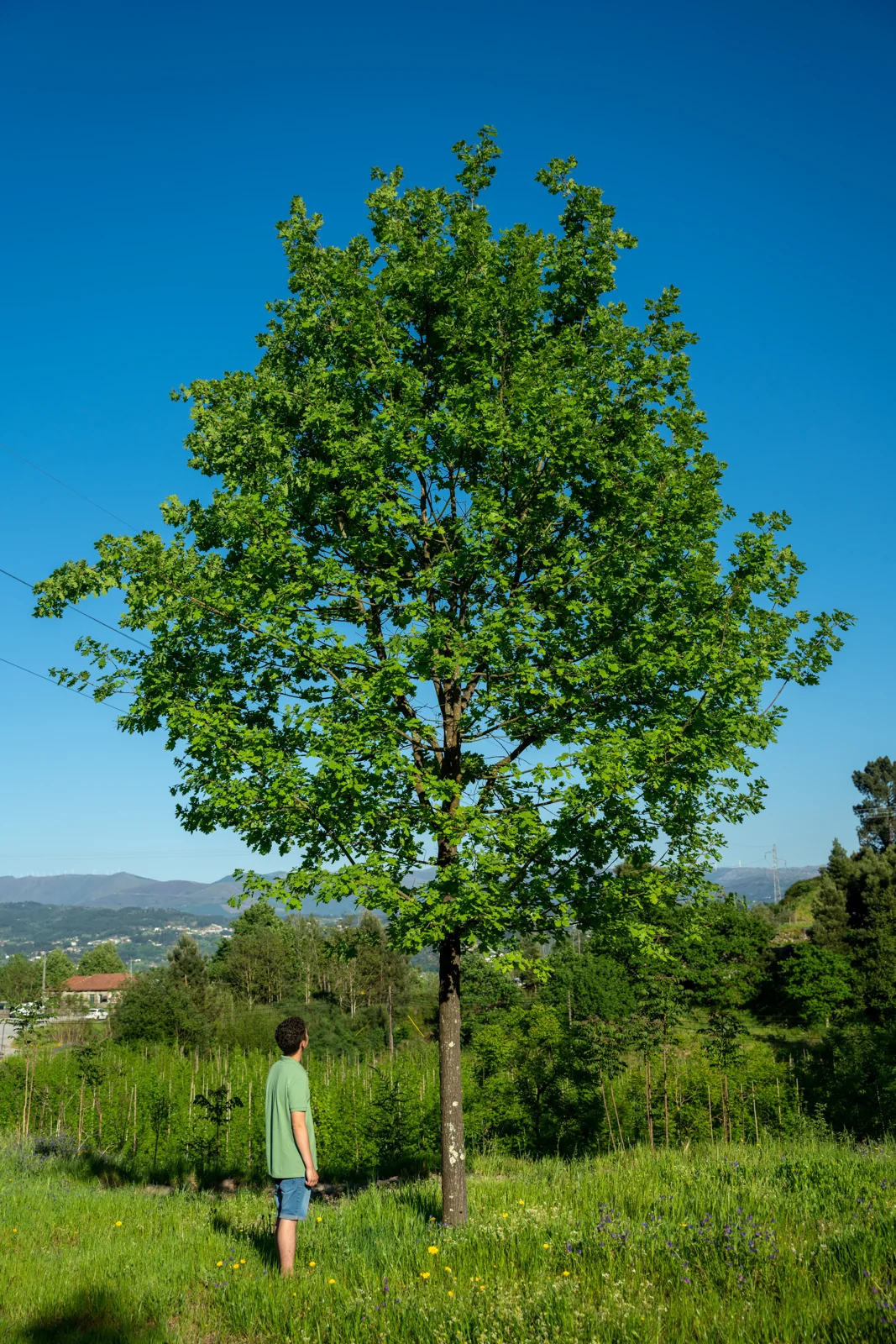
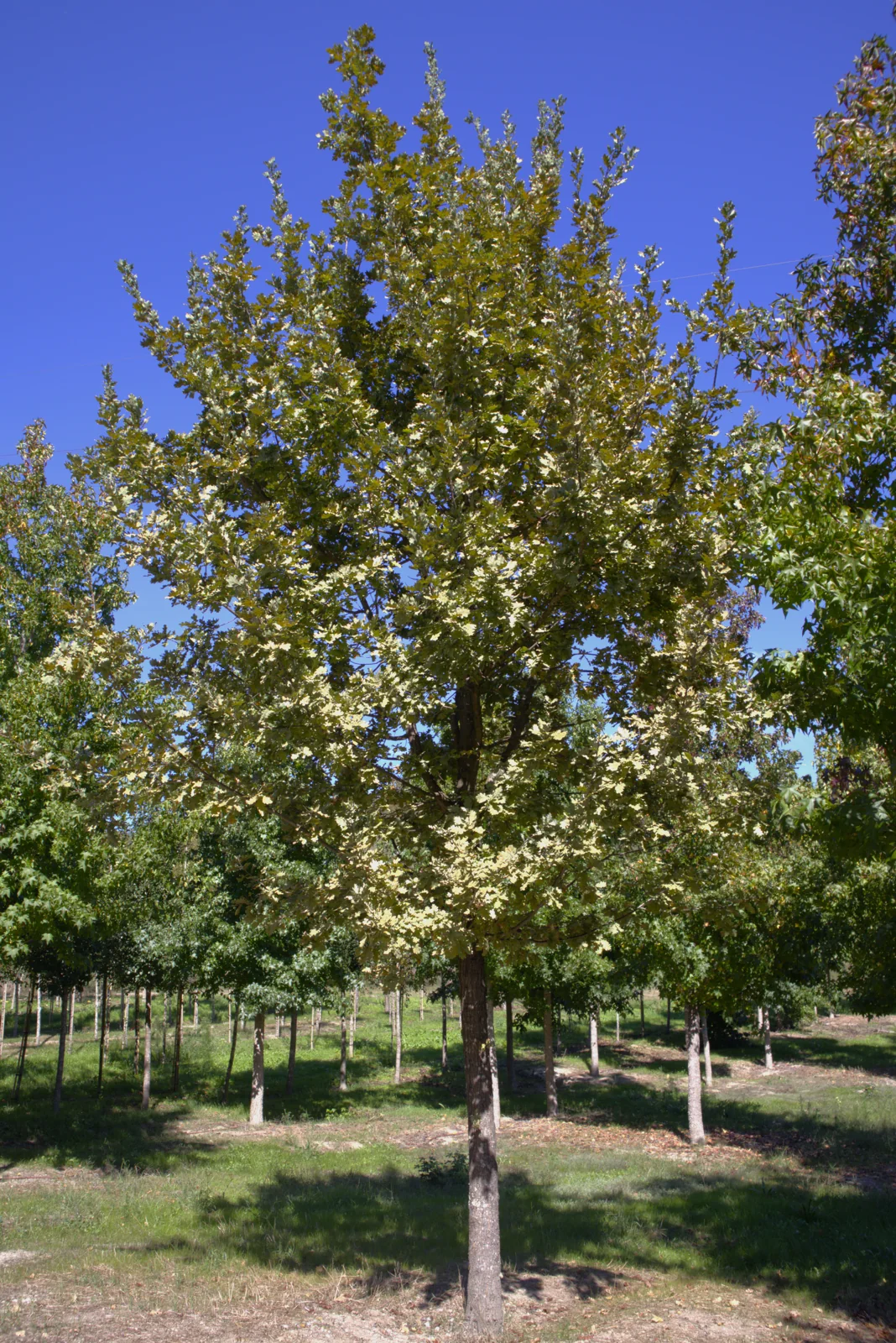
A long-lived deciduous oak with a broad, rounded crown wider than it is tall at maturity, specified where a project needs structural permanence and a native backbone species that German partners recognise without justification.
About this Species
As a German native (Stieleiche), this species carries no winter-hardiness question on any German project. It is reliably hardy well below the minima of every Klimaregion, from the Upper Rhine valley (Oberrheingraben) through the northern German lowlands (norddeutsche Tiefebene) to the pre-Alpine foothills (voralpenland) above 400 metres, and east of the…
Read more
Show less
As a German native (Stieleiche), this species carries no winter-hardiness question on any German project. It is reliably hardy well below the minima of every Klimaregion, from the Upper Rhine valley (Oberrheingraben) through the northern German lowlands (norddeutsche Tiefebene) to the pre-Alpine foothills (voralpenland) above 400 metres, and east of the Elbe, because the species evolved across exactly this continental range. For an international specifier, this removes the usual defensive burden: winter survival (Winterhärte) is not a line item to argue.
The tree reaches 20 to 35 metres in height with a 15 to 25 metre spread in open ground, forming a deep, anchoring root system that gives it stability on exposed sites and reliable moderate drought tolerance once established. It performs on a wide range of substrates, including the heavy clays and Rhine loess that defeat more particular species, and tolerates calcareous ground; it asks mainly for adequate root volume and summer moisture during the first establishing years. Its site requirements (Standortansprüche) are broad, which is much of its value as a low-maintenance framework tree.
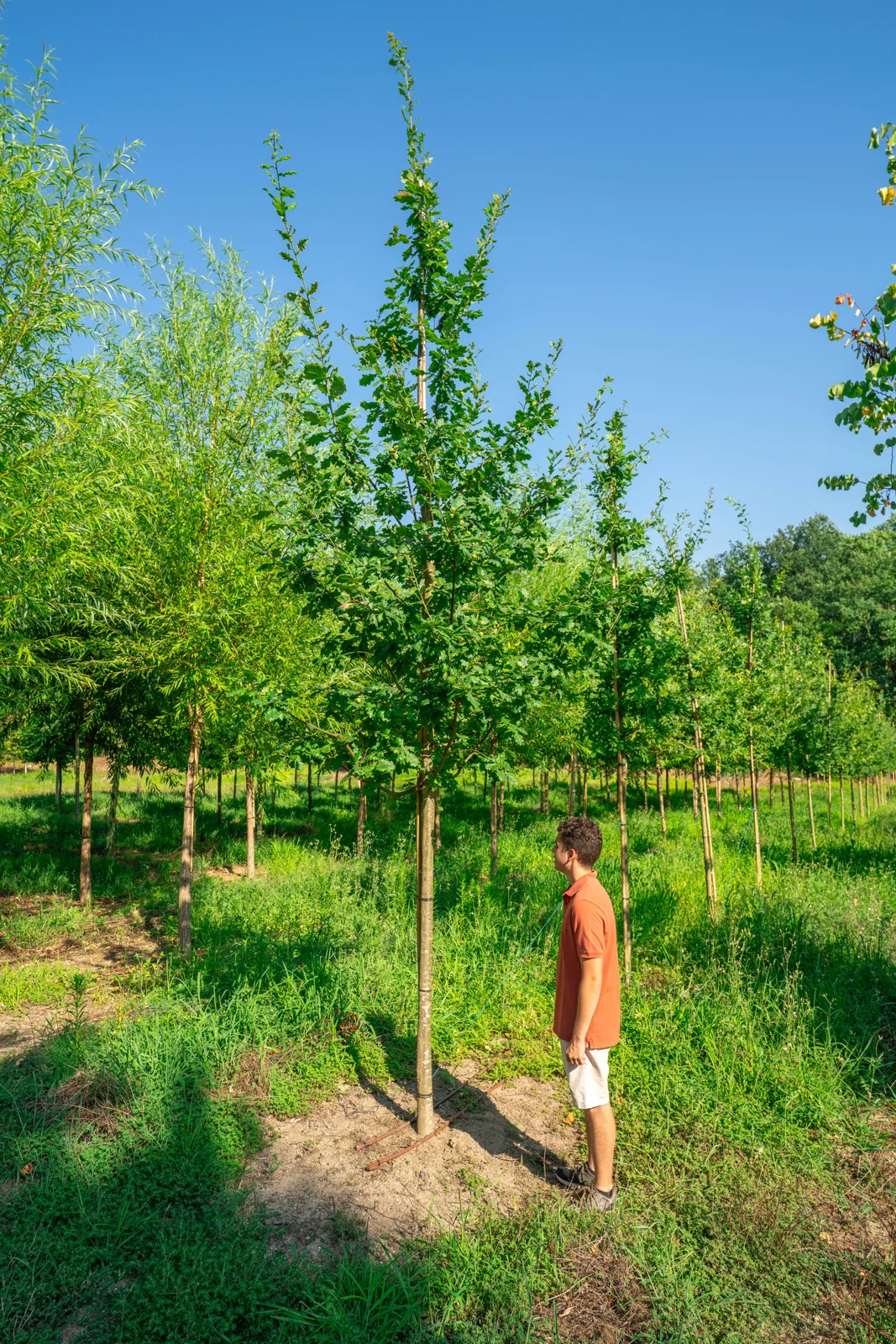
For street and urban use (Stadtbaumeignung), the honest position is mixed. The species and its narrow-crowned form Quercus robur 'Fastigiata' appear in the German street-tree canon and on GALK-related (the working group of German municipal parks departments) recommendations for open and semi-open situations, but the broad rooting and wide crown make it better suited to parks, the Stadtwald, Landschaftspark settings, and generous avenues than to confined inner-city pits. De-icing salt tolerance is limited, so it is not a first choice for heavily salted carriageway edges.
In humid summers it is susceptible to powdery mildew on young growth, a cosmetic rather than structural problem that an open, airy position reduces. Set against the pressures facing Fraxinus (Eschentriebsterben) and Acer pseudoplatanus (Russrindenkrankheit), its robust disease profile and Klima-Artenmatrix standing make it a defensible long-horizon specification, with strong autumn colour and deeply fissured winter bark adding seasonal structure through the leaf-off half of the German year.



Advice on this species
Want to know more about Quercus robur?
Tell us about your project and we'll advise you on this species — where it thrives, which size makes sense, and what to expect once planted.
- Produção própria
- Exemplares adultos
- Resposta em 1–2 dias
Sem compromisso · orçamento personalizado