

Fastigiate native oak for narrow street pits and avenues
English Oak ‘Fastigiata Koster’ · Quercus robur ‘Fastigiata Koster’
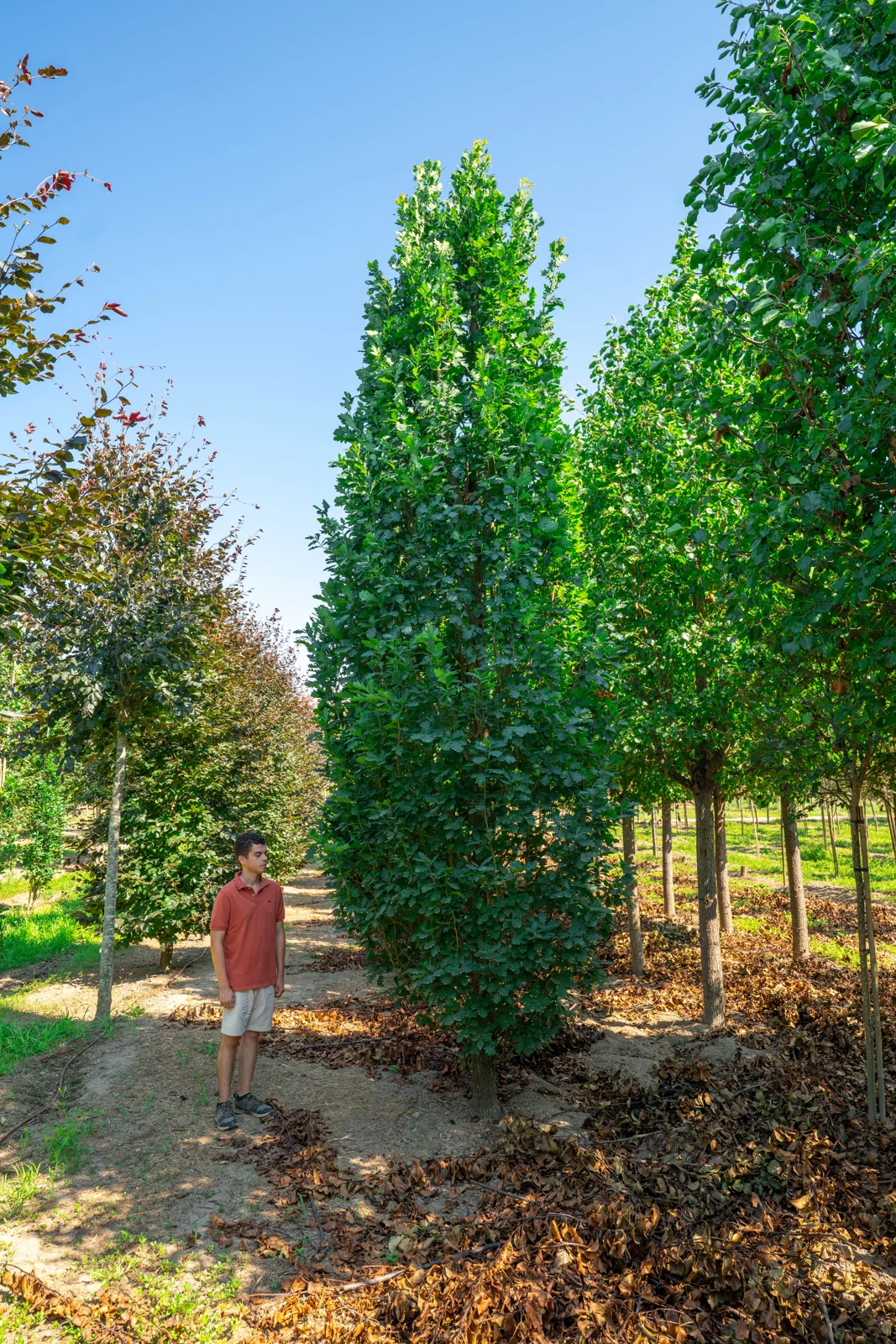
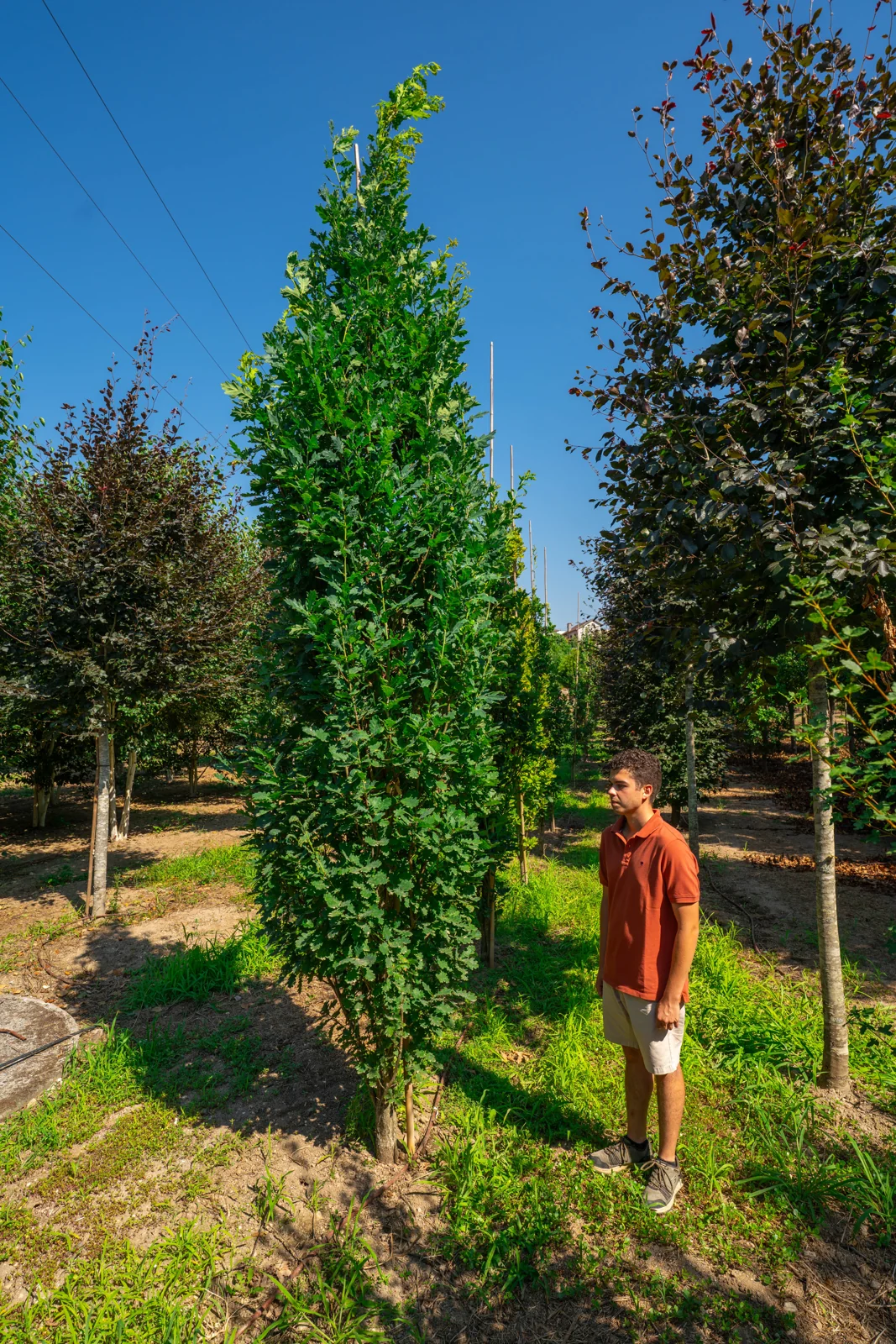
A columnar selection of the native Stieleiche, holding a dense, erect crown to roughly 4 metres wide. The fastigiate habit suits confined street pits and tight avenue spacings where a broad-crowned oak would not fit, with full native hardiness.
Key Facts
About this Cultivar
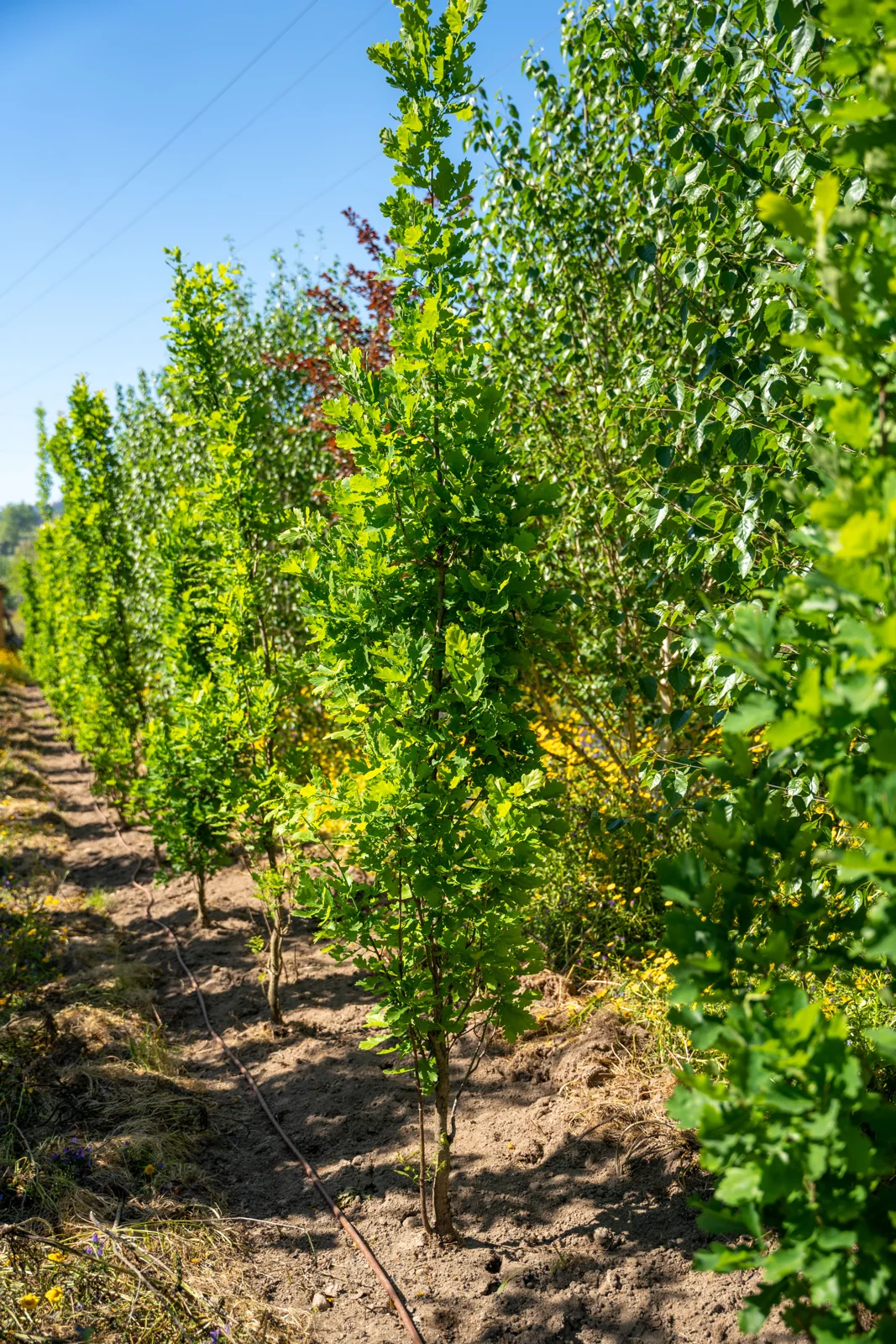
The upright, columnar form is the defining trait: branching stays close to the trunk, building a dense narrow crown that reaches around 20 metres in height but only some 4 metres in spread. This Habitusform makes it a candidate for Strassenbaum planting on tight alignments, narrow pits, and squares where the spreading wild type (around 15 to 25 metres…
Read more
Show less
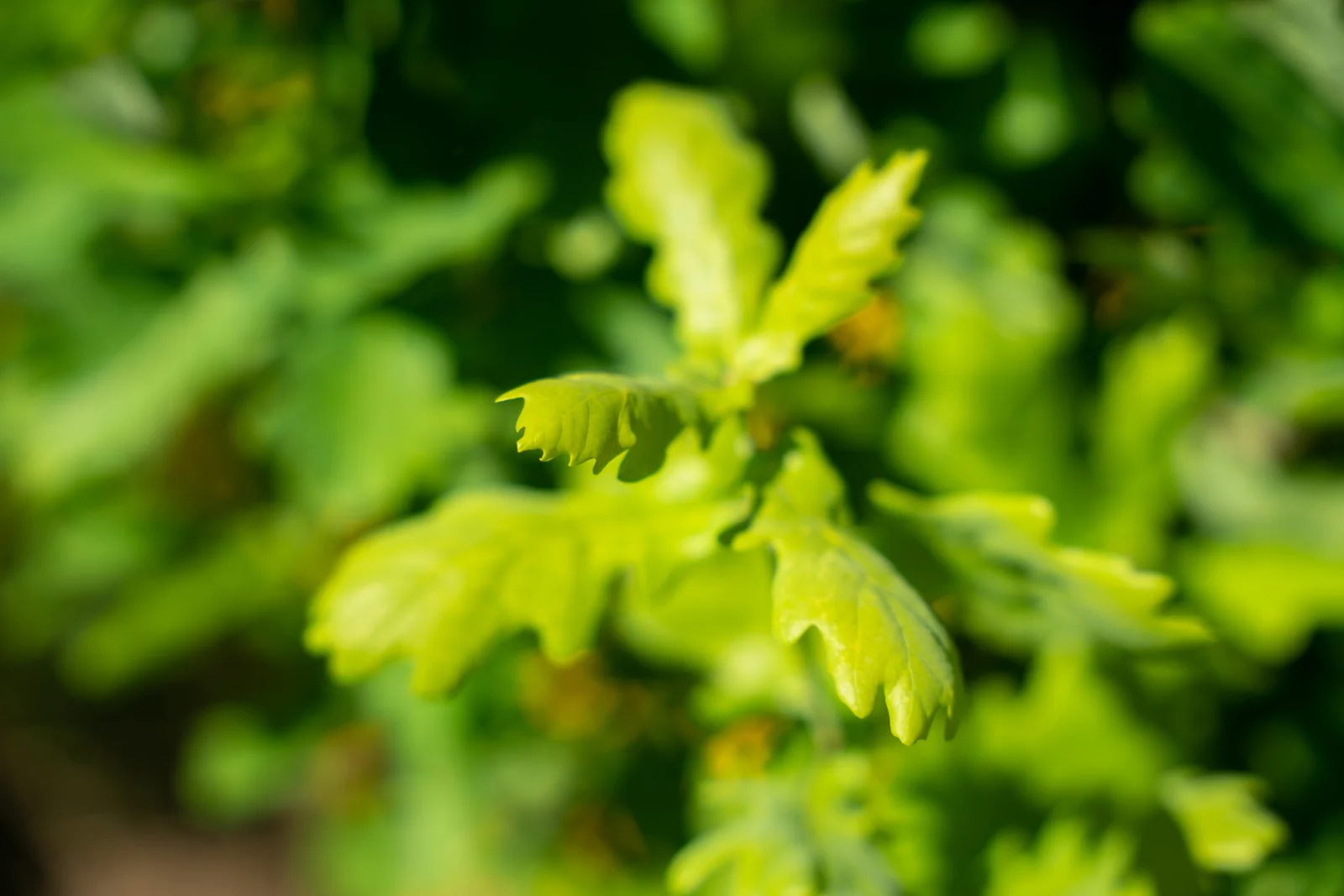
The upright, columnar form is the defining trait: branching stays close to the trunk, building a dense narrow crown that reaches around 20 metres in height but only some 4 metres in spread. This Habitusform makes it a candidate for Strassenbaum planting on tight alignments, narrow pits, and squares where the spreading wild type (around 15 to 25 metres broad) is unworkable. The dark green, lobed foliage carries into a yellow-brown autumn colour, and obovoid acorns are borne as on the species.
Winter hardiness (Winterhaerte) is not a constraint here. Quercus robur is the native Stieleiche, reliably hardy well below minus 25 degrees Celsius, so the cultivar performs across every German Klimaregion, from the Oberrheingraben (Upper Rhine valley) through the norddeutsche Tiefebene (northern German lowlands) to the cooler eastern continental sites and the Voralpenland (pre-Alpine foothills). There is no northern or eastern limit of the kind that qualifies Mediterranean stock, and no young-tree risk window to manage.
Site tolerance (Standortansprueche) is broad. It performs on most substrates, including heavy clay, loams, and calcareous soils, and is undemanding once established. Direct nursery observation rates it drought-resilient, tolerant of urban air pollution, and able to grow over paving, which supports its case for compacted inner-city pits. It takes full sun and accepts light shade. De-icing salt tolerance is modest, so on heavily salted carriageways position it where splash is limited.
As the native oak, it sits within the Stadtbaum and climate-adapted (KlimaBaum) discussion on its own merits, with no Eschentriebsterben analogue affecting it and a known wildlife value for birds. The narrow crown also lends it to formal avenue and screen work, behaving in alignment like a fastigiate Carpinus betulus but at full oak scale and longevity, giving the specifier a defensible structural choice for German urban and parkland schemes.
Advice on this species
Want to know more about Quercus robur 'Fastigiata Koster'?
Tell us about your project and we'll advise you on this species — where it thrives, which size makes sense, and what to expect once planted.
- Produção própria
- Exemplares adultos
- Resposta em 1–2 dias
Sem compromisso · orçamento personalizado