

Hardy red oak for park and avenue plantings
Scarlet Oak · Quercus coccinea
Among the most reliably hardy of the North American red oaks, it brings a broad, open crown and late scarlet autumn colour to park, lawn, and wide avenue plantings where a long-lived framework tree is wanted.
About this Species
First considerations on a German project are hardiness and root behaviour. Winter hardiness (Winterhärte) is the clear strength: this species is reliably hardy well below minus 25 degrees Celsius once established, so it performs across every German Klimaregion, from the Upper Rhine valley (Oberrheingraben) and Lower Rhine basin (Niederrheinische Bucht)…
Read more
Show less
First considerations on a German project are hardiness and root behaviour. Winter hardiness (Winterhärte) is the clear strength: this species is reliably hardy well below minus 25 degrees Celsius once established, so it performs across every German Klimaregion, from the Upper Rhine valley (Oberrheingraben) and Lower Rhine basin (Niederrheinische Bucht) through the central uplands to the northern German lowlands (norddeutsche Tiefebene), the east beyond the Elbe, and into the pre-Alpine foothills (voralpenland). Hardiness is not the constraint here that it is for Mediterranean stock.
The working constraints are soil and establishment. The species prefers acidic, free-draining loams and sands, and resists lime-induced chlorosis better than the closely related Quercus palustris, holding green foliage on calcareous substrates to moderate pH where Q. palustris yellows. It does not tolerate waterlogging or compacted, airless soils, so heavy glacial clay needs structural improvement and drainage before planting. The deep taproot that drives its drought resilience also makes it sensitive to root disturbance, which is why specimen size and a well-prepared torrão matter at this calibre.
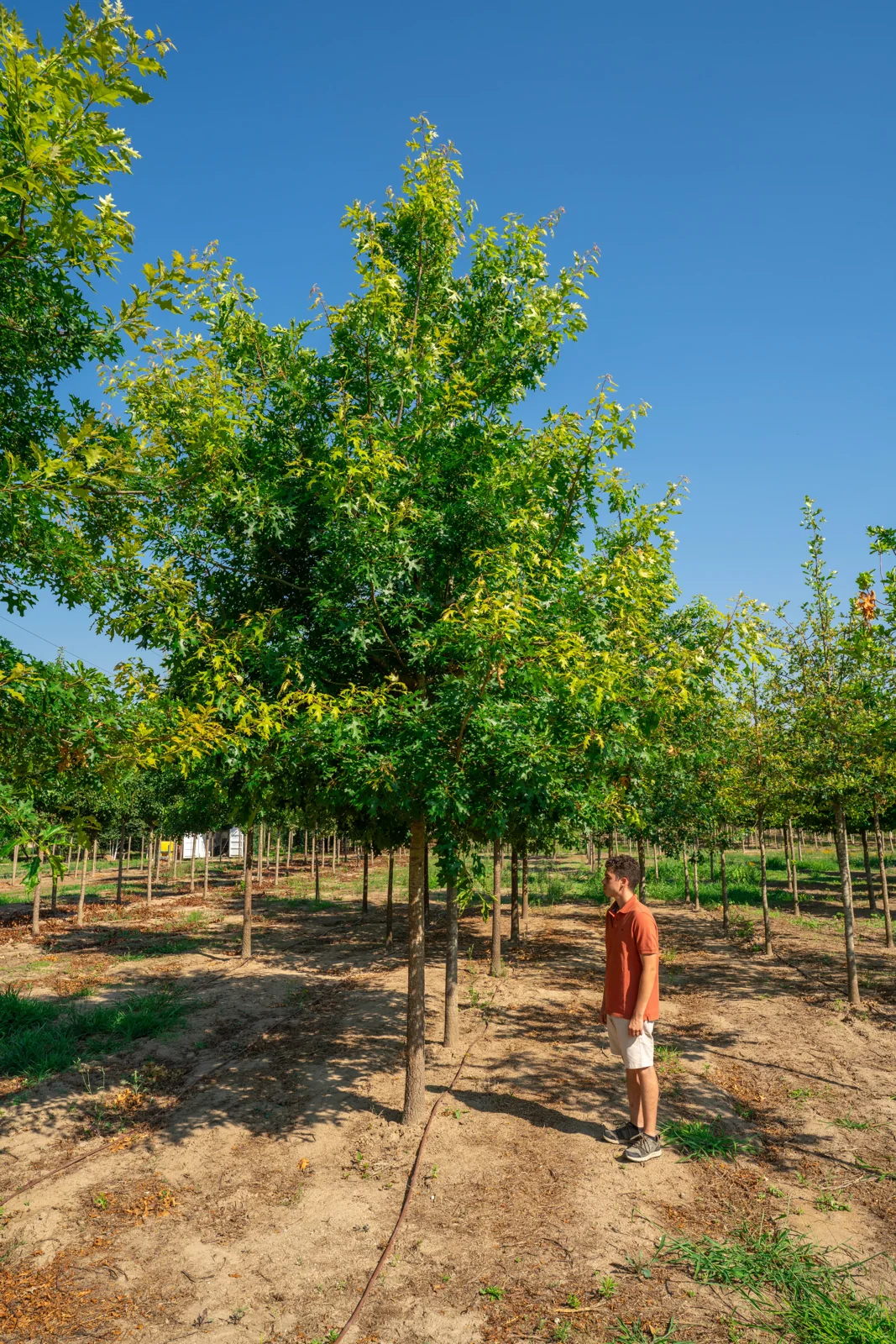
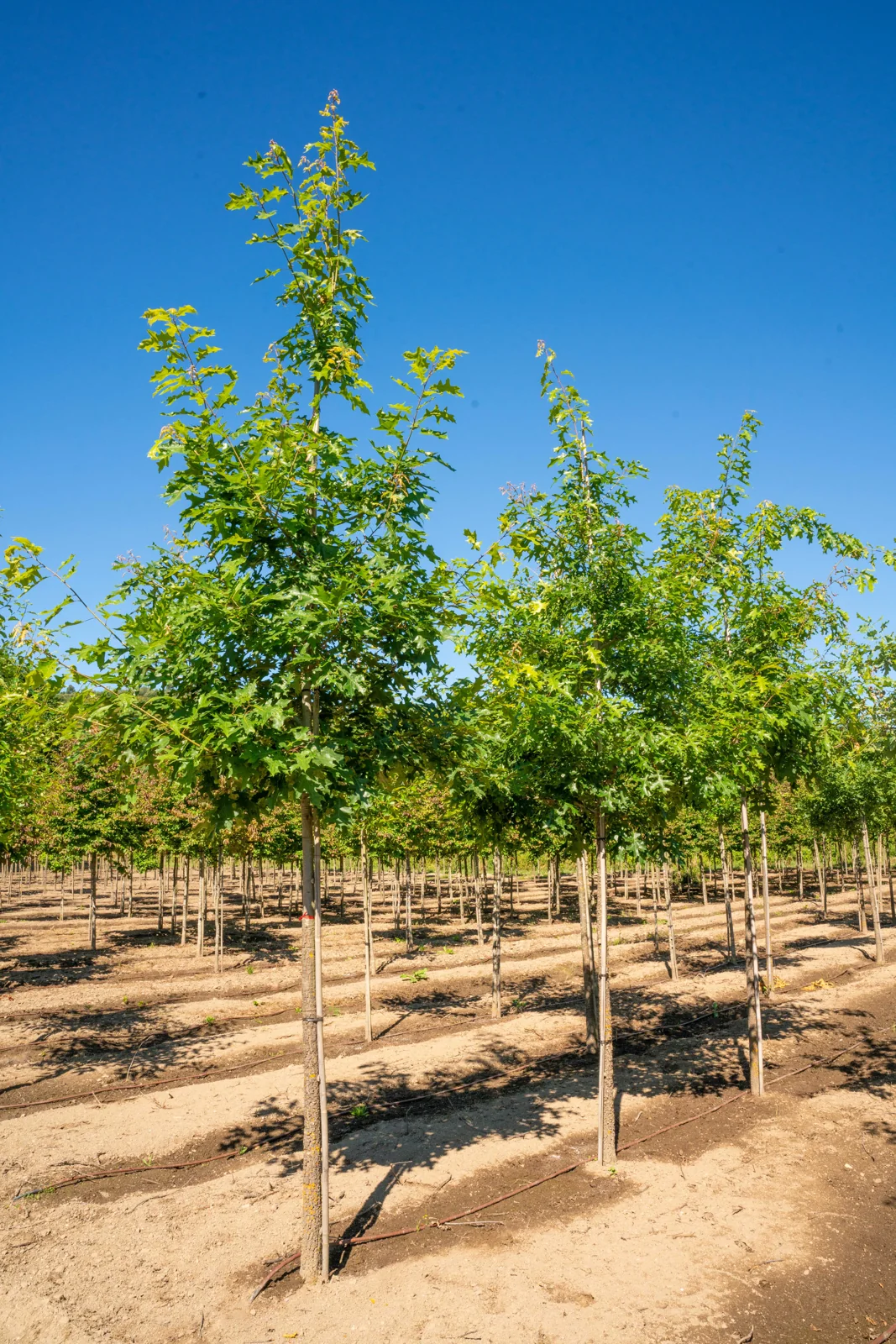
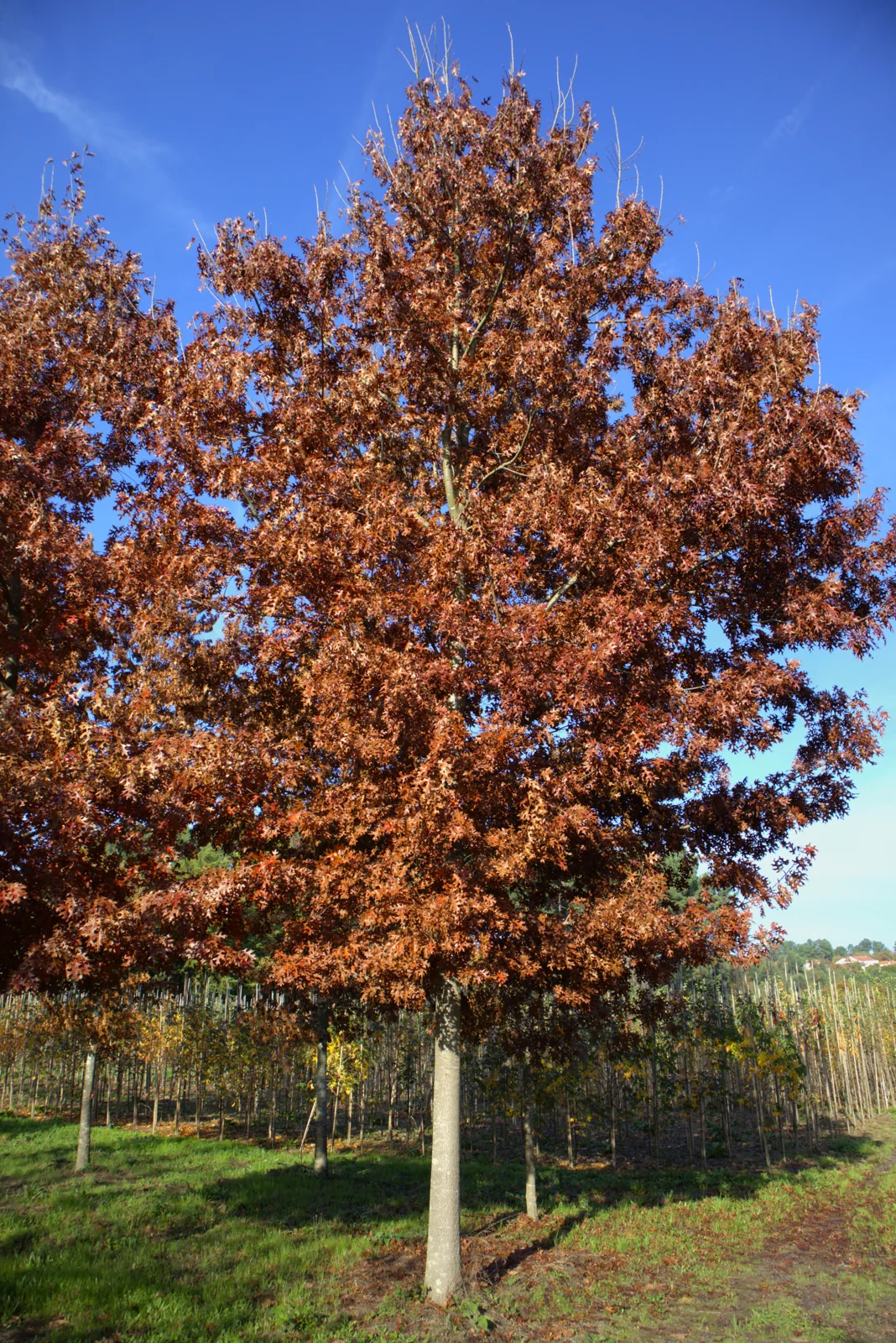
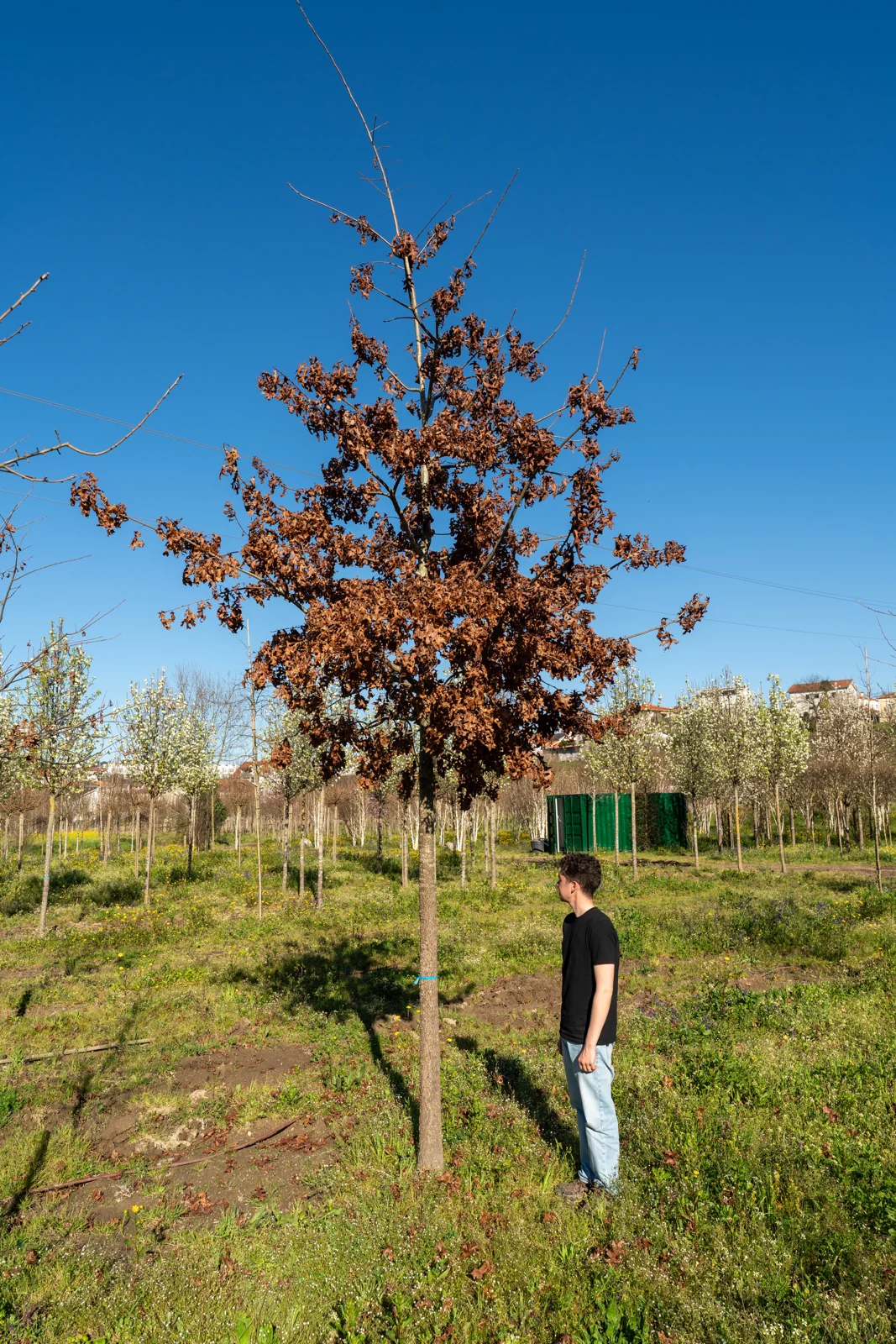
Form governs where it belongs. The crown is broad and spreading, reaching roughly 15 to 25 metres tall with a 12 to 18 metre spread at maturity, casting the light dappled shade that allows underplanting. This is a tree for the Stadtwald, the Landschaftspark, generous urban lawns, and wide avenues rather than narrow street pits, where its eventual spread would conflict with the section. Where root volume and crown space are adequate, its drought tolerance and proven hardiness make it a credible candidate for climate-adapted urban lists (Klima-Artenmatrix) as oaks gain weight in the Zukunftsbaum discussion.
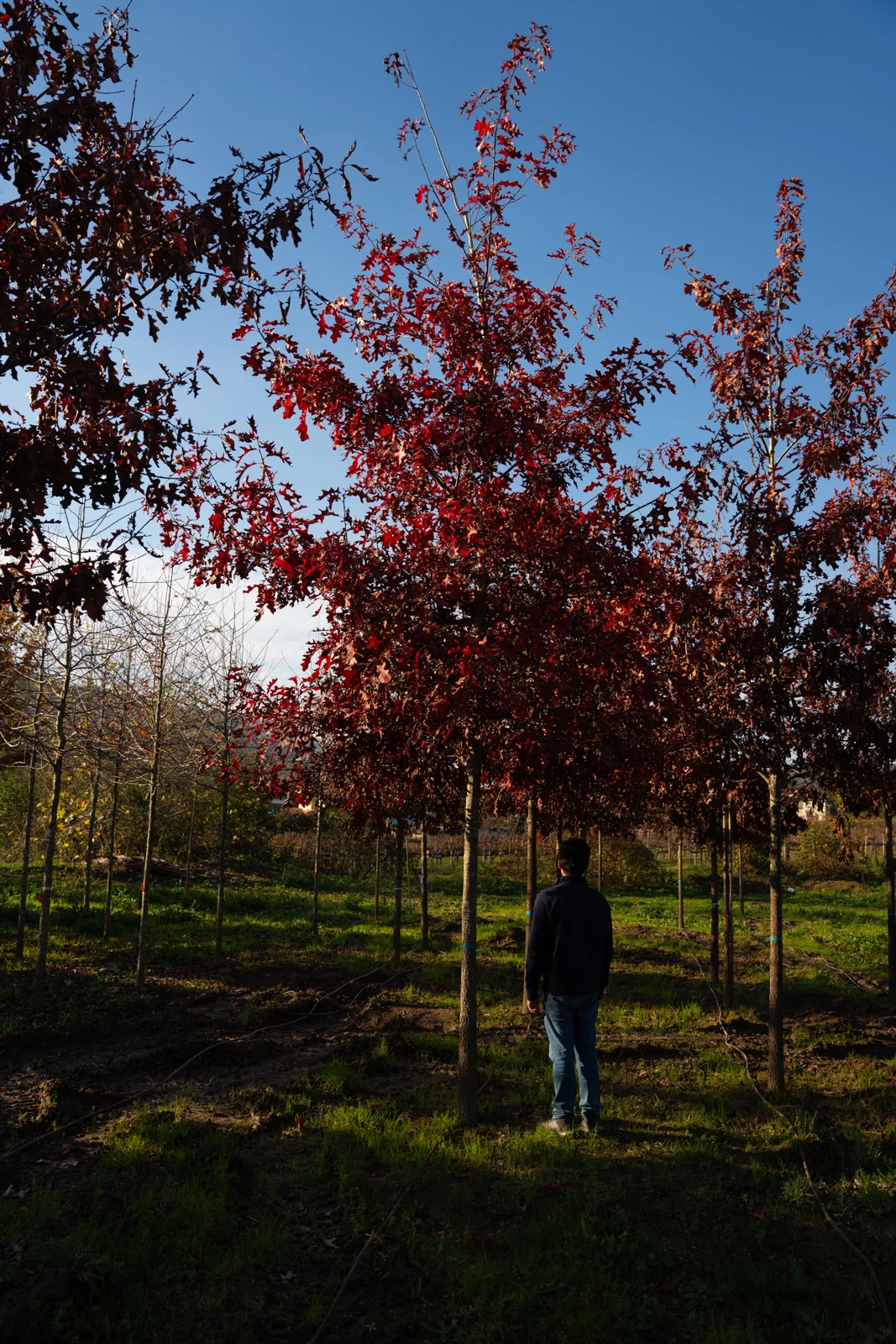
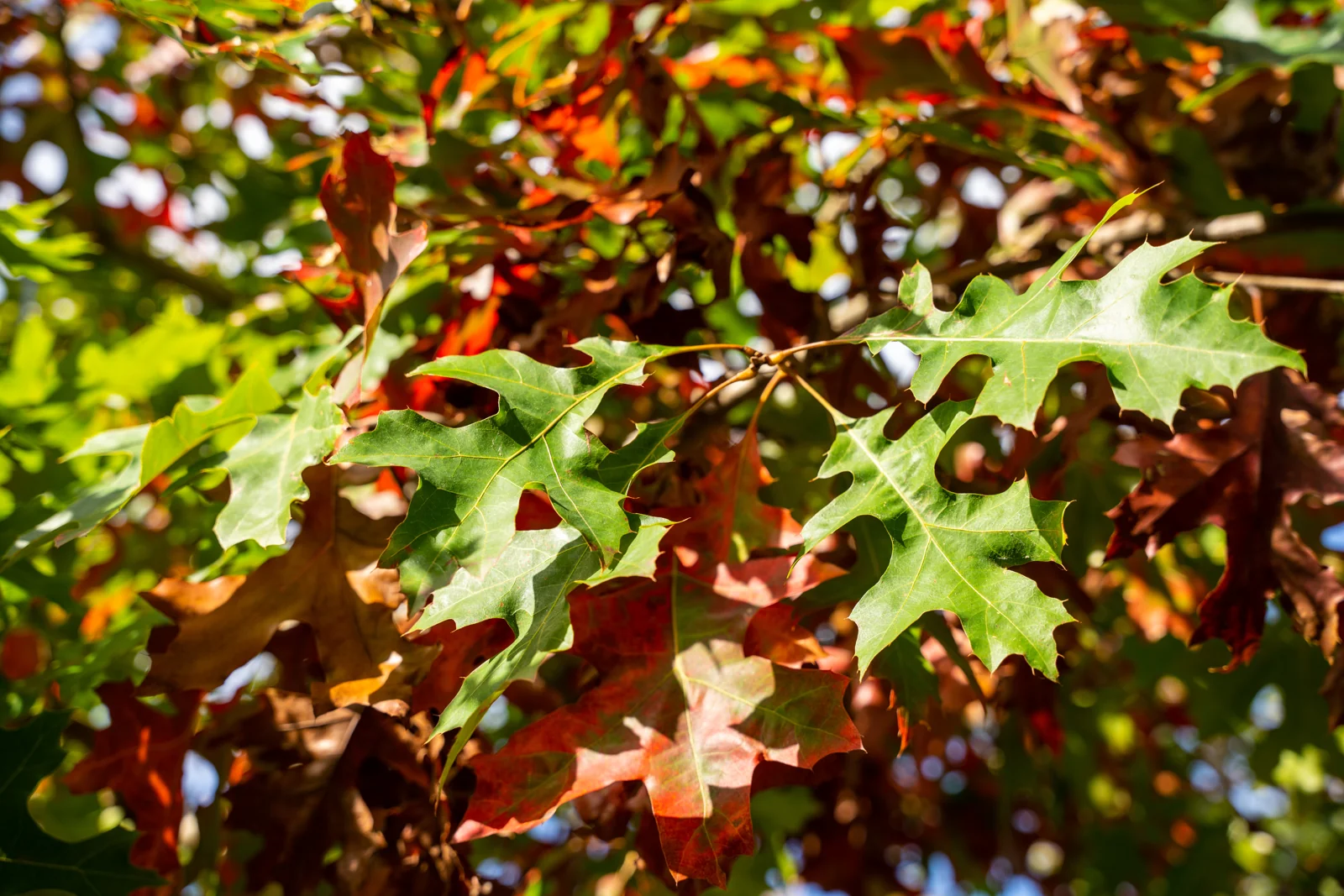
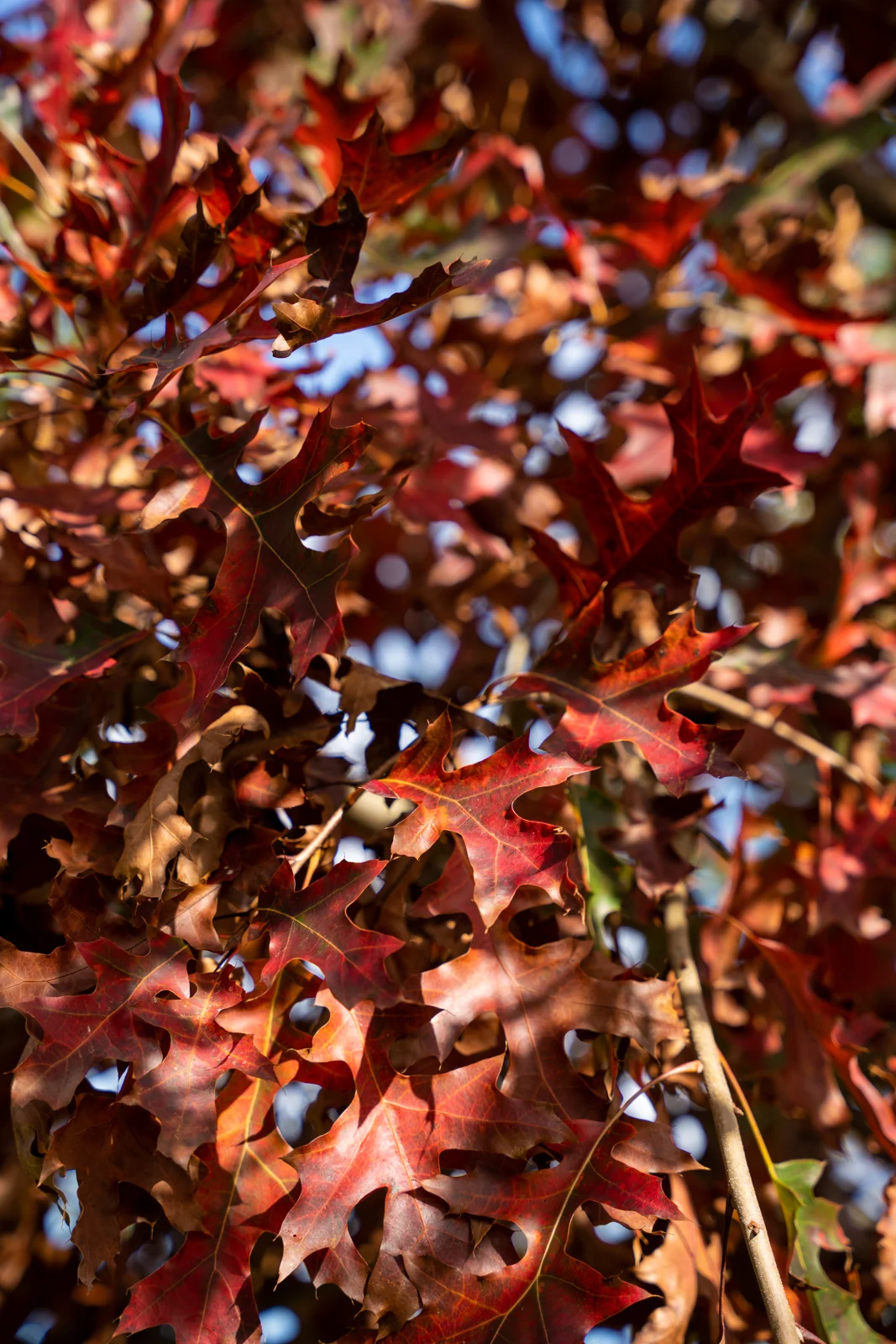
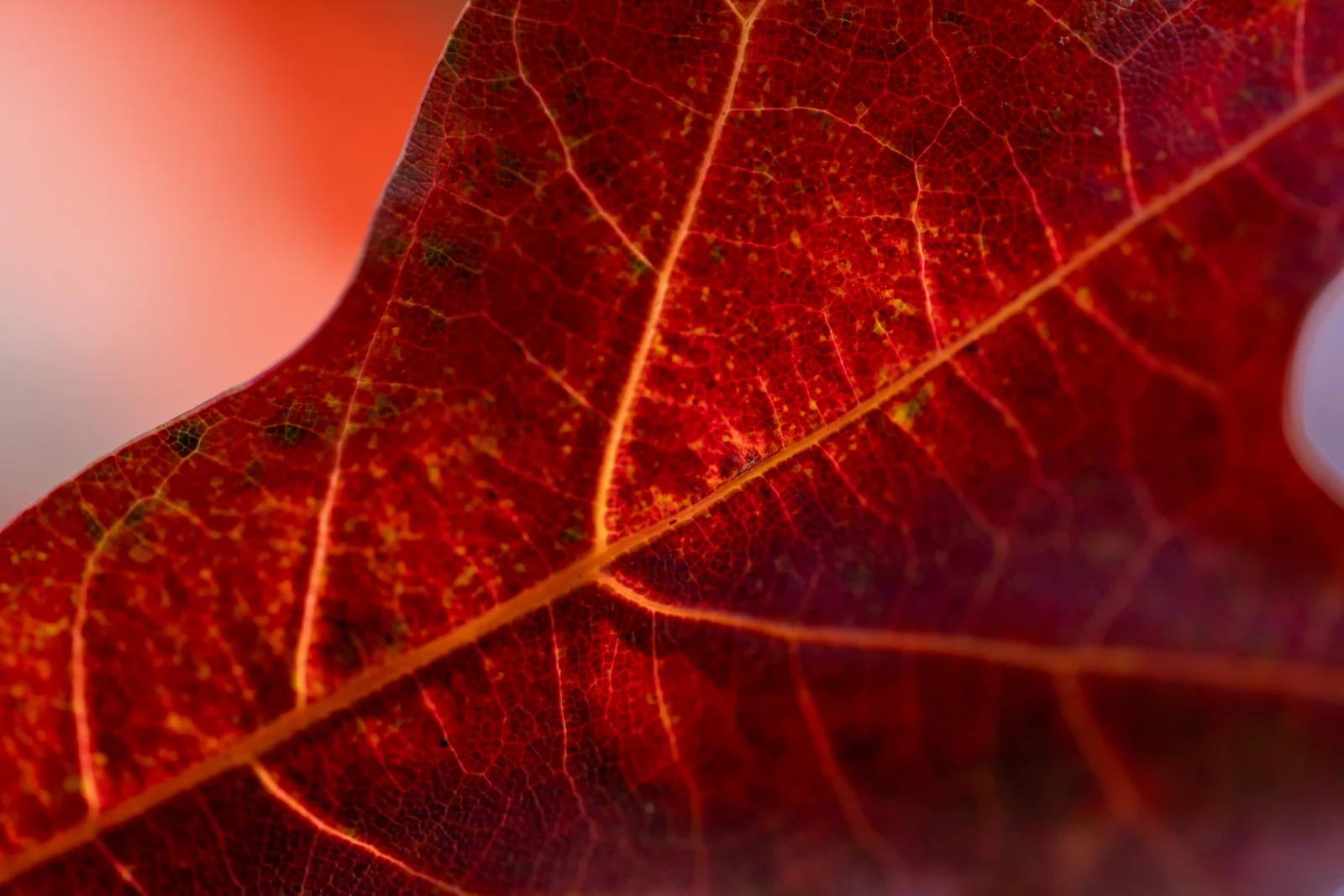
The ornamental case rests on autumn. Colour arrives late, after most oaks have turned, and the deep, bristle-tipped, C-shaped lobes hold a vivid scarlet for six to eight weeks, a genuine specification criterion for public space where leaf-off is half the visible year. The dark, ridged bark and stout reddish-brown shoots carry winter structure, and the canopy supports substantial insect and bird life as oaks reliably do.



Advice on this species
Want to know more about Quercus coccinea?
Tell us about your project and we'll advise you on this species — where it thrives, which size makes sense, and what to expect once planted.
- Produção própria
- Exemplares adultos
- Resposta em 1–2 dias
Sem compromisso · orçamento personalizado