

Columnar street tree for confined urban planting pits
Callery Pear ‘Chanticleer’ · Pyrus calleryana ‘Chanticleer’
Where a street alignment needs vertical structure without lateral spread, this narrowly conical Callery pear cultivar holds a tight 4 to 6 metre crown, tolerates compacted urban soils, and winters reliably across the German Klimaregionen.
Key Facts
About this Cultivar
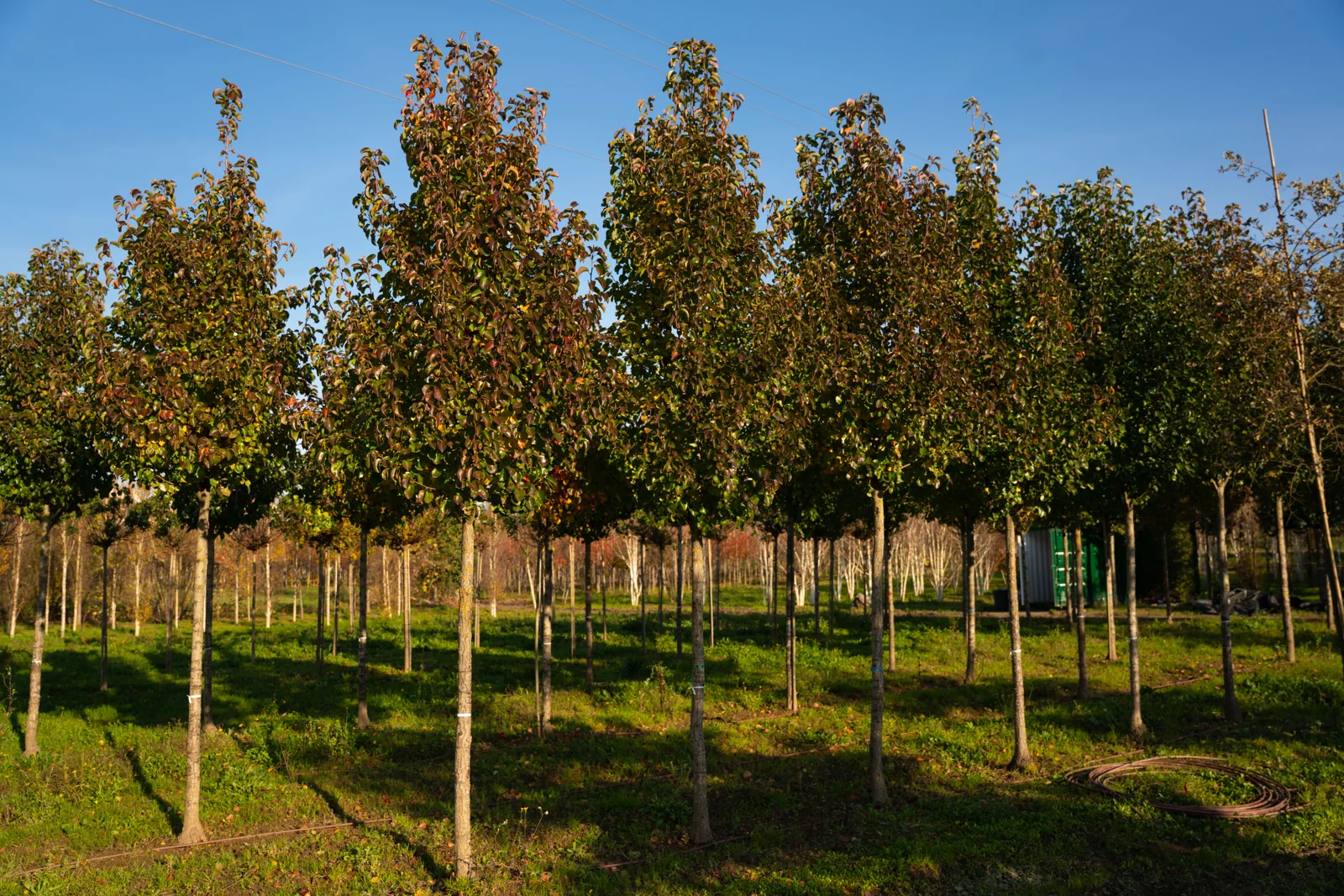
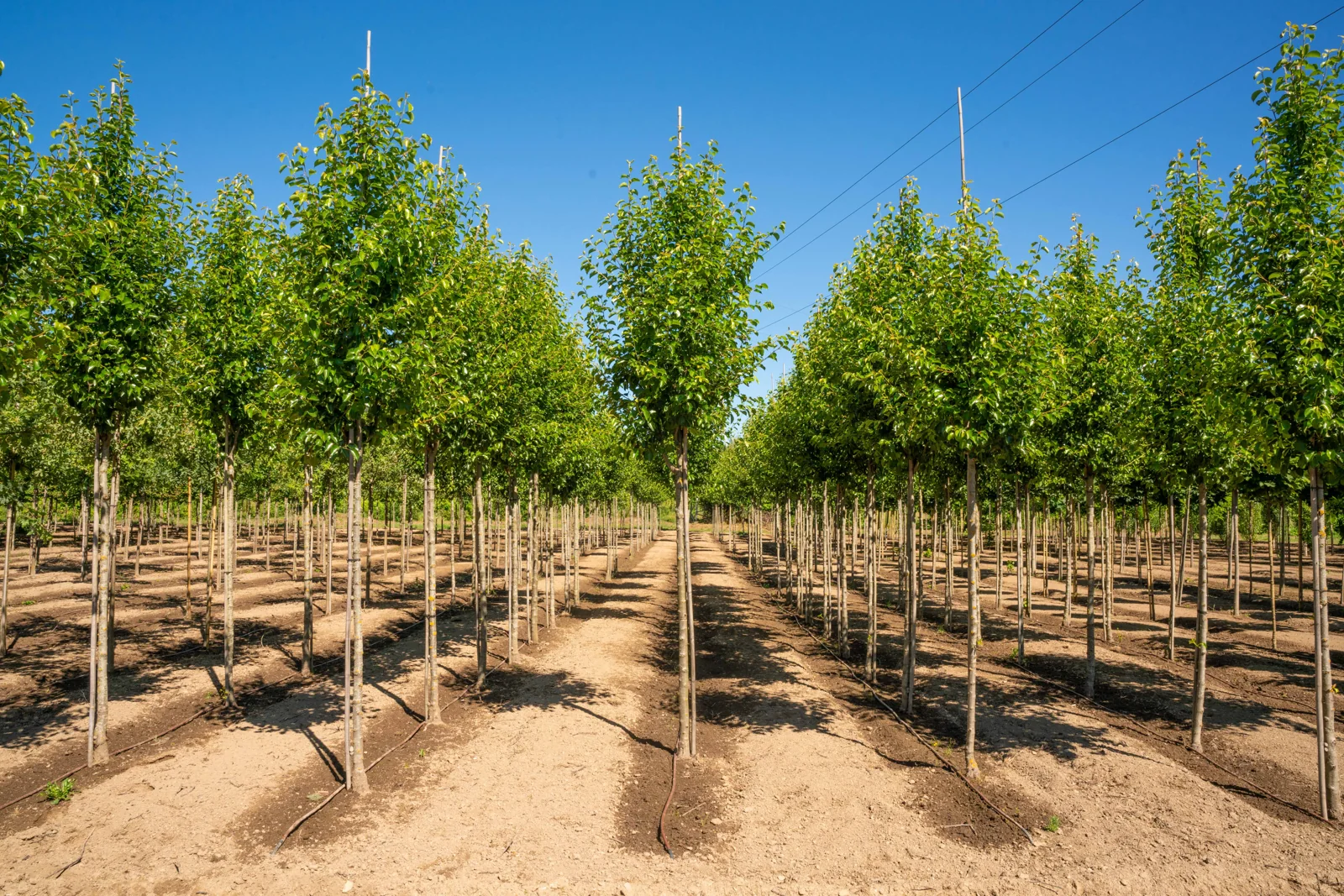
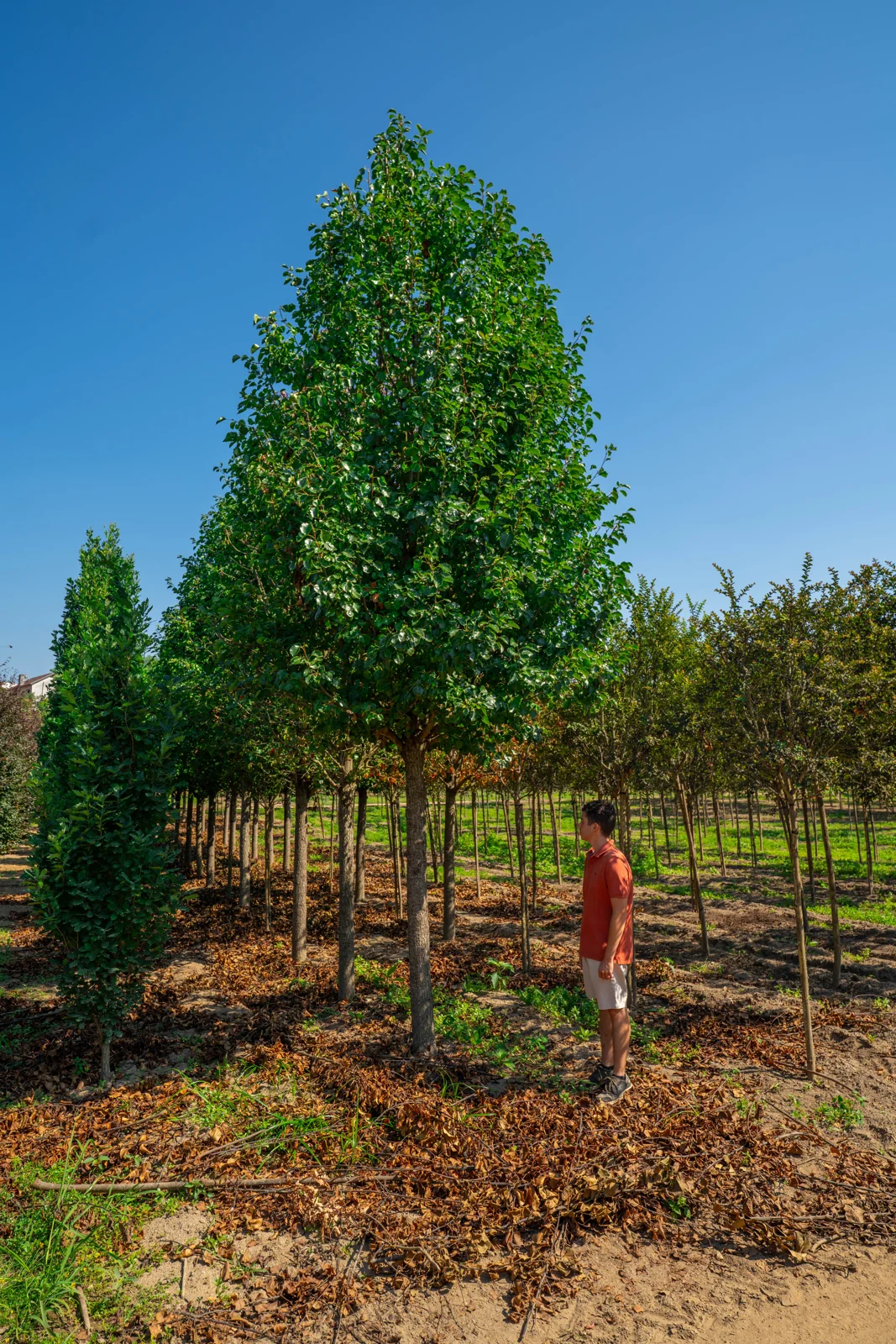
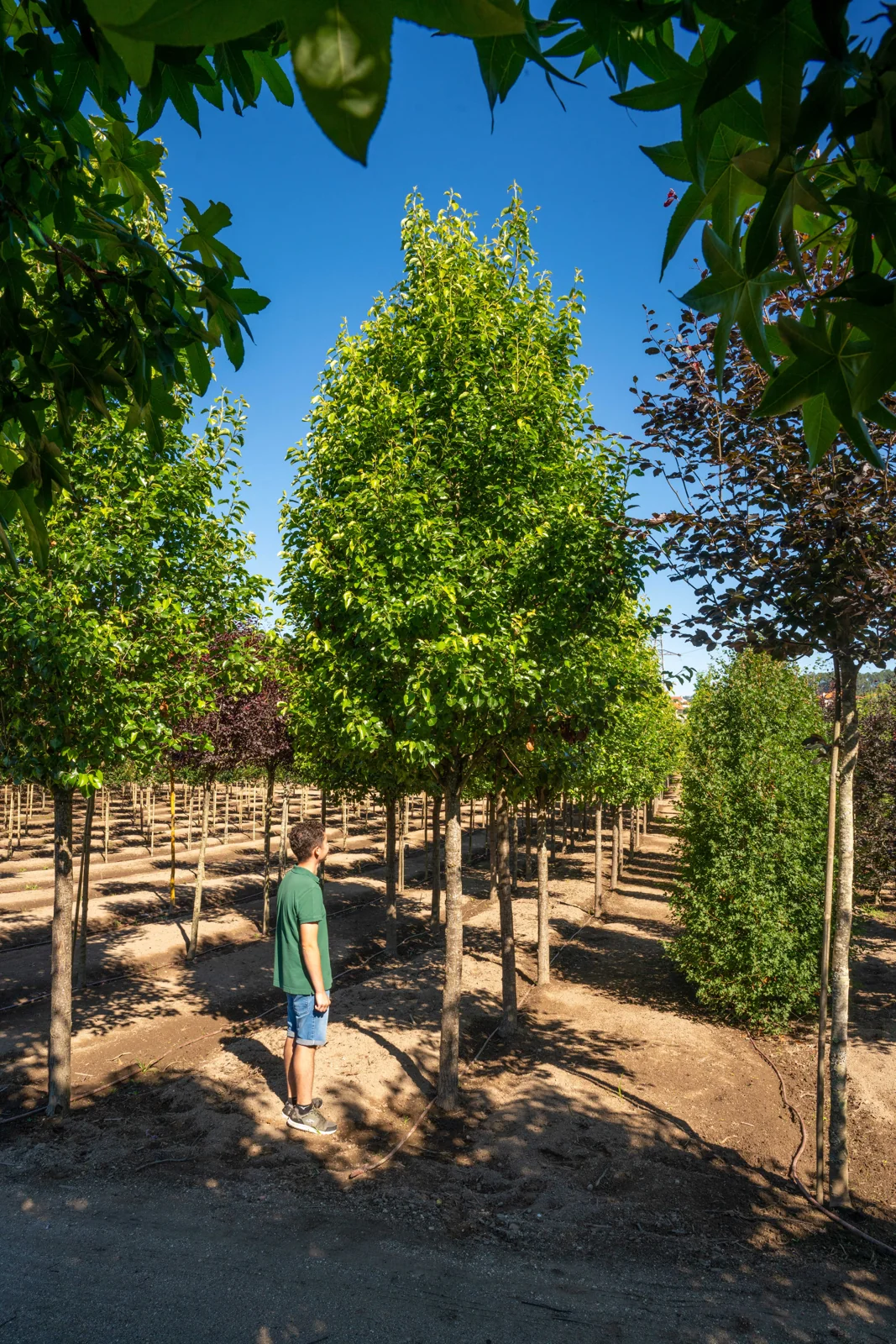
The cultivar 'Chanticleer' carries a narrowly conical to columnar crown (Habitusform), reaching 10 to 12 metres in height at a spread of only 4 to 6 metres. This vertical, space-economic habit suits confined street pits, alignments, and squares where a broad-crowned Tilia or Acer would not fit. White spring flower in March to May is followed by glossy dark…
Read more
Show less
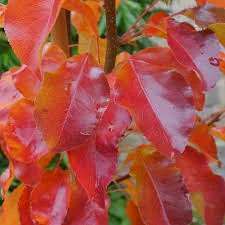
The cultivar 'Chanticleer' carries a narrowly conical to columnar crown (Habitusform), reaching 10 to 12 metres in height at a spread of only 4 to 6 metres. This vertical, space-economic habit suits confined street pits, alignments, and squares where a broad-crowned Tilia or Acer would not fit. White spring flower in March to May is followed by glossy dark foliage that turns red, purple, and orange in late autumn, giving two clear seasons of interest for public space.
Winter hardiness (Winterhärte) is the decisive argument for German specification. The cultivar is reliably hardy to around minus 28 degrees Celsius, placing it above the working minima of every German Klimaregion: the Upper Rhine valley (Oberrheingraben), the Lower Rhine basin (Niederrheinische Bucht), the northern German lowlands (norddeutsche Tiefebene), and the continental east beyond the Elbe. It performs at altitude in the pre-Alpine foothills (voralpenland) where many Mediterranean taxa become marginal. In the hardest continental sites, give young wood a free-draining substrate and a sheltered position through the first winters, after which established trees harden off fully.
Street tree suitability (Stadtbaumeignung) rests on tolerance of compacted soils, confined root volumes, and atmospheric pollution, with moderate de-icing salt tolerance. It grows on acidic, alkaline, sandy, and clay soils provided drainage is adequate, and tolerates calcareous substrates once established, which maps onto Rhine loess, glacial moraine, and Bavarian limestone Standorte. Full sun and moderate summer drought tolerance support its canopy through the recent sequence of hot, dry German summers.
The genus carries no equivalent of Eschentriebsterben or Massariakrankheit, and the cultivar is noted for resistance to the disease pressures of its rose-family relatives. With its climate-adapted profile and proven urban performance, 'Chanticleer' reads as a credible Zukunftsbaum candidate and a defensible columnar alternative within the Stadtbaum-Kanon for international specifiers coordinating with German partners.
Advice on this species
Want to know more about Pyrus calleryana 'Chanticleer'?
Tell us about your project and we'll advise you on this species — where it thrives, which size makes sense, and what to expect once planted.
- Produção própria
- Exemplares adultos
- Resposta em 1–2 dias
Sem compromisso · orçamento personalizado