

Frost-hardy spring-flowering specimen for urban courtyards and parks
Japanese Cherry ‘Shirotae’ · Prunus serrulata ‘Shirotae’
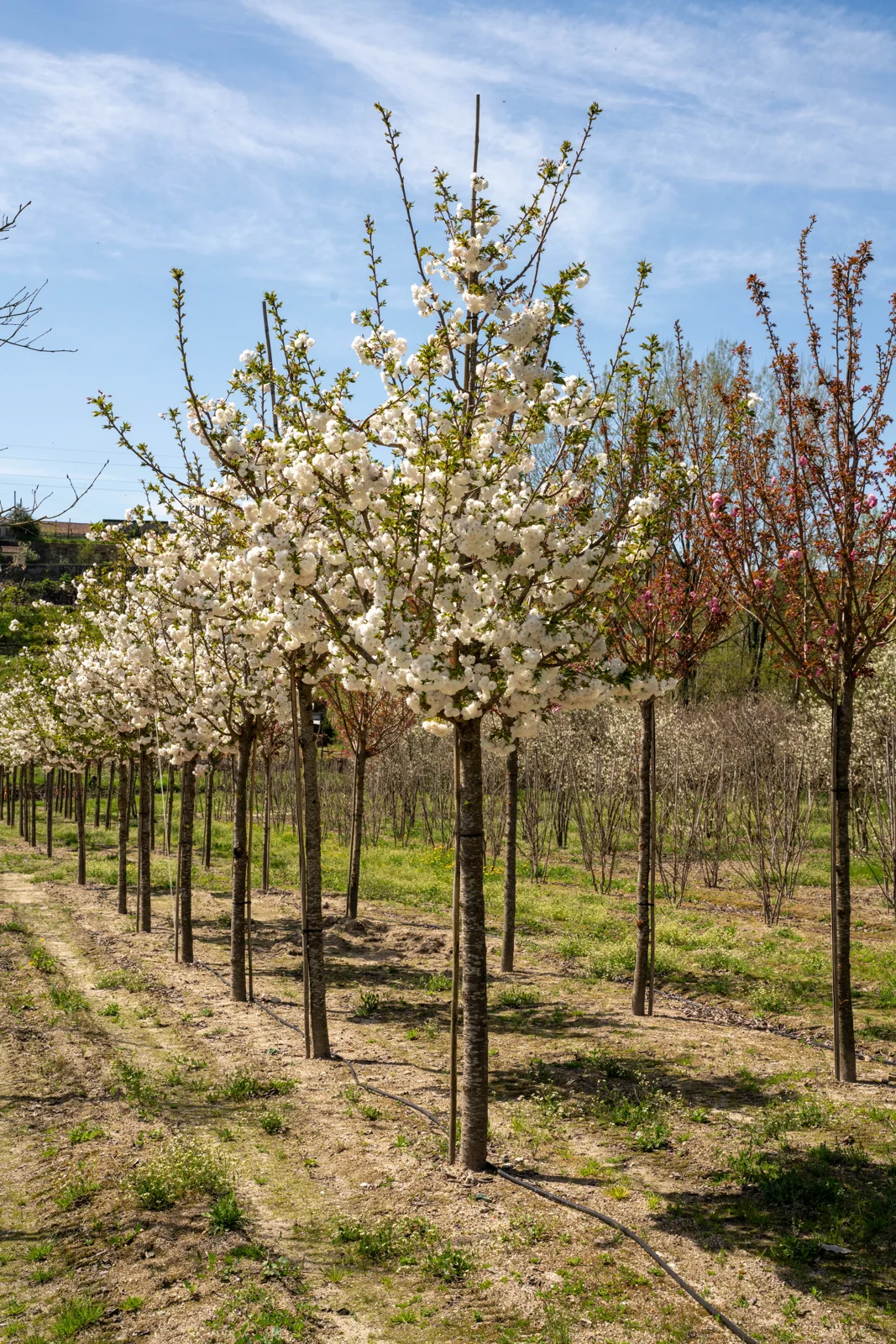
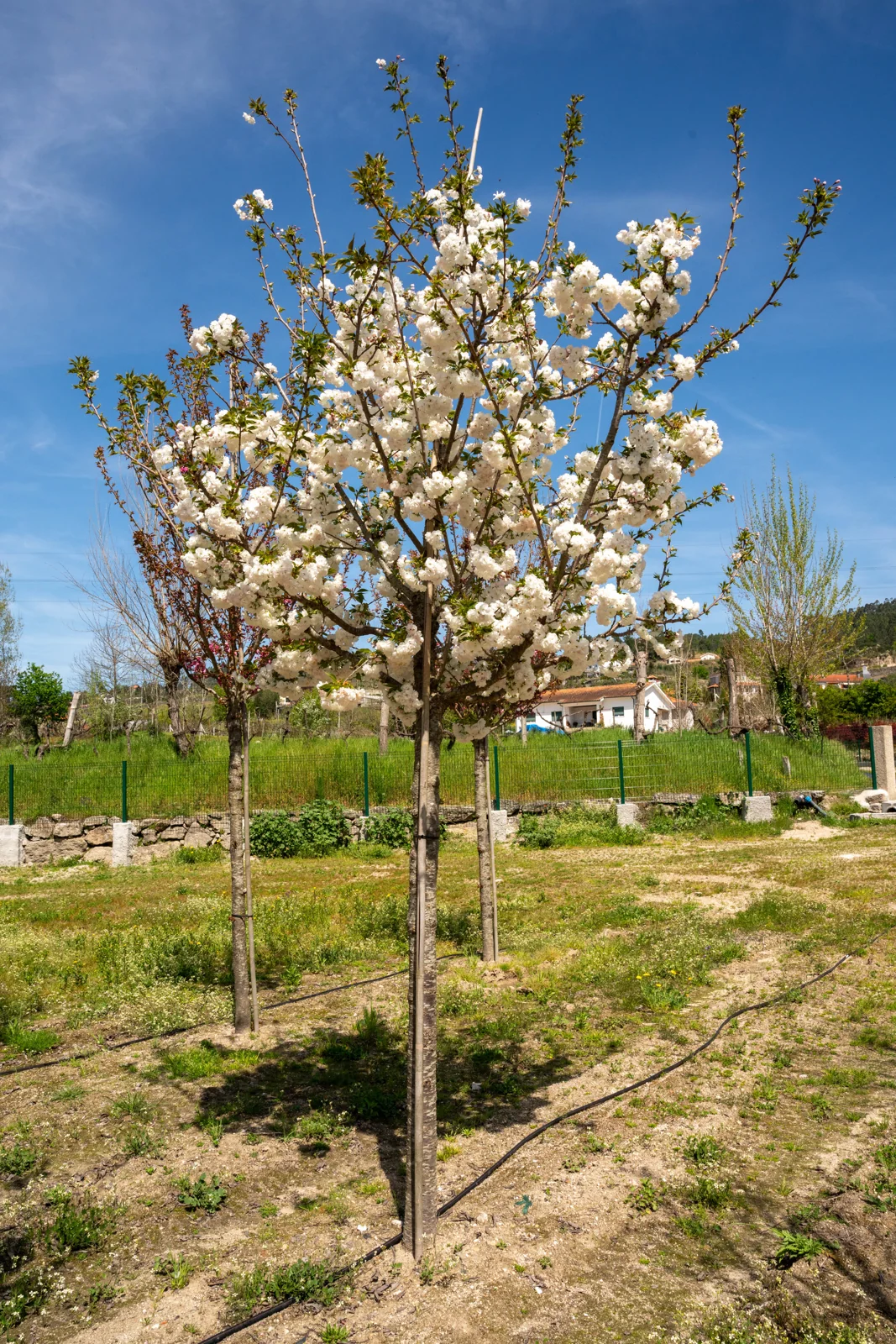
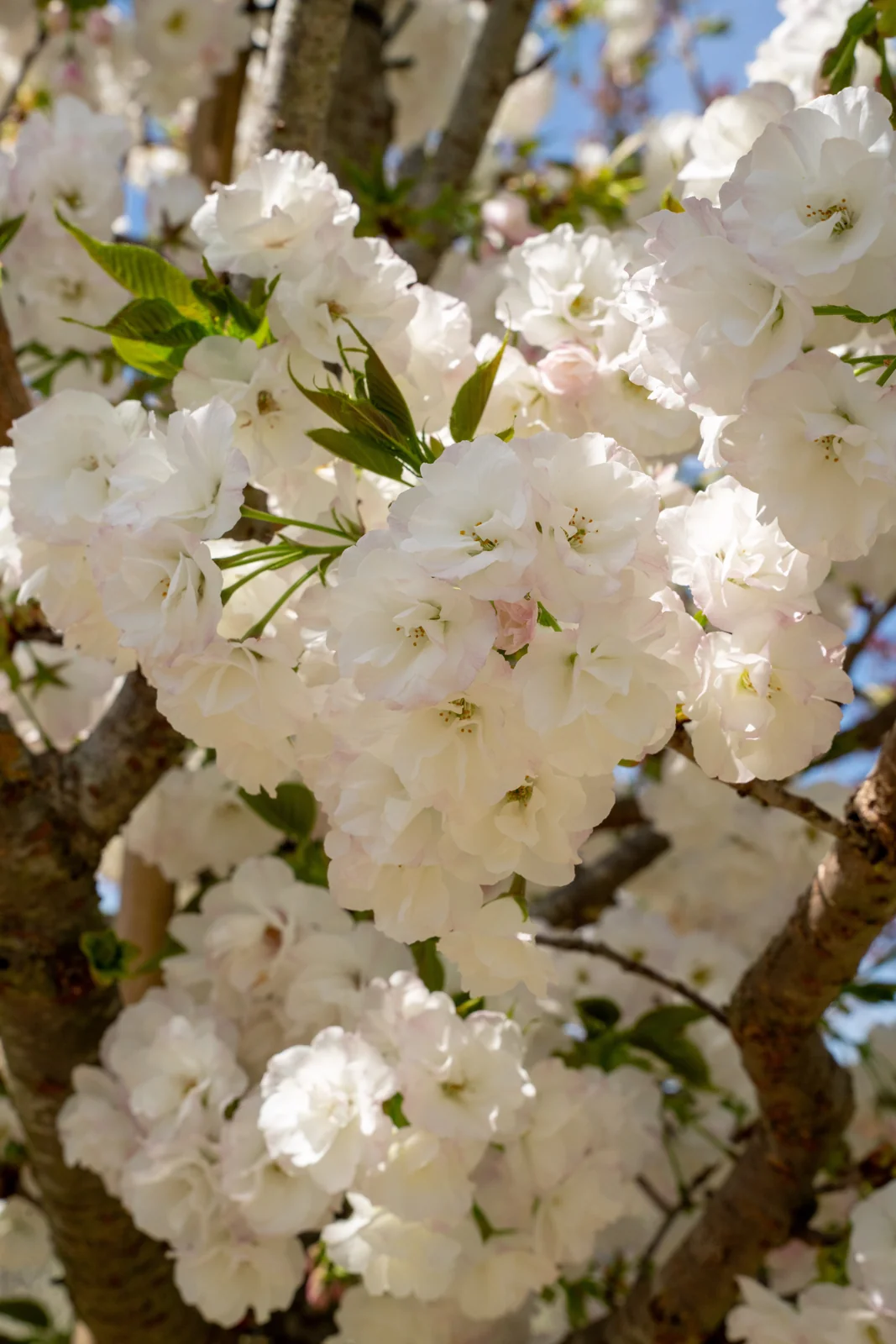
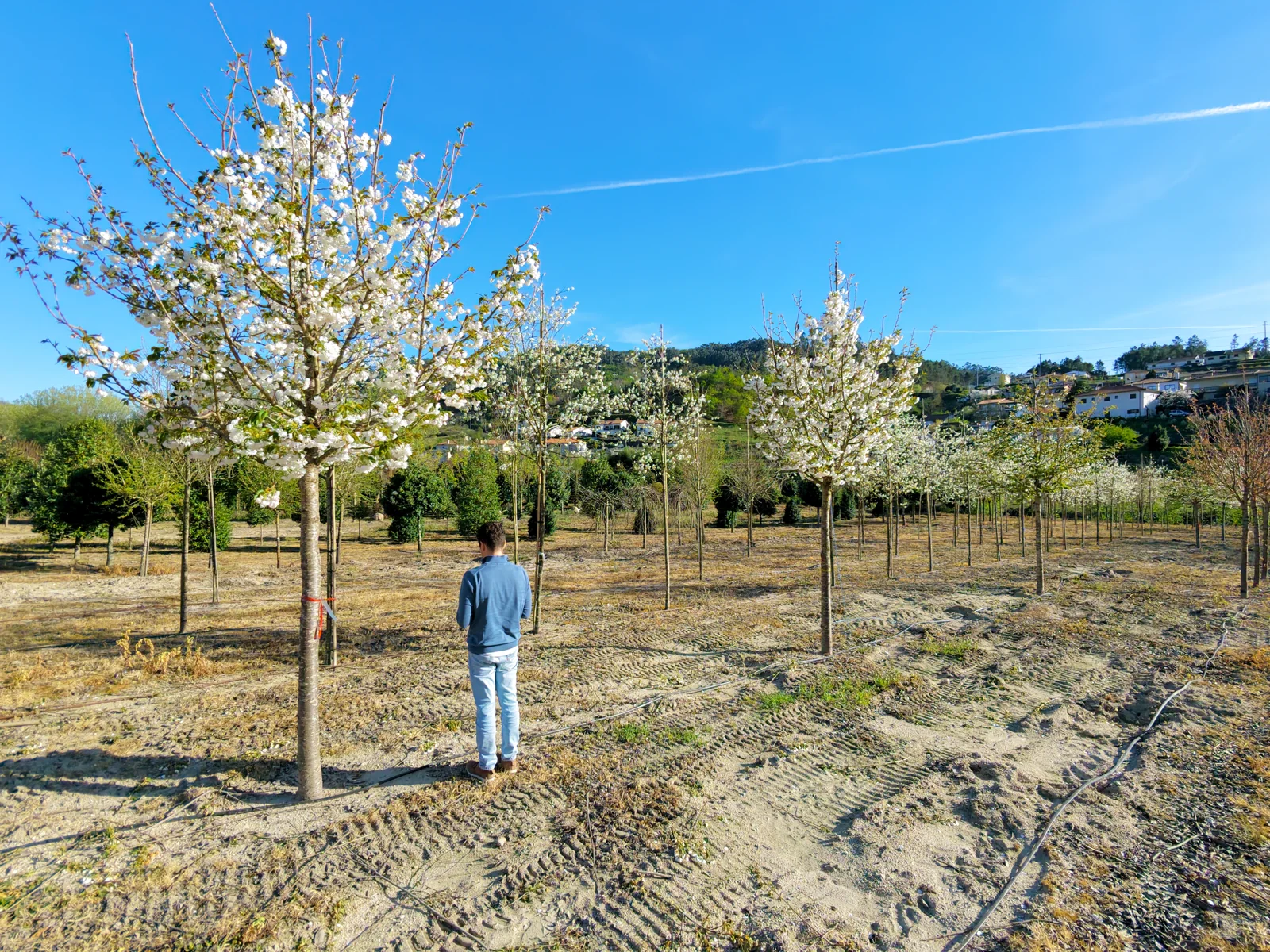
A broad, horizontally tiered crown of pure-white semi-double blossom defines this Japanese flowering cherry (Japanische Bluetenkirsche), a small deciduous specimen for parks, courtyards, and residential schemes where an April flowering display and dependable winter hardiness must both hold.
Key Facts
About this Cultivar
The habit is the specification argument: a low, wide-spreading crown that layers almost horizontally, reaching 4 to 6 metres in height with a comparable spread at maturity. Growth is slow, so the form develops in controlled stages and the mature footprint is predictable on a plan. The single ornamental peak is the April flowering: large, semi-double,…
Read more
Show less
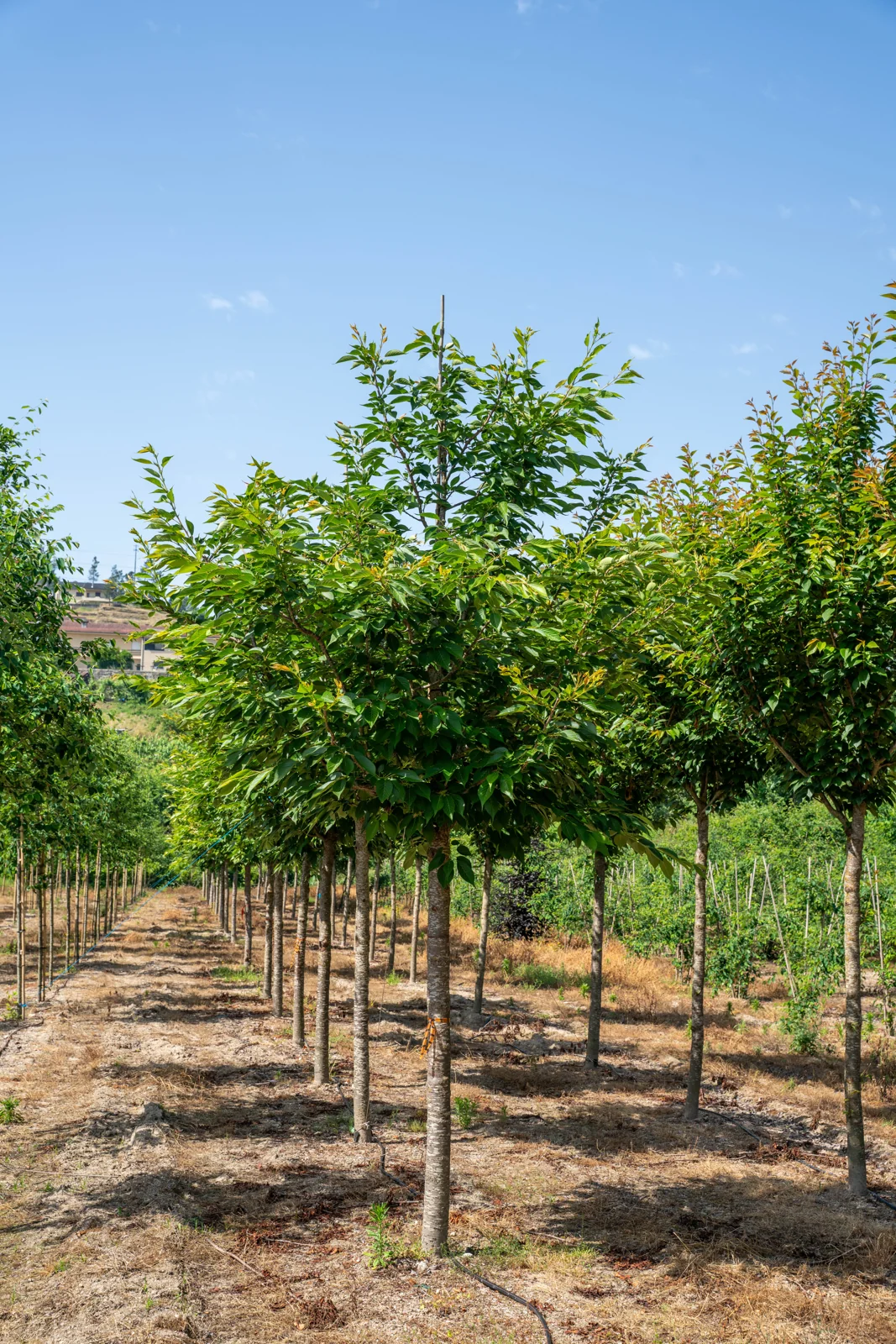
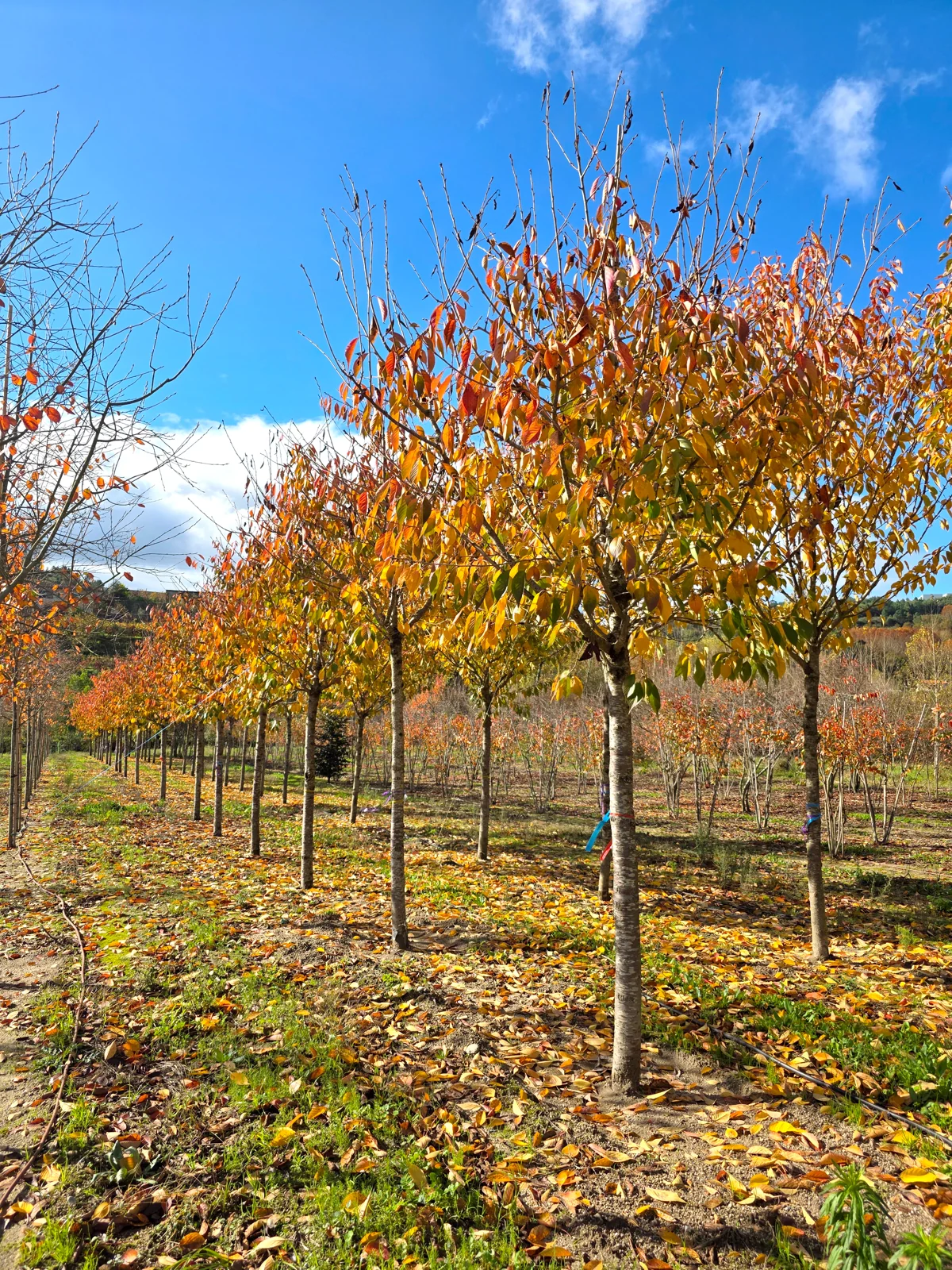
The habit is the specification argument: a low, wide-spreading crown that layers almost horizontally, reaching 4 to 6 metres in height with a comparable spread at maturity. Growth is slow, so the form develops in controlled stages and the mature footprint is predictable on a plan. The single ornamental peak is the April flowering: large, semi-double, pure-white flowers in dense pendent clusters, lightly fragrant, carried on bronze-tinted young foliage. Autumn brings orange to copper-brown tones before leaf fall, giving a secondary seasonal note.
Winter hardiness (Winterhaerte) is not the limiting factor for this cultivar on German sites. Prunus serrulata is rated across the cold range down to roughly minus 26 degrees Celsius (USDA zone 5a), so the tree performs reliably through the milder western Klimaregionen, the Oberrheingraben (Upper Rhine valley), the Niederrheinische Bucht (Lower Rhine basin), and well into the colder continental east and the norddeutsche Tiefebene (Northern German lowlands). The constraints are spring frost on the open flower and exposure: site away from frost pockets, and give shelter from strong wind, which the broad crown catches.
Site requirements (Standortansprueche) favour fertile, well-drained, slightly acidic loams in full sun; the cultivar tolerates sandy and clay soils but does not accept waterlogging, since the genus is prone to root rot on poorly drained ground. Provide open air movement around the crown to limit fungal pressure. Disease and pest resistance is moderate, in line with the species; this is not a Stadtbaum-Kanon street tree for compacted pits and de-icing salt, but a feature specimen (Solitaer) for parks, Kurpark settings, and walled courtyards where its horizontal silhouette and flowering season carry the planting. Specify it where space allows the crown to spread and where the spring display is the design intent.
Advice on this species
Want to know more about Prunus serrulata 'Shirotae'?
Tell us about your project and we'll advise you on this species — where it thrives, which size makes sense, and what to expect once planted.
- Produção própria
- Exemplares adultos
- Resposta em 1–2 dias
Sem compromisso · orçamento personalizado