

Double-flowered cherry for parks and avenue planting
Japanese Cherry ‘Kanzan’ · Prunus serrulata ‘Kanzan’
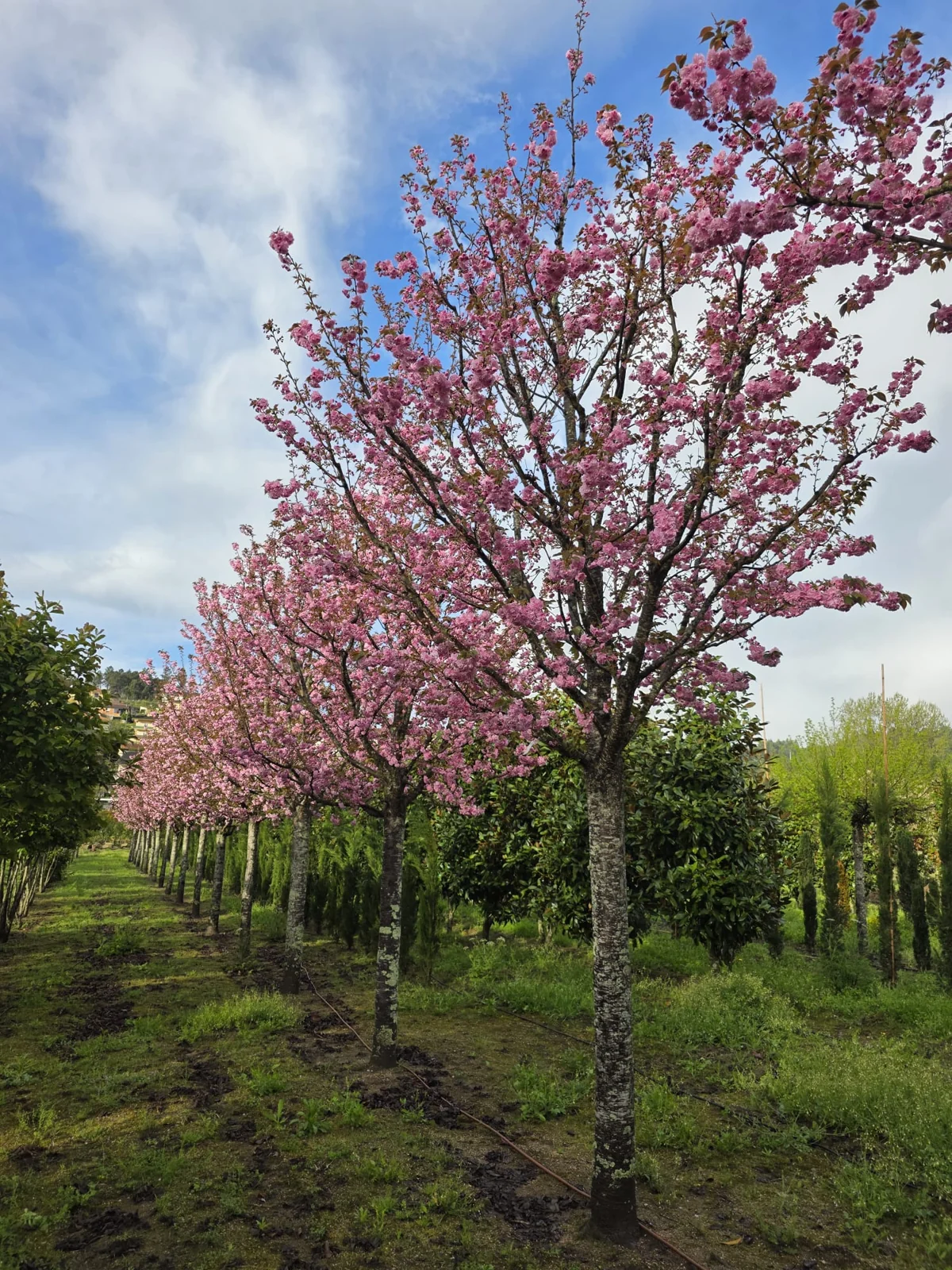
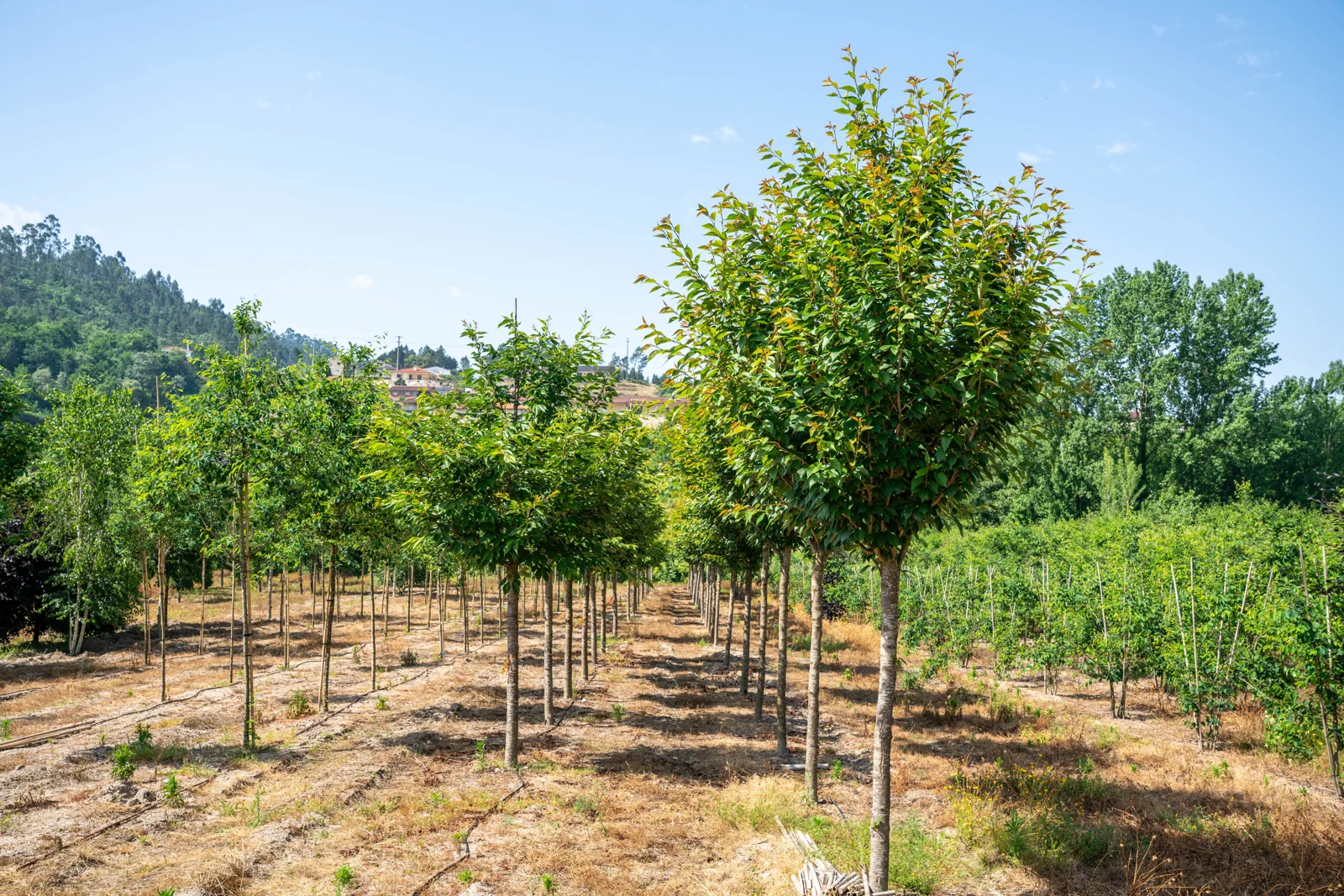
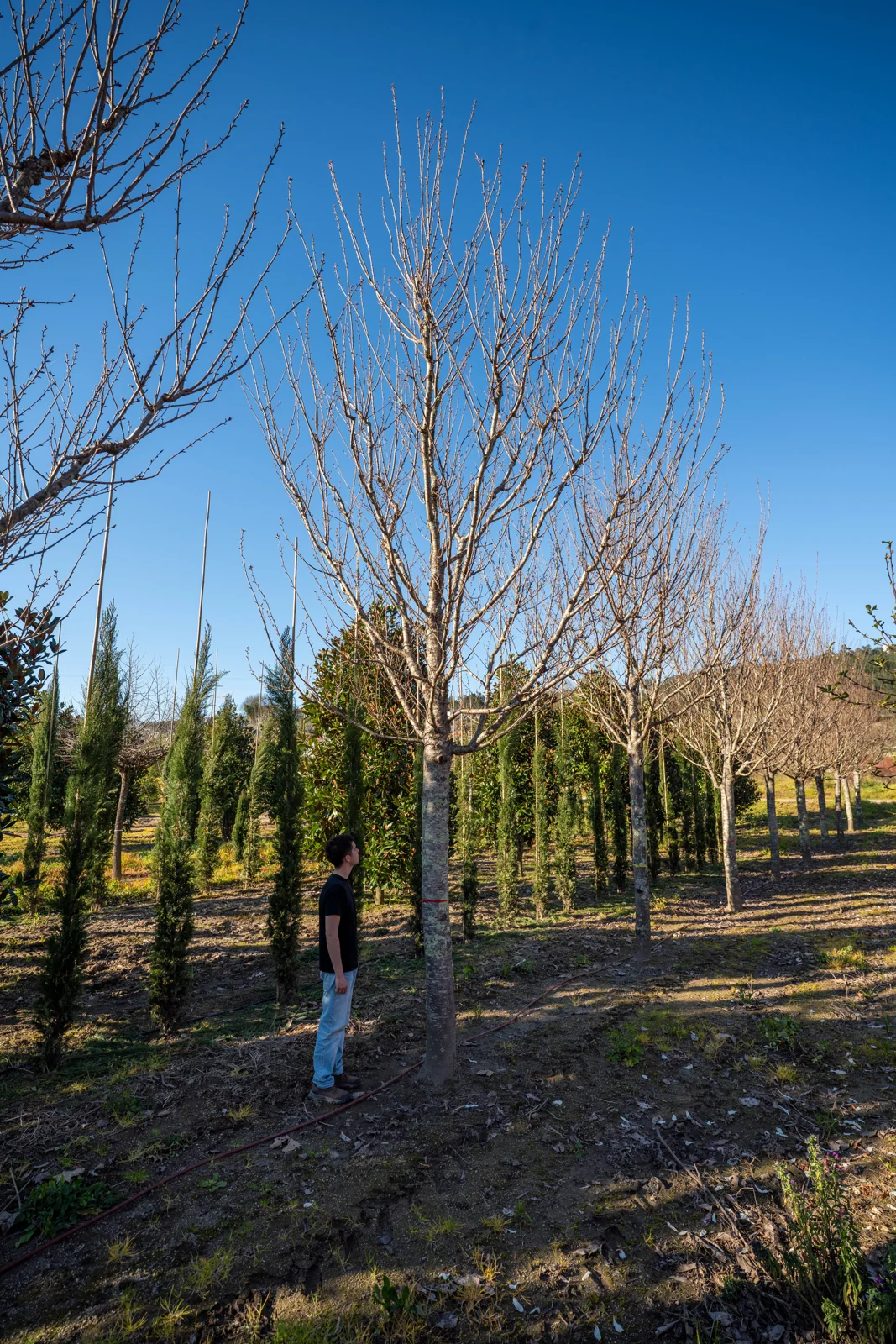
Stiffly upright when young, opening with age to a broad rounded crown, this double-flowered cultivar reads as a defined spring event. It suits residential schemes, park settings, and short avenues where a concentrated April display is the objective.
Key Facts
About this Cultivar
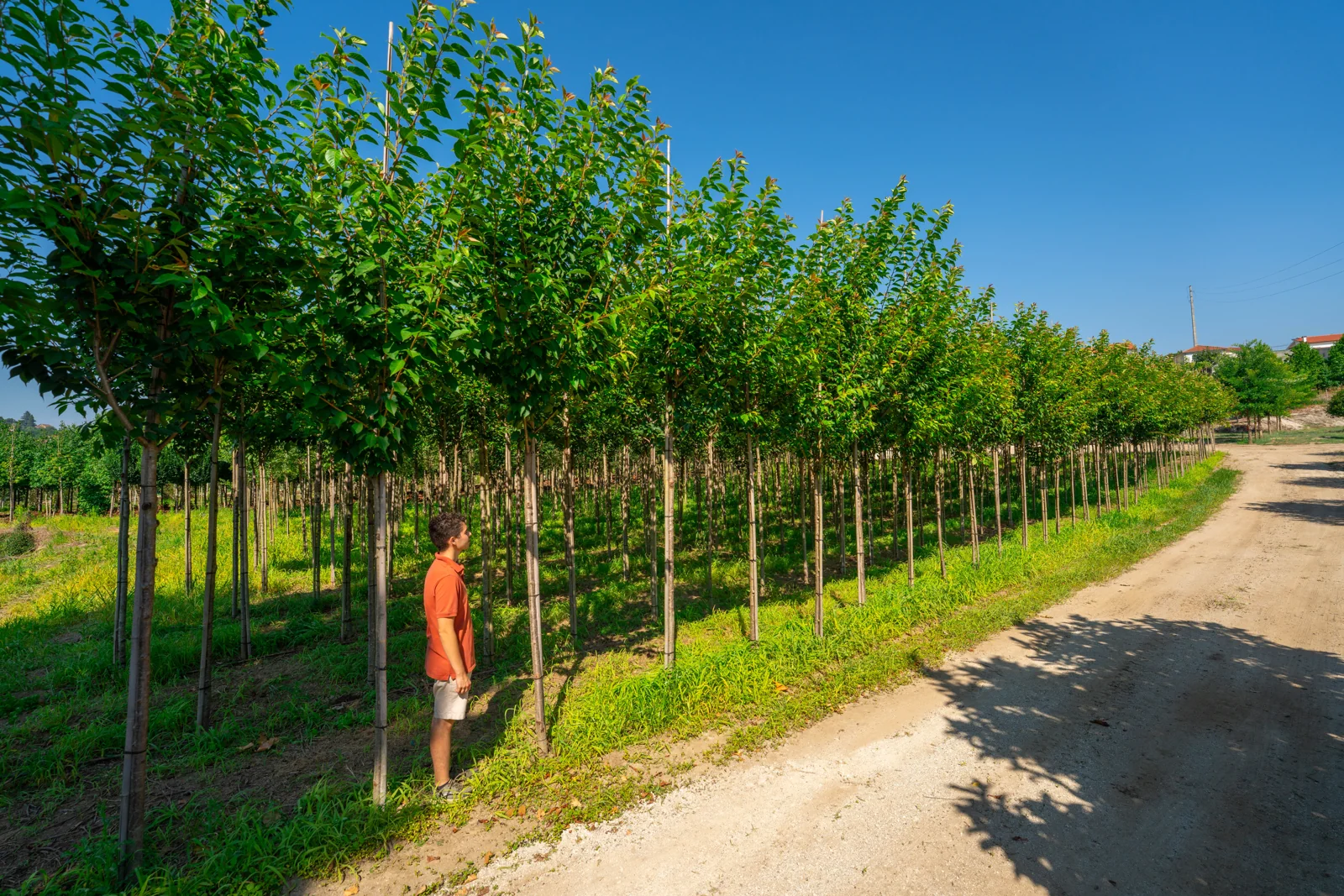
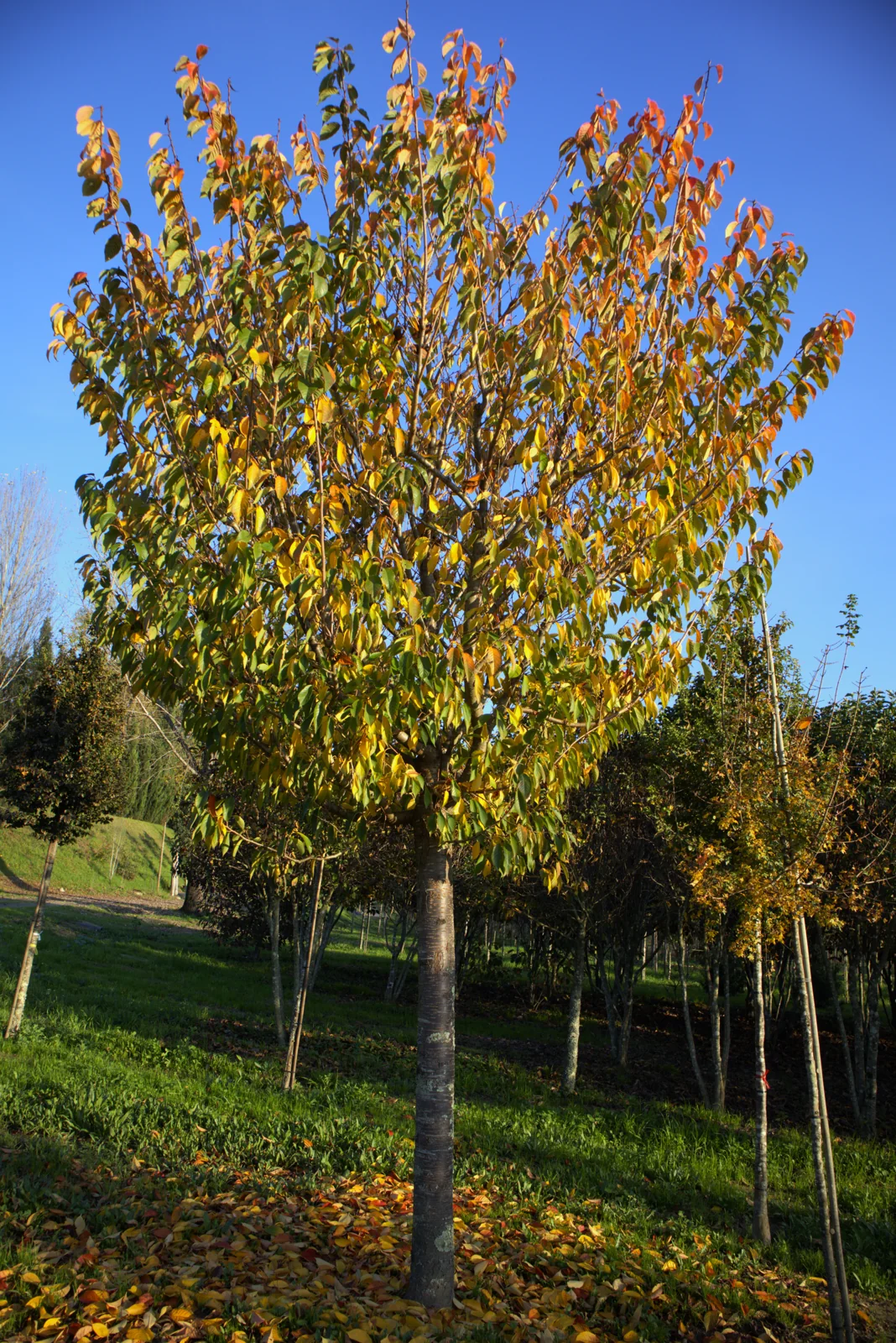
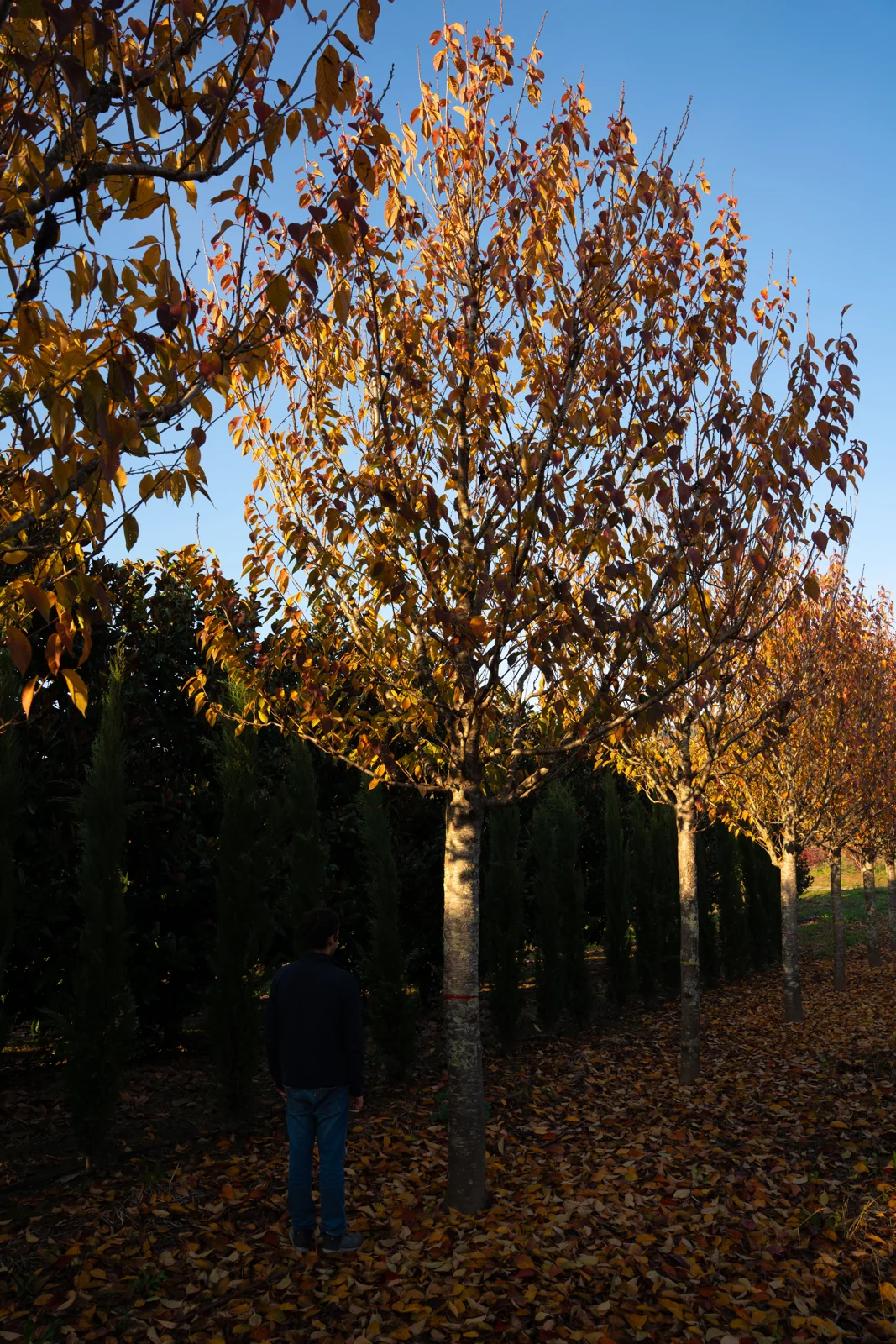
The crown develops a clear habit (Habitusform): vase-shaped and ascending in youth, broadening to a rounded canopy of 6 to 10 metres height and 5 to 8 metres spread at maturity. Dense clusters of two to five double flowers, each carrying twenty to thirty deep-pink petals, open across the bare framework in April and May before the foliage hardens. Young…
Read more
Show less
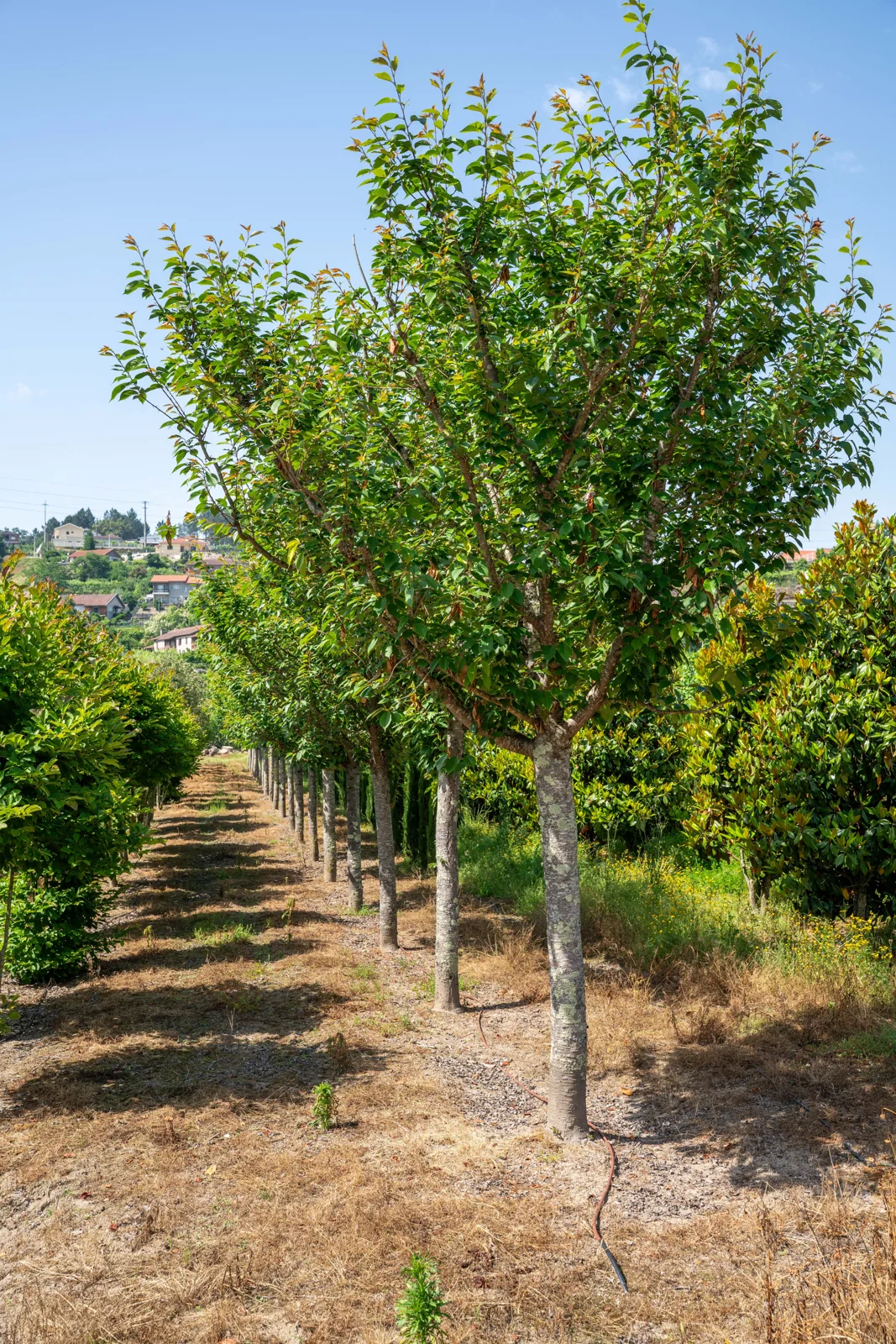
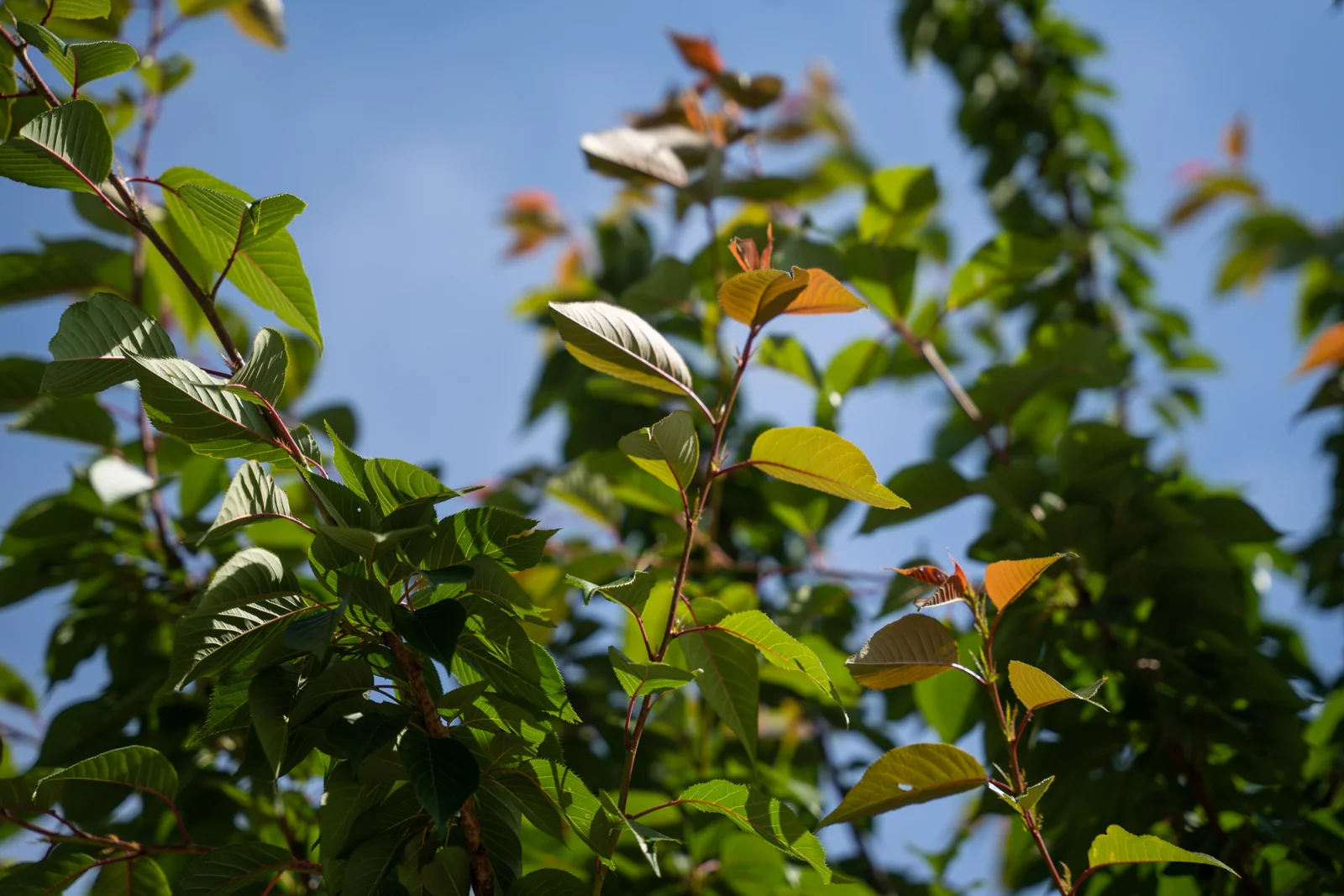
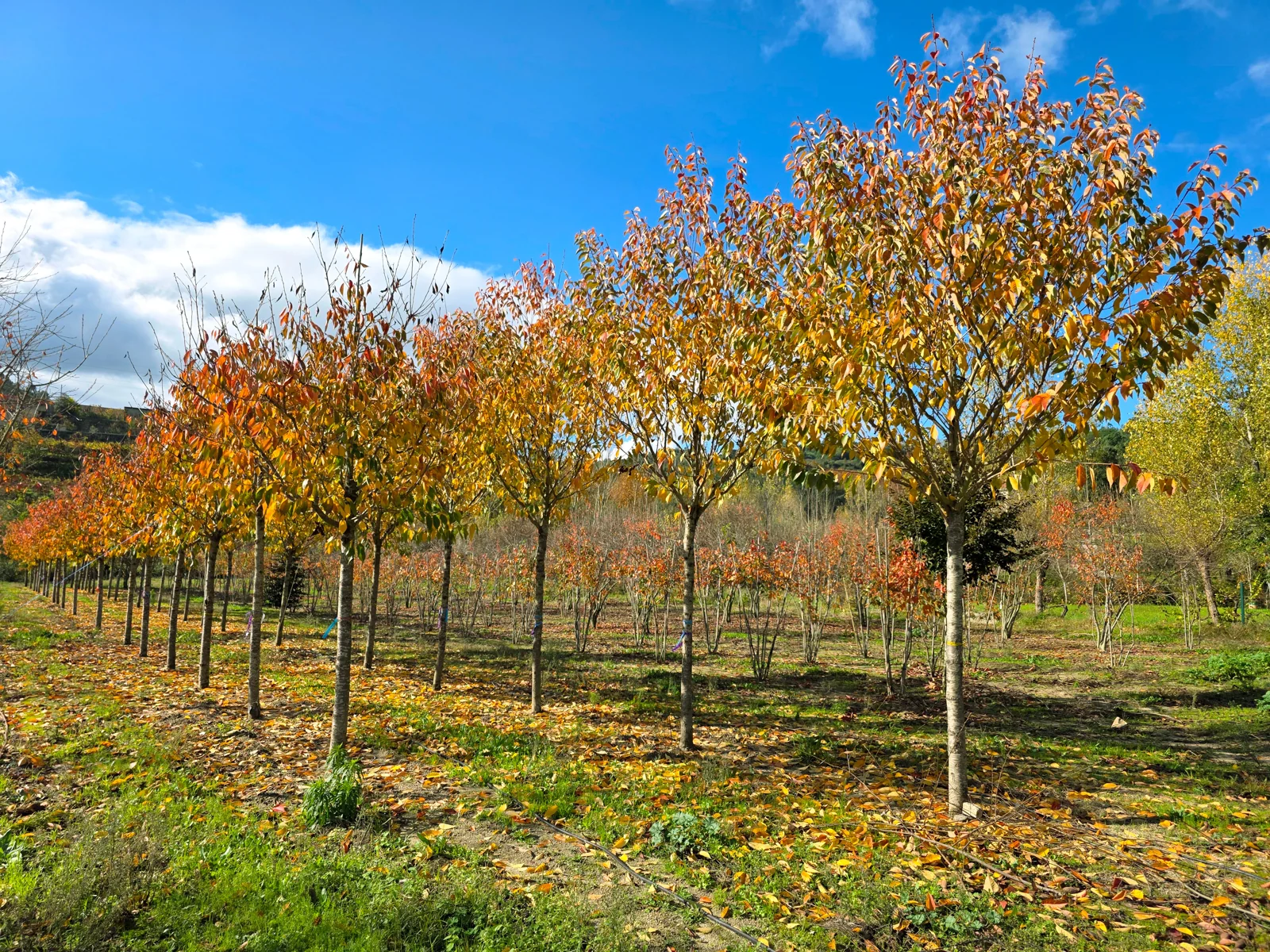
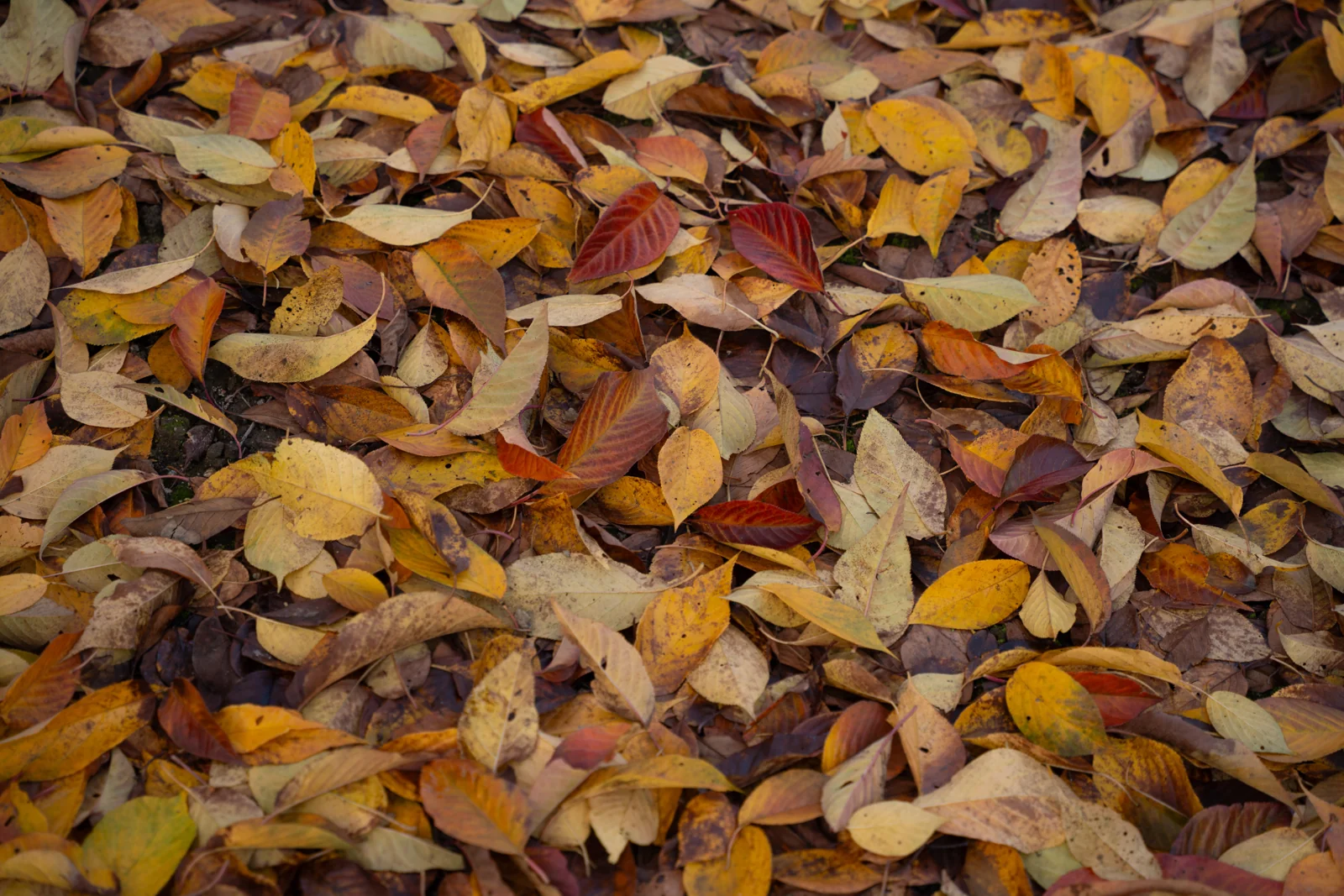
The crown develops a clear habit (Habitusform): vase-shaped and ascending in youth, broadening to a rounded canopy of 6 to 10 metres height and 5 to 8 metres spread at maturity. Dense clusters of two to five double flowers, each carrying twenty to thirty deep-pink petals, open across the bare framework in April and May before the foliage hardens. Young leaves emerge bronze, deepen to dark green through summer, and turn copper and orange in autumn, giving two distinct seasons of interest in a country where leaf-off occupies half the visible year.
Winter hardiness (Winterharte) is the cultivar's strongest argument for German specification. It is reliably hardy to roughly minus 25 degrees Celsius, placing it across the full range of German climate regions: the Upper Rhine valley (Oberrheingraben), the Lower Rhine basin (Niederrheinische Bucht), the northern German lowlands (norddeutsche Tiefebene), and the colder continental sites east of the Elbe and in the pre-Alpine foothills (Voralpenland). This is not a Mediterranean species needing a sheltered microclimate; it winters without protection wherever the familiar Eichen and Linden grow.
Site requirements (Standortanspruche) are straightforward. It performs on fertile, free-draining loams with reliable summer moisture, and tolerates both lighter sandy ground and heavier clay on slightly acidic to neutral substrates. Drought tolerance and de-icing salt tolerance are both low, which qualifies its street-tree suitability (Stadtbaumeignung): it is sound for parks, residential streets, and Kurpark settings, while the salted carriageway edge and the heat-island pit suit it less well.
The genus carries the usual Prunus pressures, and the thin bark splits easily under mechanical or sun damage, so clean pruning and physical protection matter on public sites. Specified to its conditions, it remains one of the most dependable spring-flowering specimens available to the German Landschaftsarchitekt.
Advice on this species
Want to know more about Prunus serrulata 'Kanzan'?
Tell us about your project and we'll advise you on this species — where it thrives, which size makes sense, and what to expect once planted.
- Produção própria
- Exemplares adultos
- Resposta em 1–2 dias
Sem compromisso · orçamento personalizado