

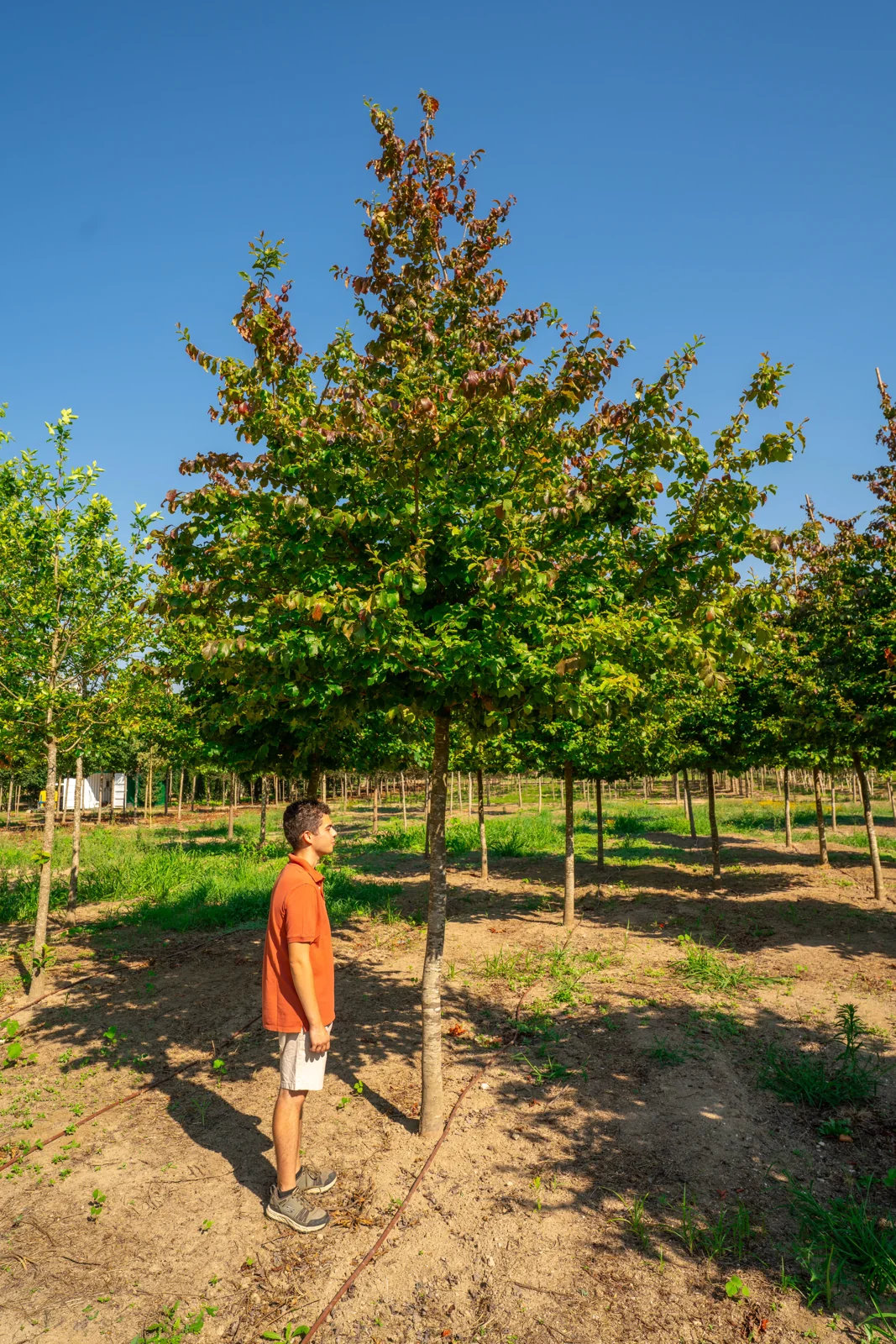
Klimaresilienter Eisenholzbaum for year-round structural interest
Persian Ironwood · Parrotia persica
A slow-growing deciduous tree of proven winter hardiness across all German climate regions, combining exfoliating ornamental bark, continental-grade autumn colour, and documented tolerance of urban conditions with near-complete freedom from pest and disease pressure.
About this Species
Native to the montane forests of the Alborz range in northern Iran and the eastern Caucasus, Parrotia persica carries a continental genetic heritage that translates directly into reliable frost tolerance across Germany. Specimens of documented Iranian and Azerbaijani provenance in Belgian collections have survived sustained winter minima of minus 19 degrees…
Read more
Show less
Native to the montane forests of the Alborz range in northern Iran and the eastern Caucasus, Parrotia persica carries a continental genetic heritage that translates directly into reliable frost tolerance across Germany. Specimens of documented Iranian and Azerbaijani provenance in Belgian collections have survived sustained winter minima of minus 19 degrees Celsius without structural damage, placing the species comfortably within the hardiness envelope of even the norddeutsche Tiefebene and exposed sites in the Voralpenland. For the international specifier, this means no practical Klimaregion exclusion: the Eisenholzbaum is defensible from the Oberrheingraben to Hamburg and Berlin without the winter-risk caveats that constrain most trees of southern or southwestern Asian origin.
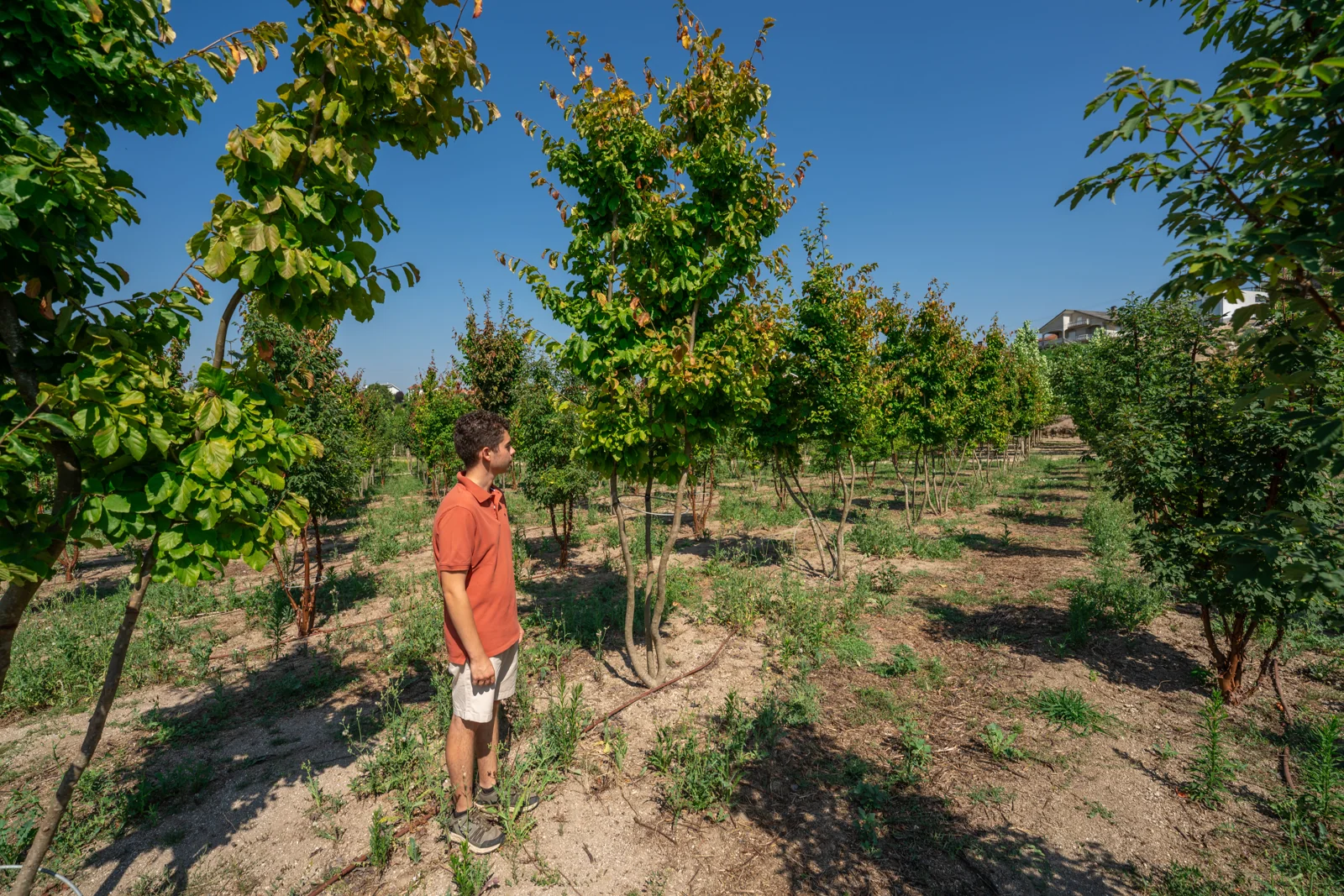
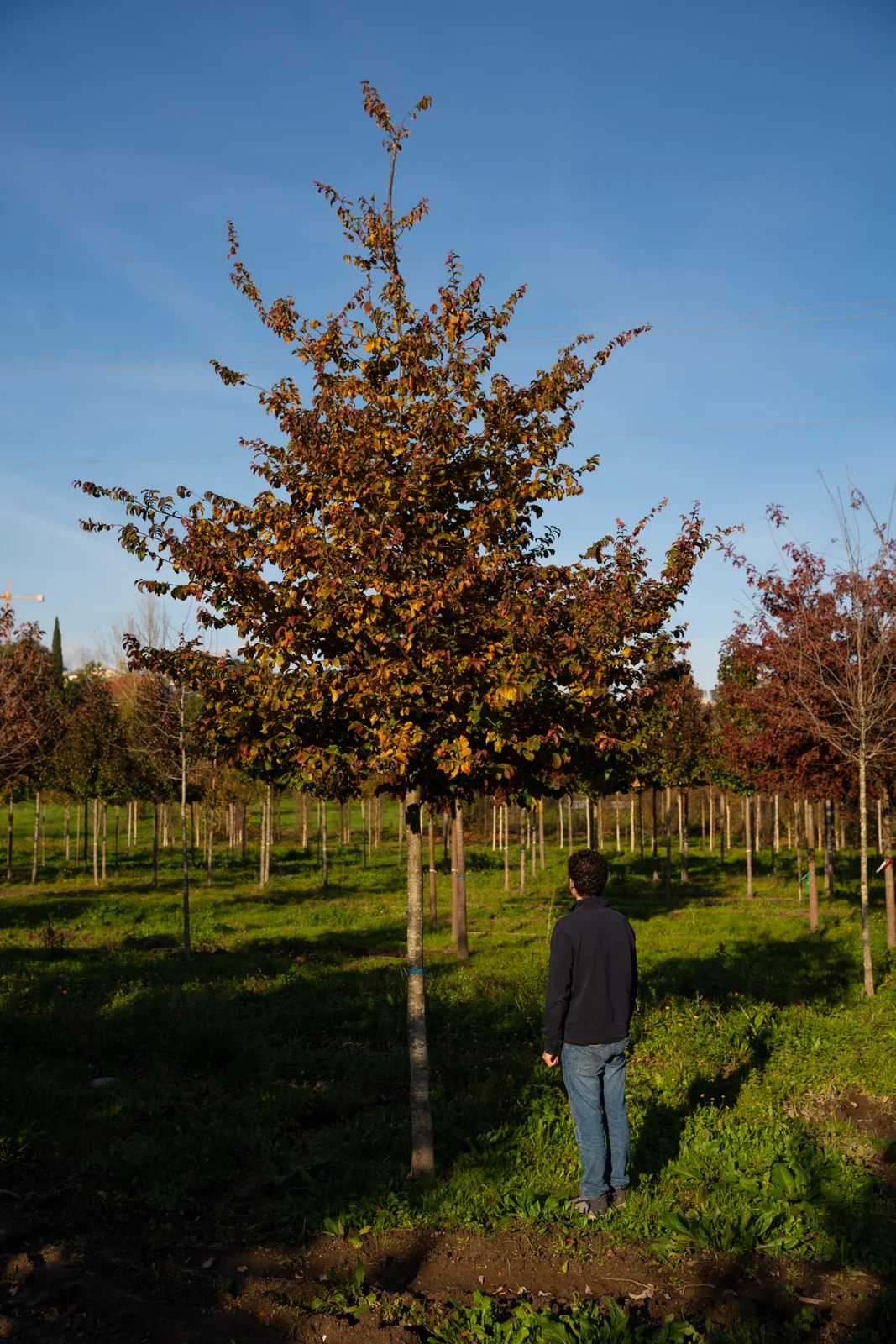
The species develops a spreading, often multi-stemmed habit with a mature height of 6 to 12 metres and a comparable spread, though formative pruning in the nursery phase can produce a clean single-stem structure suitable for street and alignment planting. Crown architecture responds well to the structured pruning regimes typical of German Strassenbaume, and the slow growth rate reduces long-term maintenance demand. Root behaviour is non-aggressive: no documented tendency toward surface rooting or infrastructure damage, which simplifies specification for confined urban planting pits.
Site adaptability is broad for a tree of this quality. Parrotia persica performs on free-draining loams and moist well-drained soils, tolerates calcareous substrates to moderately alkaline pH, and manages compacted or periodically wet ground conditions that would stress many comparable ornamental trees. Full sun produces the strongest autumn colour and the densest crown; partial shade is tolerated, though foliage becomes sparser and autumn tones less intense. Drought tolerance is moderate rather than absolute: the deep root system sustains the canopy through extended dry periods once established, but supplementary irrigation during the first two to three growing seasons after planting is standard practice for Empfehlungen fur Baumpflanzungen.
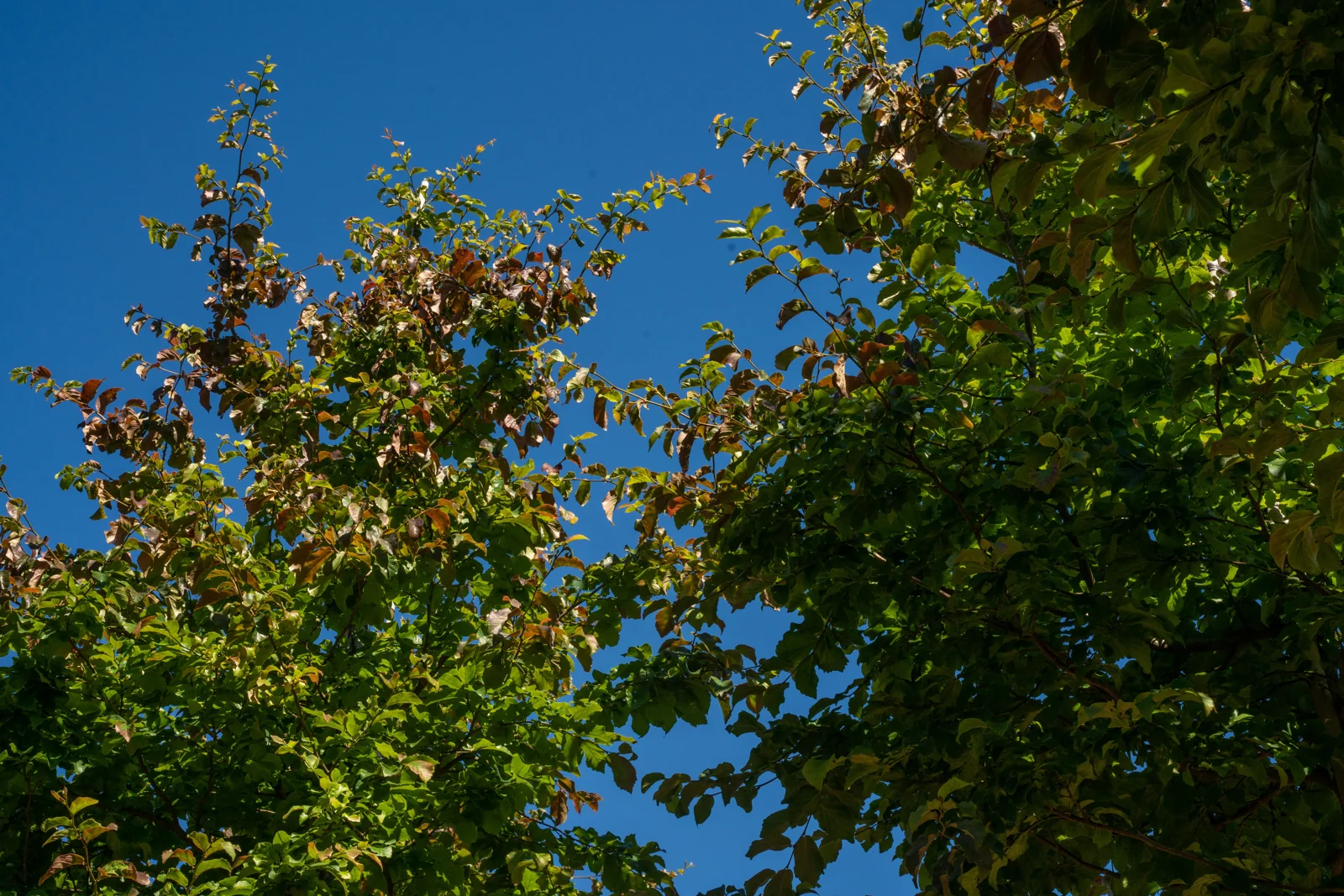
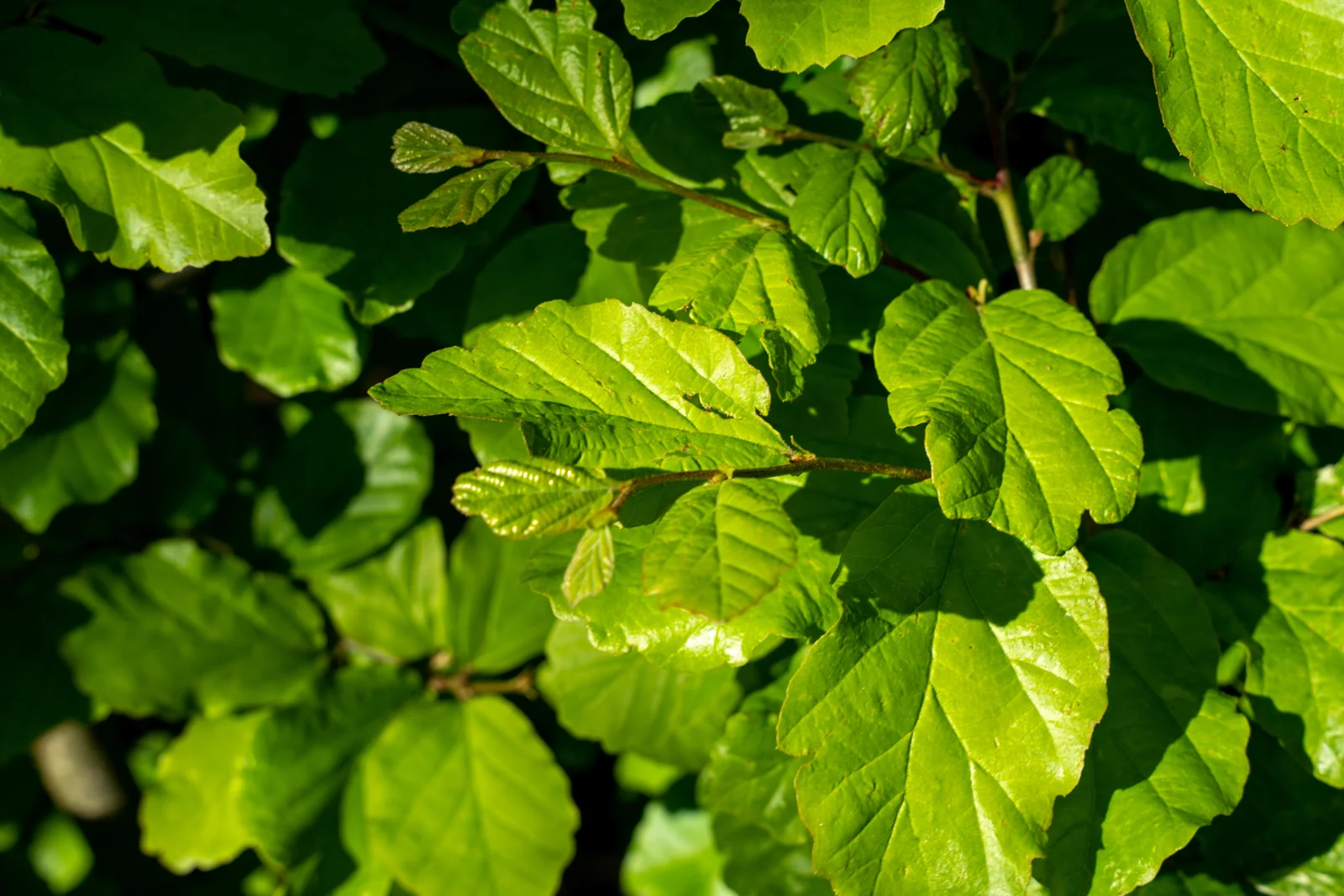
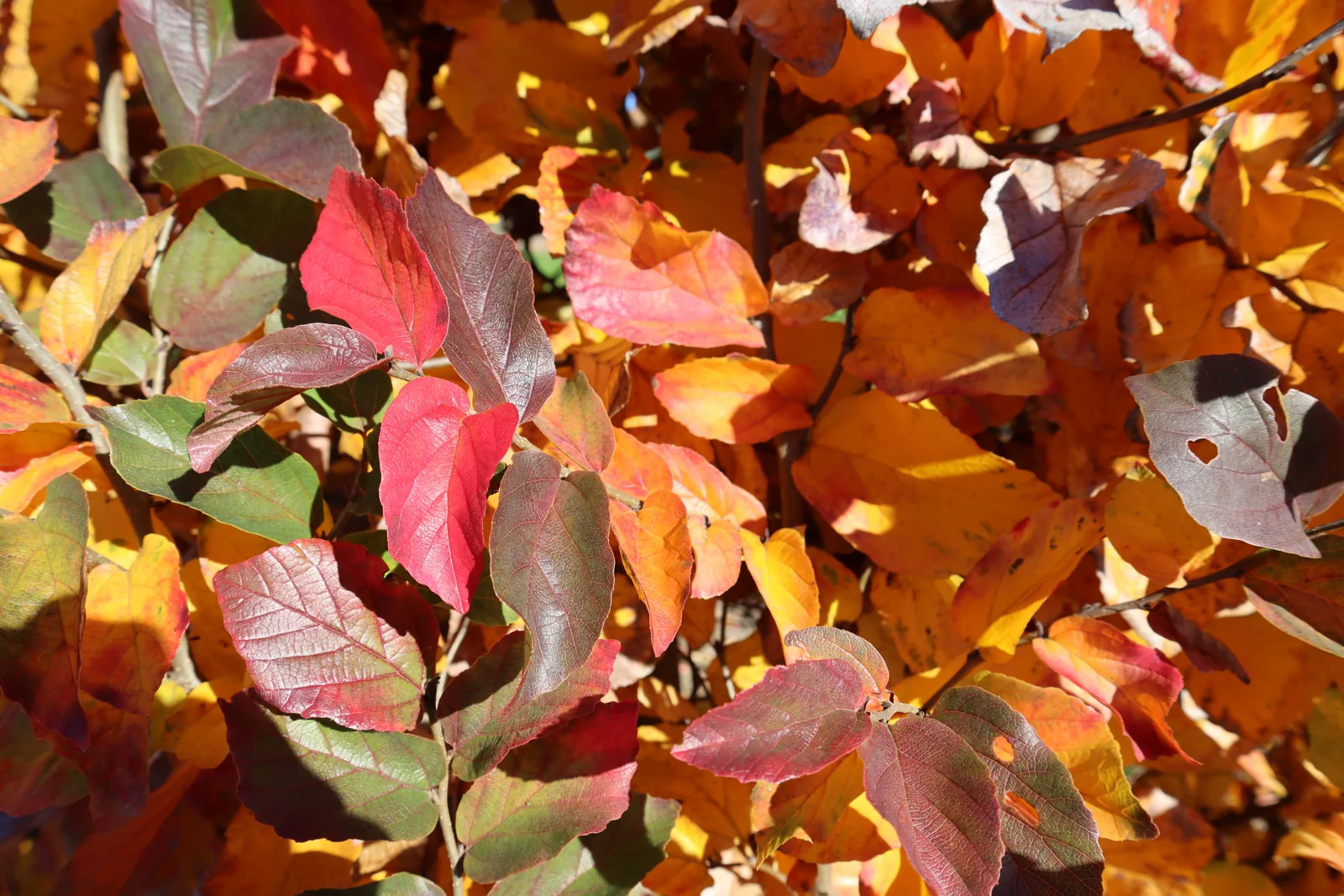
The ornamental case rests on three seasons of visible interest. In late winter, clusters of small red-stamened flowers appear on bare wood before leaf break. Through summer, the glossy dark green foliage is dense and healthy, with no significant pest or disease pressure recorded in European cultivation: neither Eschentriebsterben nor Russrindenkrankheit nor the phytosanitary pressures currently degrading Fraxinus, Acer pseudoplatanus, and Platanus stocks apply here. Autumn colour in a continental climate is markedly stronger than in maritime conditions, ranging from clear yellow through orange to deep crimson and plum, often displayed simultaneously across a single crown. On mature specimens, the bark exfoliates to reveal a mosaic of cinnamon, green, cream, and pale grey patches that provides structural interest through the leaf-off months, a significant specification criterion in a country where the dormant season accounts for nearly half the visible year.



Advice on this species
Want to know more about Parrotia persica?
Tell us about your project and we'll advise you on this species — where it thrives, which size makes sense, and what to expect once planted.
- Produção própria
- Exemplares adultos
- Resposta em 1–2 dias
Sem compromisso · orçamento personalizado