

Columnar Eisenholzbaum for confined urban planting pits
Persian Ironwood ‘Vanessa’ · Parrotia persica ‘Vanessa’
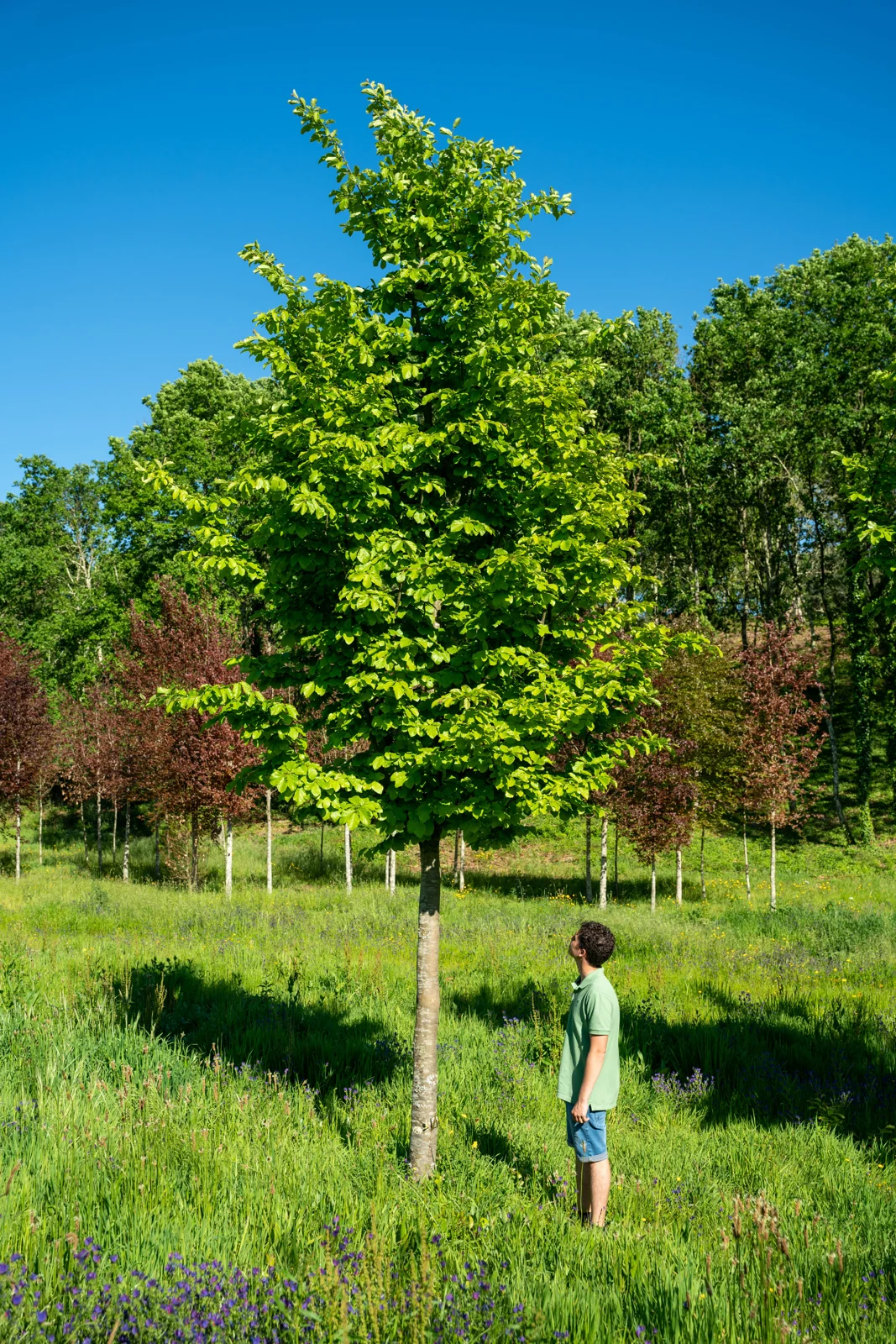
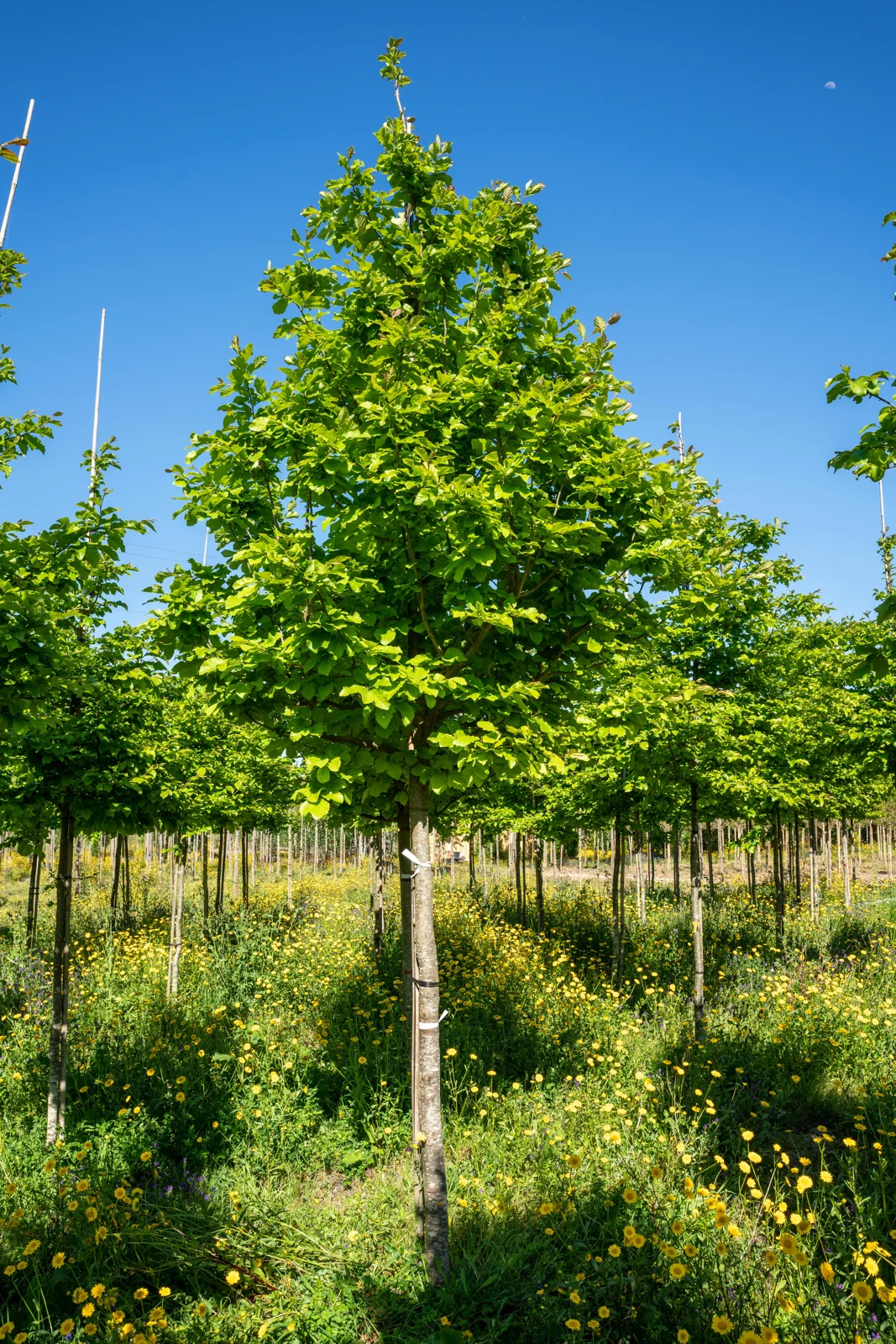
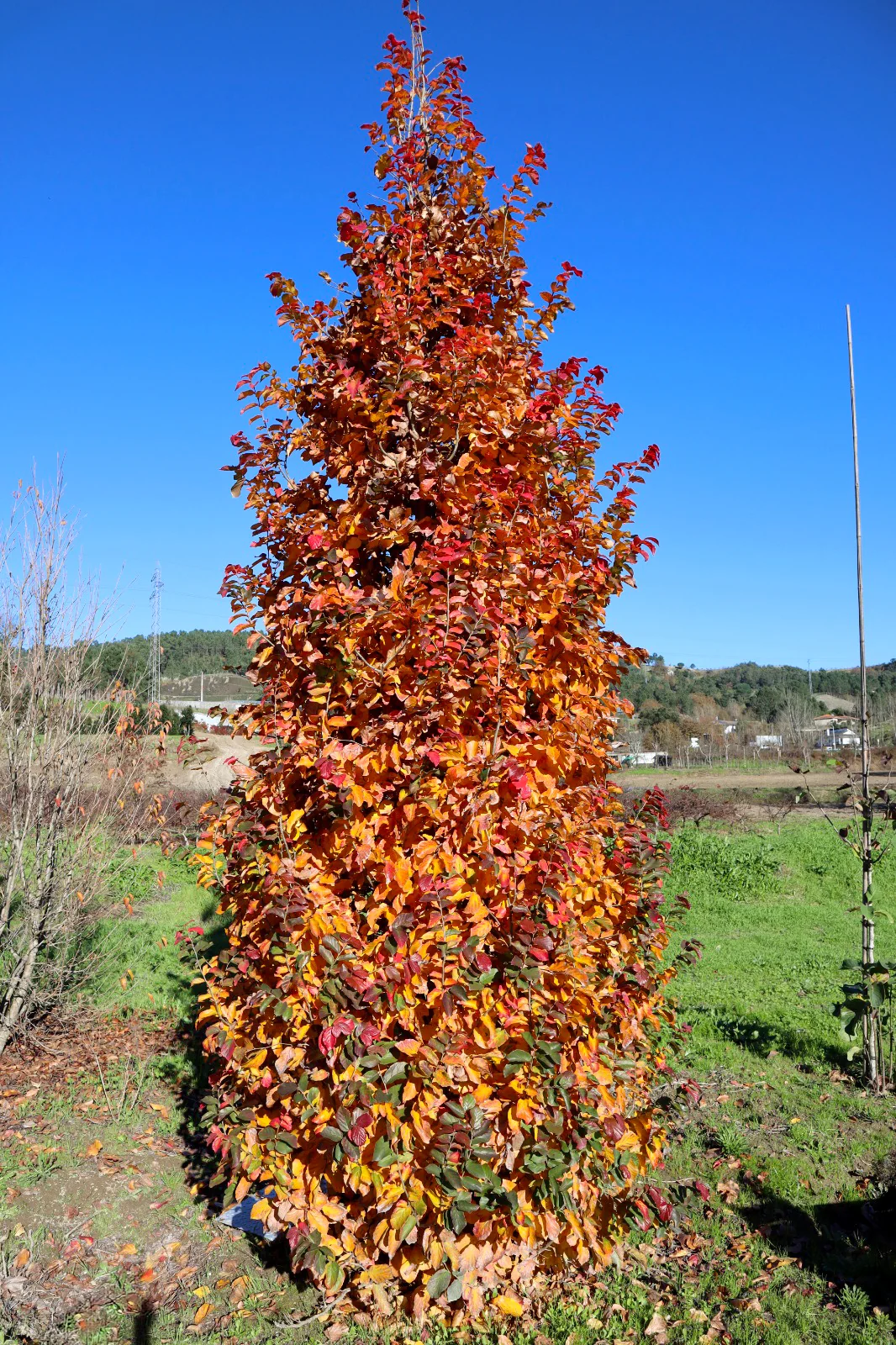
A narrow, upright selection of the Hyrcanian Eisenholzbaum, ‘Vanessa’ suits constrained German urban sites where crown width is limited but specimen presence is wanted. Hardiness, bark interest, and reliable autumn colour underwrite the specification.
Key Facts
About this Cultivar
Provenance trials in Belgian collections record Parrotia persica surviving minus 19 degrees Celsius without lasting damage on free-draining soils, with established trees recovering canopy after subsequent hot dry seasons. A conservative working minimum for ‘Vanessa’ is around minus 18 degrees Celsius in sheltered positions; below that, risk of frost damage…
Read more
Show less
Provenance trials in Belgian collections record Parrotia persica surviving minus 19 degrees Celsius without lasting damage on free-draining soils, with established trees recovering canopy after subsequent hot dry seasons. A conservative working minimum for ‘Vanessa’ is around minus 18 degrees Celsius in sheltered positions; below that, risk of frost damage to young wood rises through the first three winters. The cultivar reads as reliable across the Niederrheinische Bucht (Lower Rhine basin), the Oberrheingraben (Upper Rhine valley), and similar mild urban climates, and remains workable across most of the central uplands. East of the Elbe and above roughly 400 metres in the voralpenland (pre-Alpine foothills), winter minima approach the species’ limit, and specification should be defended on local microclimate evidence.
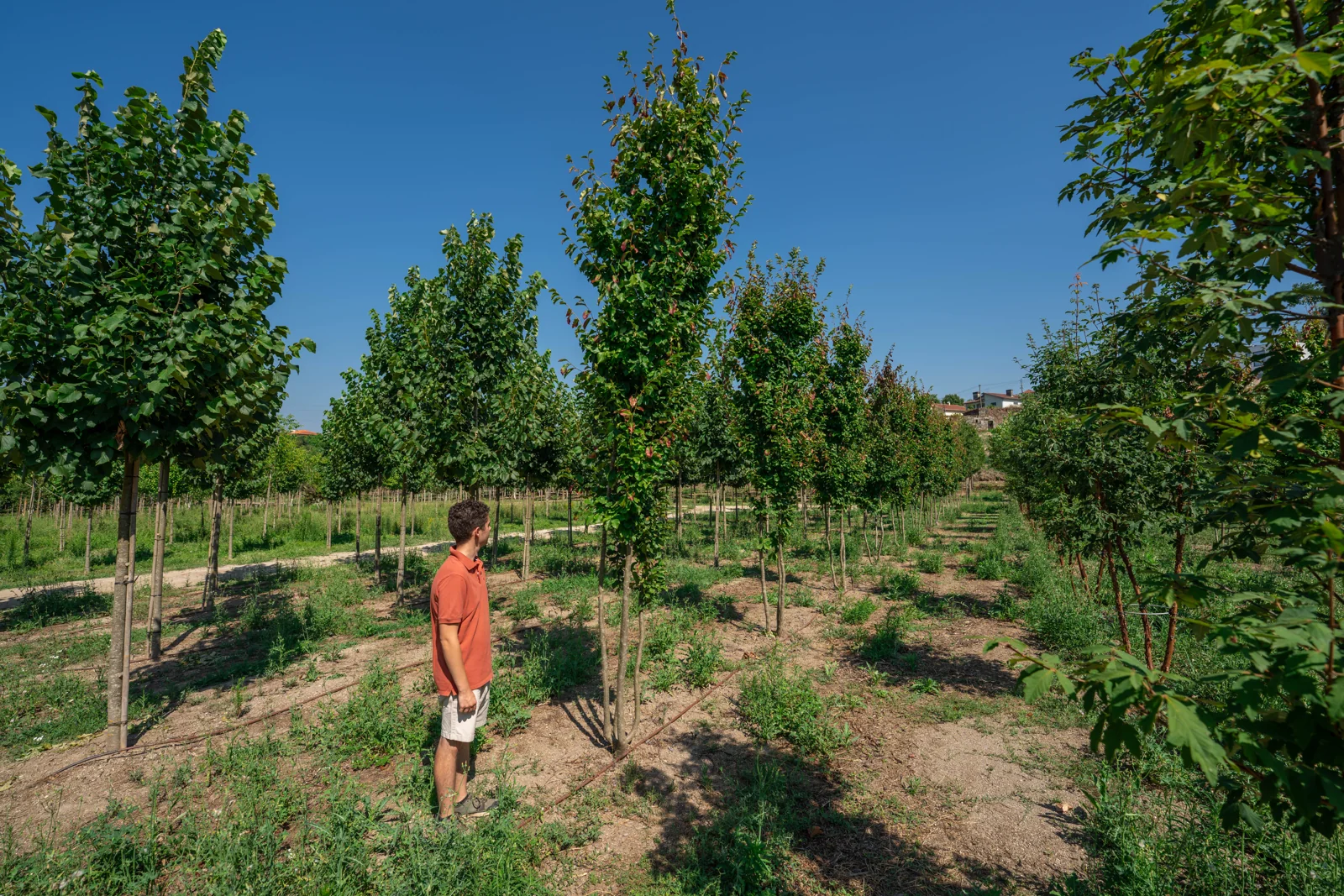
The cultivar’s value for German specifications rests on habitus (Habitusform). ‘Vanessa’ forms a narrow, upright crown to roughly 8 to 10 metres tall and 3 to 5 metres wide at maturity, where the parent species is spreading. That geometry fits compacted street pits, courtyards, and residential frontages, and it supports a Kronenaufbau compatible with German Straßenbaum maintenance. The species tolerates urban pollution and compacted ground; Standortansprüche are otherwise modest provided drainage is sound.
Phytosanitary record is favourable. Parrotia persica carries no equivalent of Eschentriebsterben, Massariakrankheit, or Russrindenkrankheit, and is not in the host range of ALB surveillance protocols; routine pest and disease pressure is low across continental European cultivation. The taxon therefore reads as a replacement candidate where Fraxinus excelsior allocations have collapsed under ash dieback, and as a Zukunftsbaum candidate under the Klima-Artenmatrix logic, given documented drought recovery on the parent species. Salt tolerance is low, so kerbside positions on heavily salted routes warrant separate substitutes.
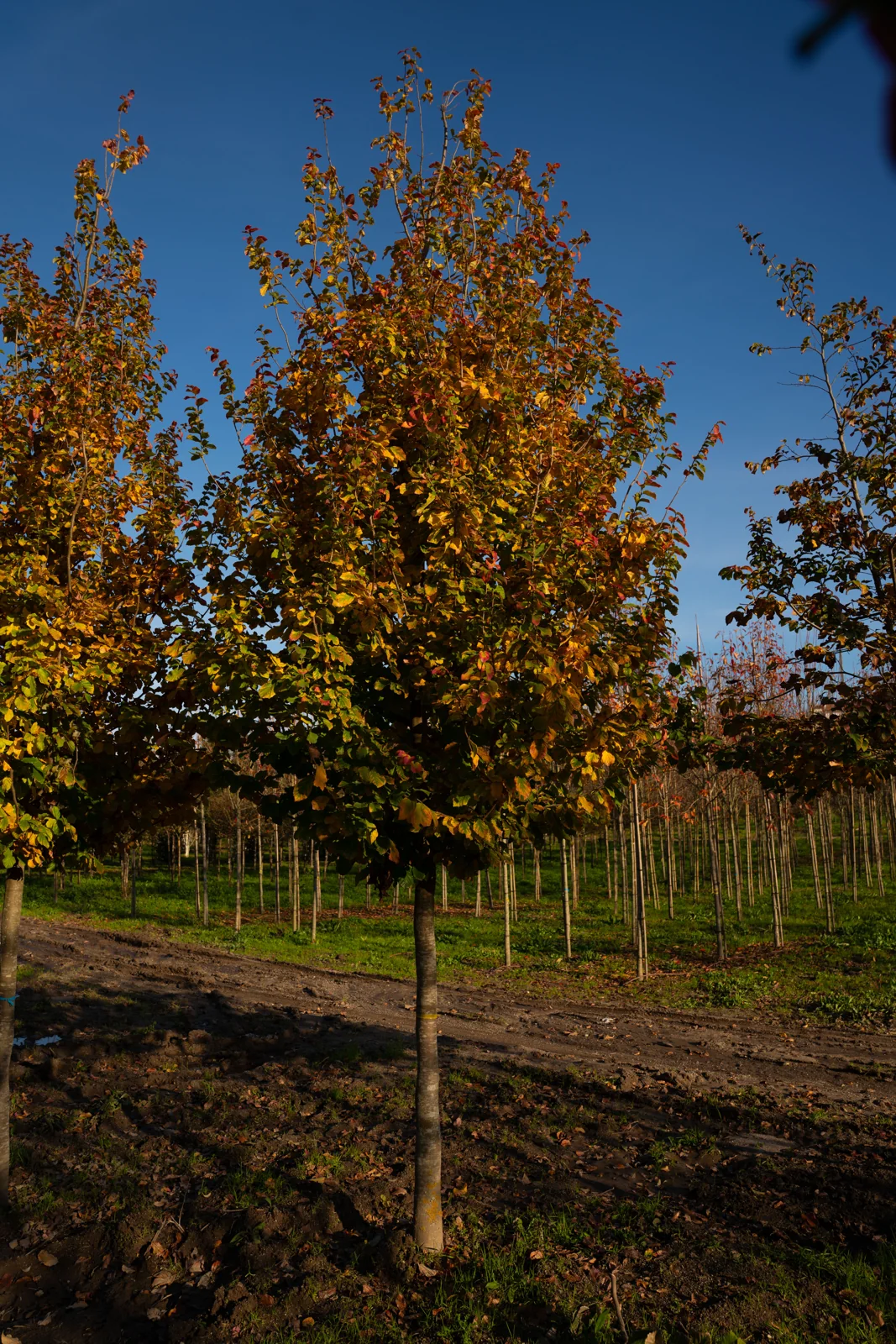
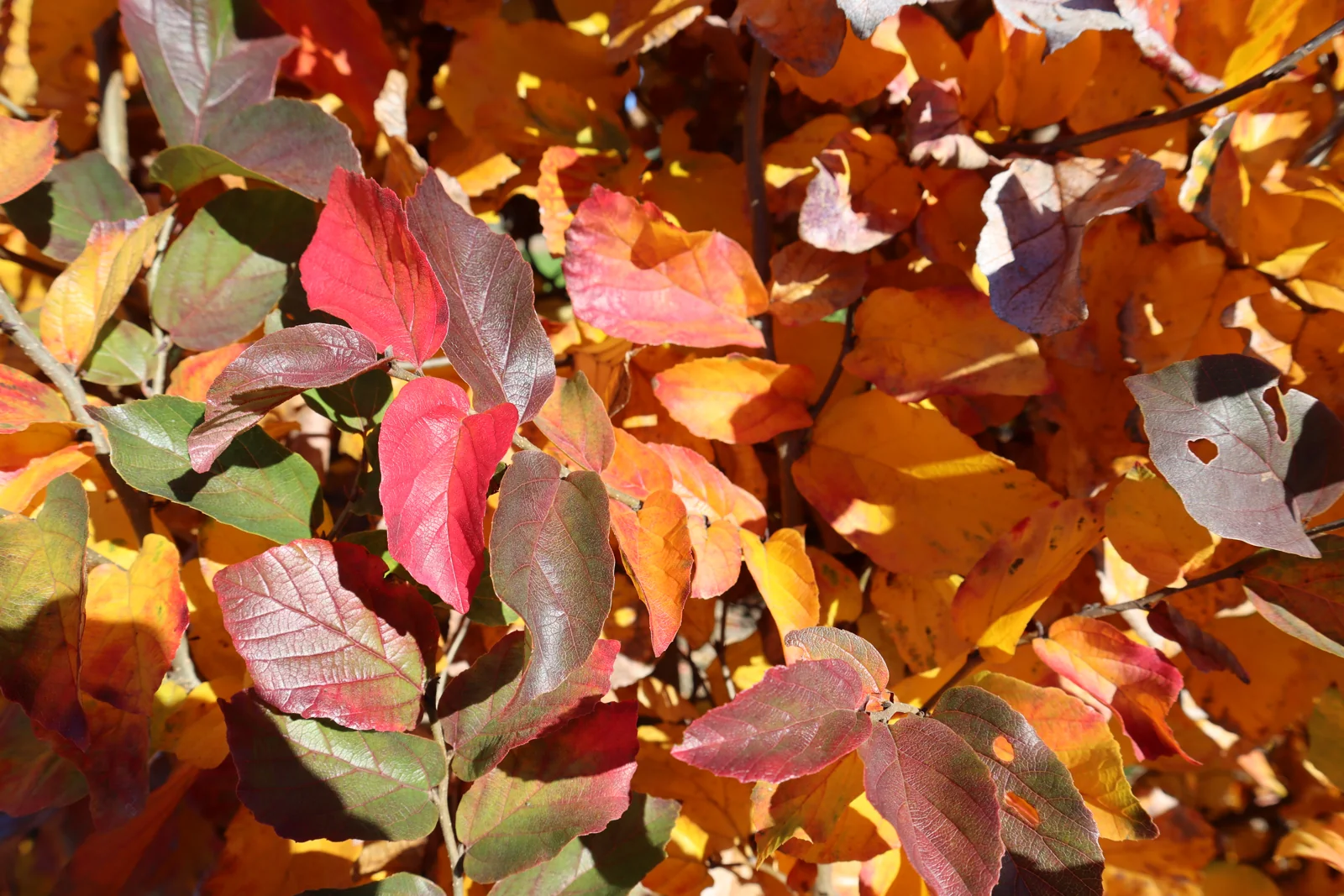
Soils: well-drained loams to sandy substrates are preferred; the species accepts calcareous ground once established, with growth slower on heavy clay unless drainage is improved. Autumn colour on ‘Vanessa’ is reliably brilliant red, holding into November in continental conditions and providing a defensible Pflanzliste argument for civic and Kurpark settings. Exfoliating bark in patches of grey, green, and tan carries winter interest through leaf-off, which is half the visible year in most German Klimaregionen.
Advice on this species
Want to know more about Parrotia persica 'Vanessa'?
Tell us about your project and we'll advise you on this species — where it thrives, which size makes sense, and what to expect once planted.
- Produção própria
- Exemplares adultos
- Resposta em 1–2 dias
Sem compromisso · orçamento personalizado