

Pollution-tolerant evergreen screen with autumn fragrance
Holly Olive · Osmanthus heterophyllus
Reliable as a dense evergreen screen or specimen shrub across the milder German Klimaregionen, with winter hardiness to approximately minus 20 degrees Celsius in established specimens on free-draining soil.
About this Species
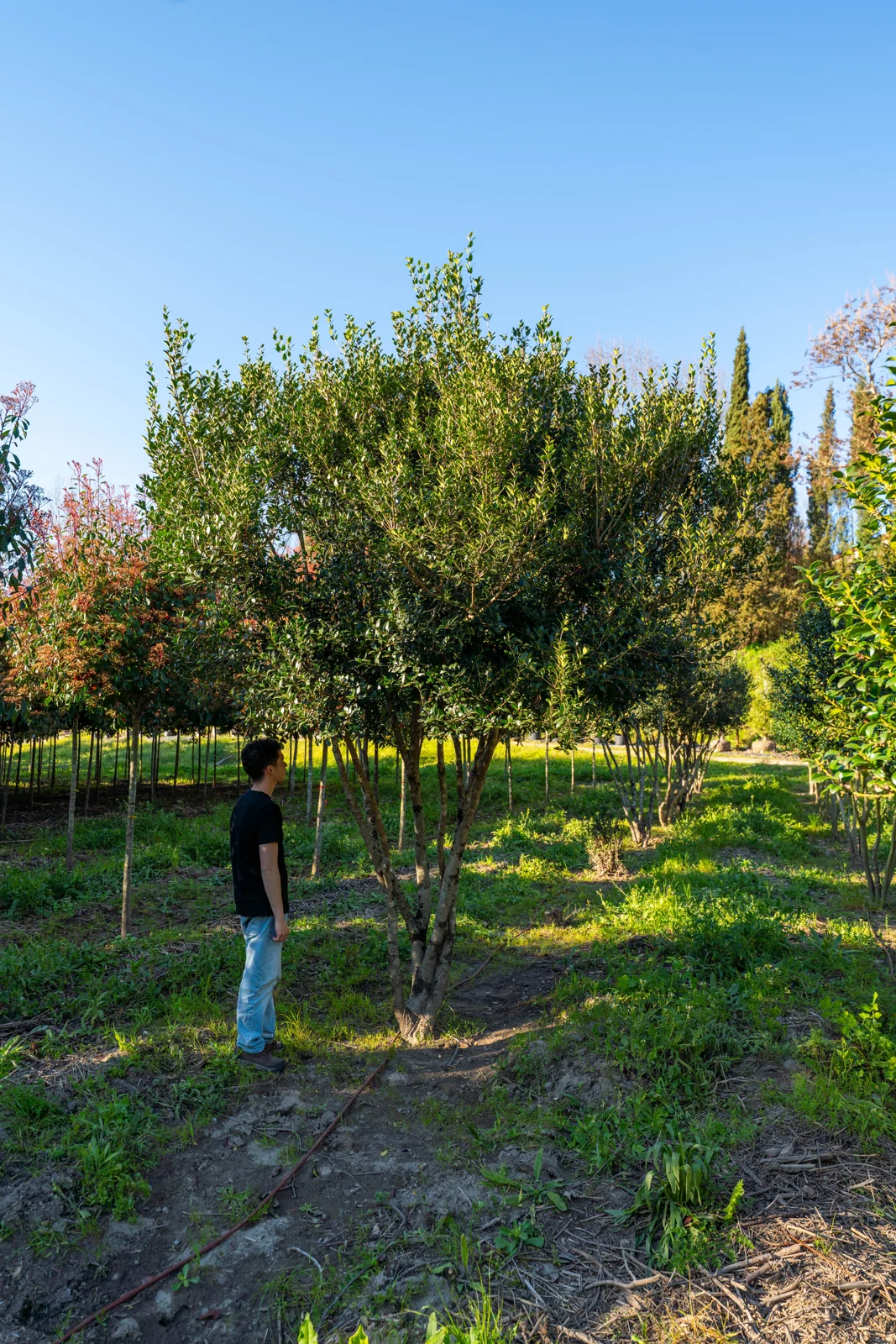
Osmanthus heterophyllus (Stachelblättrige Duftblüte) occupies a functional niche in German projects that few evergreen shrubs fill as precisely: a slow-growing, dense-canopied plant that tolerates pollution, heavy pruning, and urban soil conditions while providing genuine olfactory value during the autumn specification window from September to November. Its…
Read more
Show less
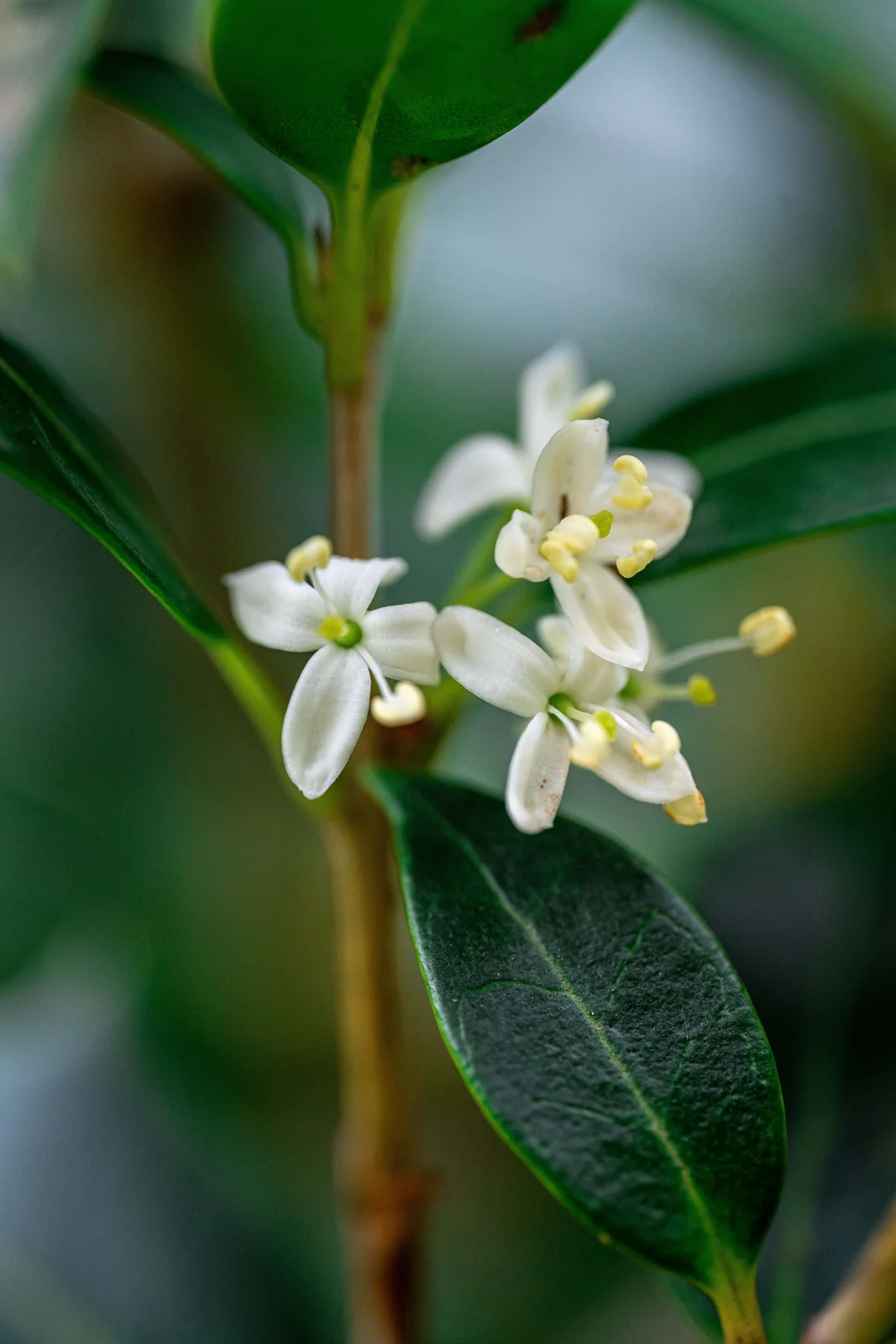
Osmanthus heterophyllus (Stachelblättrige Duftblüte) occupies a functional niche in German projects that few evergreen shrubs fill as precisely: a slow-growing, dense-canopied plant that tolerates pollution, heavy pruning, and urban soil conditions while providing genuine olfactory value during the autumn specification window from September to November. Its white flowers appear in clusters against dark, coriaceous foliage and carry a fragrance disproportionate to the plant's modest stature, a quality that carries weight in courtyard and civic planting schemes where seasonal sensory programming is a brief requirement.
Winter hardiness (Winterhärte) is the primary site-fit question for a German specifier. Established specimens have been recorded surviving to approximately minus 20 degrees Celsius under favourable conditions, which places the species within reliable performance for the Upper Rhine valley, the Lower Rhine basin, and the Rhein-Main lowlands. In the pre-Alpine foothills and across the central uplands, the species is viable but requires sheltered siting and well-drained substrate to prevent root damage during prolonged freeze events. East of the Elbe and in elevated positions above 400 metres, young-tree hardiness is a practical constraint: the first two to three winters carry the greatest risk, and exposed open sites without urban heat island mitigation should be approached conservatively.
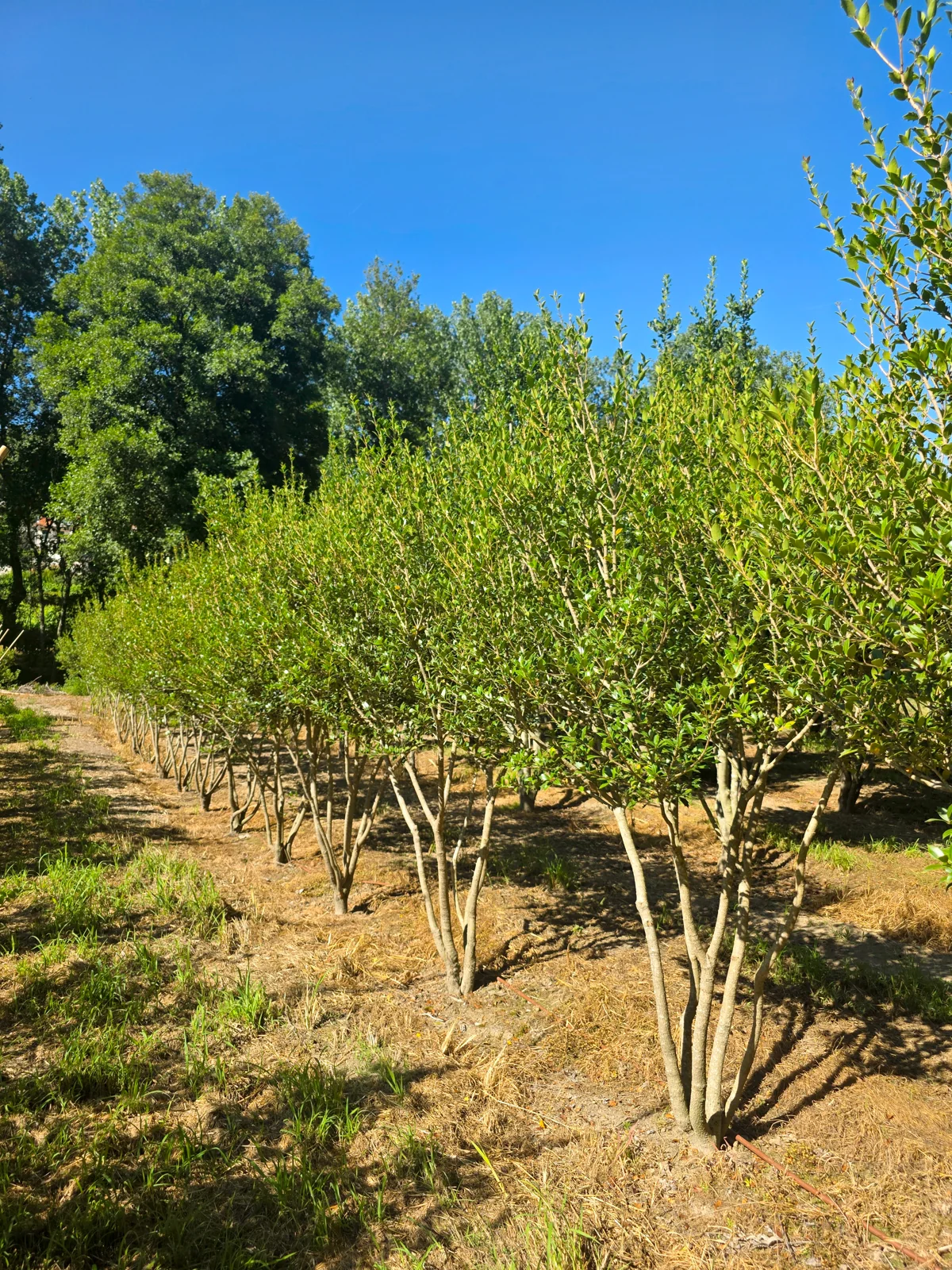
For urban planting suitability, Osmanthus heterophyllus functions well in schemes where hedge structure, visual screening, or a low-maintenance evergreen mass is the brief. Its tolerance of compacted urban soils is good; its response to de-icing salt is moderate, which limits exposed street-edge applications in cities where winter salting is heavy but does not disqualify courtyard, park, and semi-sheltered civic planting. The species has no serious disease or pest problems under German conditions, which strengthens its position as a long-term low-maintenance element.
Soil adaptability is broad. Osmanthus heterophyllus performs on free-draining loams, tolerates calcareous and mildly alkaline substrates to approximately pH 8, and accepts clay-textured soils provided drainage is not compromised. As an evergreen structural shrub, a hedge element, or a shaped specimen in formal civic schemes, the species is flexibly deployable in project specifications.



Advice on this species
Want to know more about Osmanthus heterophyllus?
Tell us about your project and we'll advise you on this species — where it thrives, which size makes sense, and what to expect once planted.
- Produção própria
- Exemplares adultos
- Resposta em 1–2 dias
Sem compromisso · orçamento personalizado