

Taproot-anchored shade tree with continental-grade winter hardiness
Black Tupelo · Nyssa sylvatica
Hardy to minus 35 degrees Celsius and reliable across every German Klimaregion, the Tupelobaum offers autumn colour few temperate broadleaves match, with tolerance of wet, compacted substrates. It thrives on acidic to neutral soils, its taproot suiting field-grown stock.
About this Species
Winter hardiness (Winterhärte) is not a limiting factor for this species in Germany. With a documented minimum tolerance near minus 37 degrees Celsius, Nyssa sylvatica performs without restriction from the Oberrheingraben (Upper Rhine valley) through the norddeutsche Tiefebene (Northern German lowlands) and into the voralpenland (pre-Alpine foothills) above…
Read more
Show less
Winter hardiness (Winterhärte) is not a limiting factor for this species in Germany. With a documented minimum tolerance near minus 37 degrees Celsius, Nyssa sylvatica performs without restriction from the Oberrheingraben (Upper Rhine valley) through the norddeutsche Tiefebene (Northern German lowlands) and into the voralpenland (pre-Alpine foothills) above 600 metres. Young trees are no more frost-sensitive than established specimens. This degree of hardiness places it among the most cold-tolerant North American broadleaves available to European specifiers, comparable to native Quercus robur or Tilia cordata.
The species develops a conical to broadly upright habitus (Habitusform), reaching 10 to 20 metres in height with a spread of 6 to 10 metres. Branches extend at near-right angles to the trunk, producing a layered crown architecture that provides effective shade without excessive density. The deeply furrowed, near-black bark, arranged in rectangular blocks on mature stems, contributes strong winter structure during the six months of leaf-off that define the German visual calendar. Growth is slow, roughly 3 to 5 metres in the first decade, which limits establishment-phase maintenance but requires patience from clients expecting rapid canopy closure.
Soil requirements (Standortansprüche) are the primary specification constraint. Nyssa sylvatica demands acidic to neutral substrates, performing well on moist, free-draining loams and tolerating periodic waterlogging and compacted urban ground. It does not tolerate alkaline or calcareous soils. On Rhine loess or Bavarian limestone sites above pH 7, the species will decline. This rules out a significant share of German urban planting sites, but on the glacial sands of the north-east, the acidic brown earths of the central uplands, and the alluvial soils of riparian corridors, it is well suited. Salt tolerance is low, which limits its use as a Strassenbaum on salted routes.
Nyssa sylvatica is not currently listed on the GALK street tree list (the definitive German street tree recommendation list, maintained by the working group of German municipal parks departments), and its low salt tolerance and soil-pH restriction make general Stadtbaumeignung (street tree suitability) unlikely. Its role on German projects is as a specimen or shade tree in parks, Landschaftspark settings, riparian plantings, and institutional grounds where soil chemistry can be confirmed at design stage. Disease resistance is high, with no significant susceptibility to the fungal and insect pressures currently affecting German Fraxinus, Aesculus, or Acer pseudoplatanus stock.
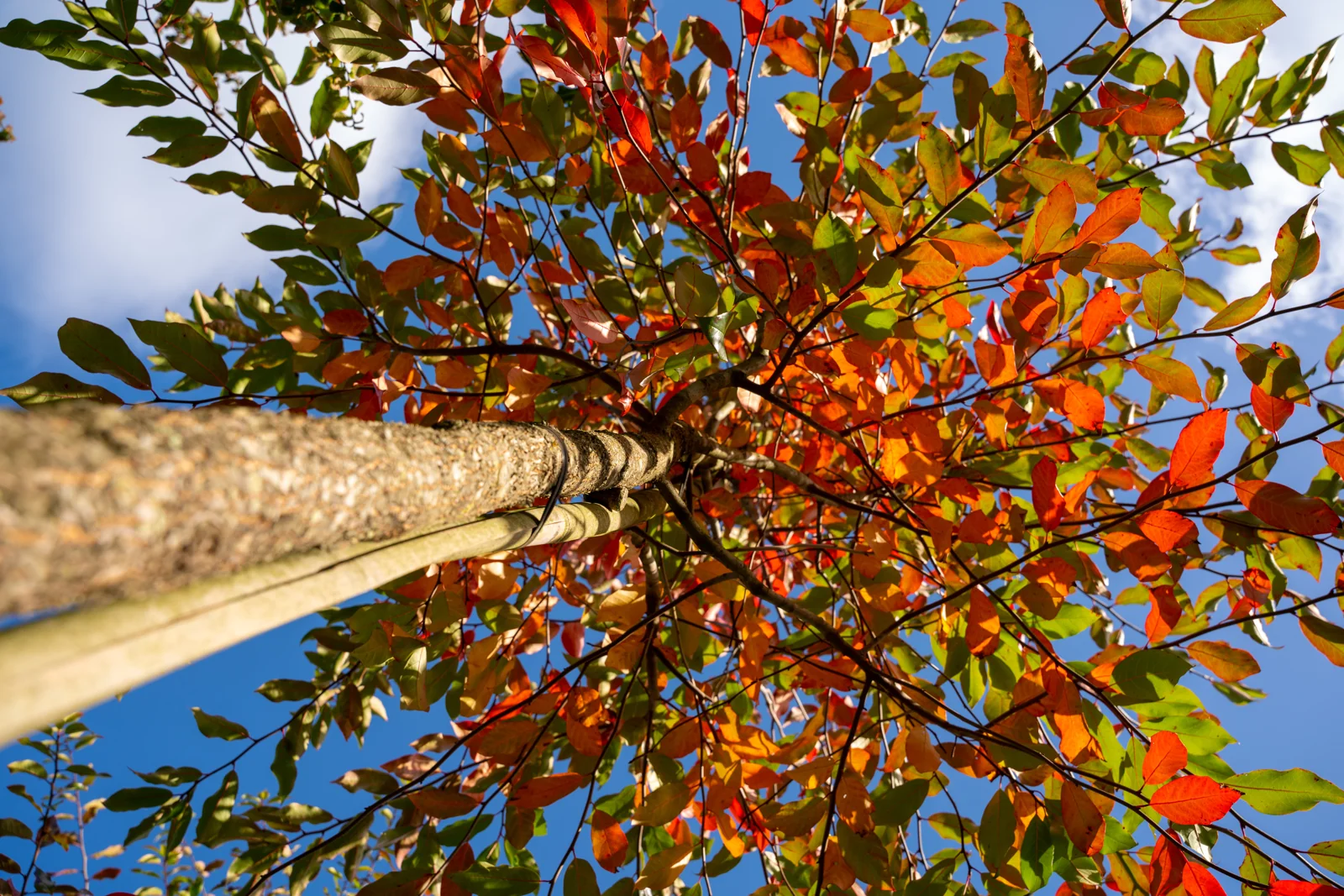
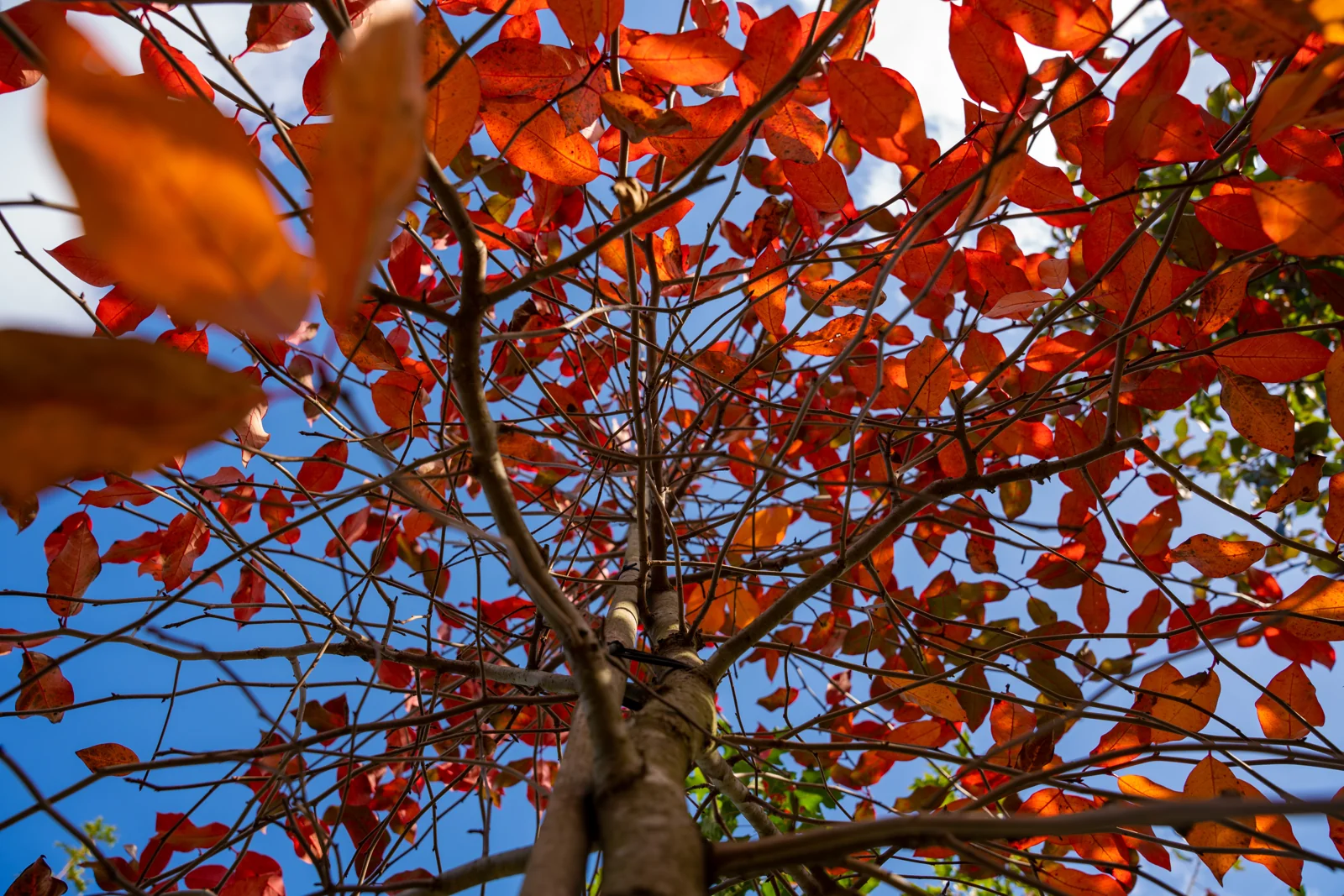
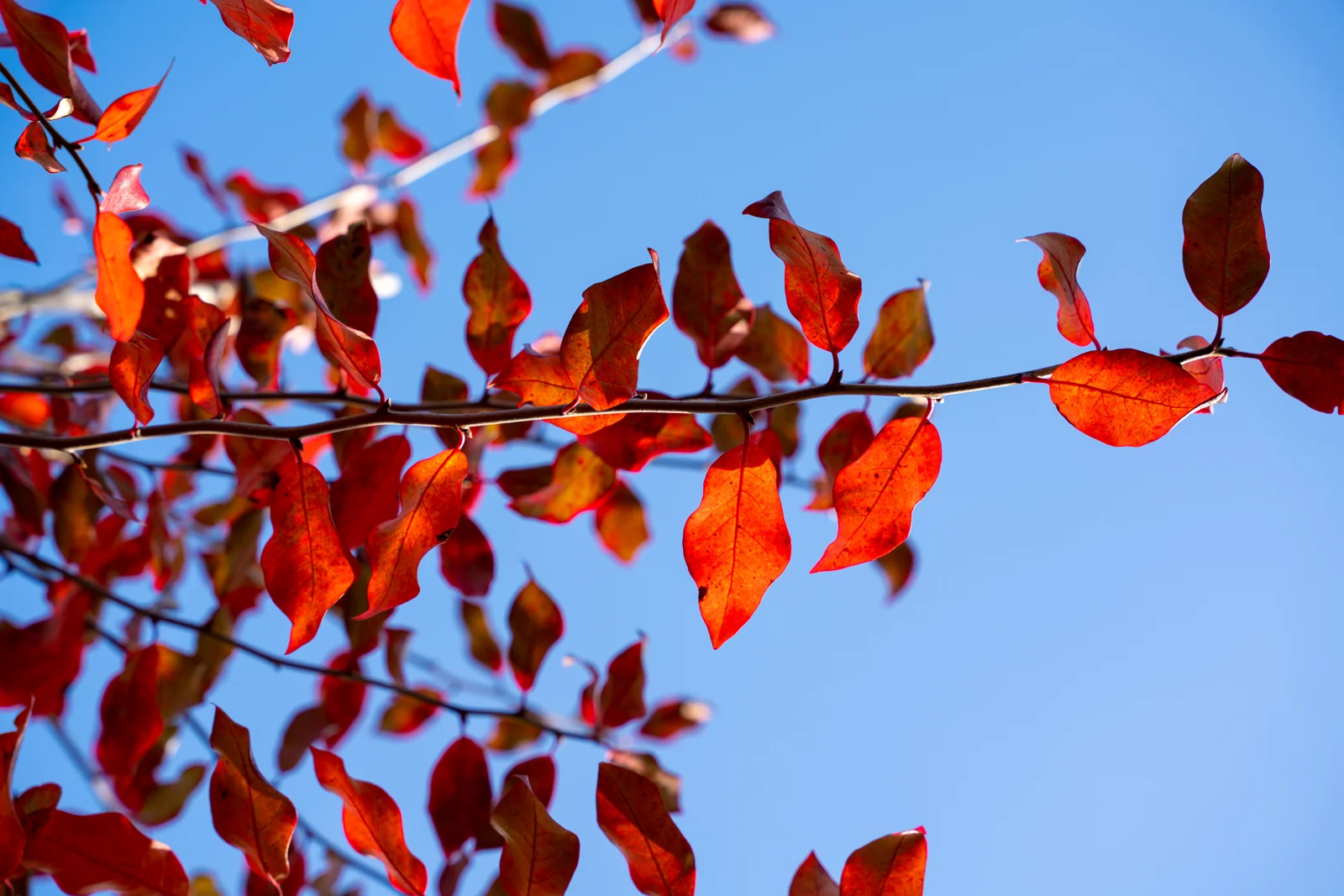
Autumn colour is the species' defining ornamental attribute. Foliage transitions through yellow, orange, and deep scarlet to purple, often carrying multiple tones simultaneously on a single crown. Colour onset is early, typically mid-September in German latitudes, which provides visual interest before the main autumn wave of native broadleaves. The deep taproot (Wurzelverhalten) that anchors this stability also makes transplanting difficult. Field-grown, root-trained stock from a nursery that has managed the taproot through successive transplanting cycles is essential for reliable establishment on site.



Advice on this species
Want to know more about Nyssa sylvatica?
Tell us about your project and we'll advise you on this species — where it thrives, which size makes sense, and what to expect once planted.
- Produção própria
- Exemplares adultos
- Resposta em 1–2 dias
Sem compromisso · orçamento personalizado