

Heat-adapted Zukunftsbaum candidate for mild-winter urban sites
Chinaberry Tree · Melia azedarach
A fast-growing deciduous shade tree well suited to Germany's warmest, mild-winter Klimaregionen, where winters stay above minus 12 degrees Celsius. It offers drought tolerance, disease resistance, and a broad spreading crown for heat-stressed urban planting.
About this Species
Winter hardiness (Winterhärte) is the defining constraint for Melia azedarach in Germany. The species tolerates minimum temperatures of approximately minus 15 degrees Celsius once established on free-draining soil in sheltered positions, but minus 12 degrees Celsius is the more conservative working limit for open sites. This restricts reliable performance…
Read more
Show less
Winter hardiness (Winterhärte) is the defining constraint for Melia azedarach in Germany. The species tolerates minimum temperatures of approximately minus 15 degrees Celsius once established on free-draining soil in sheltered positions, but minus 12 degrees Celsius is the more conservative working limit for open sites. This restricts reliable performance to the Upper Rhine valley (Oberrheingraben), the Lower Rhine basin (Niederrheinische Bucht), and comparable mild-winter locations in southwestern and western Germany. East of the Elbe, in the northern German lowlands (norddeutsche Tiefebene), and above approximately 300 metres in the pre-Alpine foothills (voralpenland), the species should be considered unsuitable without substantial microclimate protection. Young trees are materially less hardy than established specimens; the first three winters represent the primary risk window, and supplementary protection during this period is advisable even in otherwise suitable Klimaregionen.
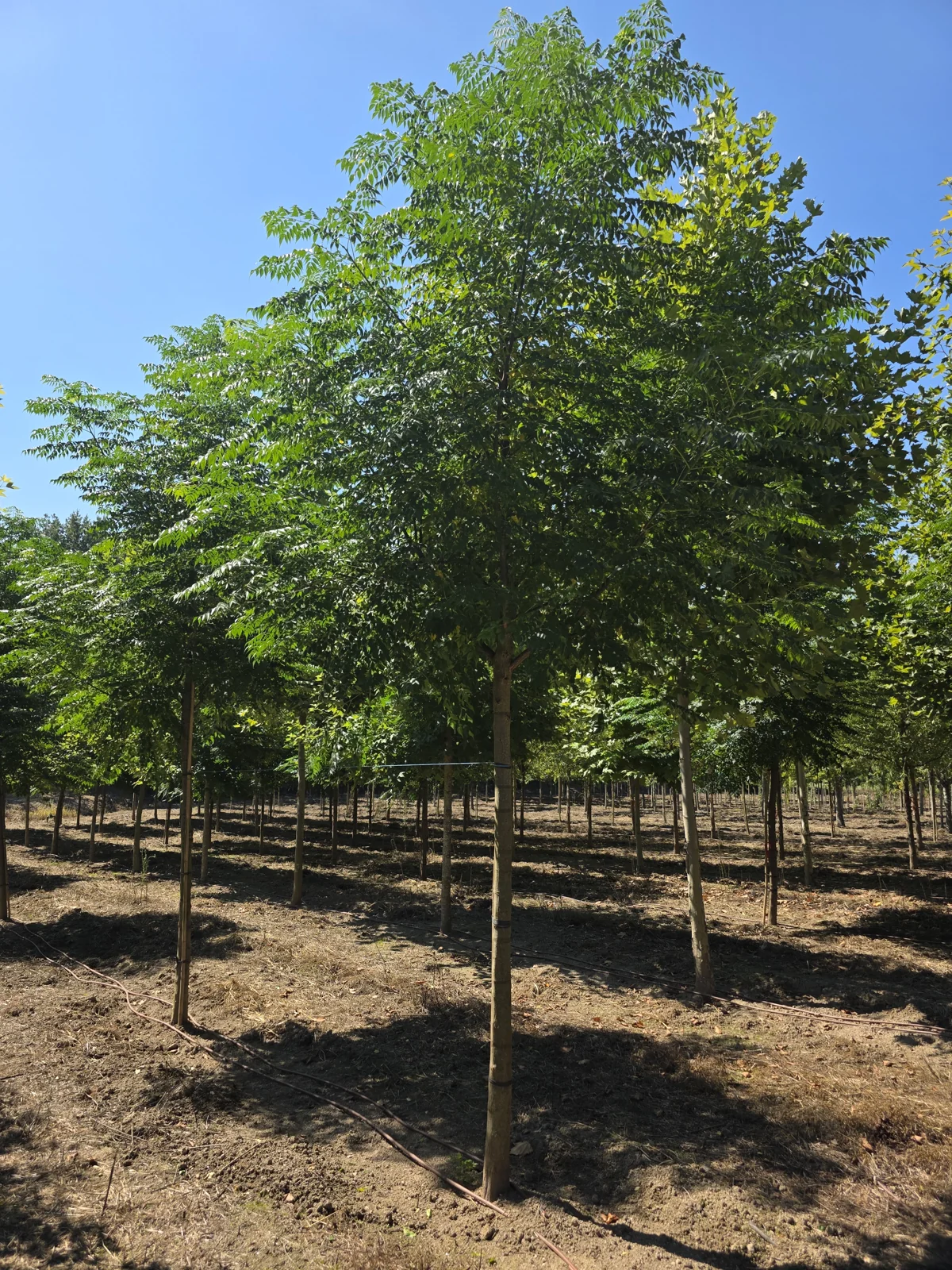
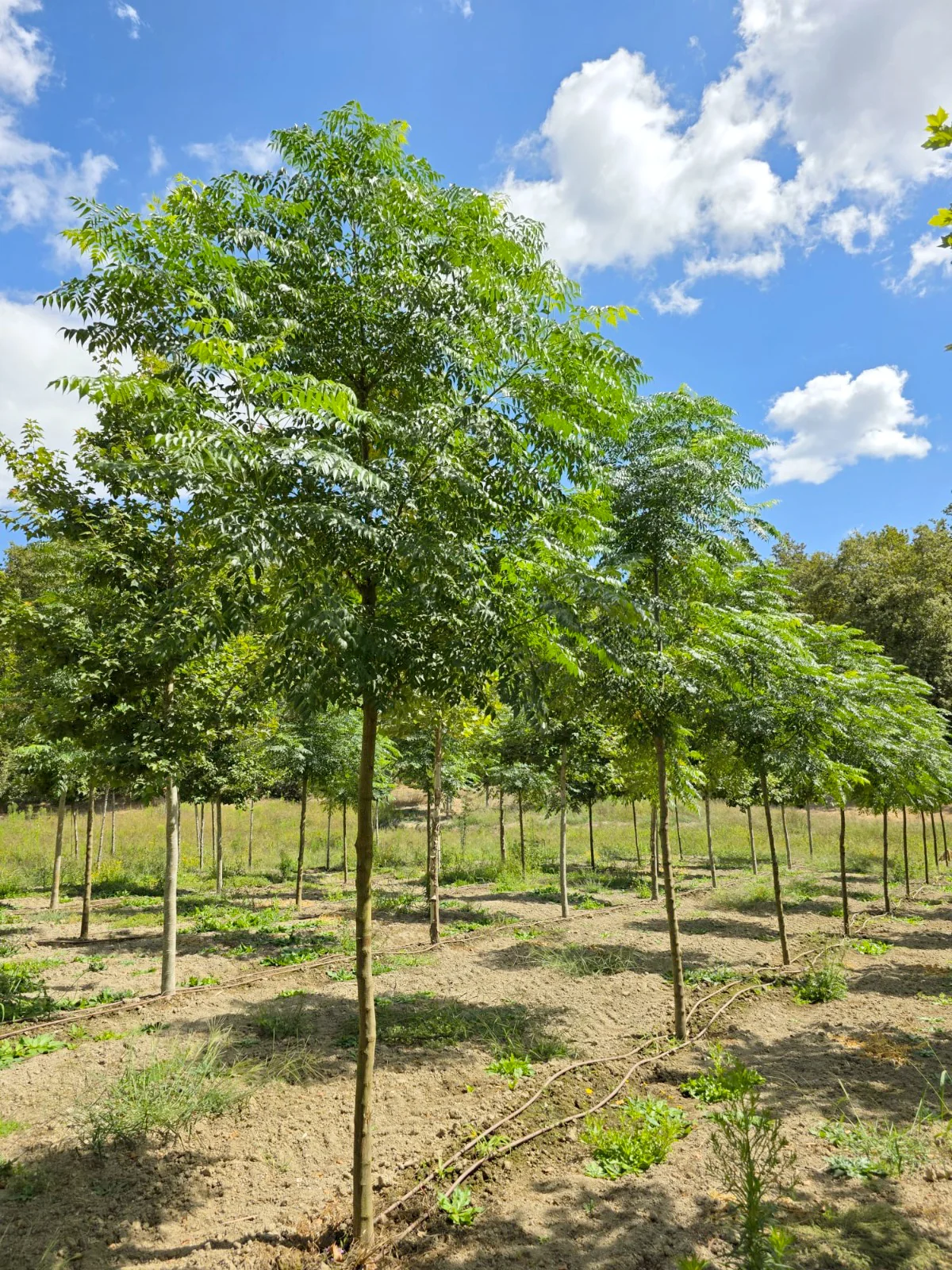
In sites where winter conditions permit, the tree develops a rounded, spreading crown (Habitusform) reaching 8 to 15 metres in height with a spread of 6 to 10 metres. Growth rate is rapid, which positions it as a candidate for urban heat-island mitigation where canopy cover is needed within a compressed timeframe. The species tolerates compacted substrates, performs on free-draining loams and sandy soils, and accepts calcareous ground to approximately pH 8 once established. De-icing salt tolerance is moderate. These site tolerances, combined with its documented heat and drought resistance, align with the Zukunftsbaum criteria that German municipalities are applying to climate-adapted species selection. Melia azedarach does not currently appear on the GALK street tree list (the definitive German street tree recommendation list, maintained by the working group of German municipal parks departments), though its performance profile under the 2018 to 2022 drought sequence warrants evaluation against the Klima-Artenmatrix for sites in the mildest Klimaregionen.
Flowering occurs from April to June in fragrant lavender panicles of 20 to 40 centimetres, followed by persistent yellow drupes through winter. The flowers carry a distinctive chocolate-like fragrance. Bipinnate foliage, up to 50 centimetres long, provides dense summer shade and a yellow autumn colour before leaf drop. The open winter silhouette with persistent fruit clusters gives structural interest during the leafless months.
Two characteristics require explicit assessment in any German specification. First, all parts of the tree, particularly the fruit, contain tetranortriterpene neurotoxins and are toxic to mammals including dogs and cats. This limits suitability for playgrounds, schoolyards, and sites with unsupervised public access. Second, the species has a comparatively short productive lifespan, averaging around 20 years, which must be factored into lifecycle cost calculations and replacement planning. In warmer climates the tree self-seeds readily, though German winter temperatures generally suppress this tendency. Where these constraints are acceptable, Melia azedarach fills a narrow but genuine gap in the German urban palette: a fast-establishing, drought-resistant shade tree for the warmest western and southwestern sites where conventional Linden (Tilia cordata) and Ahorn (Acer platanoides) are increasingly stressed by summer heat.



Advice on this species
Want to know more about Melia azedarach?
Tell us about your project and we'll advise you on this species — where it thrives, which size makes sense, and what to expect once planted.
- Produção própria
- Exemplares adultos
- Resposta em 1–2 dias
Sem compromisso · orçamento personalizado