

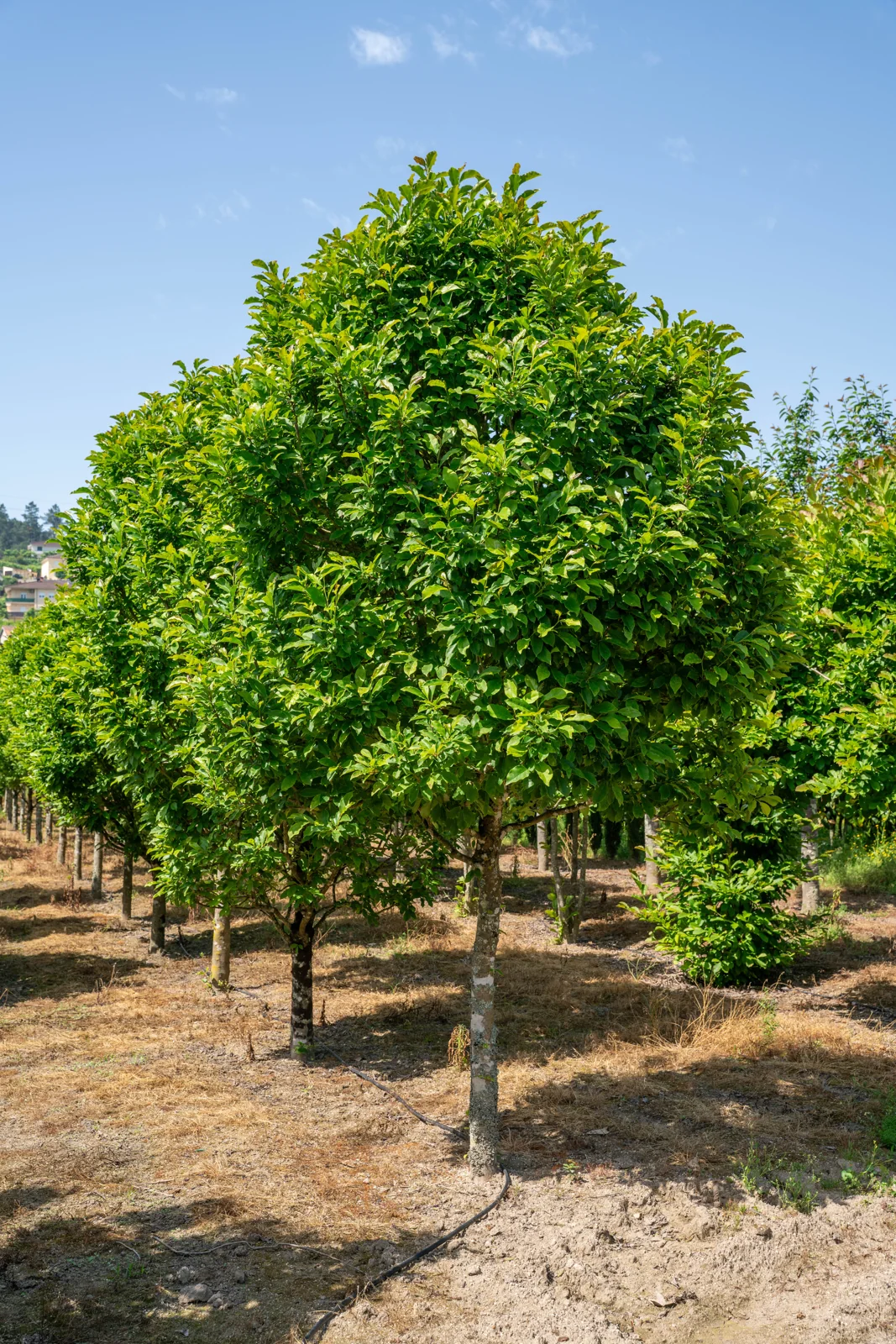
Late-flowering specimen magnolia for frost-prone spring sites
Susan Magnolia · Magnolia susan
A compact deciduous magnolia (Magnolie Susan) bred to flower two to four weeks after Magnolia stellata and M. x soulangeana, holding its buds past late frost across all German Klimaregionen. Hardy to minus 30 degrees Celsius.
About this Species
Magnolia 'Susan' is a hybrid of M. liliiflora 'Nigra' and M. stellata 'Rosea', developed in the 1950s at the US National Arboretum as part of the Little Girl series. The breeding objective was practical: delayed flowering that avoids the late spring frost damage which routinely compromises earlier-blooming magnolias in continental climates. In German…
Read more
Show less
Magnolia 'Susan' is a hybrid of M. liliiflora 'Nigra' and M. stellata 'Rosea', developed in the 1950s at the US National Arboretum as part of the Little Girl series. The breeding objective was practical: delayed flowering that avoids the late spring frost damage which routinely compromises earlier-blooming magnolias in continental climates. In German conditions, where late frosts into May are common in the northern lowlands (norddeutsche Tiefebene) and pre-Alpine foothills (Voralpenland), this delayed phenology is a material specification advantage over M. x soulangeana.
Winter hardiness (Winterharte) is not a limiting factor. Zone 4b corresponds to minus 30 degrees Celsius, placing 'Susan' well within the tolerance range for all German climate regions, including the coldest positions in the Brandenburg lowlands and the Bavarian uplands. There is no meaningful difference between young-tree and established-tree hardiness at German winter minima. The species performs reliably from the Upper Rhine valley (Oberrheingraben) through the northern German lowlands (norddeutsche Tiefebene) to the eastern border regions without winter protection.
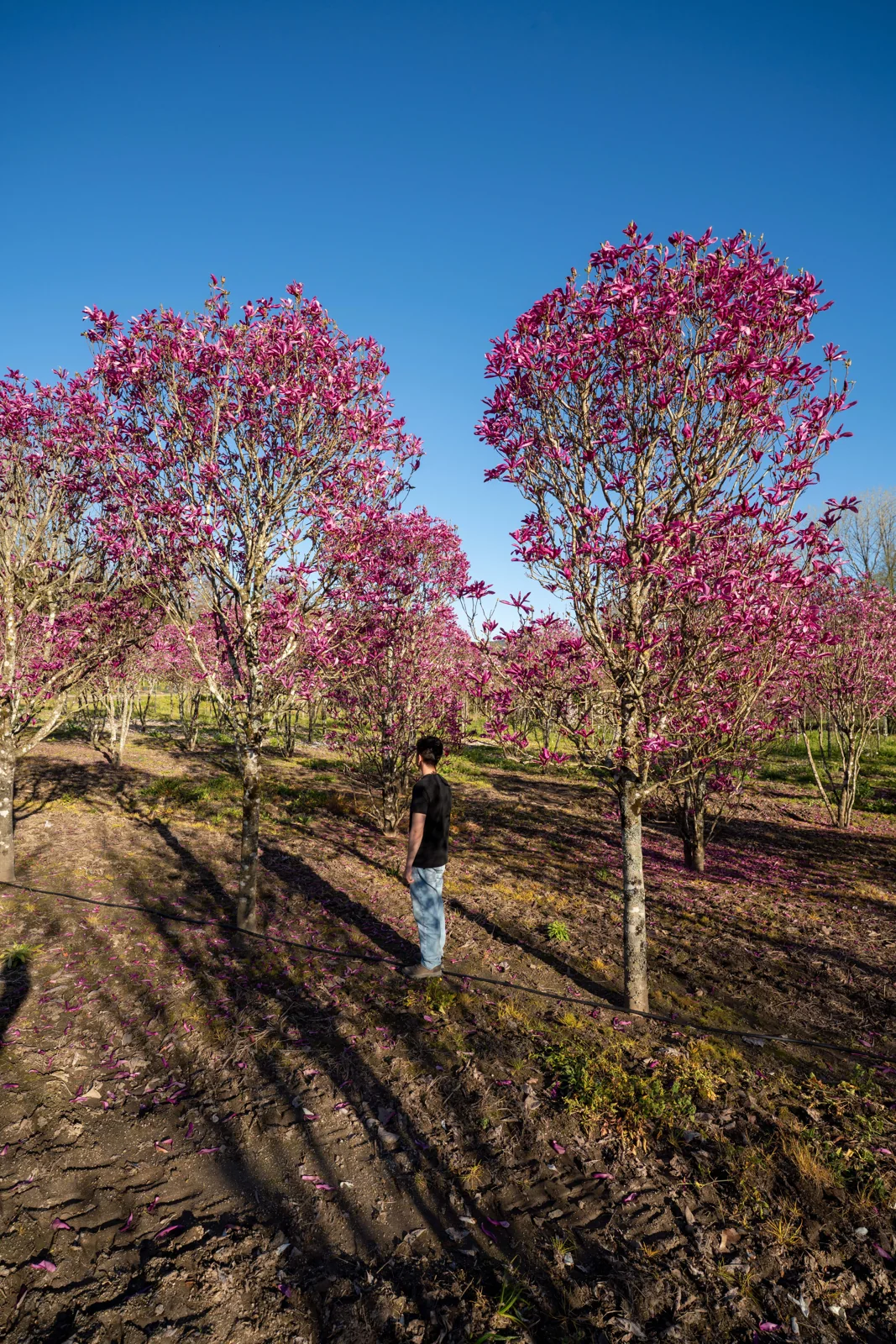
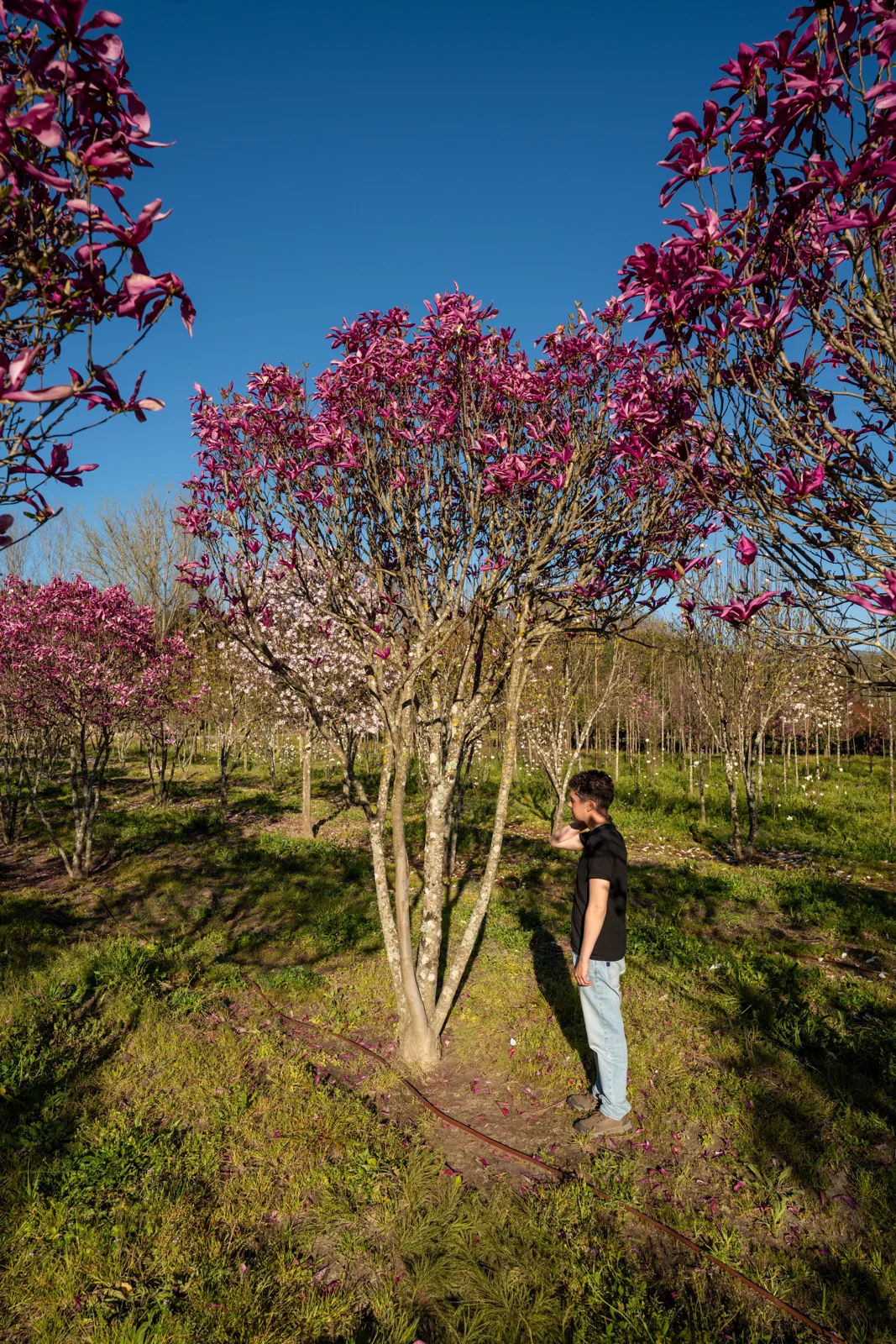
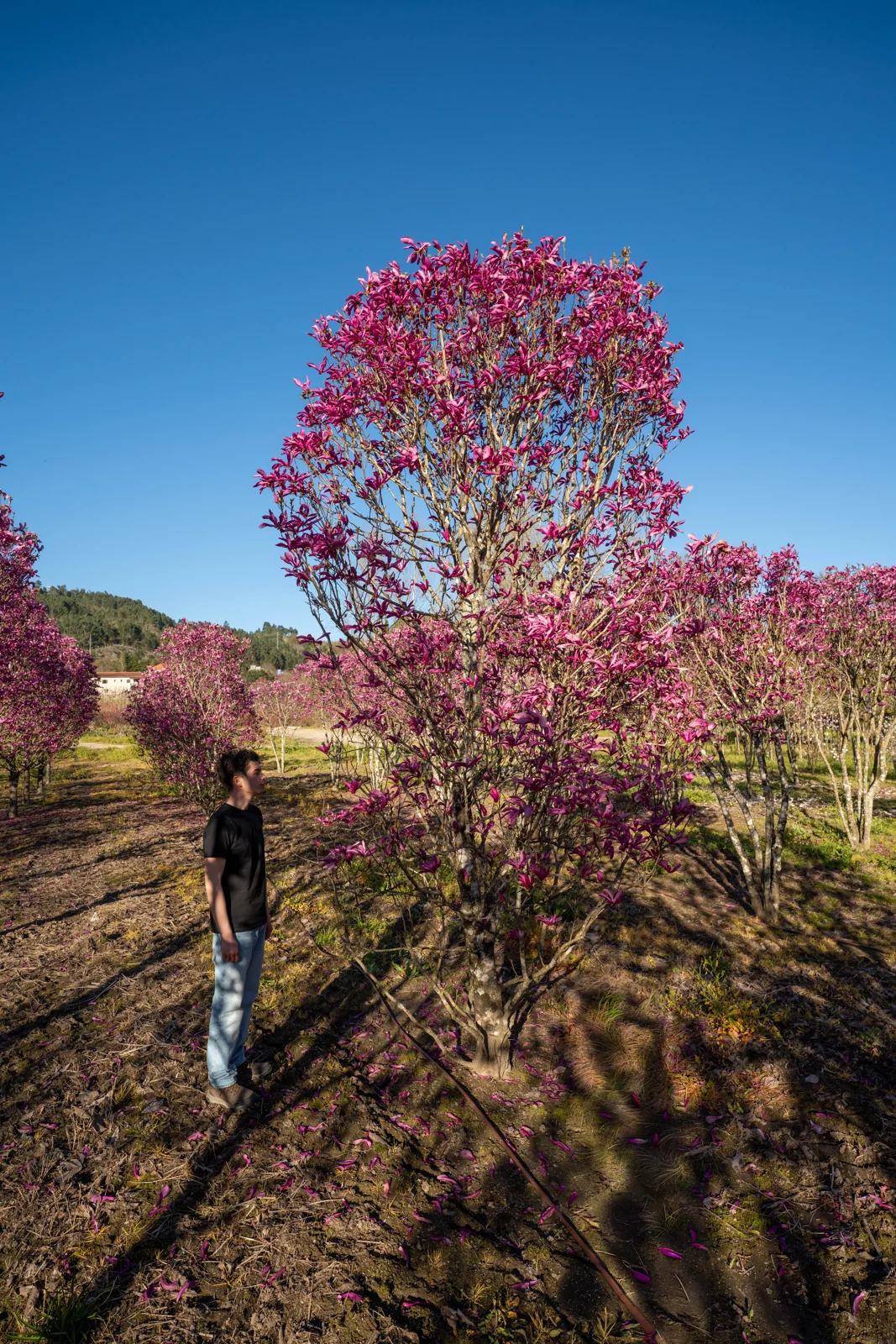
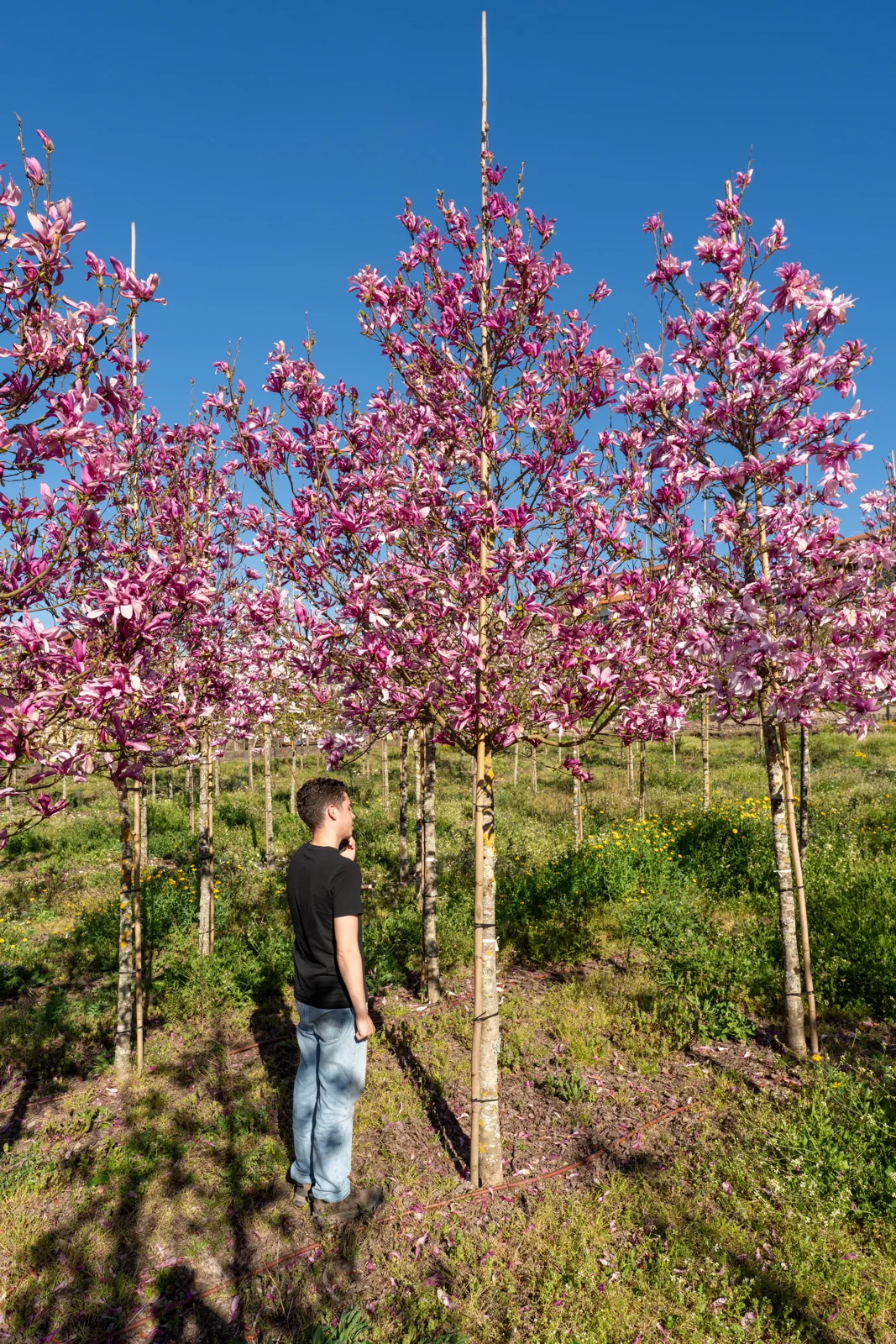
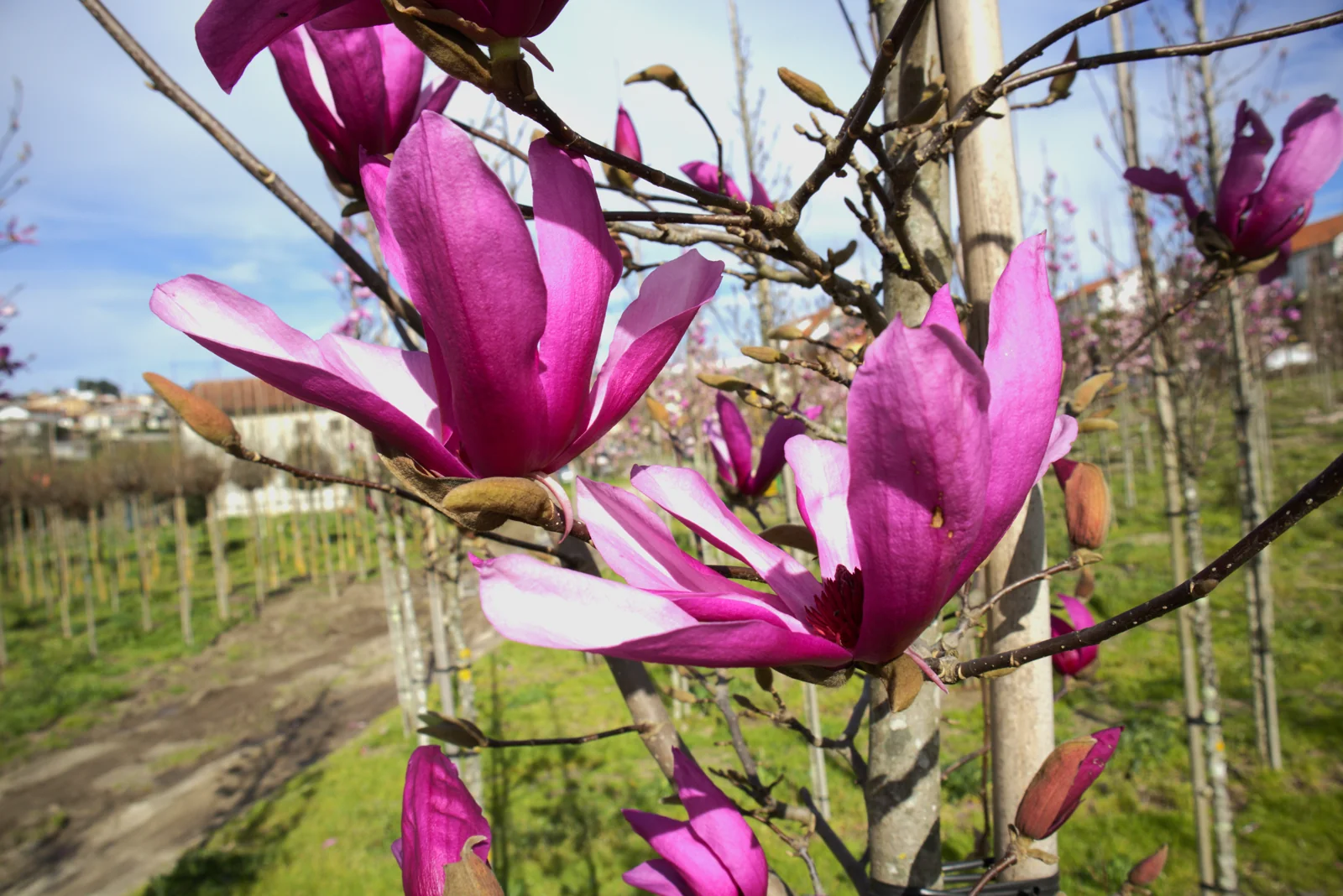
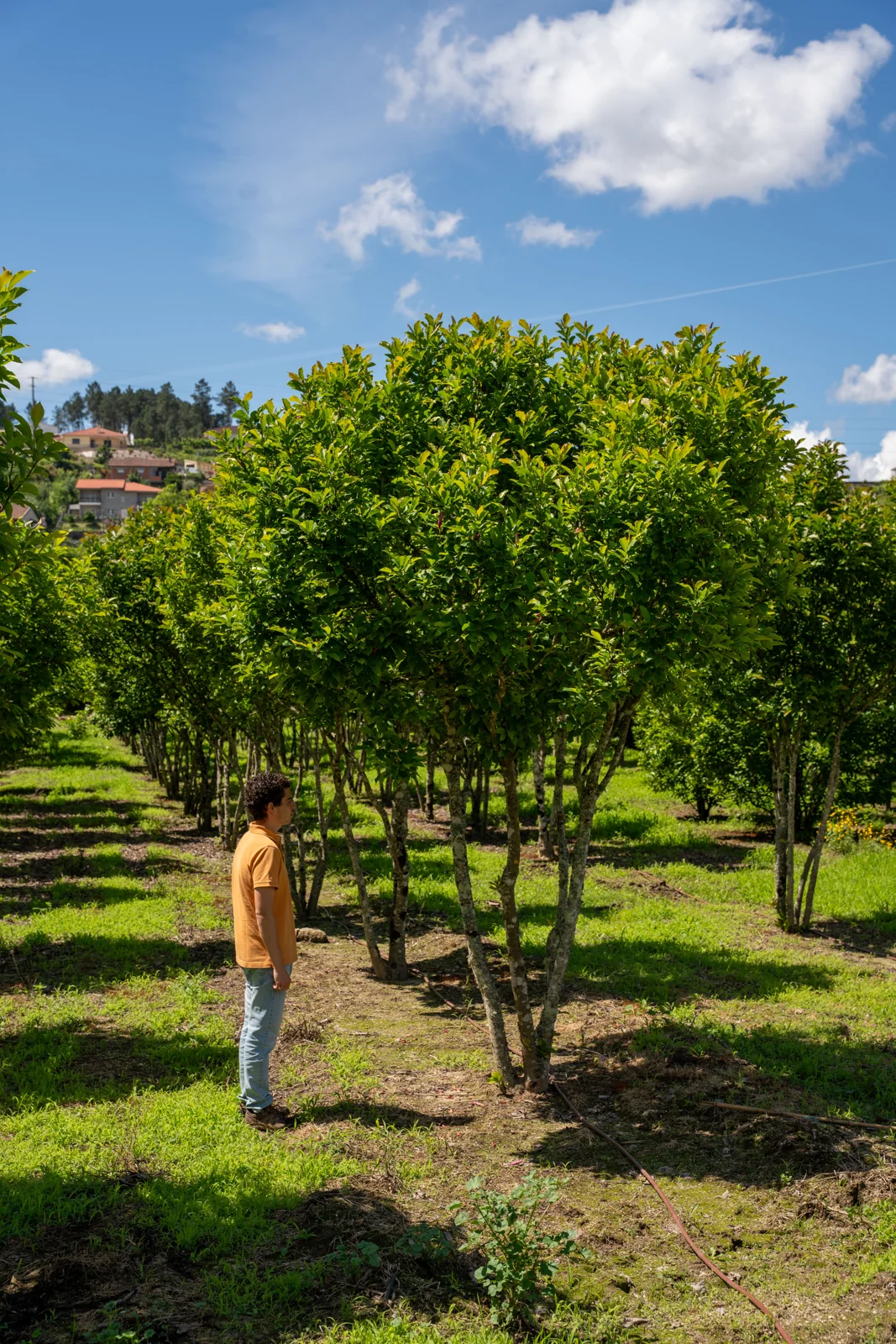
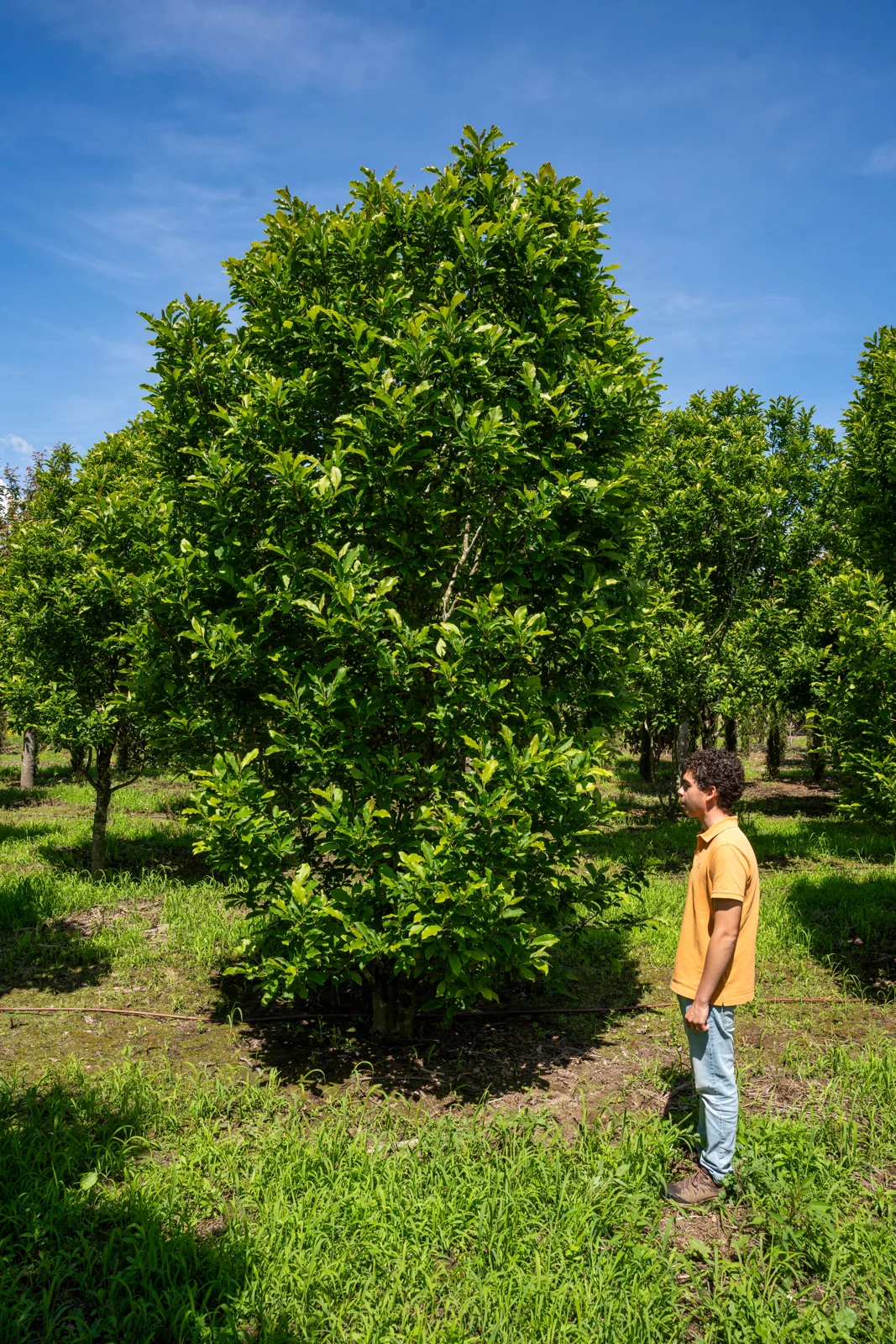
The habitus (Habitusform) is upright to rounded, reaching 2.5 to 3.7 metres in height and spread at maturity, slow-growing at roughly 15 to 30 centimetres per year. Goblet-shaped flowers of 6 slightly twisted tepals open fuchsia to purple-red with paler inner tones from mid-April into early May, carrying a light fragrance. Sporadic repeat bloom occurs in midsummer. Autumn foliage turns yellow-bronze, providing a secondary ornamental phase during the leaf-off transition.
Site requirements (Standortanspruche) favour organically rich, neutral to slightly acidic, moist but well-drained loams. Calcareous substrates risk lime-induced chlorosis; on Rhine loess or Bavarian limestone soils, acidifying amendments or raised beds are advisable. A sheltered position is preferred: the fleshy root system (Wurzelverhalten) is sensitive to transplanting disturbance and to waterlogged substrates. Avoid warm south-facing exposures, which promote premature bud break and negate the delayed-flowering advantage. Salt tolerance is low, making 'Susan' unsuitable for roadside planting where winter de-icing is routine.
No serious disease or pest problems are recorded. Powdery mildew and leaf spot may appear in humid summers but are cosmetic rather than structural. For small-format urban sites, courtyards, and institutional plantings where M. x soulangeana is too large or too frost-vulnerable, 'Susan' offers a more compact and phenologically safer alternative. The species does not appear on the GALK street tree list (the definitive German street tree recommendation list, maintained by the working group of German municipal parks departments), consistent with its low salt tolerance and shrubby habit, but it merits consideration for protected urban positions where street tree standards do not apply.
Advice on this species
Want to know more about Magnolia susan?
Tell us about your project and we'll advise you on this species — where it thrives, which size makes sense, and what to expect once planted.
- Produção própria
- Exemplares adultos
- Resposta em 1–2 dias
Sem compromisso · orçamento personalizado