

Evergreen broad-crowned specimen for sheltered urban sites
Southern Magnolia ‘Gallisoniensis’ · Magnolia grandiflora ‘Gallisoniensis’
A European cultivar for sheltered positions in the milder German Klimaregionen, Magnolia grandiflora 'Gallisoniensis' (Immergrüne Magnolie) is hardy to approximately minus 15 degrees Celsius on free-draining soil.
Key Facts
About this Cultivar
Winter hardiness is the determining factor for specifying this cultivar in Germany. Established specimens tolerate sustained minima around minus 15 degrees Celsius in sheltered positions on free-draining substrate; in open, wind-exposed sites, minus 12 degrees Celsius is a safer working limit. Young trees are more vulnerable: the first three winters require…
Read more
Show less
Winter hardiness is the determining factor for specifying this cultivar in Germany. Established specimens tolerate sustained minima around minus 15 degrees Celsius in sheltered positions on free-draining substrate; in open, wind-exposed sites, minus 12 degrees Celsius is a safer working limit. Young trees are more vulnerable: the first three winters require wind protection and root-zone mulching to buffer temperature swings. Reliable long-term performance is limited to the Upper Rhine valley, the Lower Rhine basin, and comparable mild zones in the southwest.
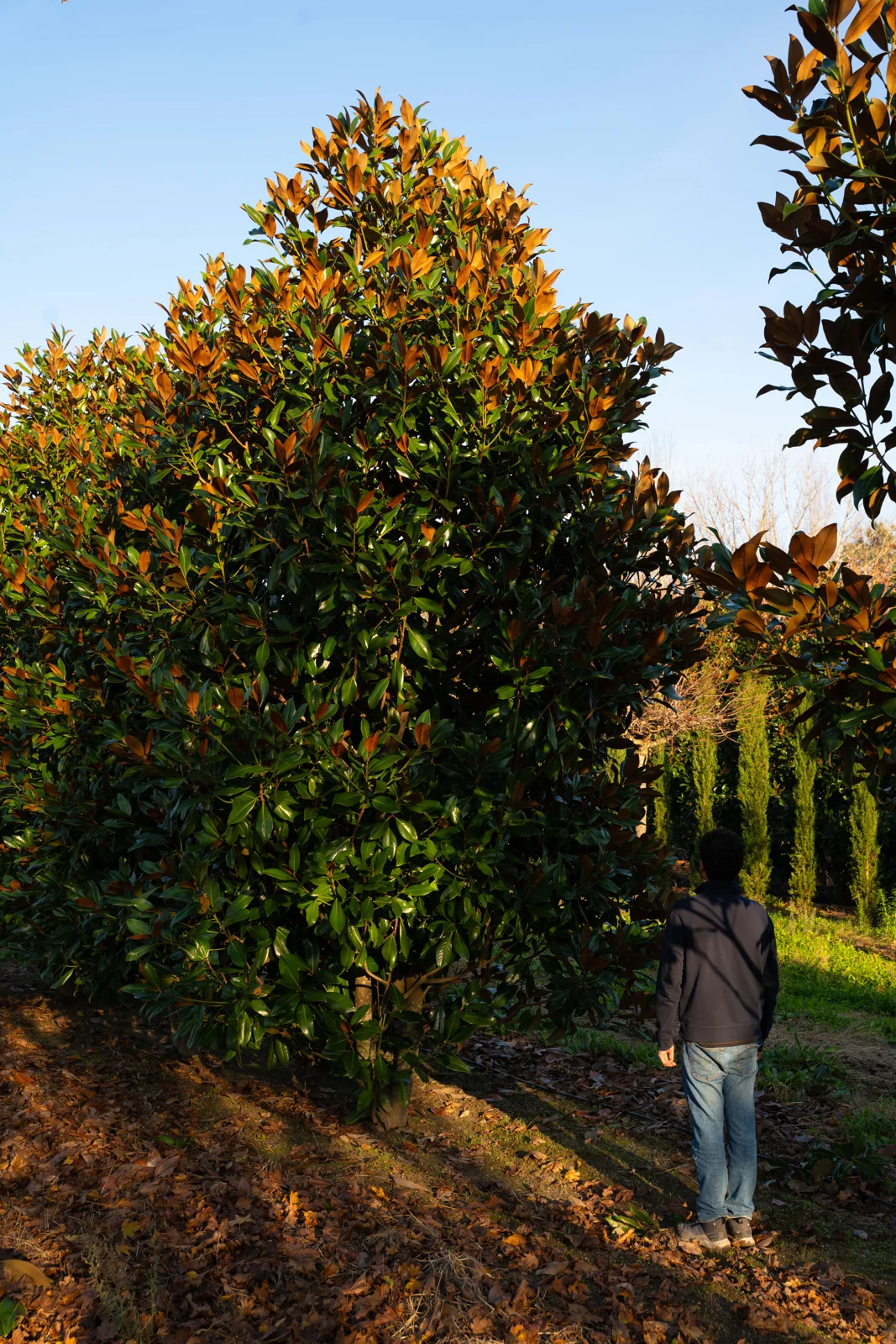
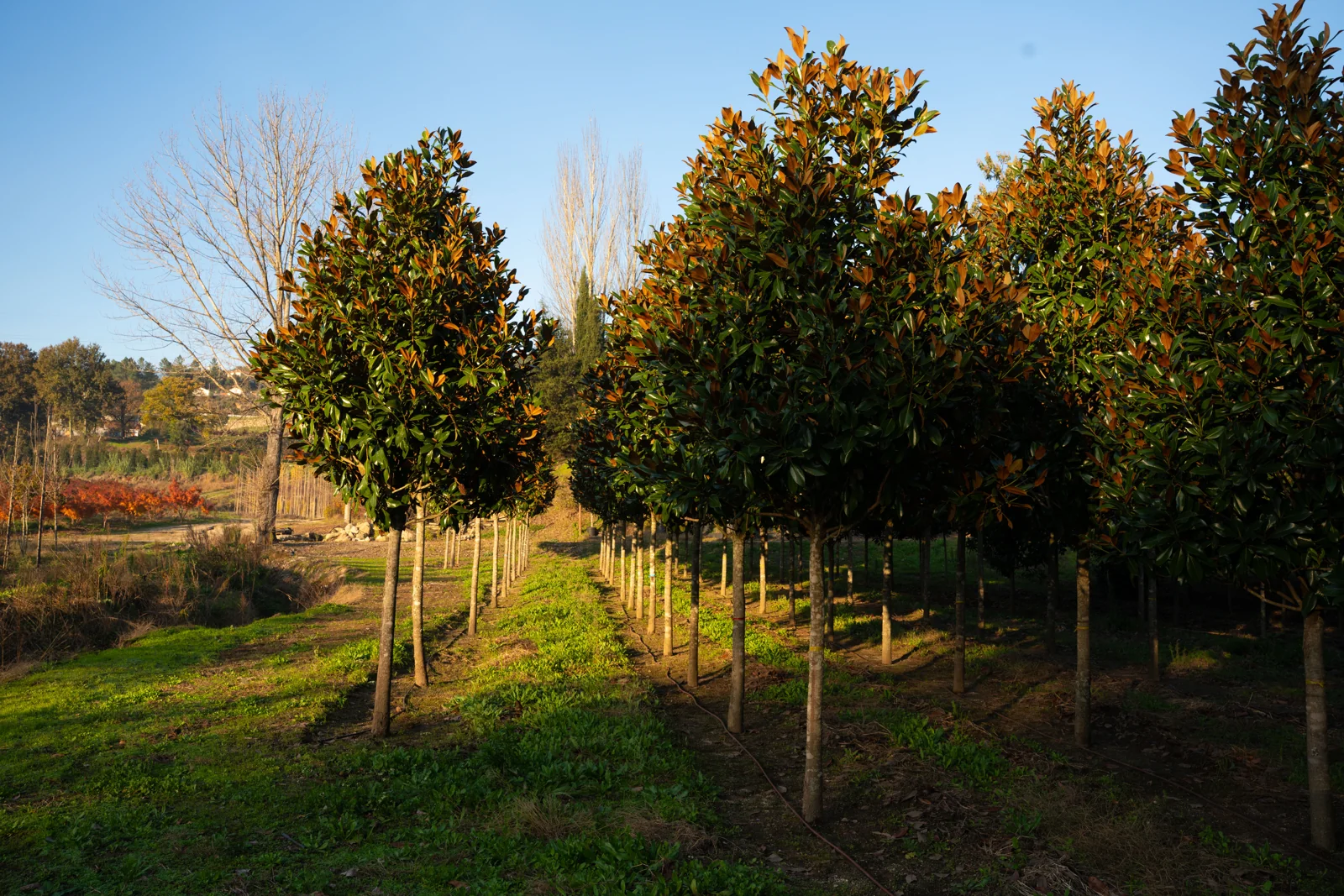
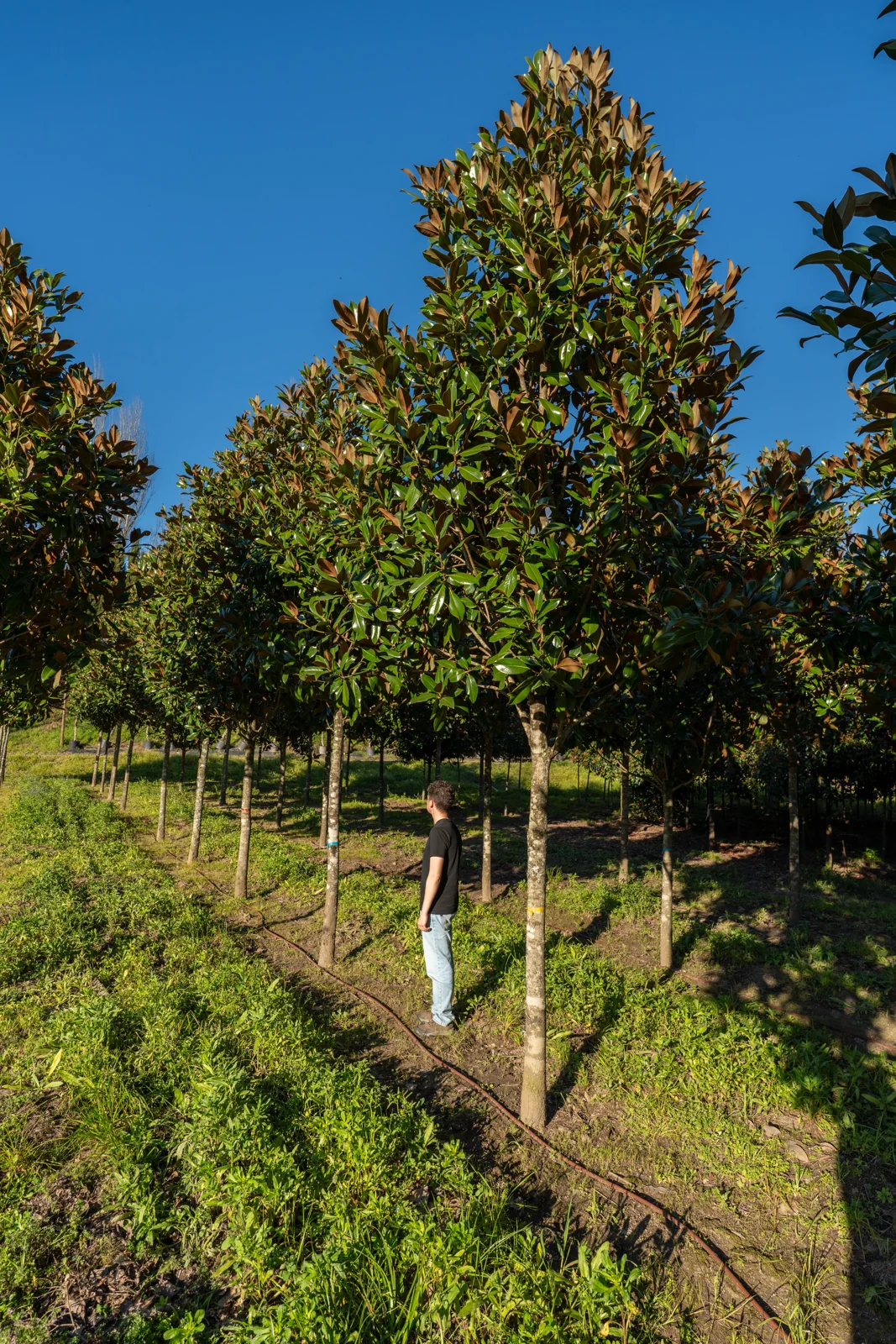
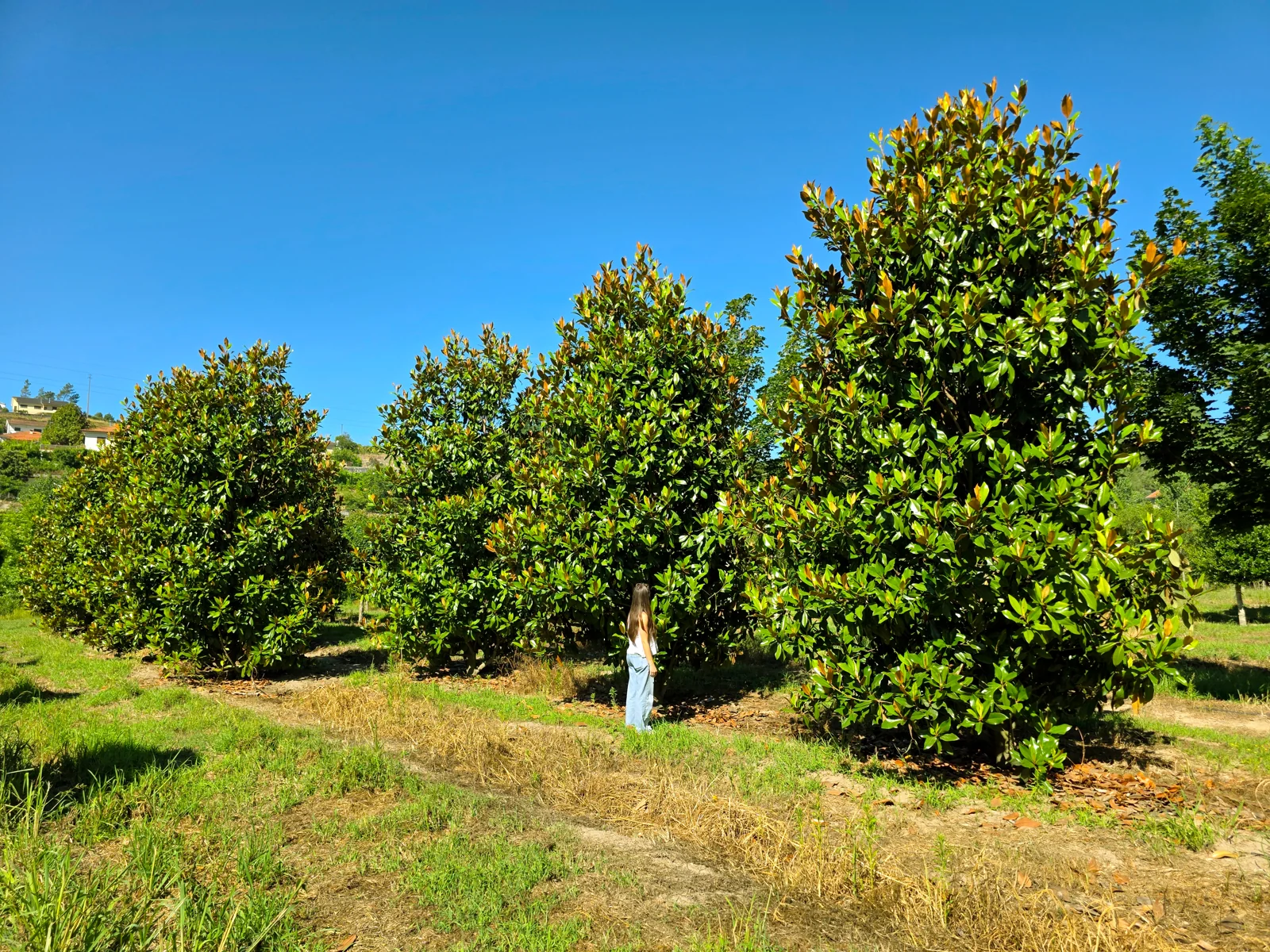
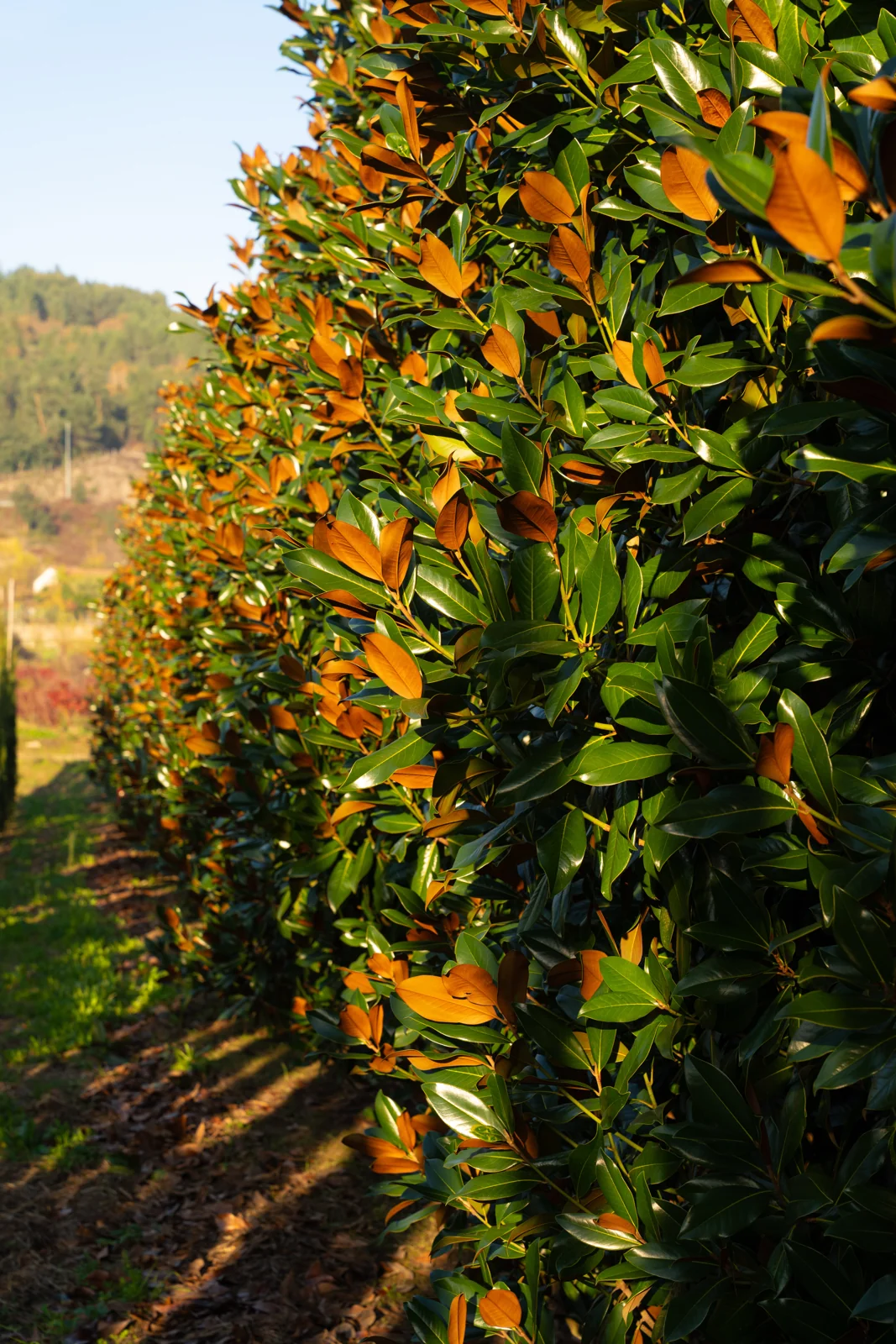
'Gallisoniensis' is a European selection, one of the oldest and most widely planted cultivars of M. grandiflora on the continent. It develops a broad conical to rounded crown reaching 15 to 20 metres in height with a spread of 8 to 12 metres at maturity, making it a substantial presence where space permits. The persistent, leathery leaves are glossy dark green above and rusty-brown tomentose beneath, providing year-round structure, a quality that distinguishes it from the deciduous canopy of a typical Linde (Tilia cordata) or Ahorn (Acer platanoides) for the six months of leaf-off in German projects. Fragrant white flowers up to 25 cm across appear from June to August.
Soil requirements are moderately specific. The cultivar performs on deep, fertile, well-drained loams and tolerates clay substrates and mildly alkaline conditions. It does not tolerate waterlogged or compacted soils, and its low salt tolerance rules it out for roadside positions subject to winter de-icing. Parks, institutional grounds, courtyards, and set-back boulevard plantings are its natural place.
Disease resistance is a practical strength. M. grandiflora is unaffected by ash dieback (Eschentriebsterben), sooty bark disease (Russrindenkrankheit), and Massaria. For projects in the Rhein-Main corridor, where heat-island temperatures increasingly stress conventional species, the cultivar's high heat tolerance offers functional resilience.
Advice on this species
Want to know more about Magnolia grandiflora 'Gallisoniensis'?
Tell us about your project and we'll advise you on this species — where it thrives, which size makes sense, and what to expect once planted.
- Produção própria
- Exemplares adultos
- Resposta em 1–2 dias
Sem compromisso · orçamento personalizado