

Hardy autumn-colour Stadtbaum for Klimaregion 6 and 7
Sweet Gum · Liquidambar styraciflua
Reliable street and parkland tree (Stadtbaum) for milder German Klimaregionen, valued for late, dependable autumn colour. Established specimens tolerate winter minima around minus twenty degrees Celsius; the first three winters define the risk window.
About this Species
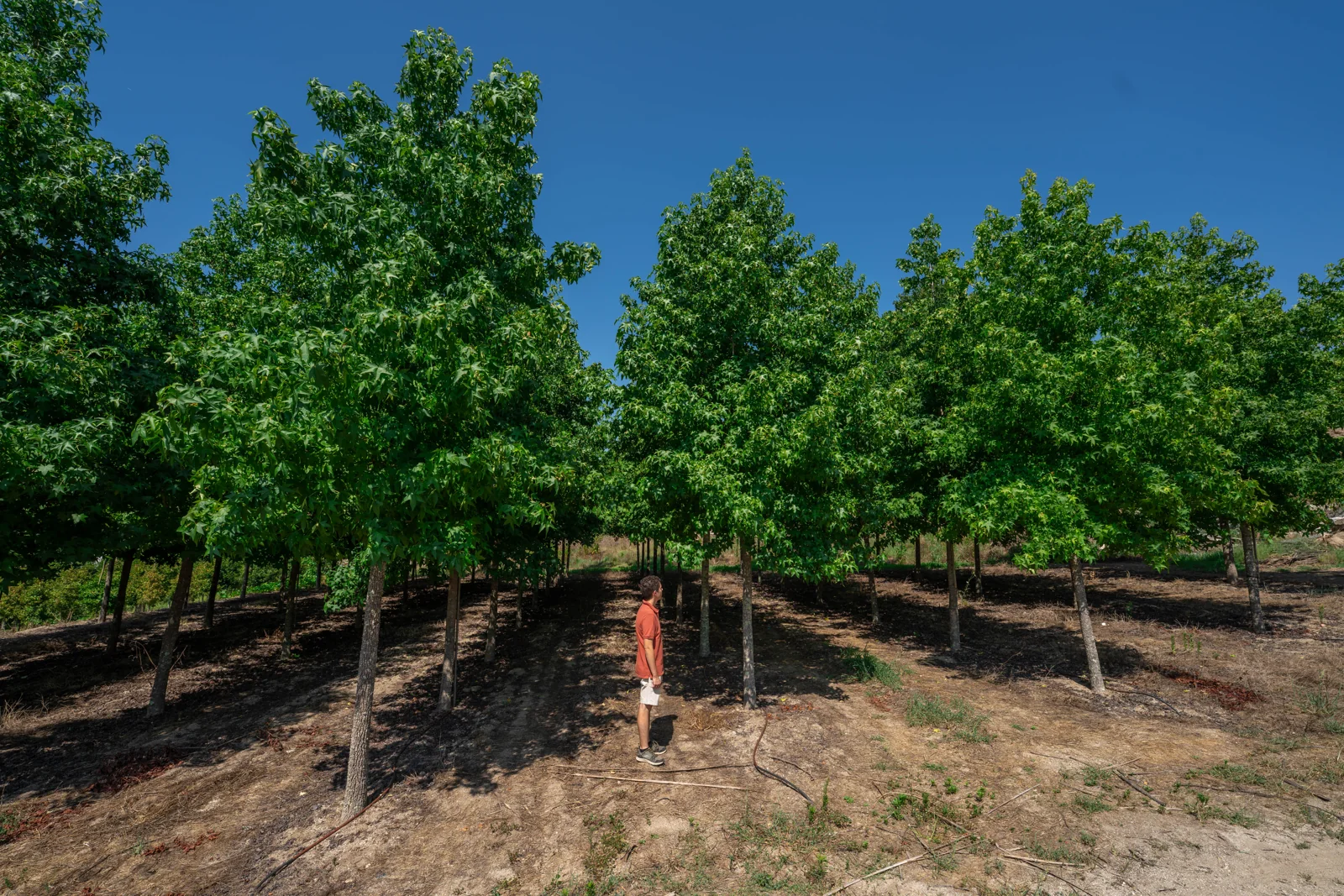
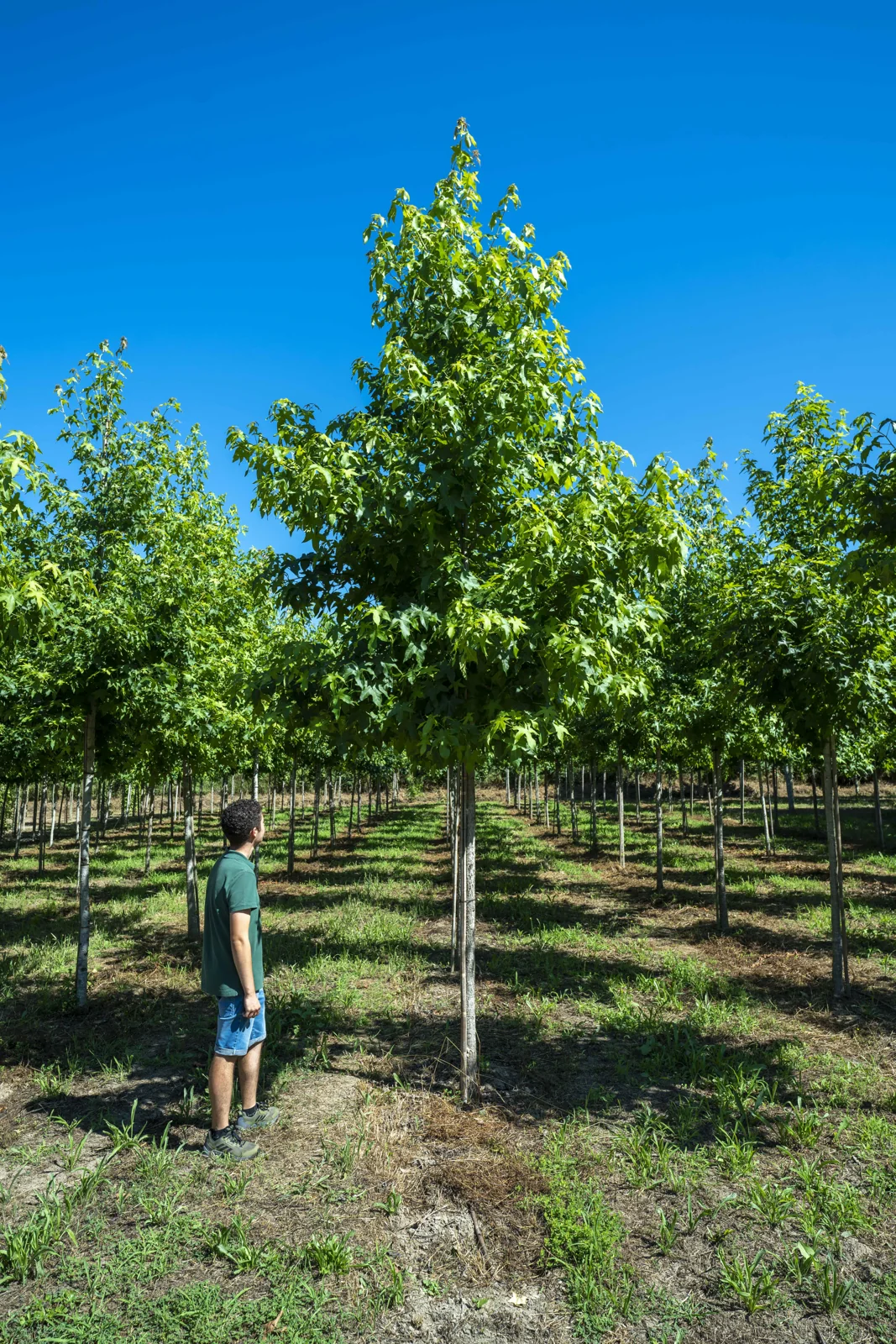
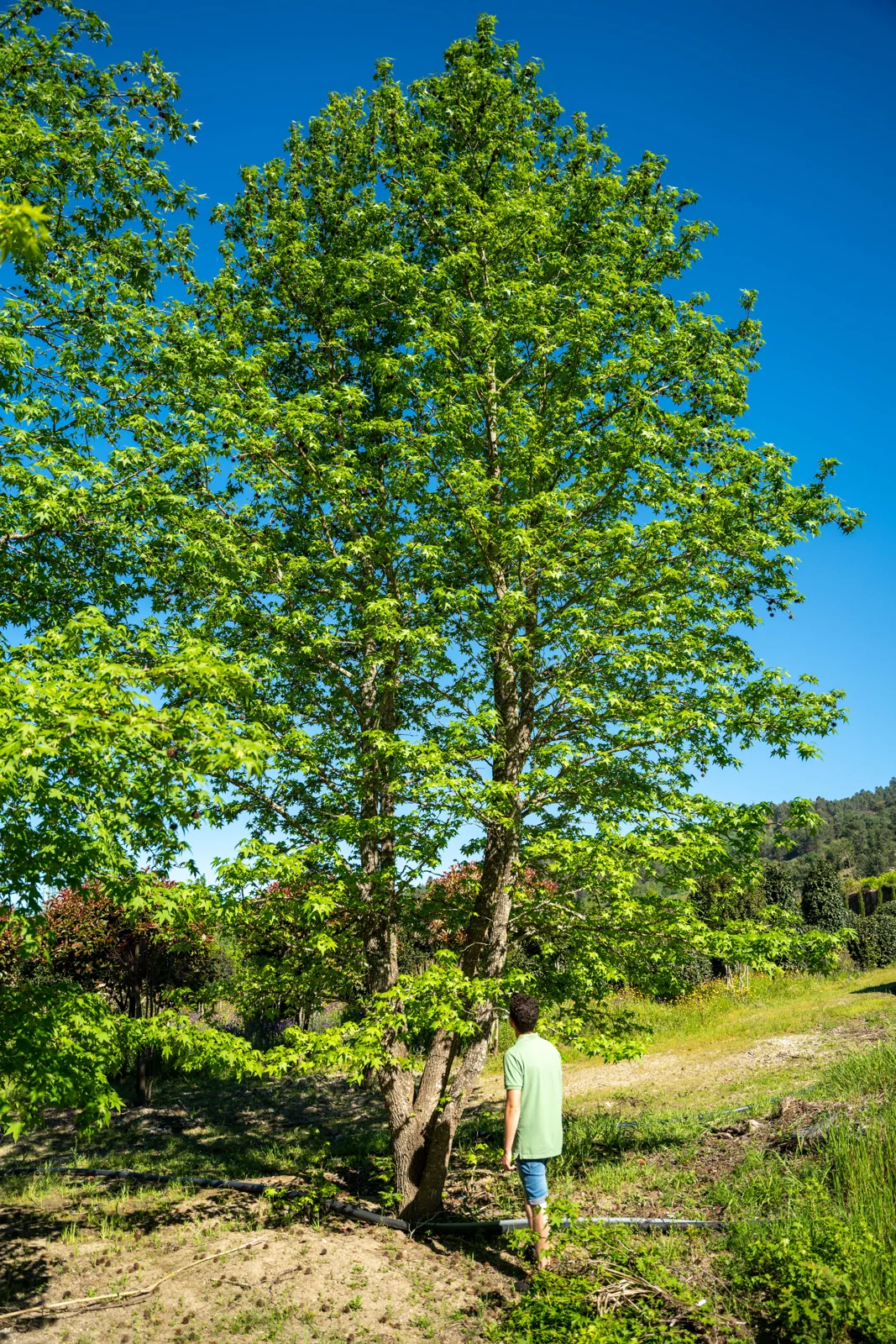
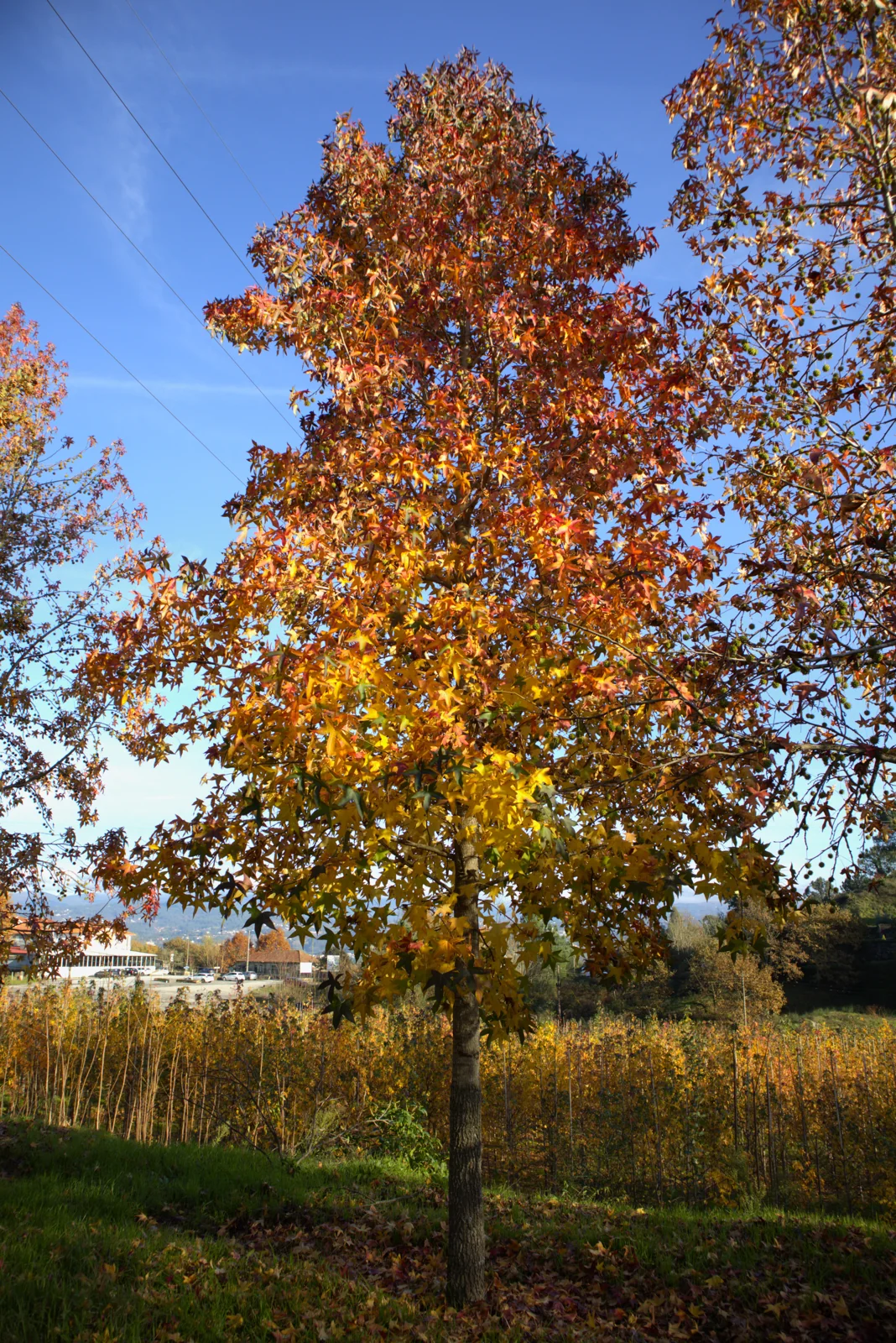
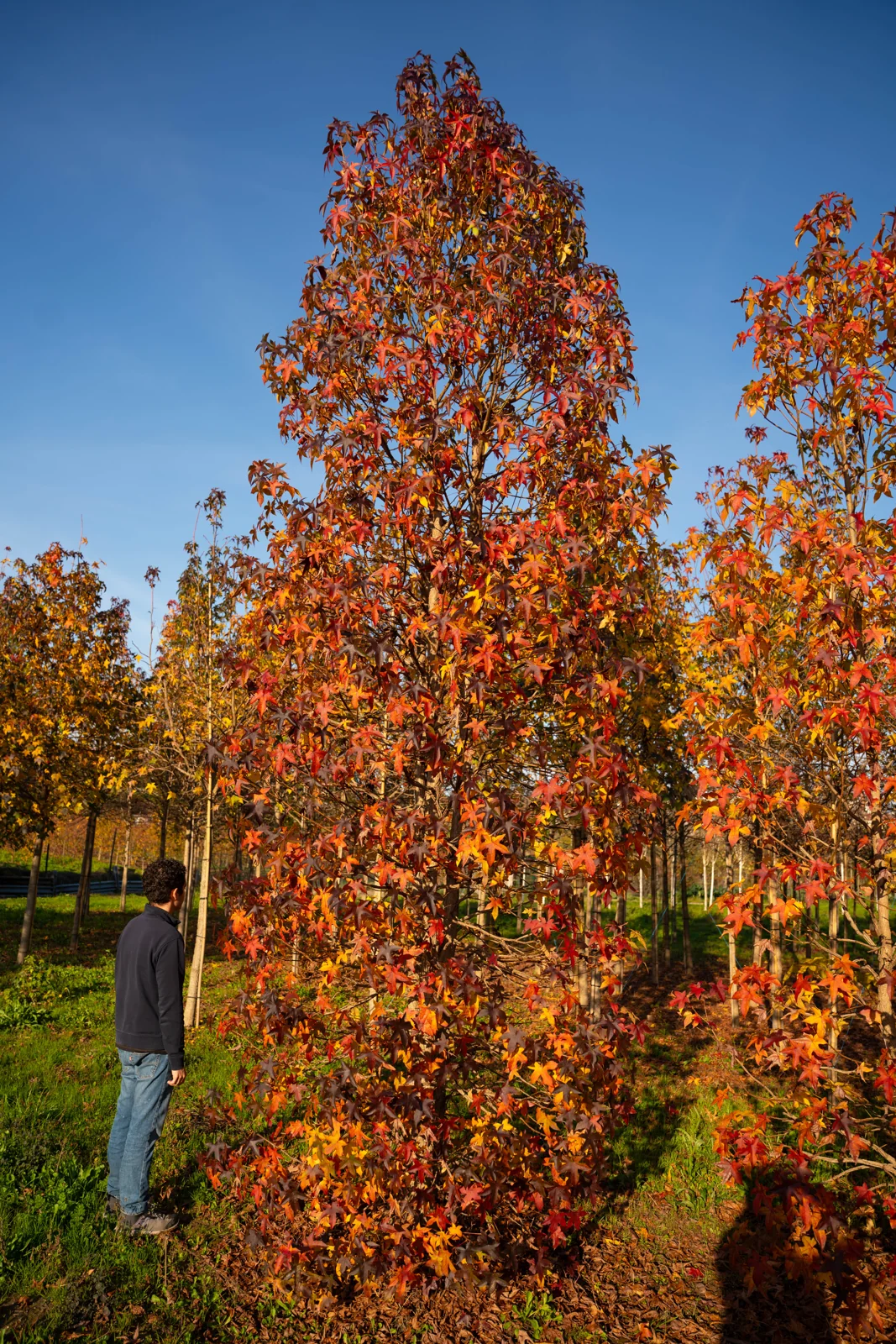
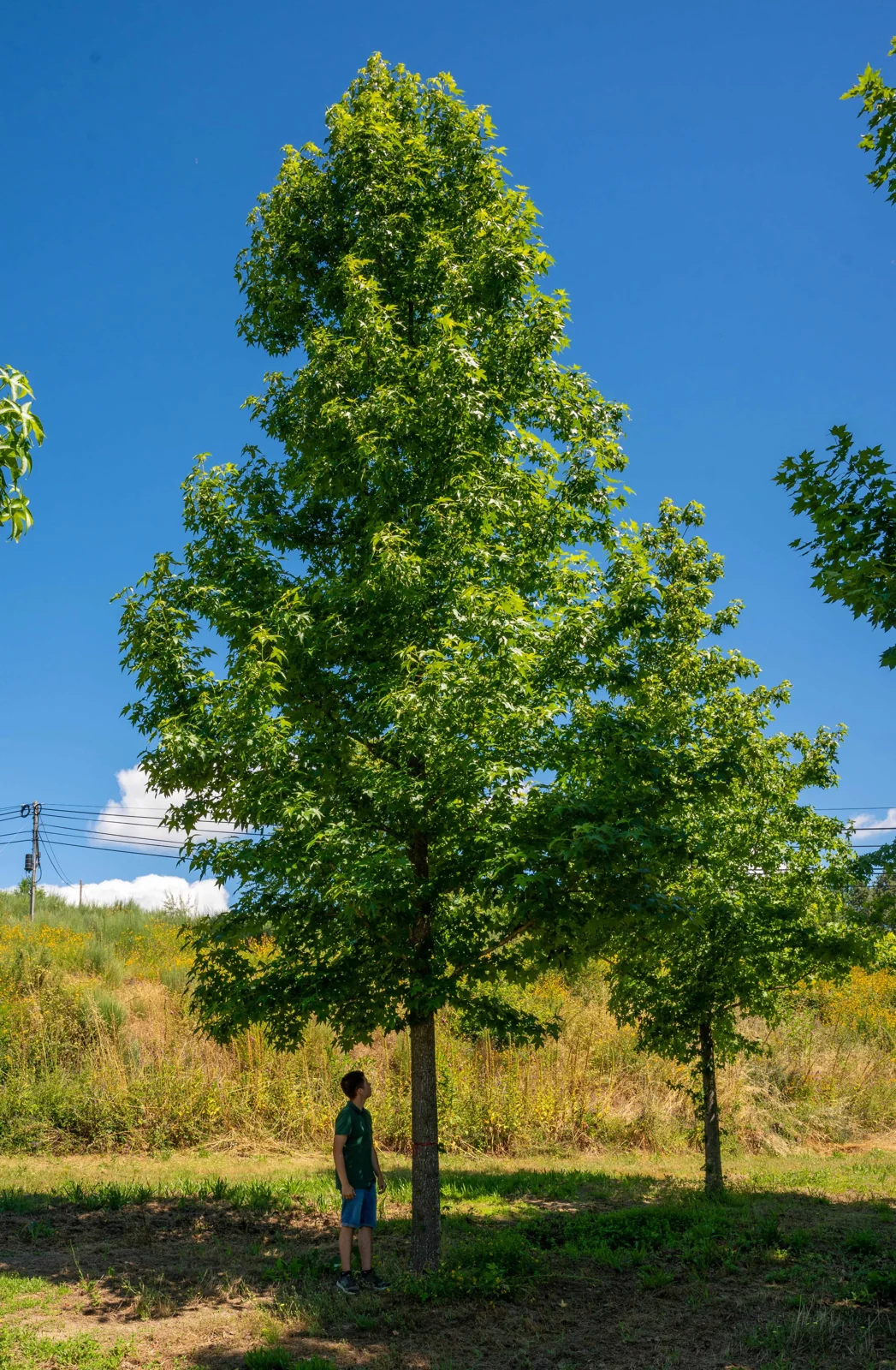
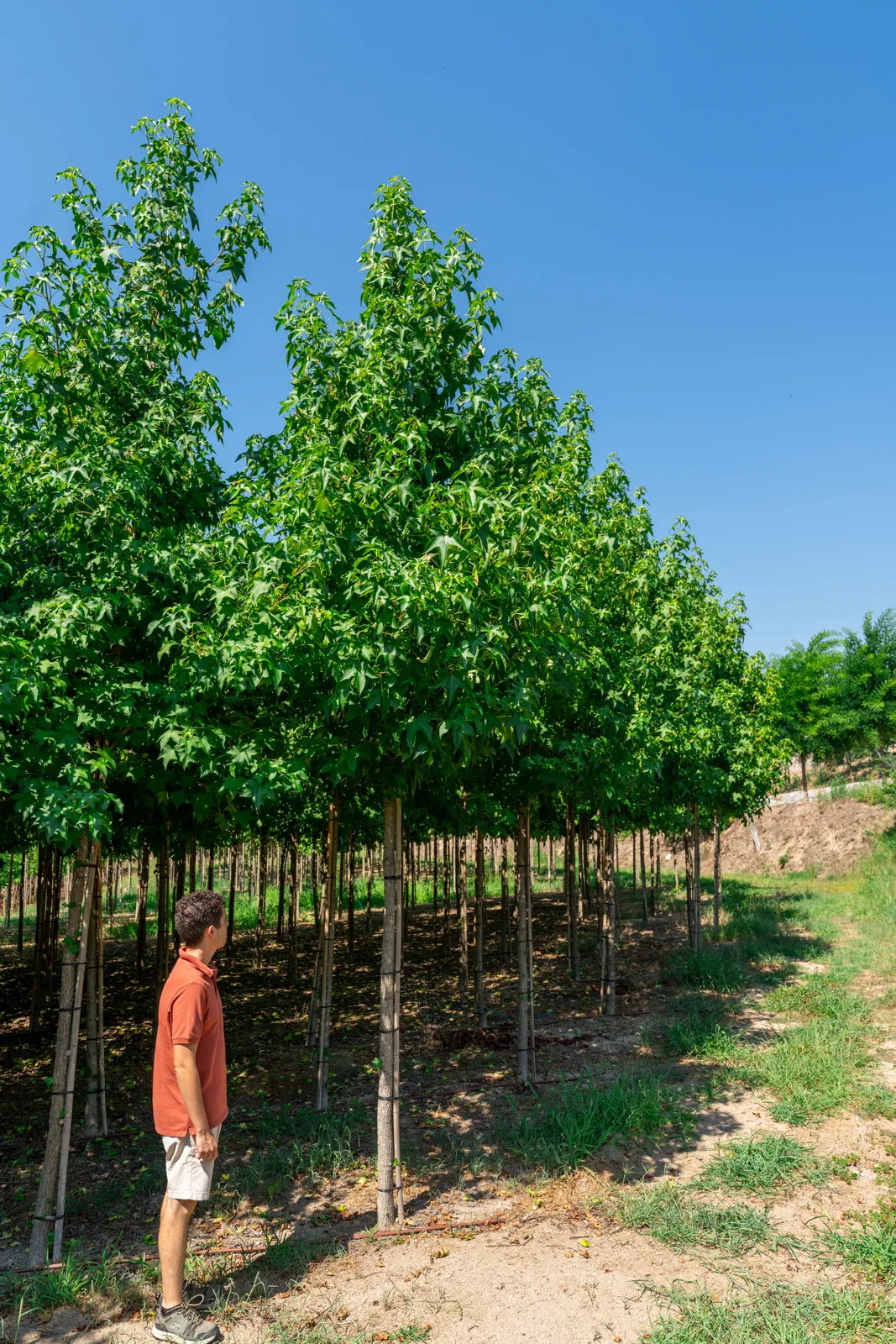
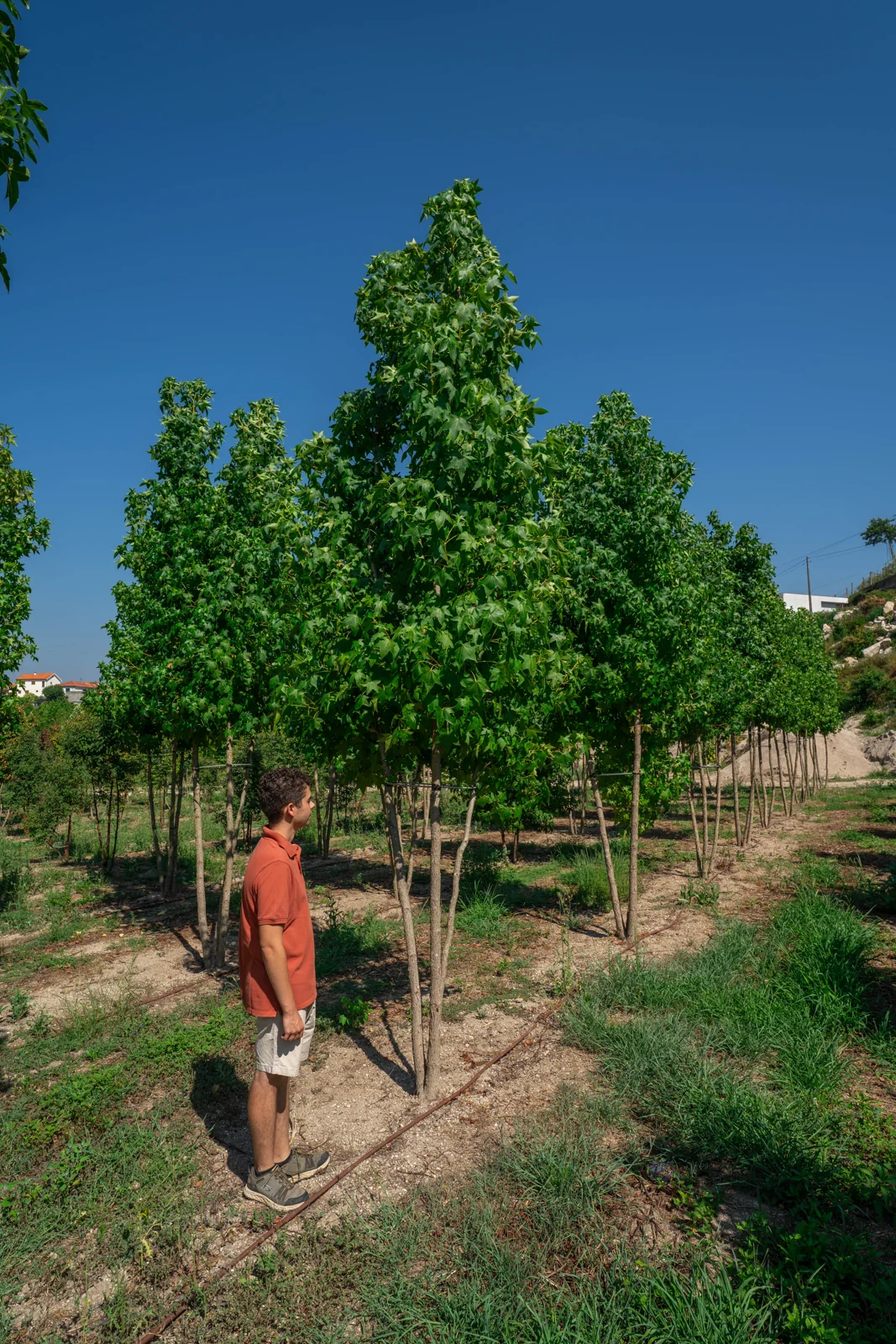
Liquidambar styraciflua occupies a position close to Acer platanoides in the German street tree canon (Stadtbaum-Kanon), with an upright pyramidal habit (Habitusform) in youth that broadens to a domed crown after three to four decades. Mature cultivated specimens settle between fifteen and twenty-five metres tall, slower in continental positions than in the…
Read more
Show less
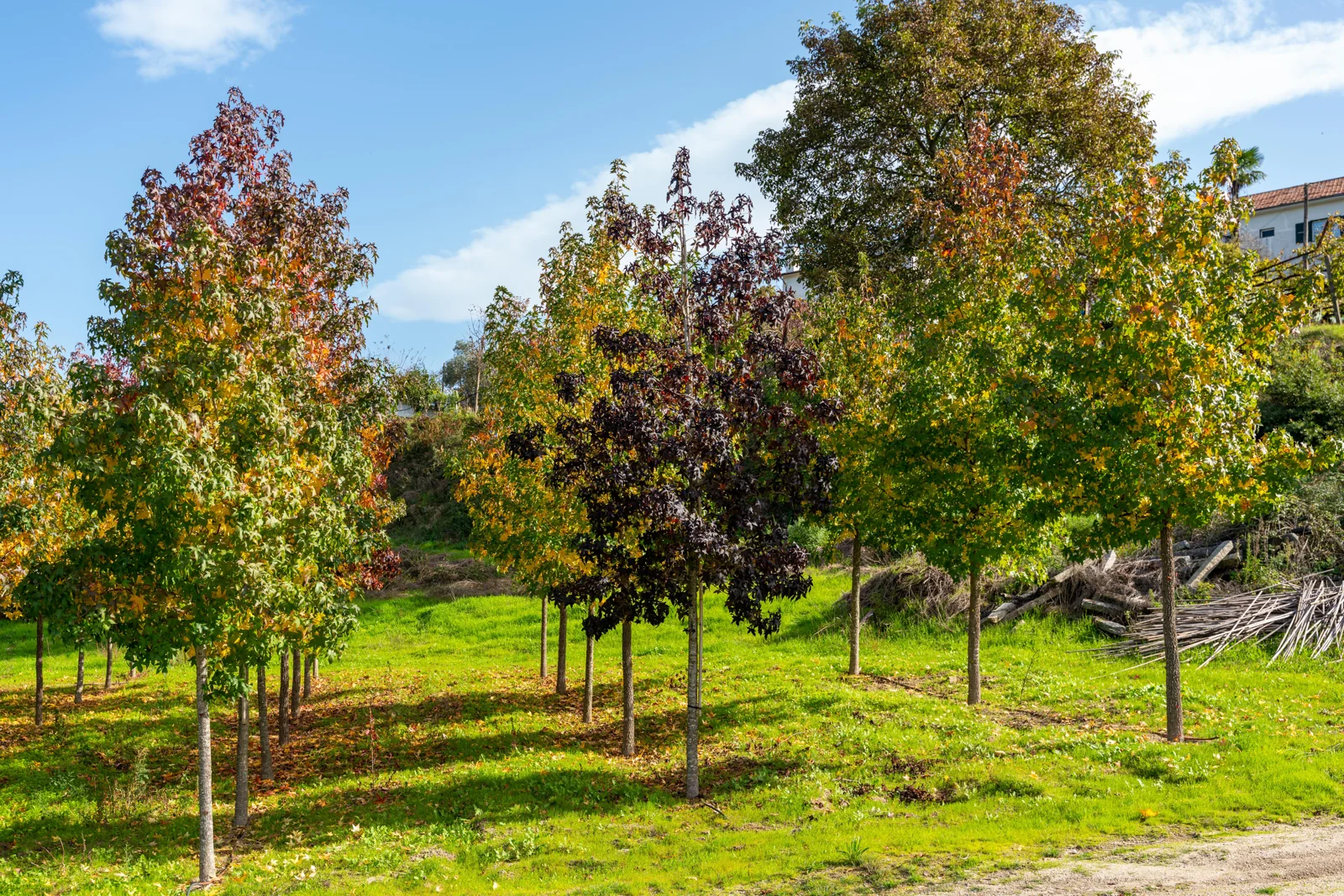
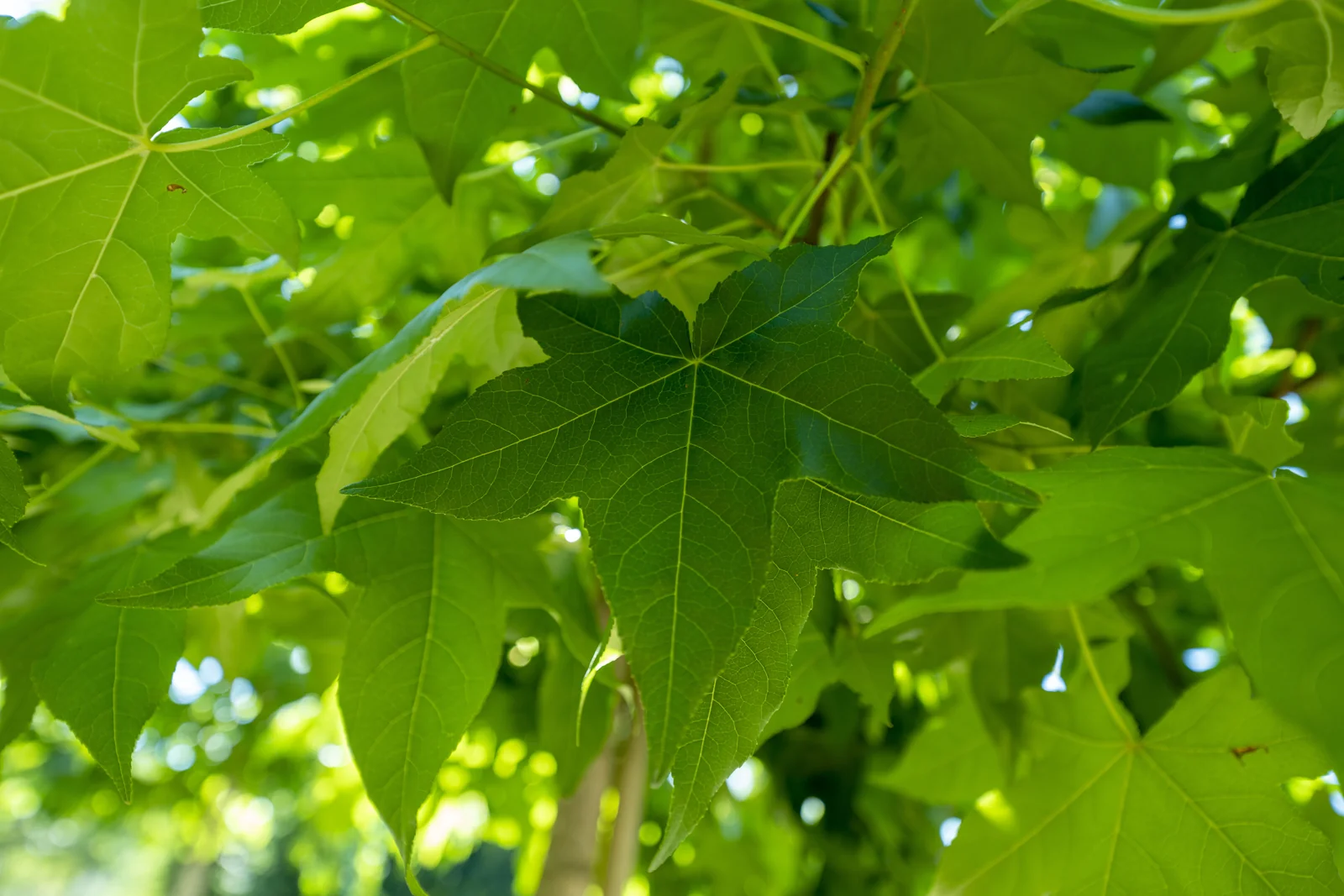
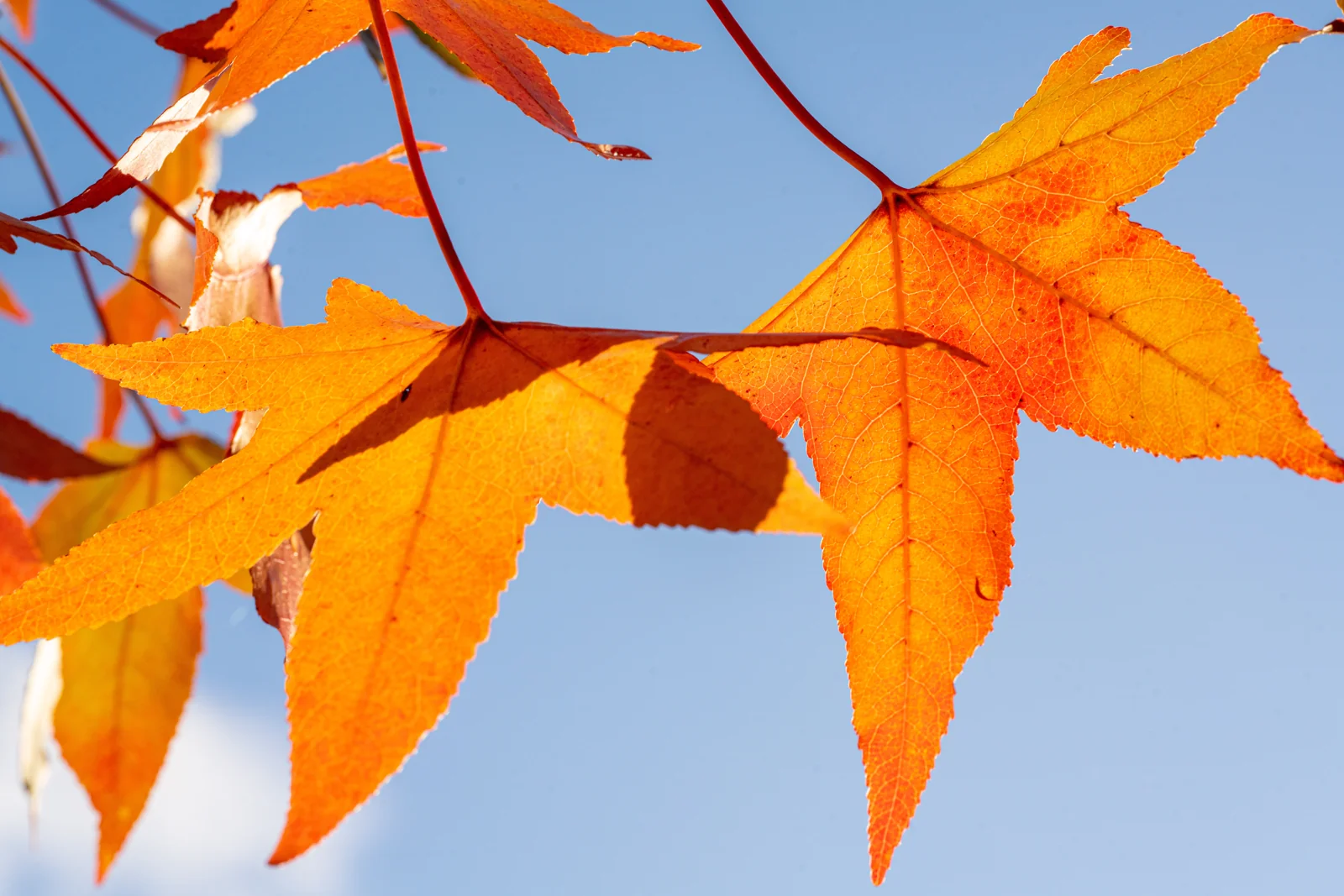
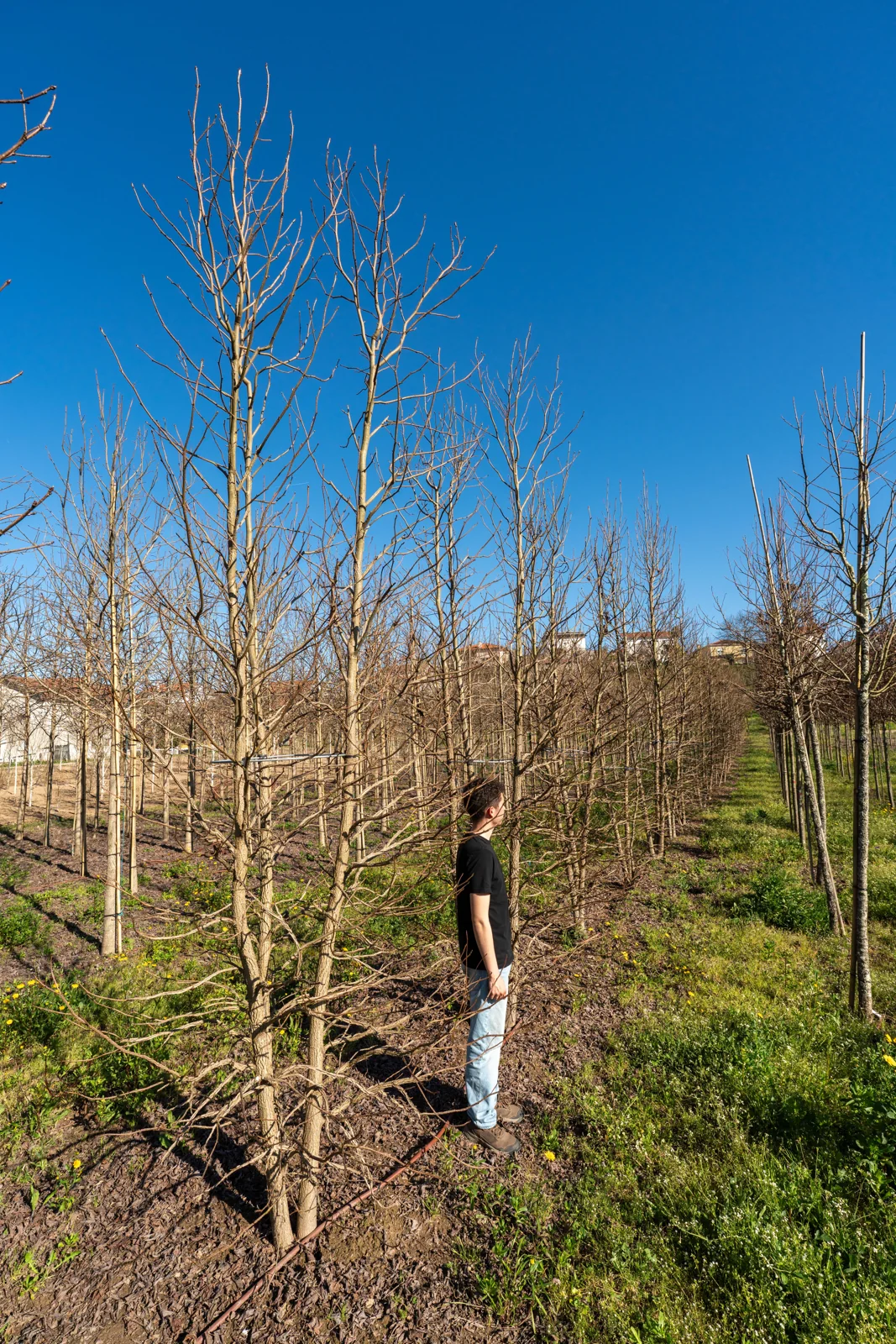
Liquidambar styraciflua occupies a position close to Acer platanoides in the German street tree canon (Stadtbaum-Kanon), with an upright pyramidal habit (Habitusform) in youth that broadens to a domed crown after three to four decades. Mature cultivated specimens settle between fifteen and twenty-five metres tall, slower in continental positions than in the Rhine valleys. Autumn colour is the defining ornamental phase, running yellow, orange, scarlet to deep purple, and holding well into November in milder German conditions.
Winter hardiness (Winterhärte) is the central specification question. Established trees on free-draining substrate are reliably hardy to around minus twenty degrees Celsius and tolerate brief excursions to minus twenty-five degrees Celsius without structural damage, placing the species in the Oberrheingraben (Upper Rhine valley) and the Niederrheinische Bucht (Lower Rhine basin) and across the Rheinland conurbation. Performance becomes marginal east of the Elbe and in the pre-Alpine foothills (voralpenland) above four hundred metres. Young trees in the first three winters should be sited in shelter.
Site requirements (Standortansprüche) favour deep, free-draining loams with summer moisture and neutral to acidic reaction; the species tolerates calcareous substrates to about pH 7.5 but develops iron chlorosis on more alkaline ground. Street tree suitability (Stadtbaumeignung) is solid in milder regions, with documented tolerance of soil compaction, moderate de-icing salt exposure, and the heat-island summers that have reshaped the post-2018 Stadtbaum-Kanon. The species figures on the GALK-Straßenbaumliste and registers as a Zukunftsbaum candidate in the Klima-Artenmatrix for Klimaregionen 6 and 7.
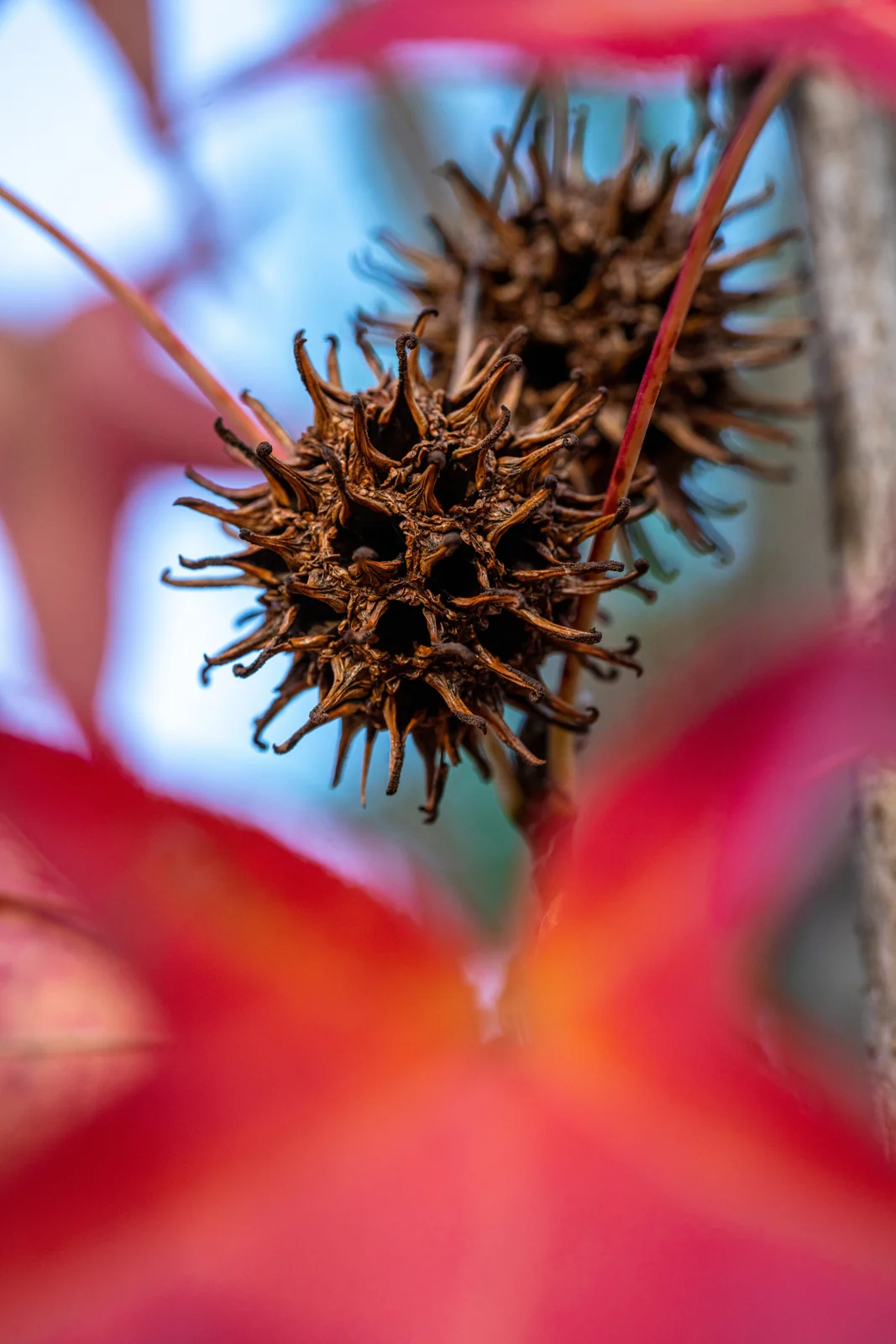
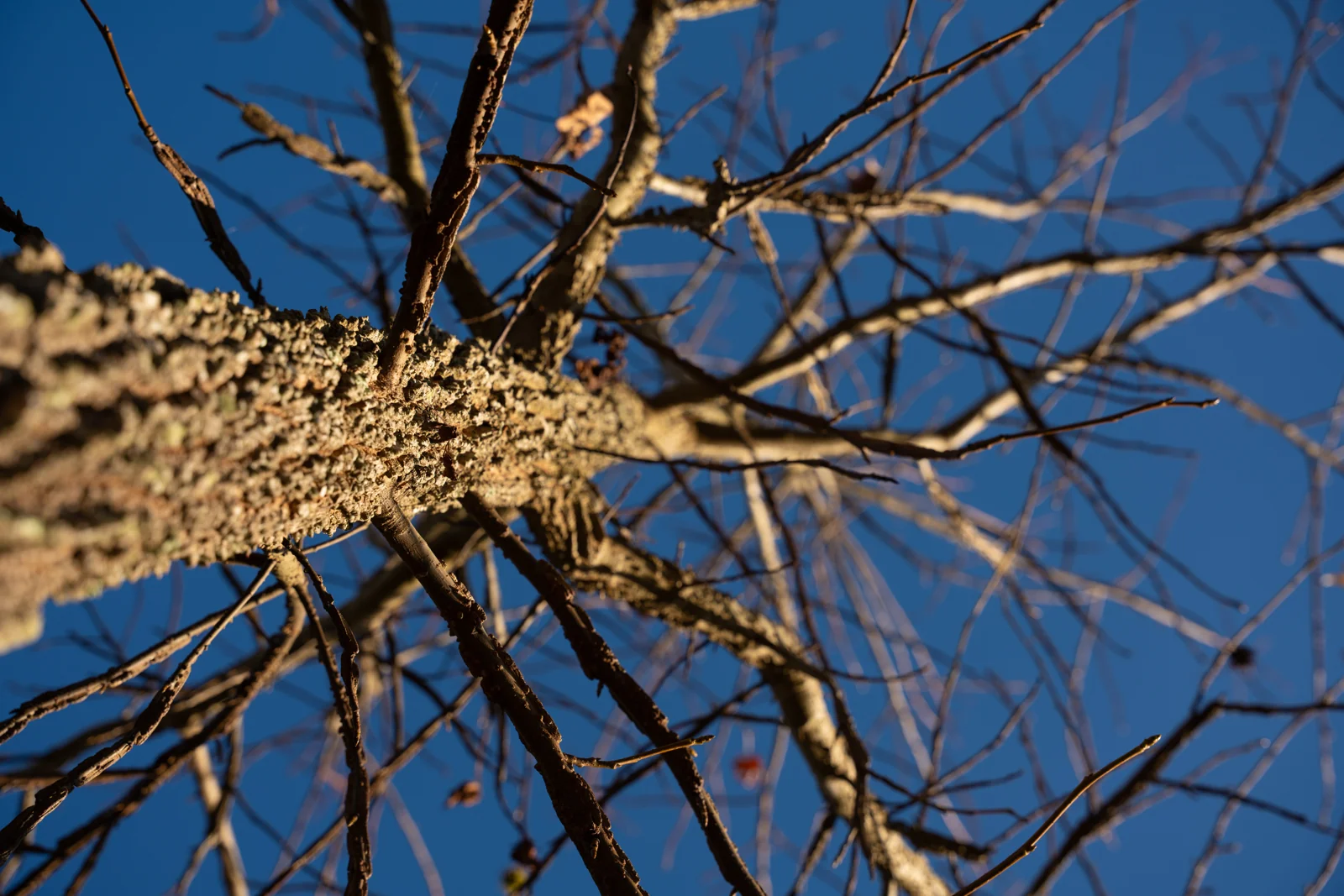
Two caveats apply. The wood is brittle and mature trees can shed limbs under heavy snow load, which structural pruning to DIN 18916 and FLL Empfehlungen für Baumpflanzungen reduces but does not eliminate; the spiked fruit capsules persist through winter and argue against deployment over pedestrian-priority surfaces. The species carries no Fraxinus or Ulmus-level phytosanitary pressure in Germany, and root behaviour (Wurzelverhalten) is shallow but moderately well-mannered.


Advice on this species
Want to know more about Liquidambar styraciflua?
Tell us about your project and we'll advise you on this species — where it thrives, which size makes sense, and what to expect once planted.
- Produção própria
- Exemplares adultos
- Resposta em 1–2 dias
Sem compromisso · orçamento personalizado