

Upright street tree with reliable autumn colour
Sweet Gum ‘Worplesdon’ · Liquidambar styraciflua ‘Worplesdon’
An upright cutleaf selection of Liquidambar styraciflua narrow enough for German avenue planting (Alleebaum), reliably hardy across most western Klimaregionen, and a defensible Zukunftsbaum candidate where heat-tolerant alternatives to Acer platanoides are being sought.
Key Facts
About this Cultivar
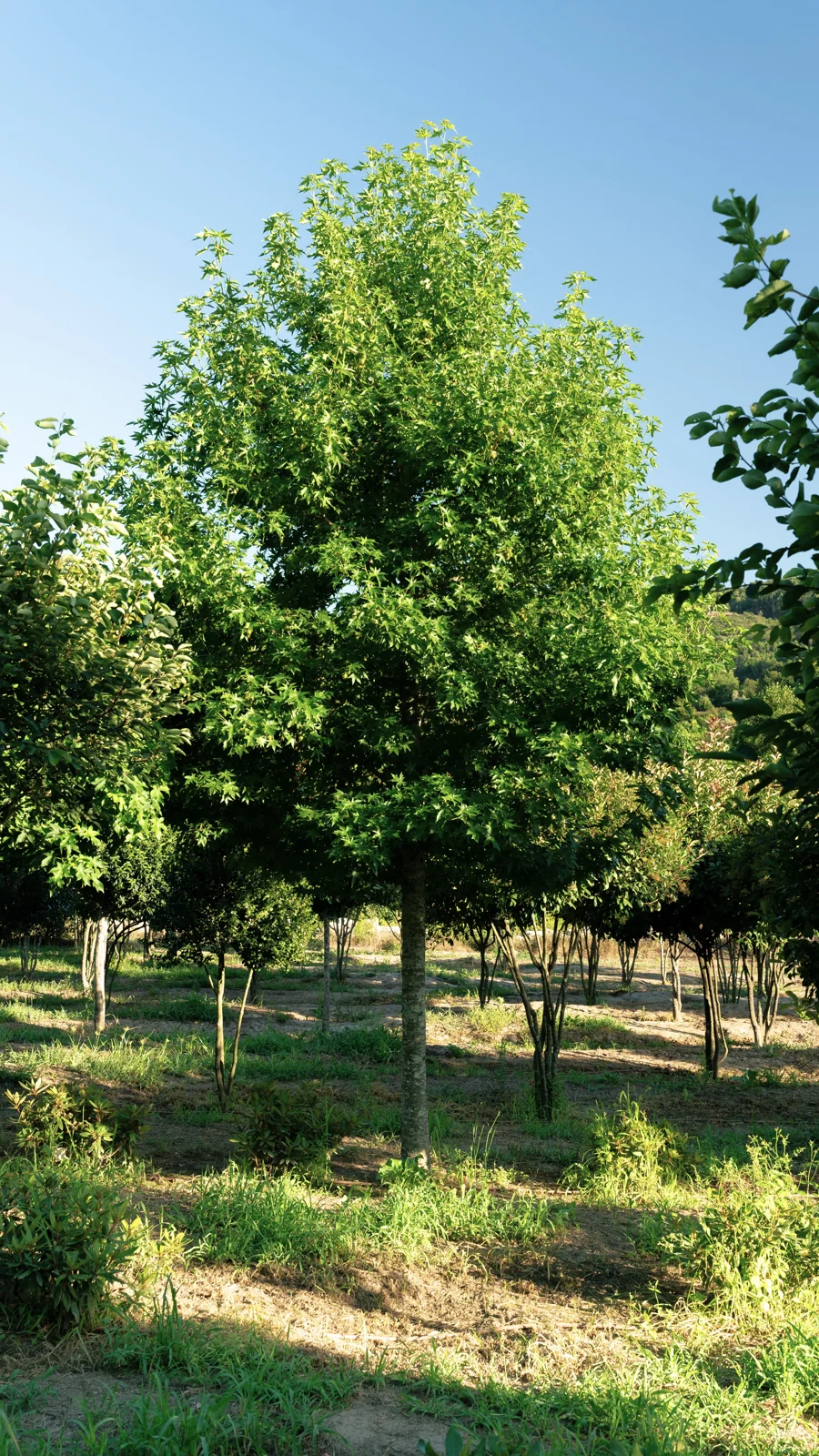
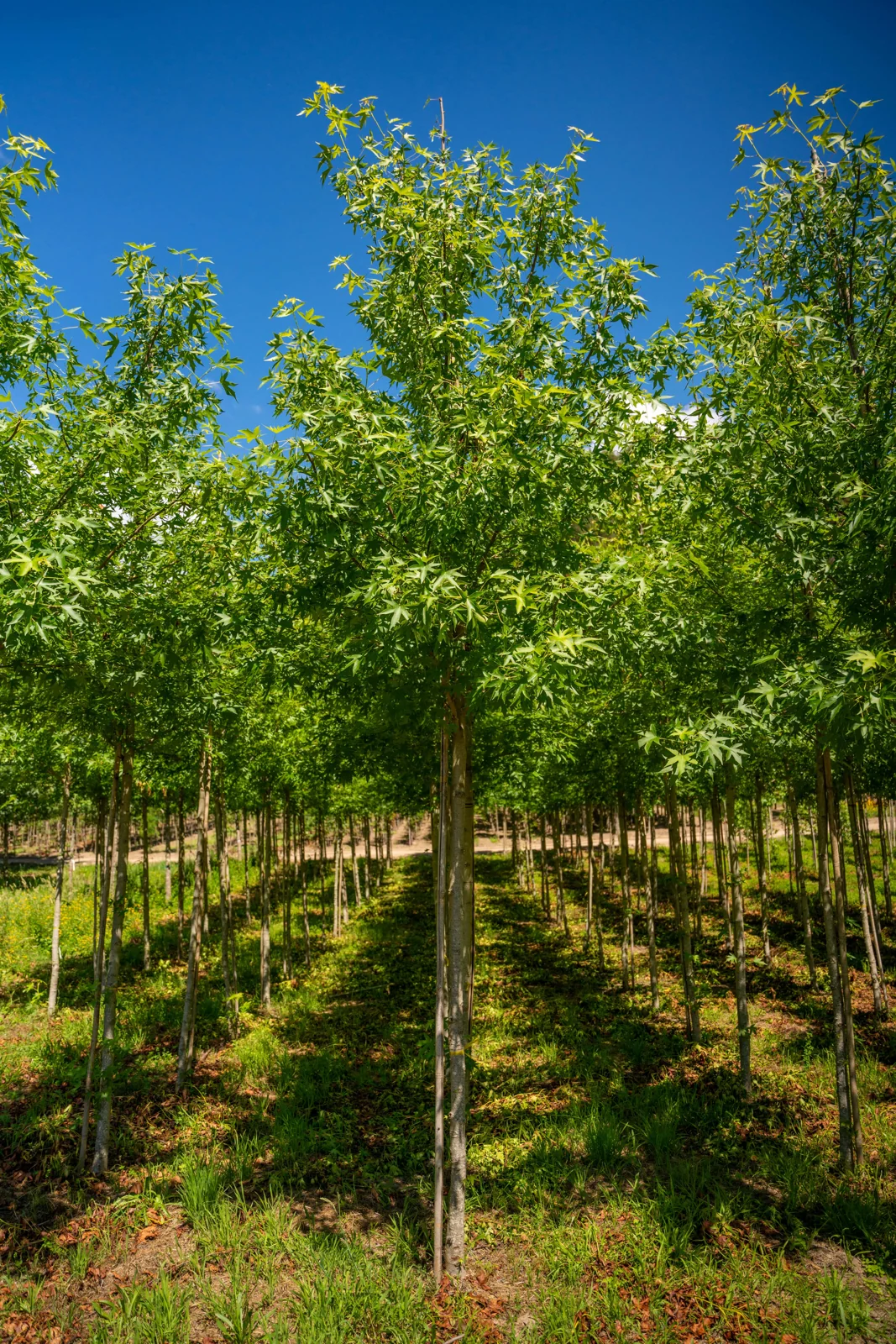
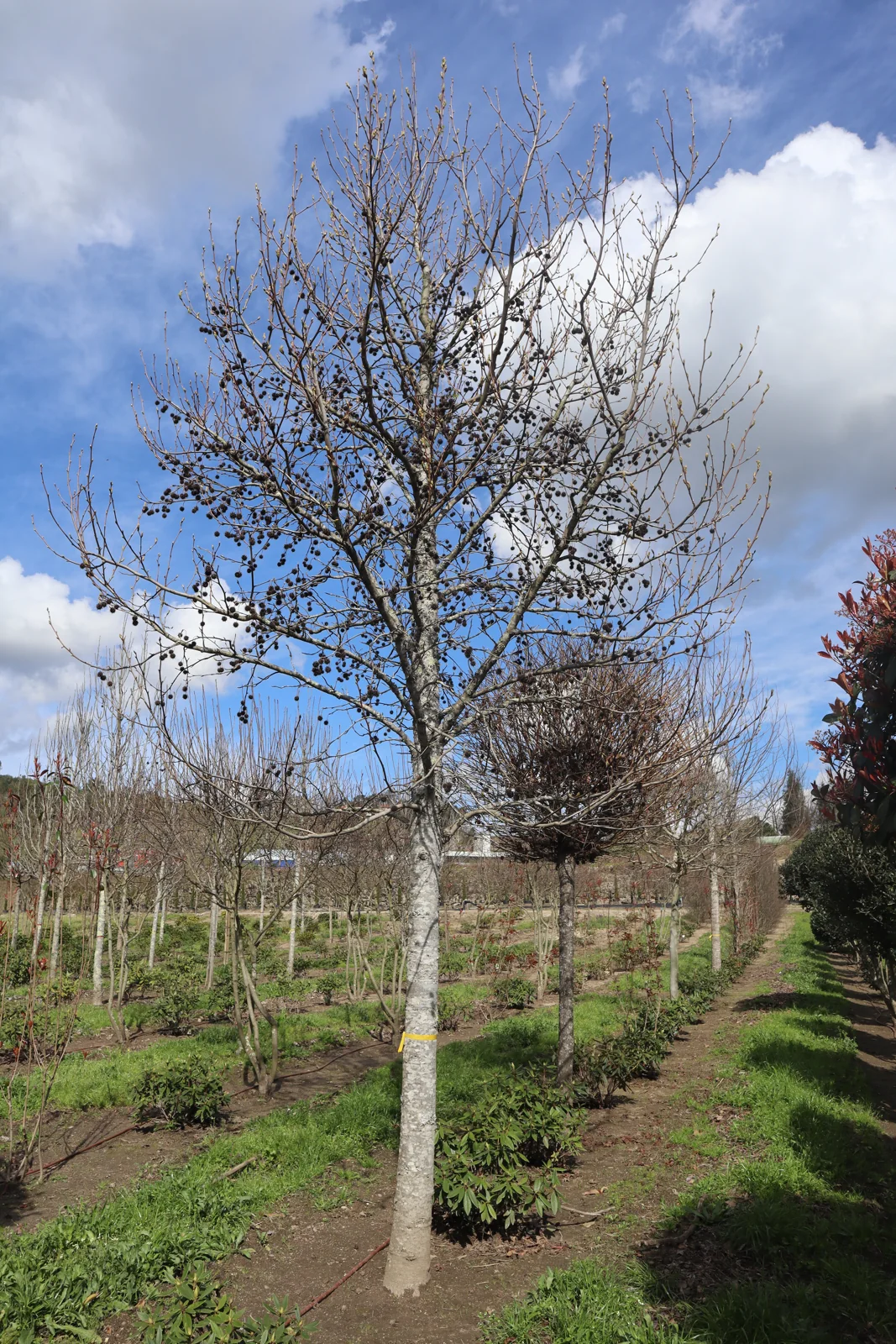
Liquidambar styraciflua 'Worplesdon' holds a distinctly narrower, conical to upright habit than the type, reaching 15 to 20 metres in height with a crown spread of 6 to 8 metres at maturity. The deeply cut, palmate foliage turns earlier and more consistently into orange, red and purple than the species, with autumn colour holding for several weeks. This…
Read more
Show less
Liquidambar styraciflua 'Worplesdon' holds a distinctly narrower, conical to upright habit than the type, reaching 15 to 20 metres in height with a crown spread of 6 to 8 metres at maturity. The deeply cut, palmate foliage turns earlier and more consistently into orange, red and purple than the species, with autumn colour holding for several weeks. This combination of vertical silhouette (Habitusform) and reliable seasonal display gives it street-tree suitability (Stadtbaumeignung) in confined kerb-to-facade profiles where wider cultivars overhang the carriageway.
Winter hardiness (Winterhärte) is the first specification check. The taxon is reliably hardy to around minus 20 degrees Celsius once established on free-draining substrates and performs across the Oberrheingraben, the Niederrheinische Bucht, Westfalen, and the urban climates of Berlin, Hamburg, Köln, Frankfurt and München. Above 600 metres in the voralpenland, and on cold-air-pooling sites east of the Elbe, late spring frosts can damage the early-flushing shoots of young trees; the first three winters are the risk window before the wood hardens off.
Site requirements (Standortansprüche) favour deep, fresh, slightly acidic to neutral loams with summer moisture, but the species tolerates calcareous substrates and compacted urban soils once the root system is established. Performance is markedly stronger on the Rhine loess and the central German brown earths than on the chalky moraines of the north-east, where iron chlorosis can appear at pH above 7.5. Full sun is required for the autumn colour to reach its catalogued intensity.
The genus carries no significant phytosanitary pressure in Germany comparable to Eschentriebsterben on Fraxinus or Russrindenkrankheit on Acer pseudoplatanus, which positions 'Worplesdon' as a credible diversification tree for Pflanzlisten reducing exposure to monocultures of Linden and Ahorn. Root behaviour (Wurzelverhalten) is shallower than that of Quercus, a point to confirm against the FLL Empfehlungen für Baumpflanzungen when planning trench width and pavement build-up under DIN 18916.
Advice on this species
Want to know more about Liquidambar styraciflua 'Worplesdon'?
Tell us about your project and we'll advise you on this species — where it thrives, which size makes sense, and what to expect once planted.
- Produção própria
- Exemplares adultos
- Resposta em 1–2 dias
Sem compromisso · orçamento personalizado