

Climate-adapted Amberbaum cultivar for reliable autumn colour in German streetscapes
Sweet Gum ‘Paarl’ · Liquidambar styraciflua ‘Paarl’
A compact cultivar of Amerikanischer Amberbaum selected in South Africa for uniform autumn colour and a controlled pyramidal to oval crown, hardy to minus 28 degrees Celsius and suited to alignment and park planting across all German Klimaregionen.
Key Facts
About this Cultivar
Winter hardiness (Winterhärte) is the strongest argument for this cultivar in Germany. The species is rated to USDA zone 5a, corresponding to winter minima around minus 28 degrees Celsius, which places established specimens well within safe limits even for the norddeutsche Tiefebene (northern German lowlands) and exposed continental sites east of the Elbe.…
Read more
Show less
Winter hardiness (Winterhärte) is the strongest argument for this cultivar in Germany. The species is rated to USDA zone 5a, corresponding to winter minima around minus 28 degrees Celsius, which places established specimens well within safe limits even for the norddeutsche Tiefebene (northern German lowlands) and exposed continental sites east of the Elbe. Young trees in their first two winters are more vulnerable to late frost damage on saturated soils; on free-draining substrates in sheltered positions, risk is minimal from the outset. In practice, L. styraciflua has proven reliable across the Oberrheingraben (Upper Rhine valley), the Niederrheinische Bucht (Lower Rhine basin), and the central uplands, and ‘Paarl’ inherits that full hardiness range.
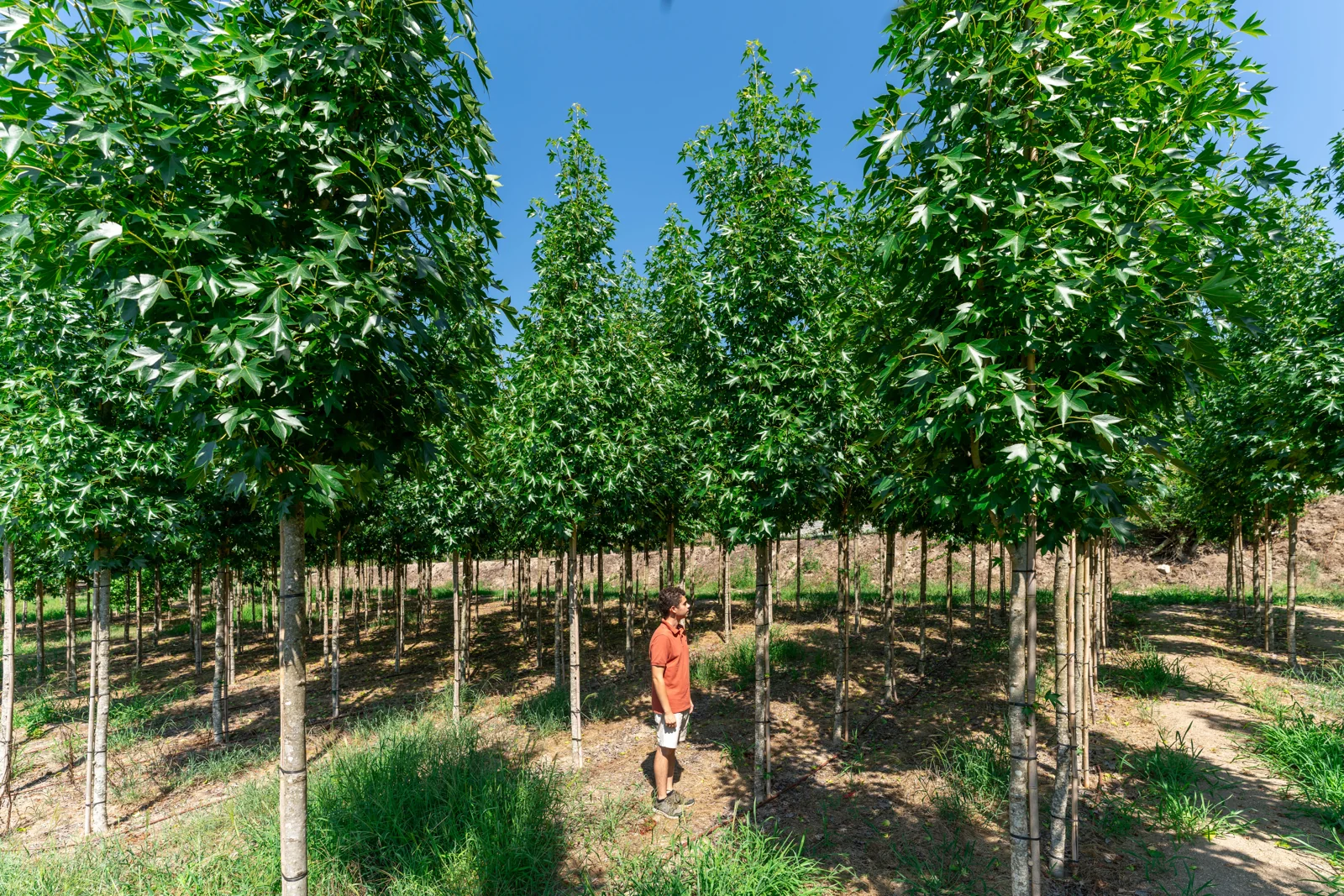
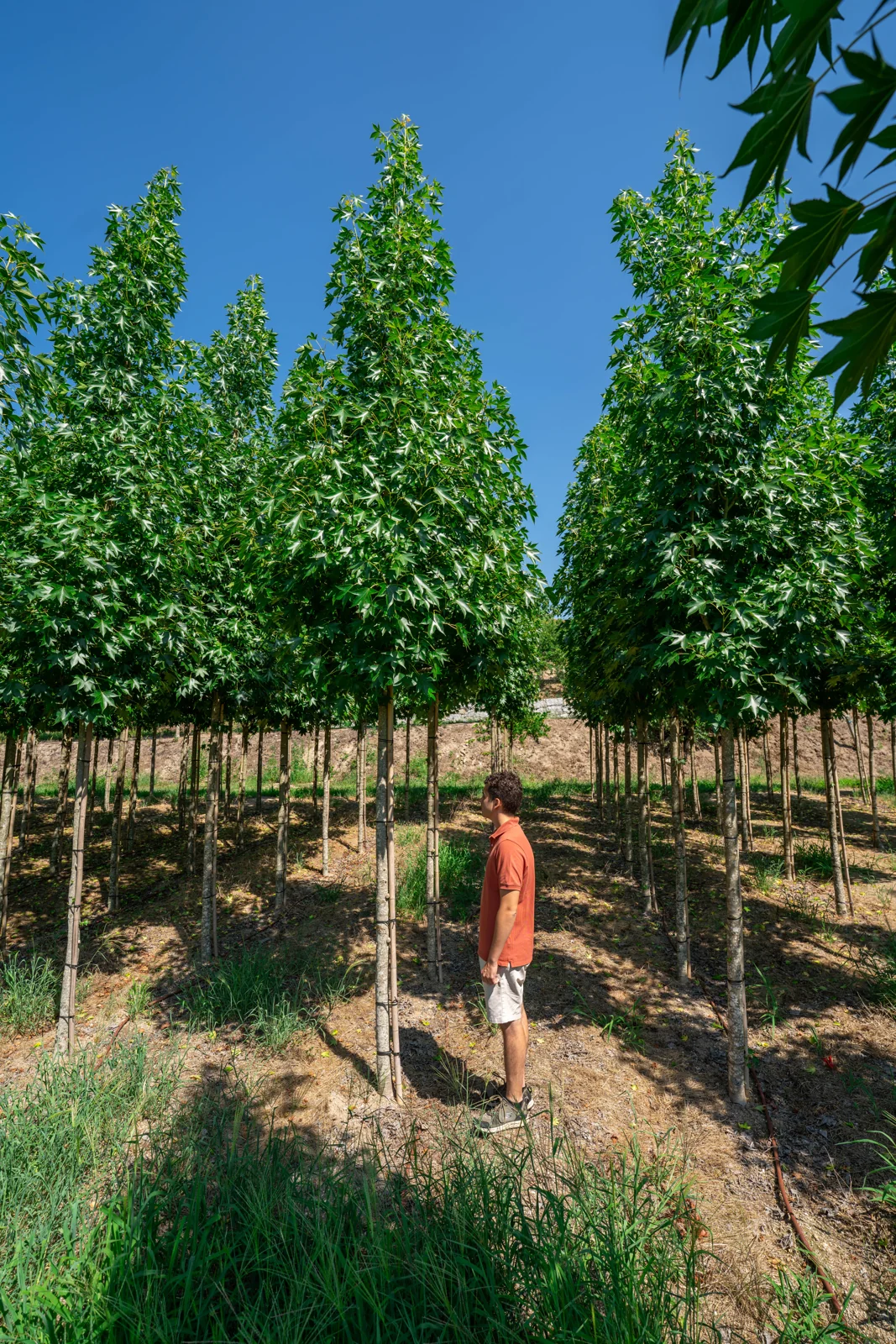
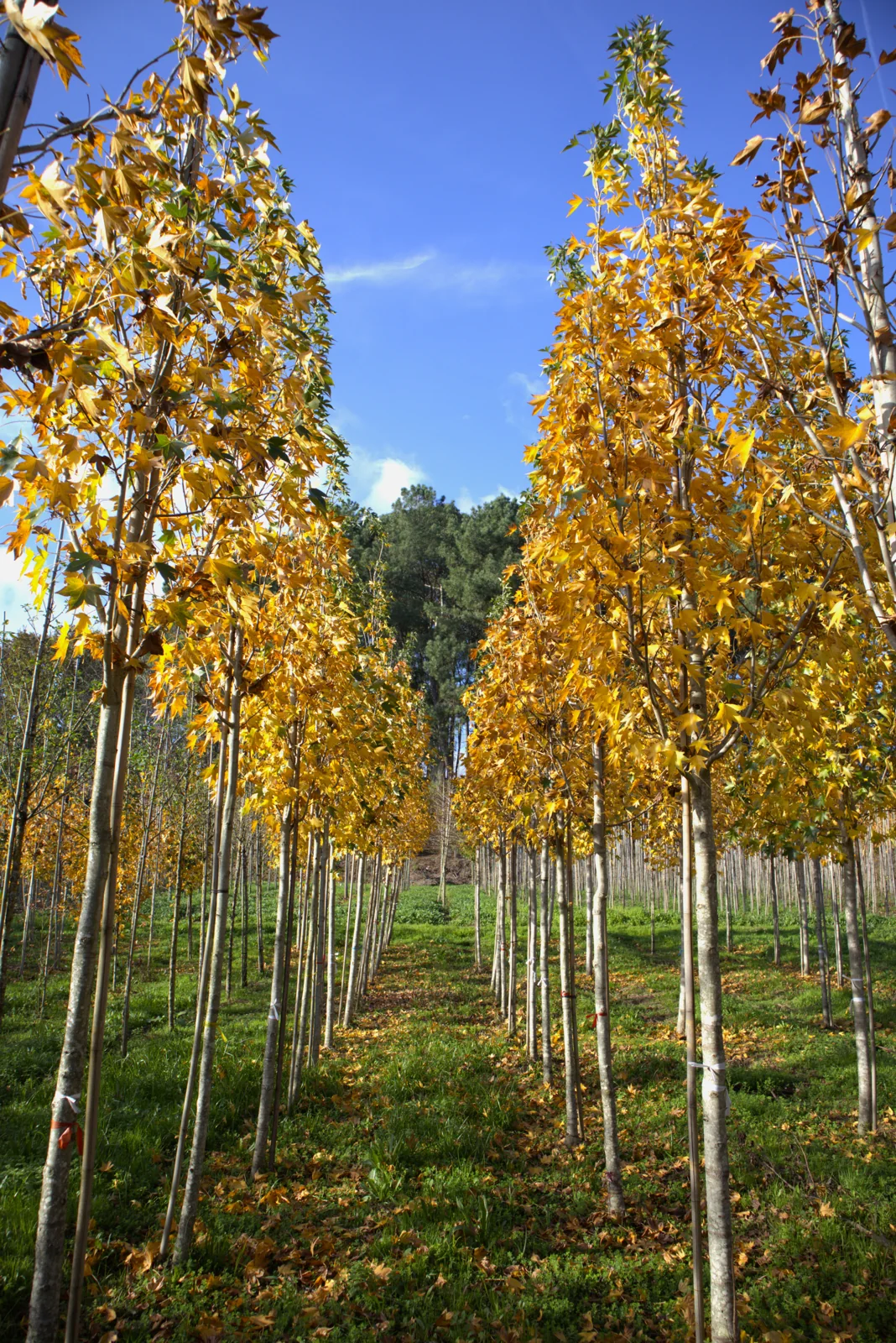
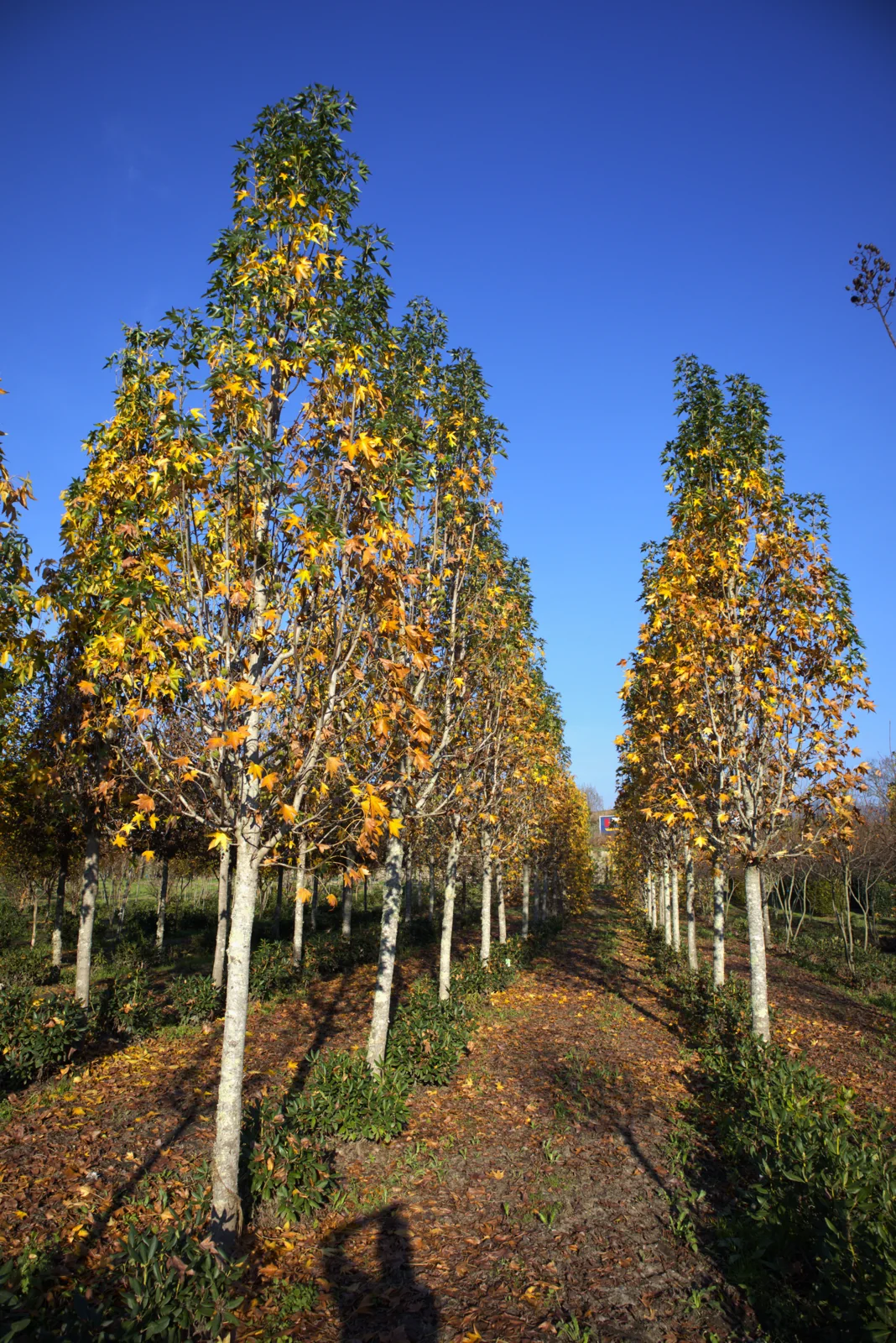
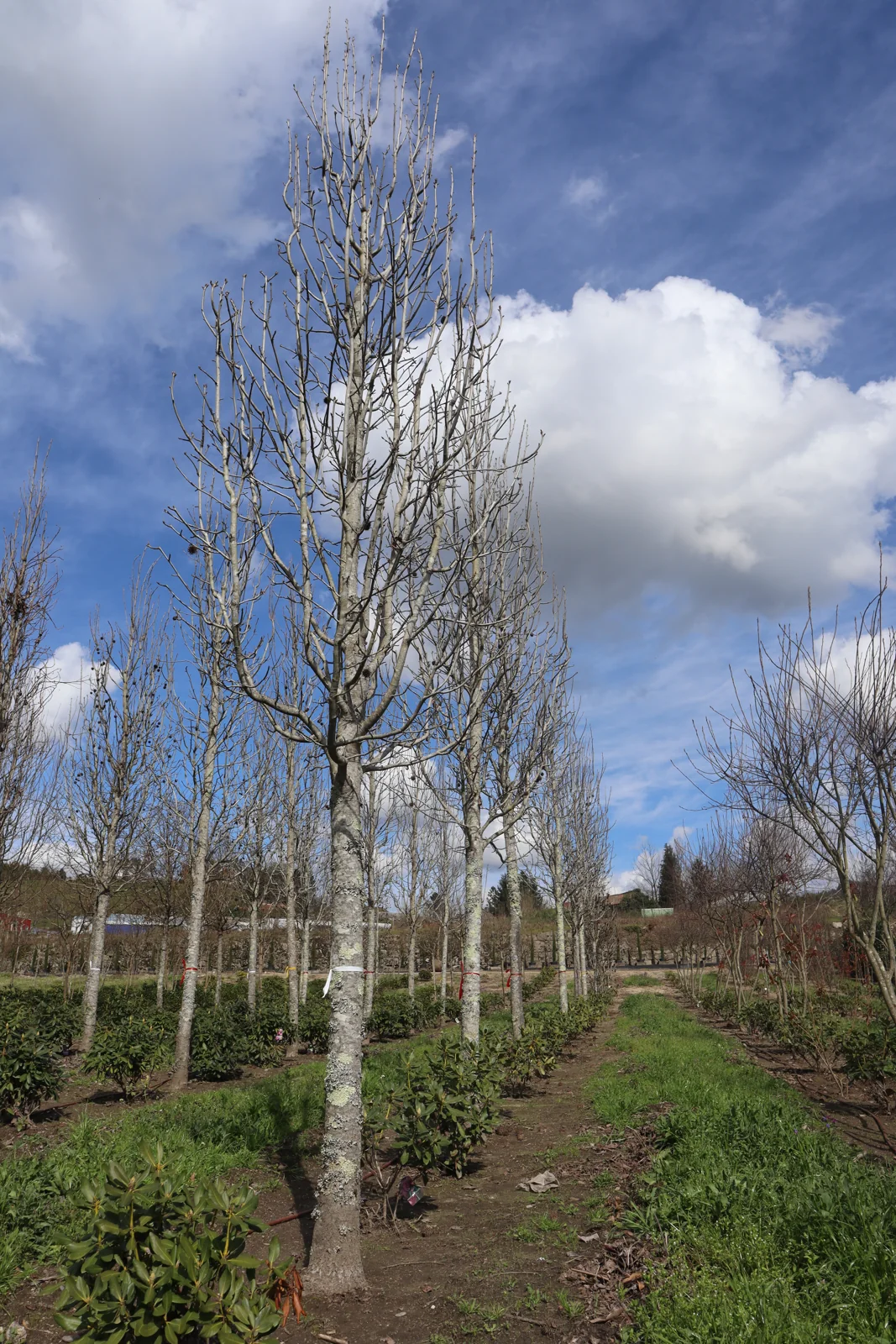
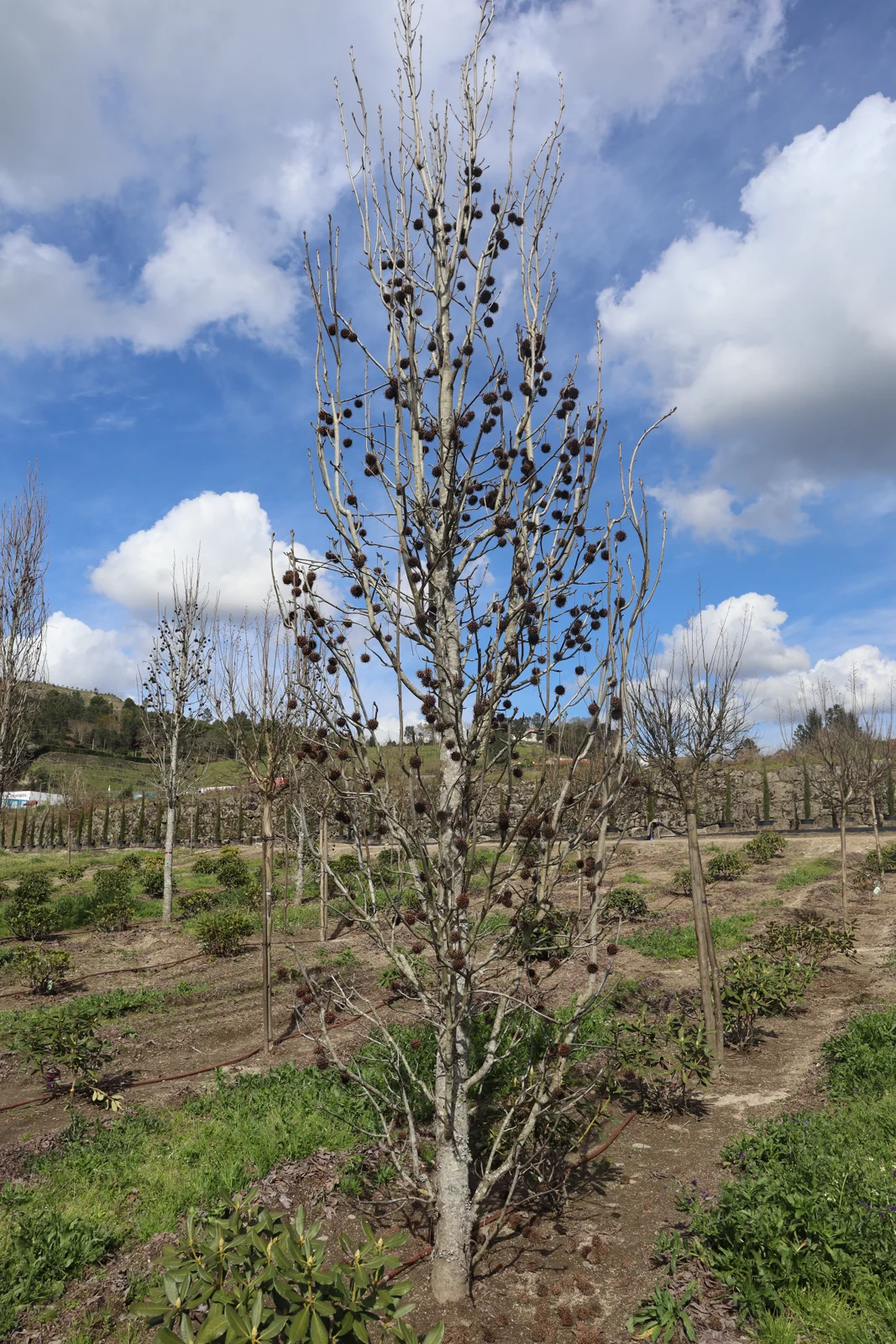
The cultivar’s principal distinction from the species type is the consistency of its autumn display. Where seedling Liquidambar can vary from tree to tree in colour intensity and timing, ‘Paarl’ produces a reliably uniform progression from deep scarlet through purple to intense orange across the entire crown. This predictability is a specification advantage in formal alignments and public-space planting where visual coherence matters. The star-shaped, deeply lobed foliage is glossy mid-green through summer, turning late in the season and persisting well into November in milder Klimaregionen. Grey, furrowed bark and the characteristic corky wing projections on younger branches provide winter structure during the six months of leaf-off.
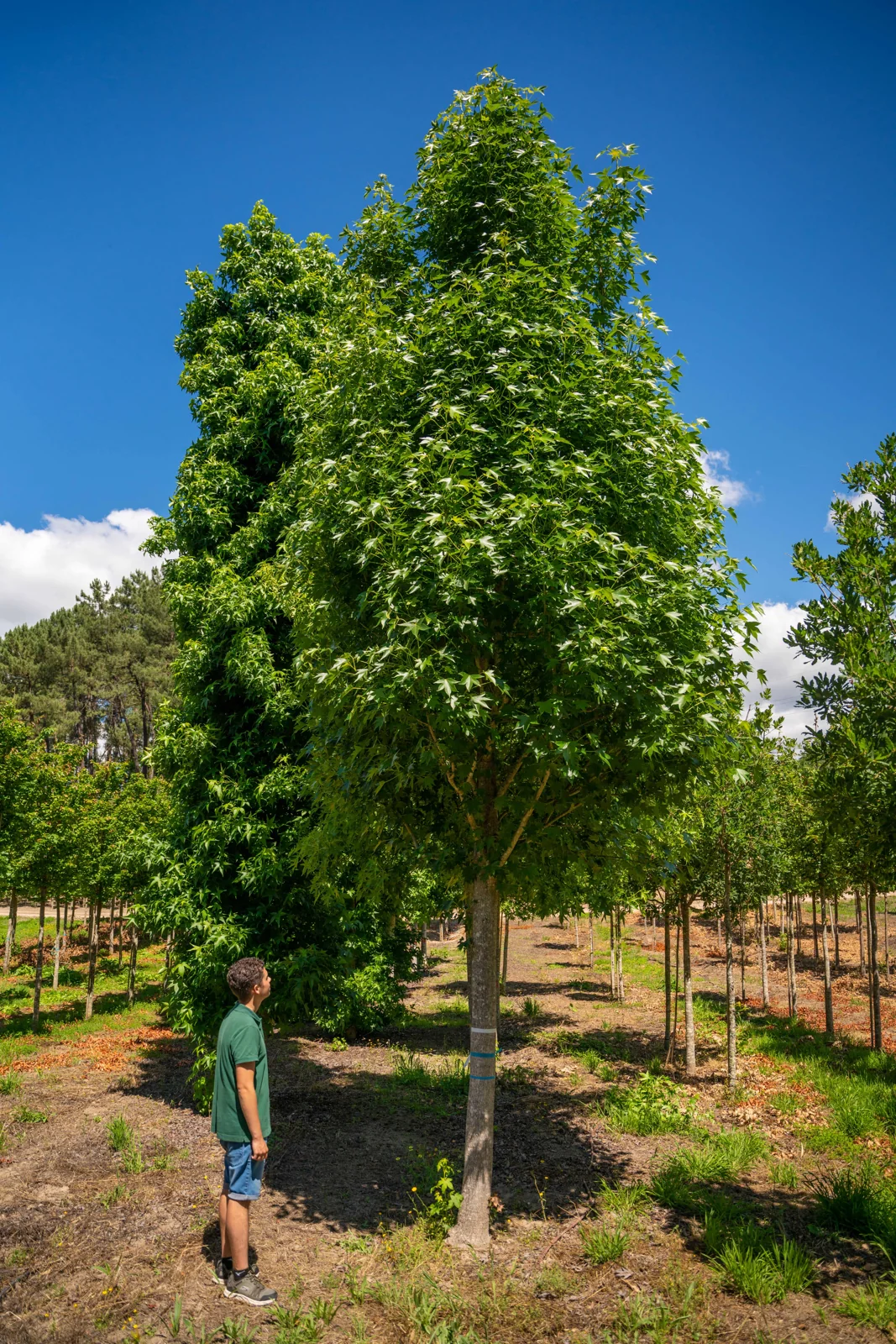
Mature dimensions of 12 to 18 metres in height and 6 to 8 metres in spread make ‘Paarl’ more manageable than the species type, which can exceed 20 metres. The pyramidal to oval crown form (Habitusform) responds well to formative pruning, maintaining a defined silhouette suited to street tree use (Stadtbaumeignung). The species appears on regional climate-adapted planting lists and is a credible Zukunftsbaum candidate: it combines high heat tolerance, documented resistance to the 2018 to 2022 pattern of hot dry summers, full pavement tolerance, and resistance to compacted urban soils. De-icing salt tolerance is low, which limits placement along heavily salted arterial roads; set-back positions in median strips or in tree pits with adequate root volume remain viable.
Soil adaptability (Standortansprüche) is broad. ‘Paarl’ performs on acidic to moderately alkaline substrates including sandy, clay, and loamy soils, provided drainage is adequate. On strongly calcareous soils above pH 8, iron chlorosis can develop, reducing foliage quality and autumn colour intensity. The species shows good disease and pest resistance; no significant susceptibility to the pathogens currently affecting German urban tree stocks, such as Eschentriebsterben on Fraxinus or Russrindenkrankheit on Acer pseudoplatanus, has been recorded. Root behaviour (Wurzelverhalten) is shallow and spreading, which should be accounted for in pavement design and underground-service routing per DIN 18916 specifications for planting works.
Advice on this species
Want to know more about Liquidambar styraciflua 'Paarl'?
Tell us about your project and we'll advise you on this species — where it thrives, which size makes sense, and what to expect once planted.
- Produção própria
- Exemplares adultos
- Resposta em 1–2 dias
Sem compromisso · orçamento personalizado