

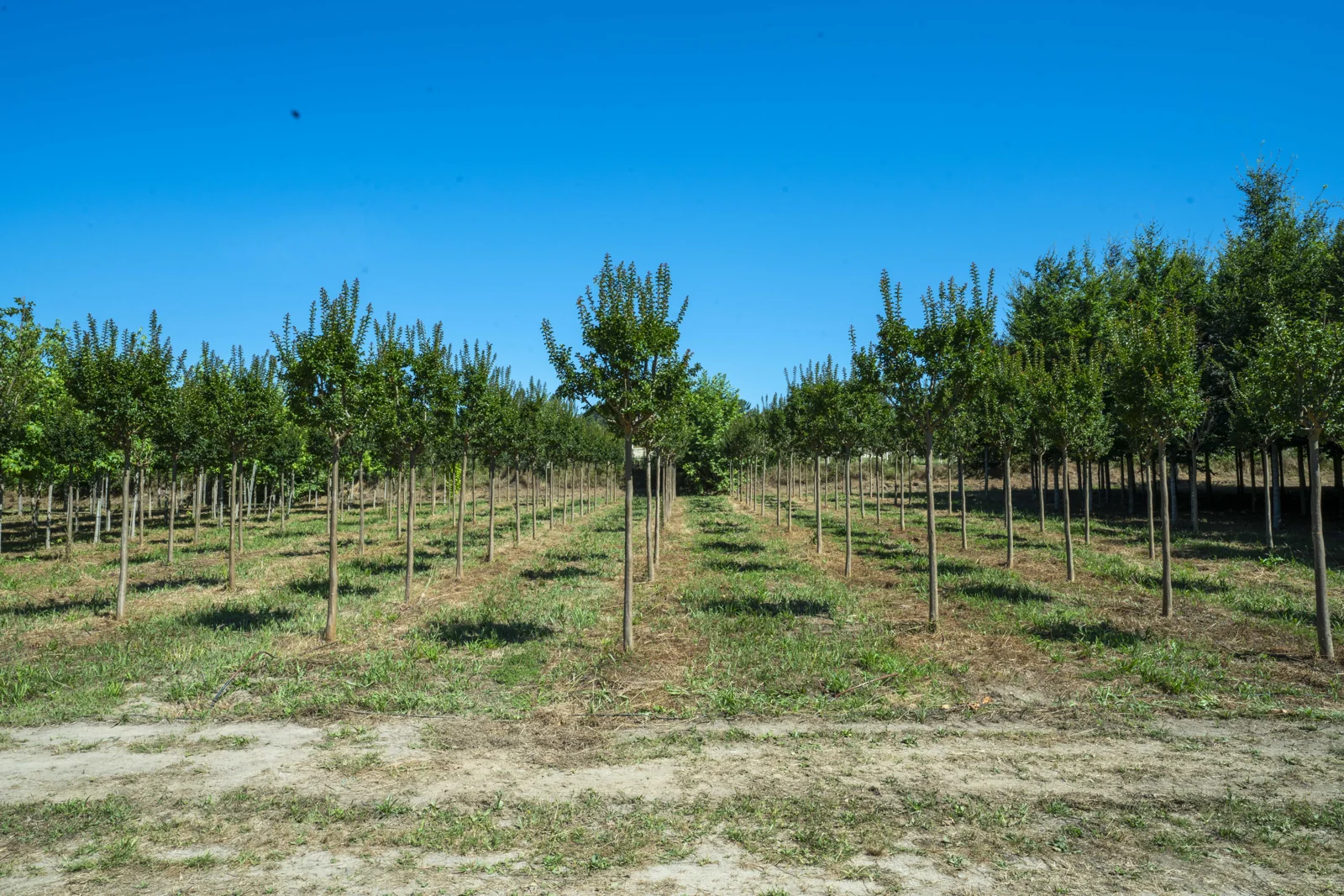
Summer-flowering specimen for mild urban Klimaregionen
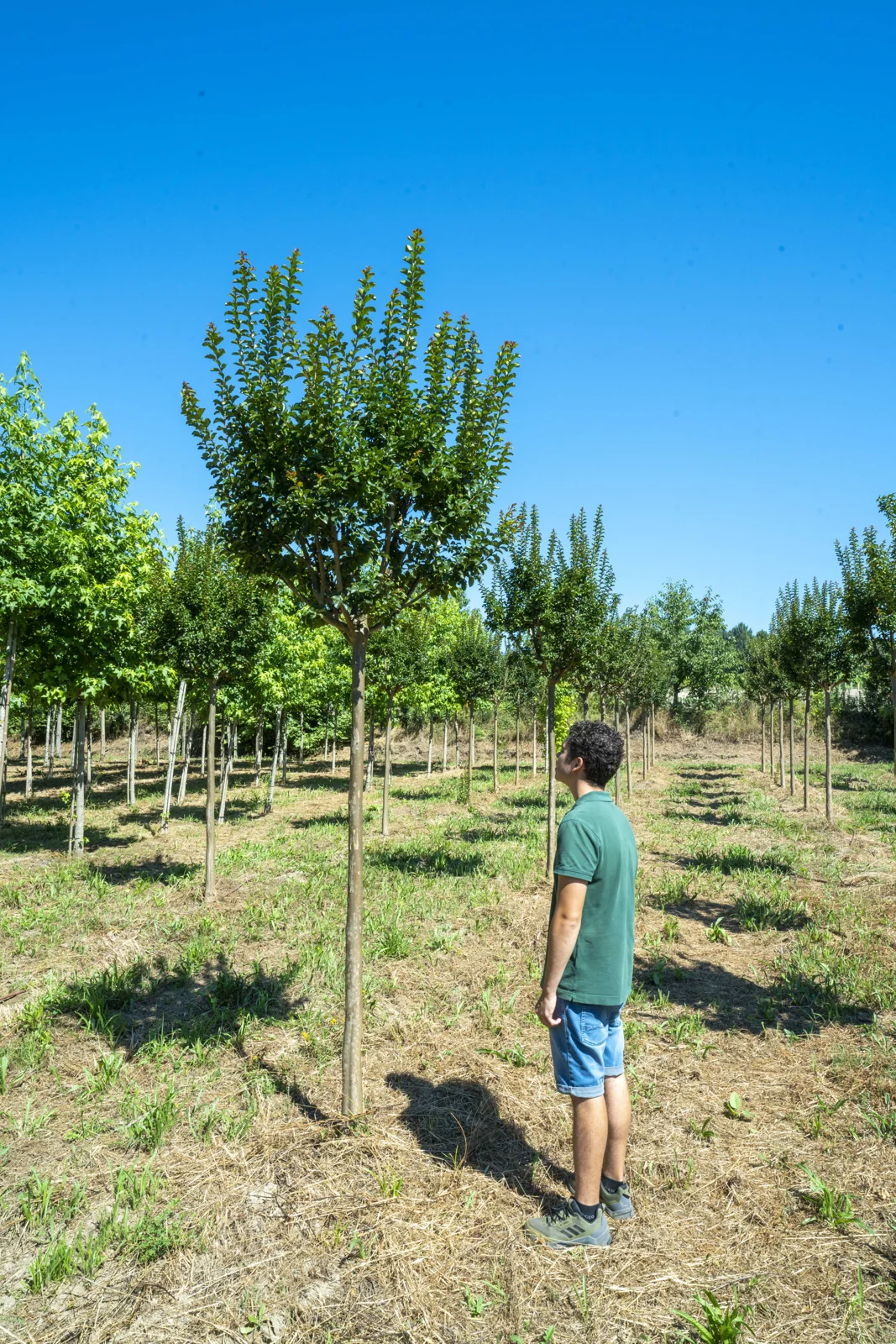
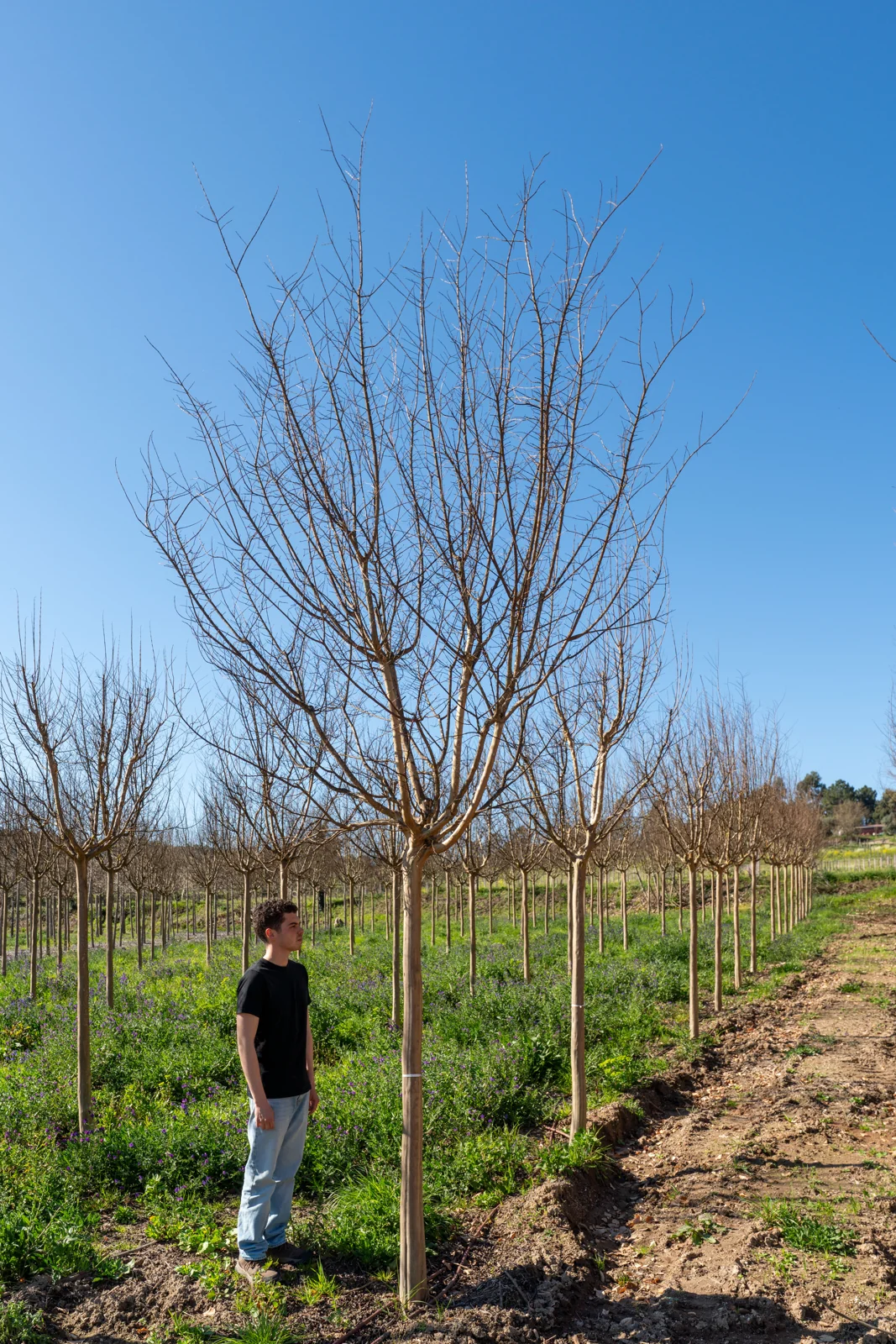
Crape Myrtle ‘Violacea’ · Lagerstroemia indica ‘Violacea’
A summer-flowering specimen tree for warm, sheltered urban sites across the milder German Klimaregionen, reliable above minus 12 degrees Celsius on free-draining soils where its violet panicles carry the late-summer colour gap.
About this Cultivar
The cultivar carries deep purple panicles from July into September, set against glossy dark green foliage that turns yellow, orange, and red in October. Mature form is a rounded, multi-stemmed small tree of 4 to 6 metres height by 3 to 5 metres spread, with smooth exfoliating bark in pale grey and cinnamon. Within the German planting palette it reads as a…
Read more
Show less
The cultivar carries deep purple panicles from July into September, set against glossy dark green foliage that turns yellow, orange, and red in October. Mature form is a rounded, multi-stemmed small tree of 4 to 6 metres height by 3 to 5 metres spread, with smooth exfoliating bark in pale grey and cinnamon. Within the German planting palette it reads as a flowering specimen, not an alignment tree: a focal point for courtyards, plazas, and southern-aspect plantings.
Winter hardiness (Winterhärte) is the constraining factor. Established specimens are reliably hardy to around minus 12 degrees Celsius on free-draining substrate in sheltered positions; young stock should be treated as hardy only to minus 8 degrees Celsius for the first three winters. The species is root-hardy to lower minima but loses top growth and the following season's panicles, which negates its ornamental purpose. Reliable performance is confined to the Oberrheingraben (Upper Rhine valley), the Niederrheinische Bucht (Lower Rhine basin), and warm urban microclimates in Köln, Frankfurt am Main, and Stuttgart. It is marginal in the norddeutsche Tiefebene (northern German lowlands), and unsuitable for the voralpenland and exposed sites east of the Elbe.
Standortansprüche (site requirements) are specific: full sun, free-draining loam or sandy loam, with summer warmth to ripen the wood before autumn. Drought tolerance is high once established, which aligns the cultivar with the hot, dry summer pattern that has reshaped urban planting priorities since 2018. Salt tolerance is low, which excludes specification along streets subject to routine winter de-icing; the cultivar is not a GALK-Straßenbaumliste candidate. On the Klima-Artenmatrix it sits among climate-adapted candidates for warm Klimaregionen rather than the general Zukunftsbaum list.
Maintenance is moderate. Light formative pruning in late winter on the previous year's wood supports the terminal panicles; heavy heading cuts (Kappung) damage the habit and are not consistent with FLL Empfehlungen for ornamental specimens. The cultivar shows moderate resistance to powdery mildew and to the pest pressures relevant in German cultivation. Native to south China and Indochina, its biology aligns with western and southern German summers, while continental winters remain its operative limit.
Advice on this species
Want to know more about Lagerstroemia indica 'Violacea'?
Tell us about your project and we'll advise you on this species — where it thrives, which size makes sense, and what to expect once planted.
- Produção própria
- Exemplares adultos
- Resposta em 1–2 dias
Sem compromisso · orçamento personalizado