

Heat-resilient Stadtklimagehölz candidate for inner-city sites
Golden Rain Tree · Koelreuteria paniculata
A medium-sized urban tree (Blasenbaum) for heat-loaded sites, reliable across the Oberrheingraben (Upper Rhine valley), the Niederrheinische Bucht (Lower Rhine basin), and comparably mild lowland positions where summer warmth carries its July flowering.
About this Species
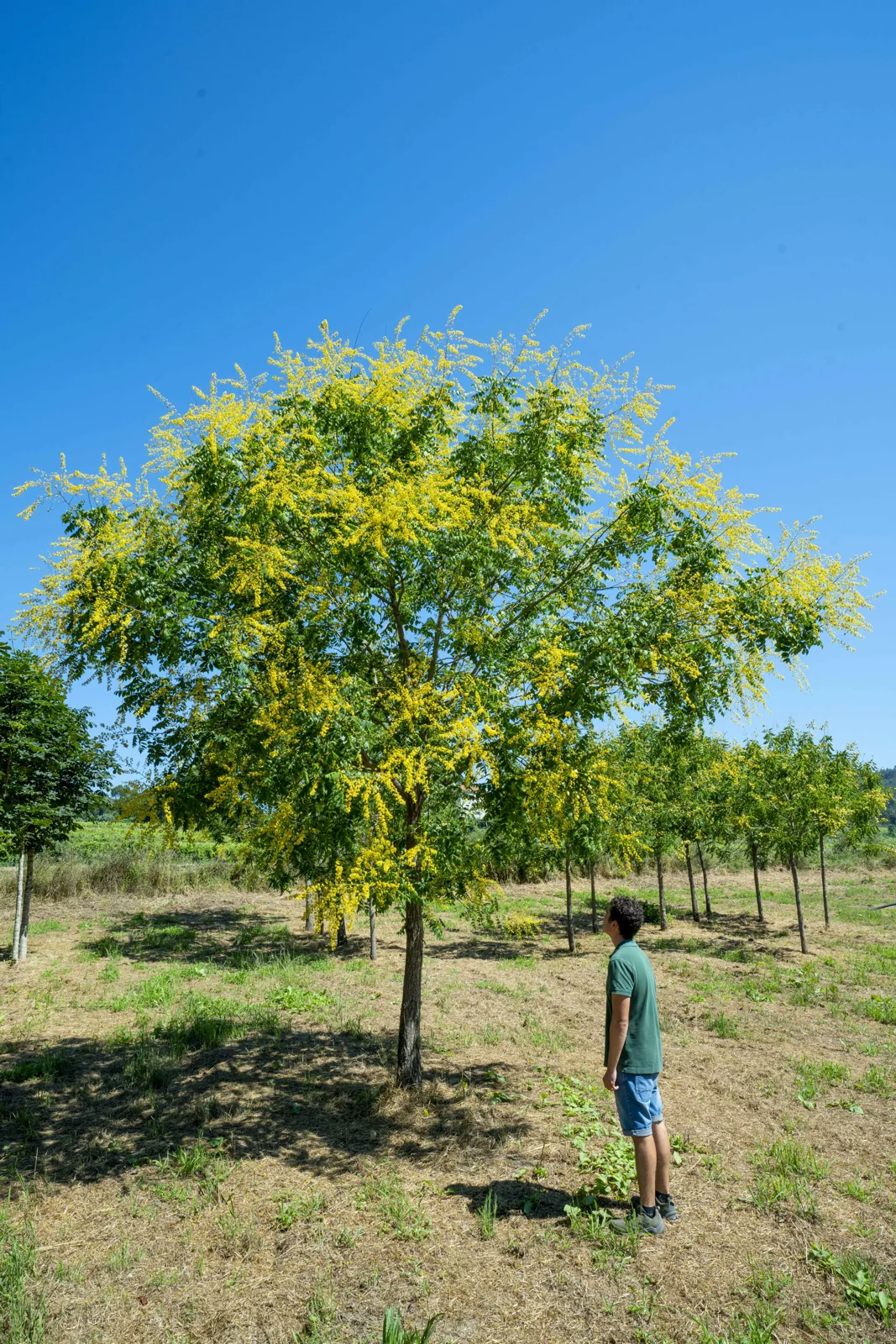
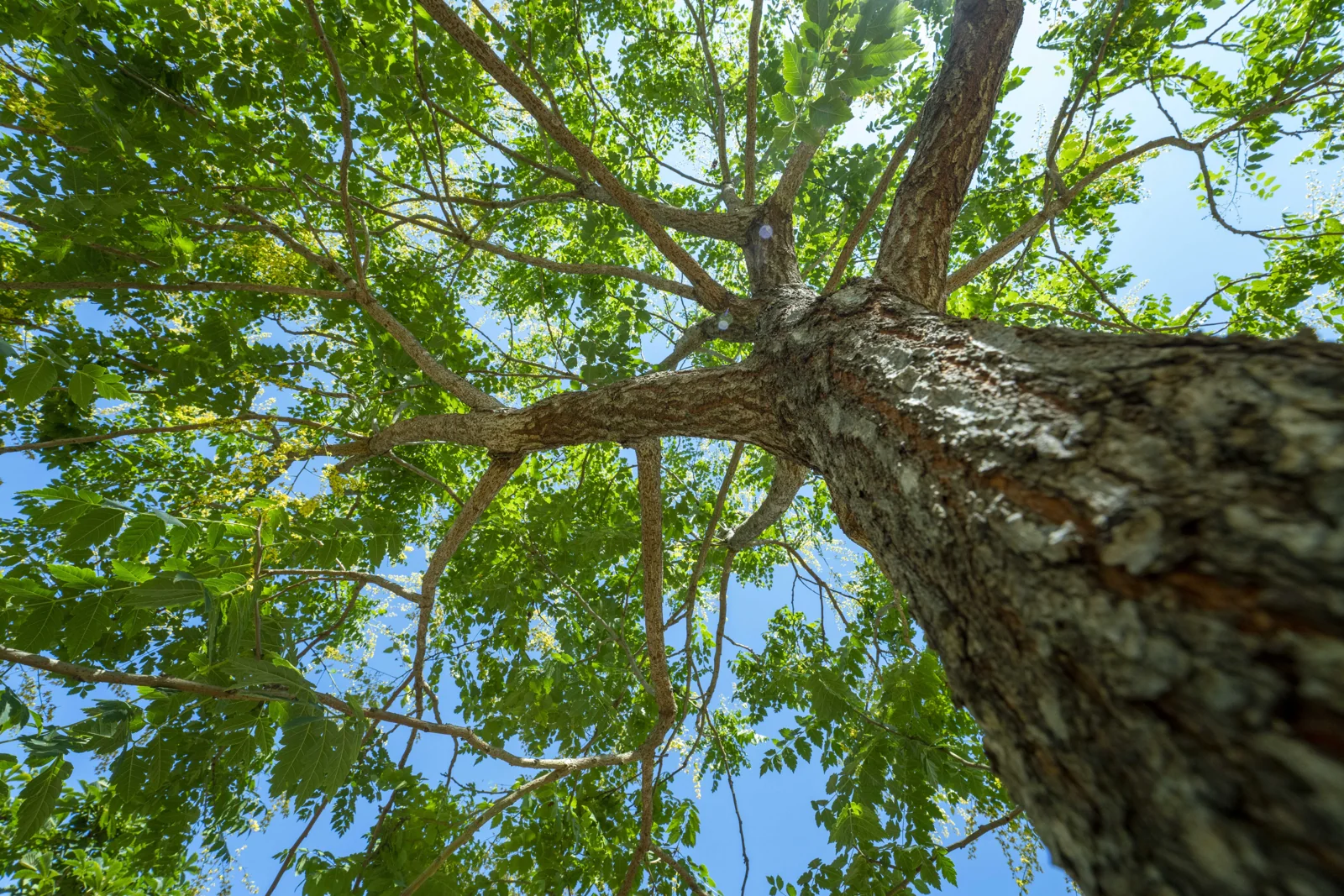
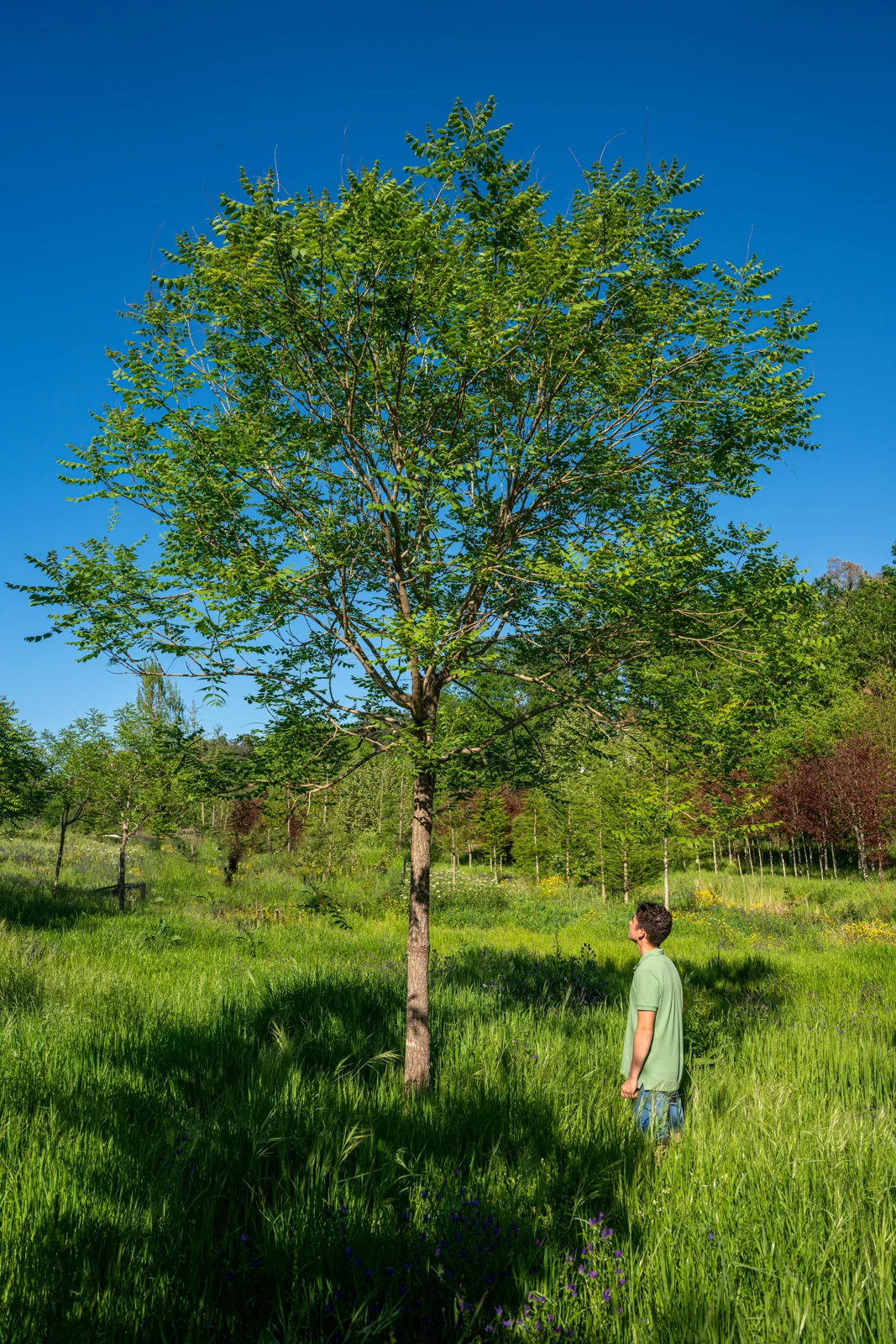
The species is a deciduous medium-sized tree reaching 8 to 12 metres in height and comparable spread, with a rounded, spreading crown carried on relatively few main branches. Pinnately compound leaves emerge bronze-pink, mature mid-green, and turn an inconsistent gold in autumn. Large terminal panicles of small yellow flowers open in July and August,…
Read more
Show less
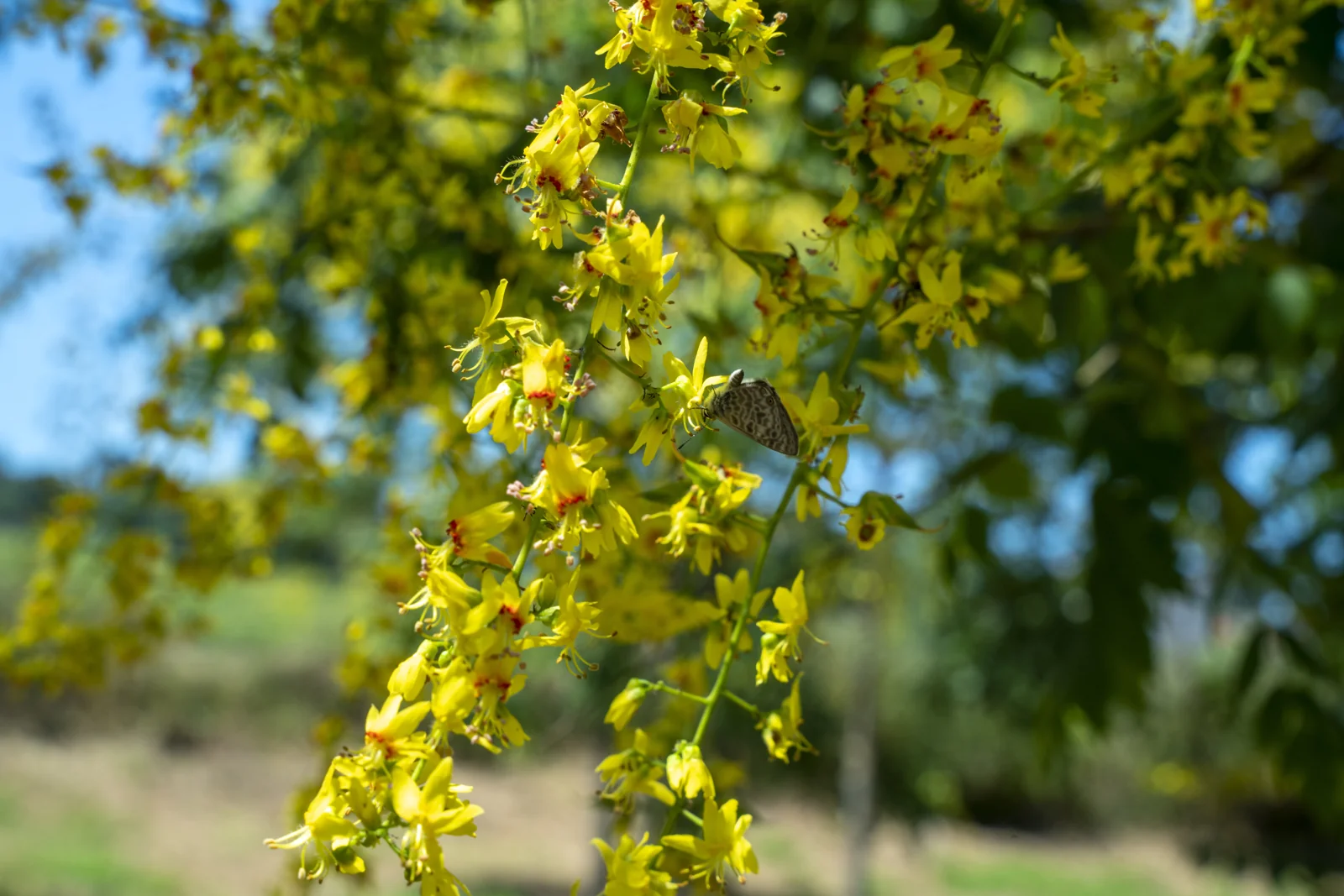
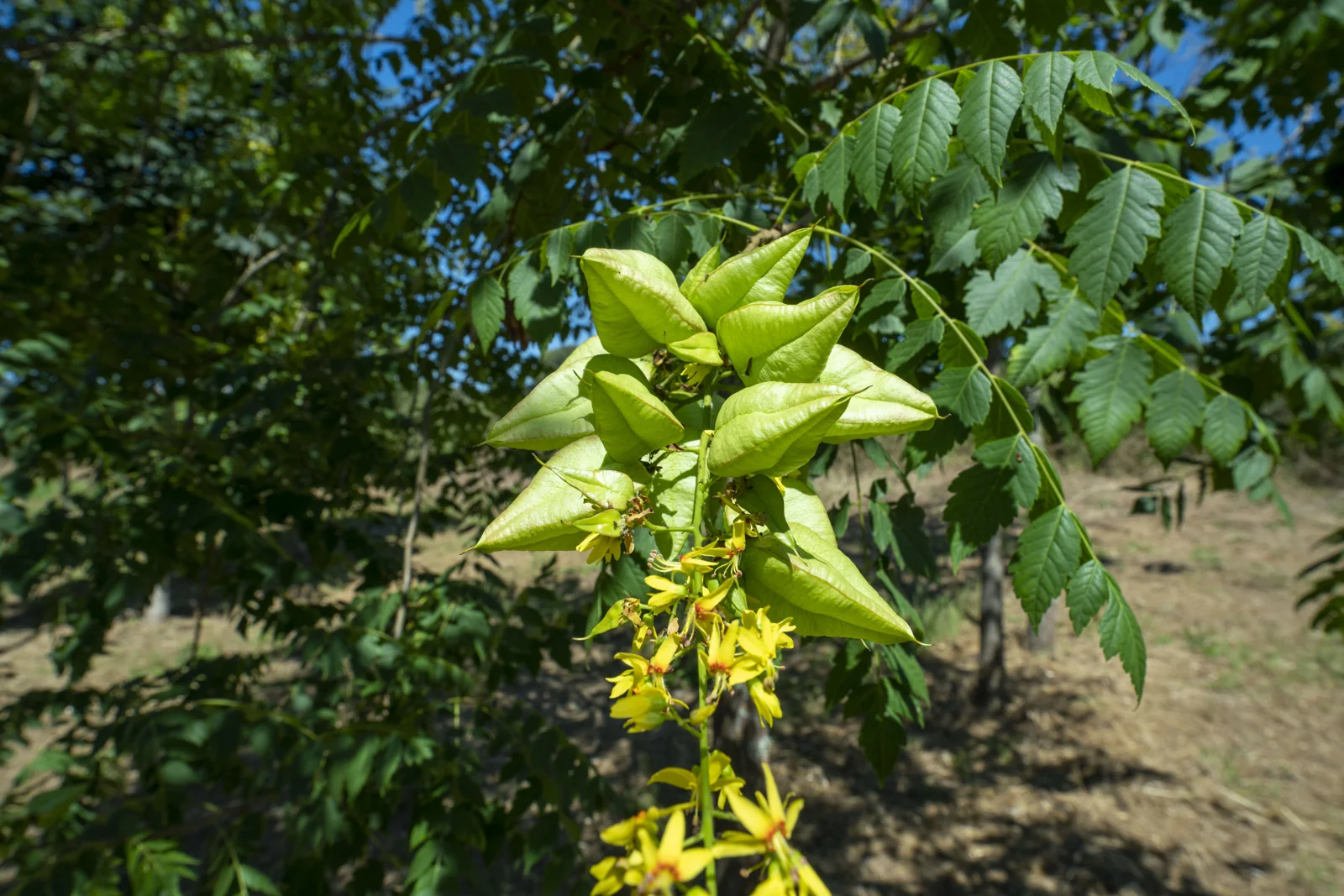
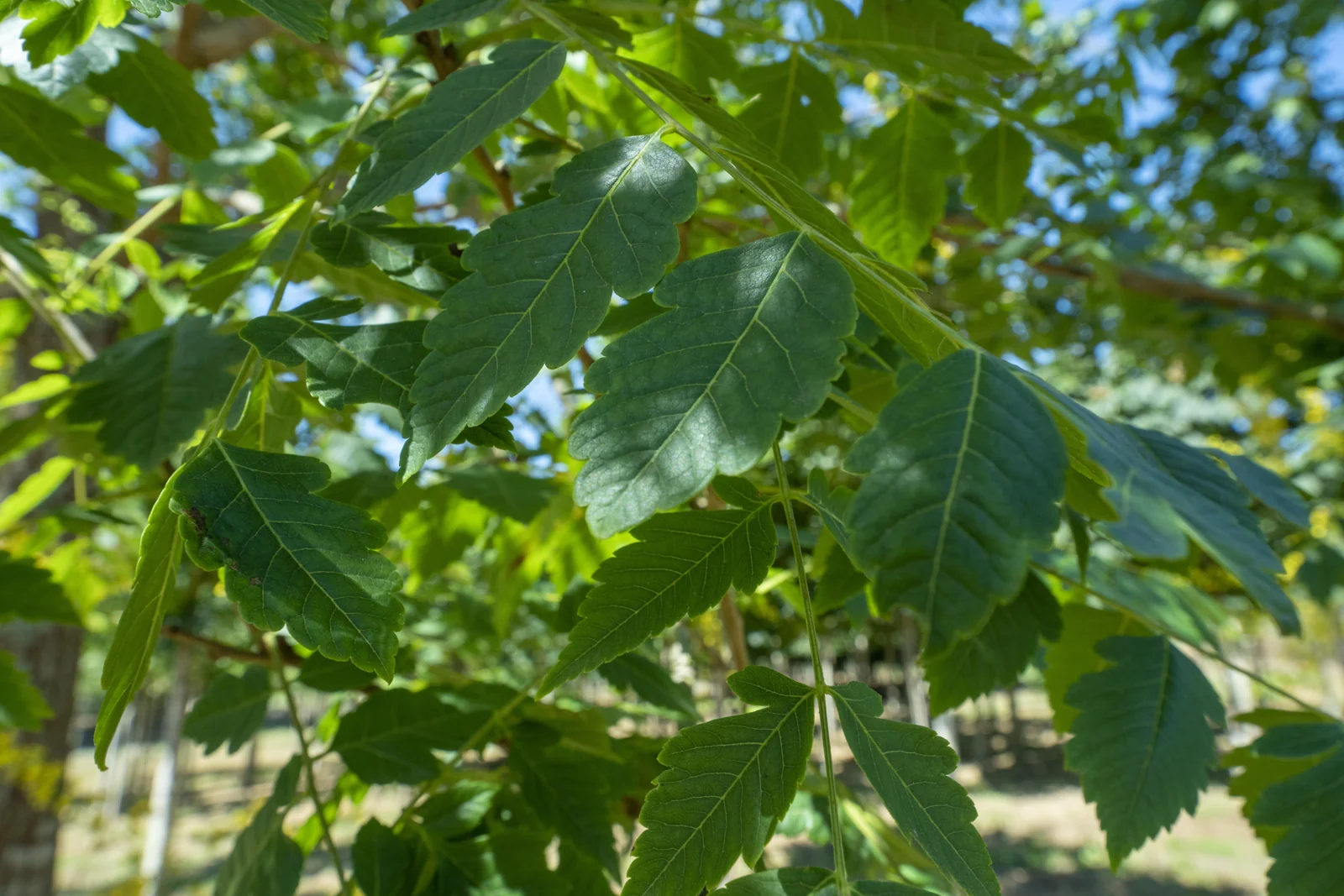
The species is a deciduous medium-sized tree reaching 8 to 12 metres in height and comparable spread, with a rounded, spreading crown carried on relatively few main branches. Pinnately compound leaves emerge bronze-pink, mature mid-green, and turn an inconsistent gold in autumn. Large terminal panicles of small yellow flowers open in July and August, followed by the distinctive papery three-valved capsules (resembling small lanterns) that persist from late summer into winter and carry visual interest through the leaf-off period.
Winter hardiness (Winterhärte) is the governing constraint for German specifications. Reliably hardy to around minus 18 degrees Celsius on free-draining substrate in sheltered positions, with minus 15 degrees Celsius a more conservative working limit on open sites; damage to young wood becomes likely below those thresholds. Performance is dependable across the Oberrheingraben, the Niederrheinische Bucht, the Kölner Bucht, and the milder Rhein-Main basin. Reliability falls off east of the Elbe, in the colder pockets of the norddeutsche Tiefebene, and above 400 metres in the voralpenland (pre-Alpine foothills). The first three winters are the principal risk window; established trees tolerate cold better than juvenile stock.
For Stadtbaumeignung (street tree suitability) the species is a credible Klima-Artenmatrix candidate and increasingly cited in Zukunftsbaum discussions. It tolerates compacted urban soils, confined root volumes, summer heat, and prolonged drought once established, with a deep pivoting root system providing the mechanism for that drought response. De-icing salt tolerance is moderate, suitable for secondary streets and squares rather than heavily salted arterial alignments. Crown architecture responds well to the formative pruning regimes typical of German Straßenbäume, though brittle wood means storm-prone exposed alignments warrant caution.
Performs on free-draining loams, on calcareous substrates to around pH 8, and on the Rhine loess soils common in the western Klimaregionen; it accepts the heavier clays of the central uplands provided drainage is adequate. The species carries no pressure equivalent to Eschentriebsterben on Fraxinus, Massariakrankheit on Platanus, or Russrindenkrankheit on Acer pseudoplatanus, making it a defensible diversification choice in canopies currently dependent on those genera. It reseeds readily on warm sites, which warrants consideration in naturalistic plantings adjoining open landscape.



Advice on this species
Want to know more about Koelreuteria paniculata?
Tell us about your project and we'll advise you on this species — where it thrives, which size makes sense, and what to expect once planted.
- Produção própria
- Exemplares adultos
- Resposta em 1–2 dias
Sem compromisso · orçamento personalizado