

Dense evergreen screen cultivar for sheltered German sites
Mutchagara Holly ‘Nellie R. Stevens’ · Ilex mutchagara ‘Nellie R. Stevens’
A pyramidal evergreen holly for framework planting and tall screens on German projects, reliably hardy across milder Klimaregionen and dependable on free-draining soils, holding glossy foliage and red winter fruit year-round.
Key Facts
About this Cultivar
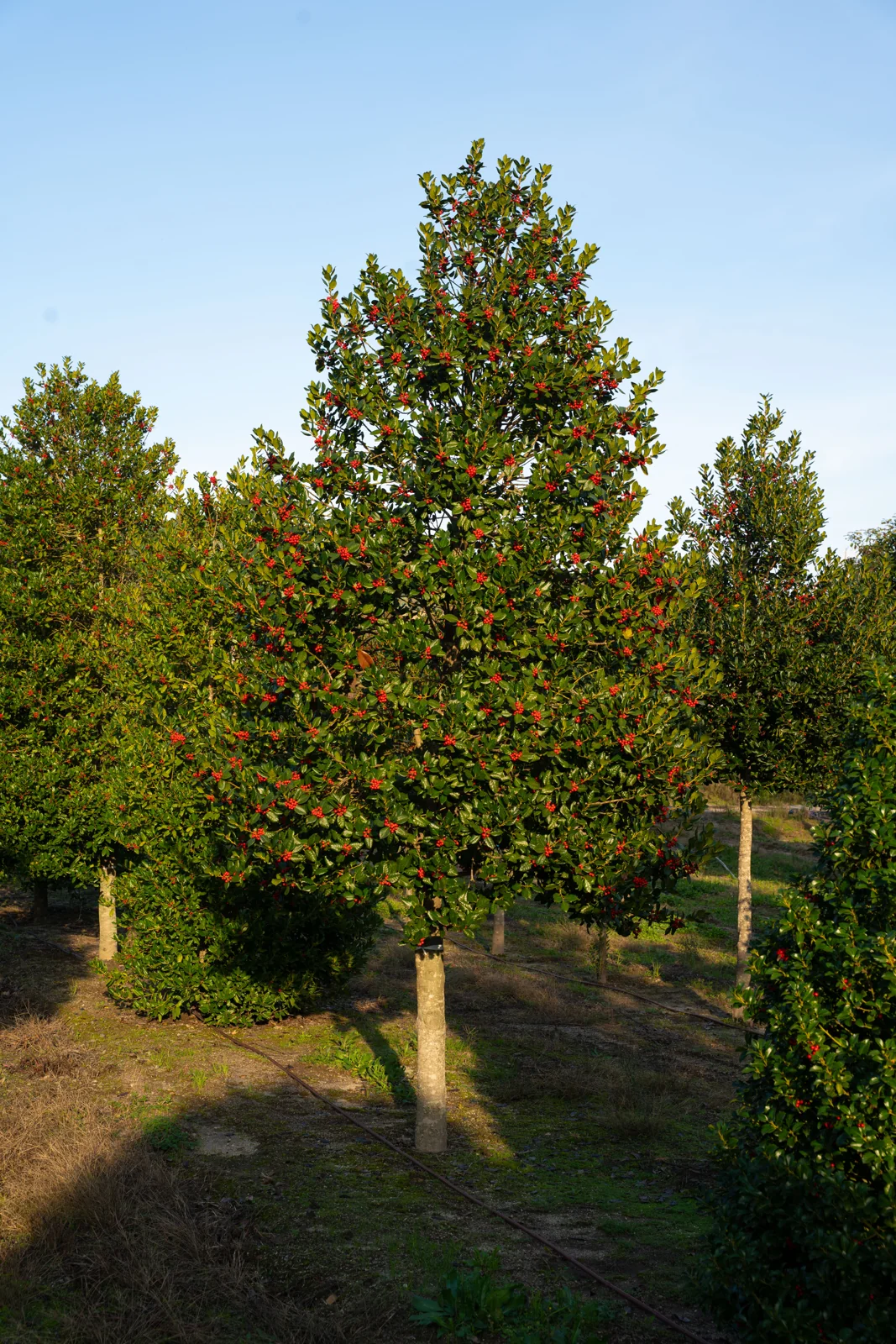
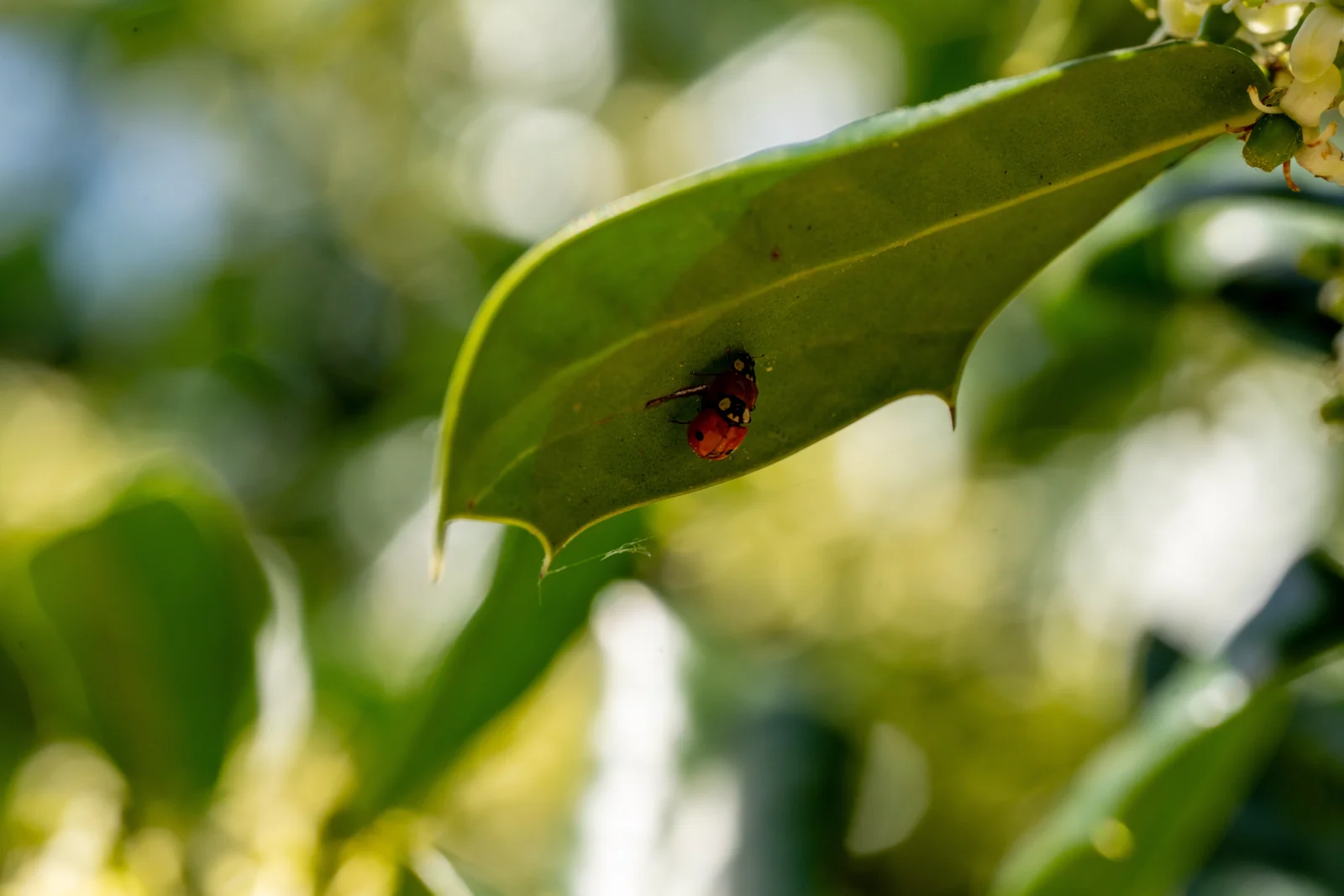
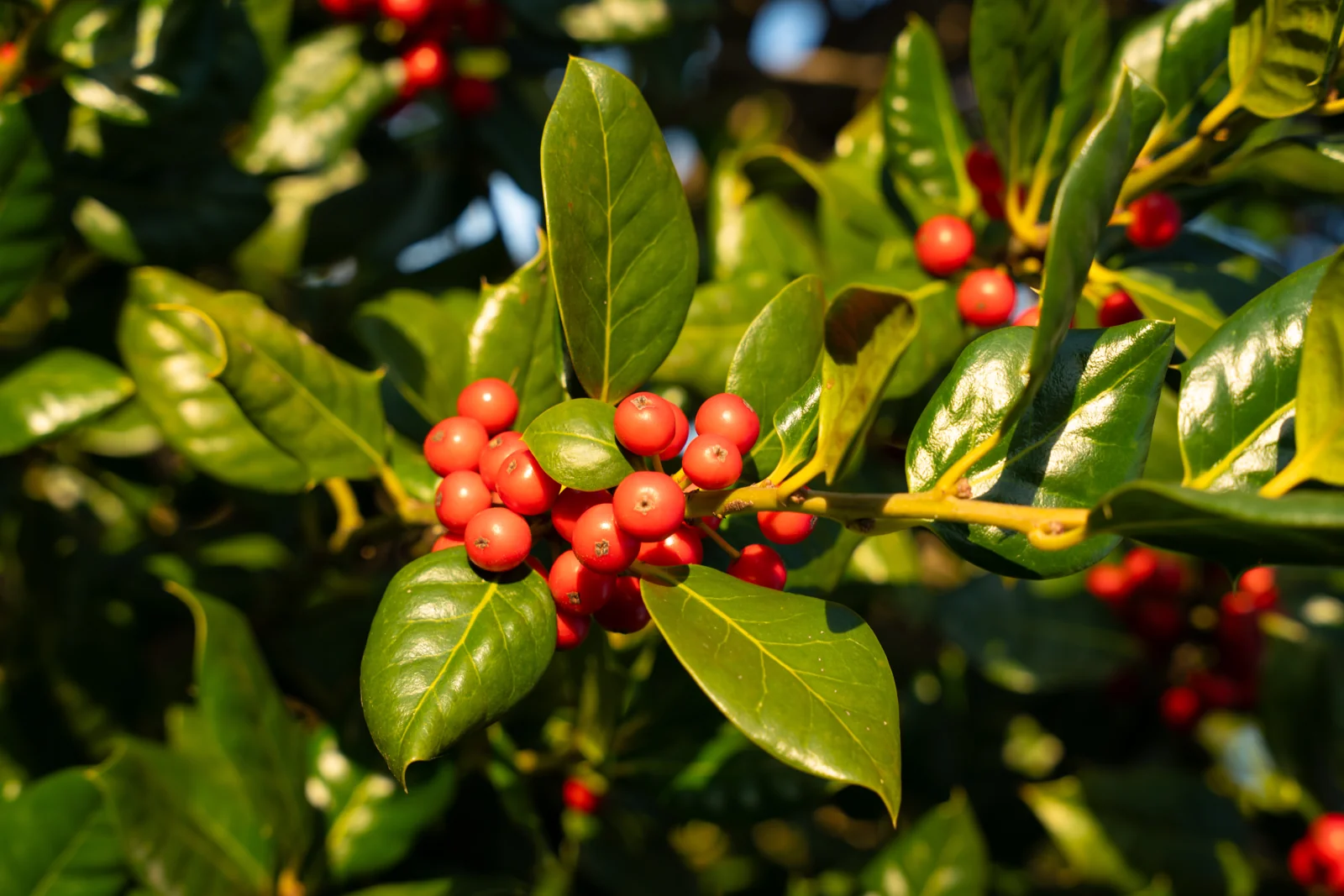
Ilex mutchagara 'Nellie R. Stevens' is a dense, pyramidal evergreen holly with glossy dark green, lightly spined leaves and a heavy red fruit set persisting from December through February. Mature dimensions settle at 4 to 6 m in height and 3 to 5 m in spread, with slow to moderate growth that holds the pyramidal Habitusform without aggressive shearing. The…
Read more
Show less
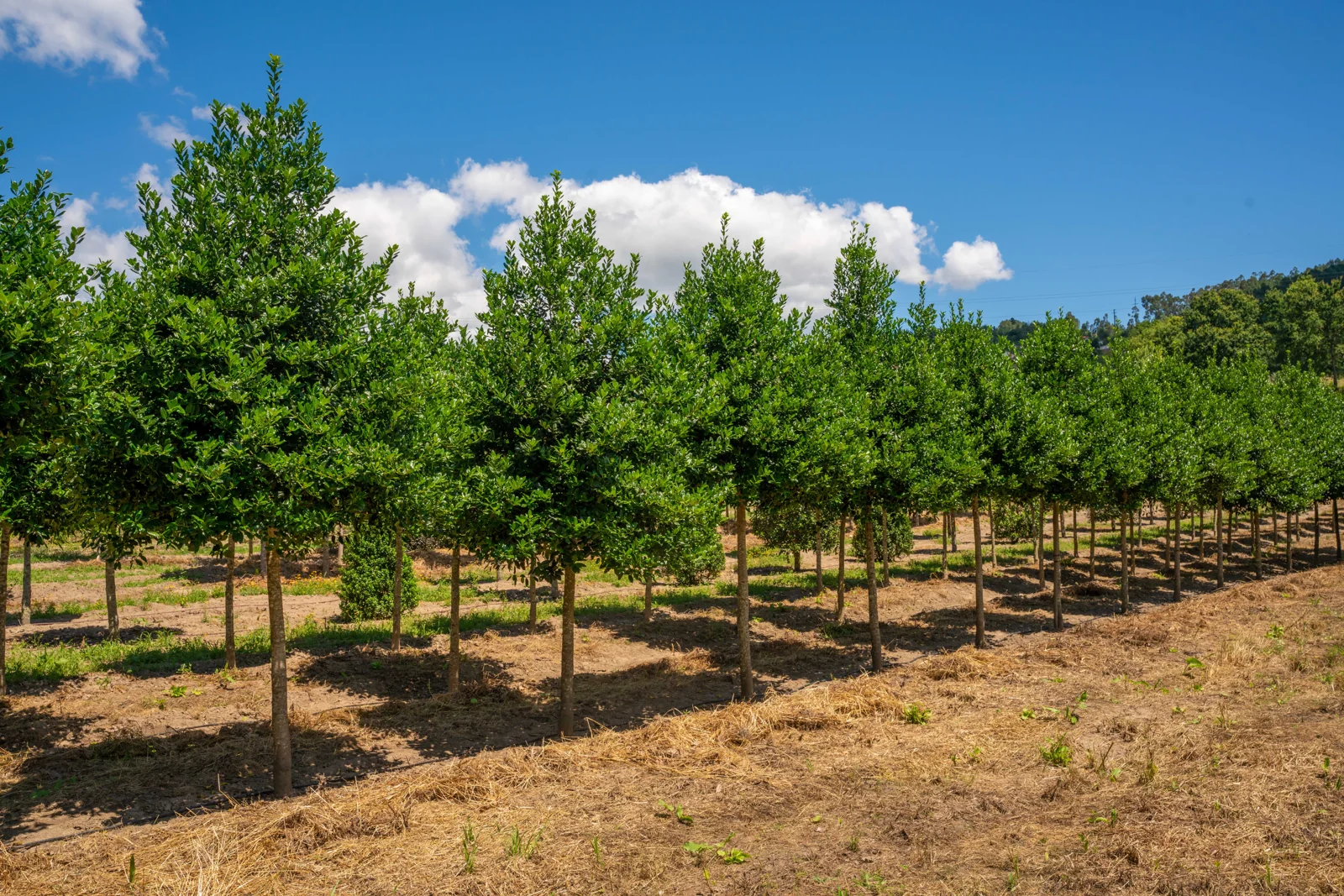
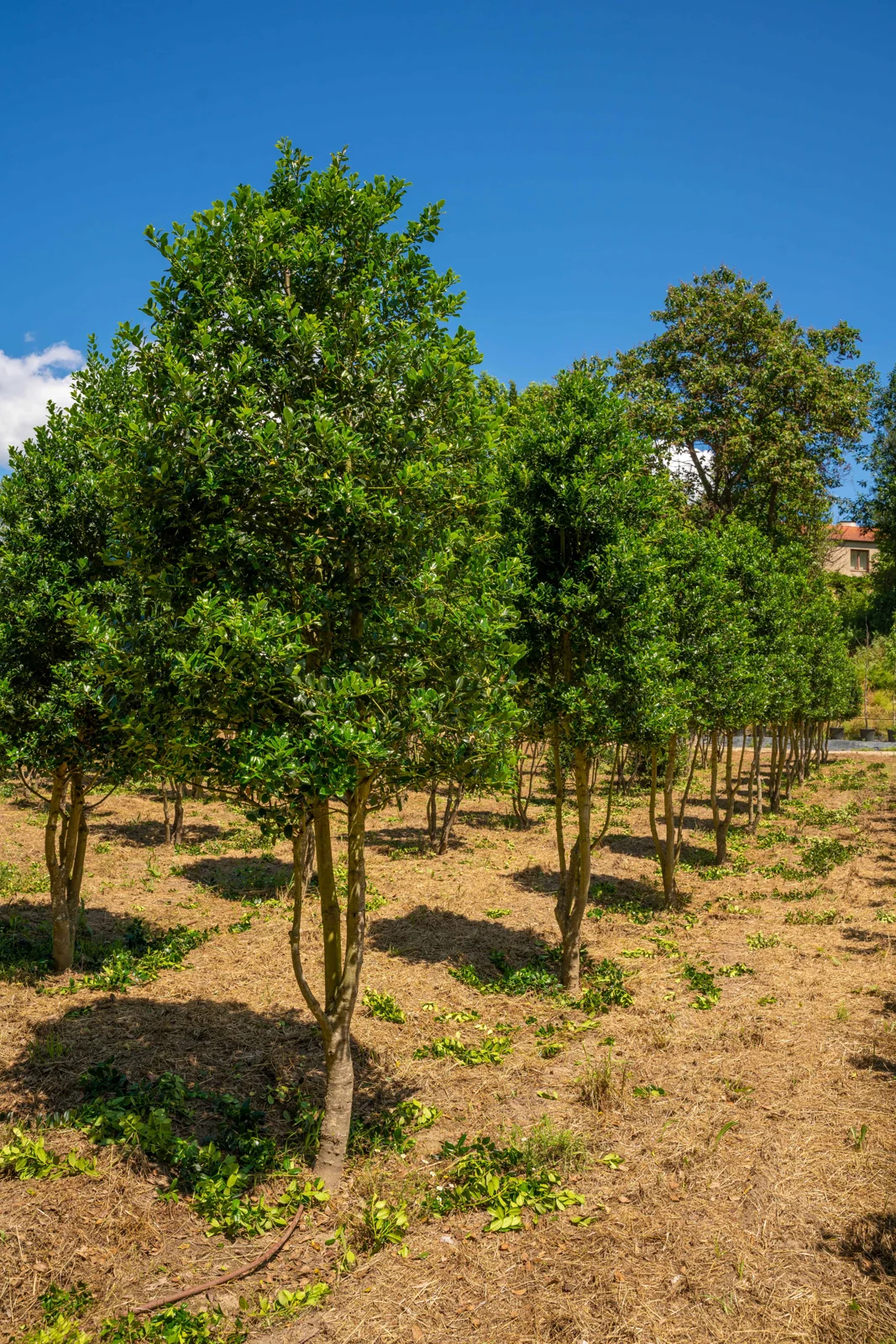
Ilex mutchagara 'Nellie R. Stevens' is a dense, pyramidal evergreen holly with glossy dark green, lightly spined leaves and a heavy red fruit set persisting from December through February. Mature dimensions settle at 4 to 6 m in height and 3 to 5 m in spread, with slow to moderate growth that holds the pyramidal Habitusform without aggressive shearing. The cultivar reads in the landscape as a more vigorous and fruit-reliable alternative to Ilex aquifolium 'J.C. van Tol', with a denser canopy than the Blue Holly group (Ilex x meserveae).
Winter hardiness is rated to zone 6a, equivalent to approximately minus 20 degrees Celsius as an absolute minimum on free-draining substrate in sheltered positions. This envelope covers most of mainland Germany, including the Rhine corridor (Oberrheingraben, Niederrheinische Bucht), the Cologne and Frankfurt basins, and the Munich plain. Reliability decreases under prolonged radiation frost in the continental east (eastern Brandenburg, Saxony) and above 400 m in the pre-Alpine foothills (voralpenland); specification in those zones should assume sheltered, urban, or near-building positions rather than open-field exposure.
Winter sun and desiccating east wind on dense evergreen broadleaf foliage matter more for this cultivar than the absolute minimum temperature. Site protection (Winterhärte, Standortansprüche) on the south-west to south aspect of a wall or behind windbreak structure preserves leaf integrity through February sun load. Soil tolerance is broad across acidic to alkaline, sandy to clay, provided drainage is secure; waterlogged winter conditions and compacted urban subgrade are the disqualifying factors.
In German specification, the cultivar competes with Photinia x fraseri and Mahonia x media for the dense evergreen broadleaf role, offering better winter structure and fruit interest than either, with comparable resistance to common pests and diseases. It is appropriate for tall hedges, framework planting in Stadtgrün and Kurpark settings, and as a standalone Habitusbaum where year-round canopy and December fruit are part of the design intent. Urban pollution tolerance is acceptable but not at the level of the GALK-Straßenbaumliste canon; treat it as a Stadtgrün rather than a Straßenbaum specification.
Advice on this species
Want to know more about Ilex mutchagara 'Nellie R. Stevens'?
Tell us about your project and we'll advise you on this species — where it thrives, which size makes sense, and what to expect once planted.
- Produção própria
- Exemplares adultos
- Resposta em 1–2 dias
Sem compromisso · orçamento personalizado