

Fast evergreen screen for wind shelter and privacy structure
Leyland Cypress · ×Cupressocyparis leylandii
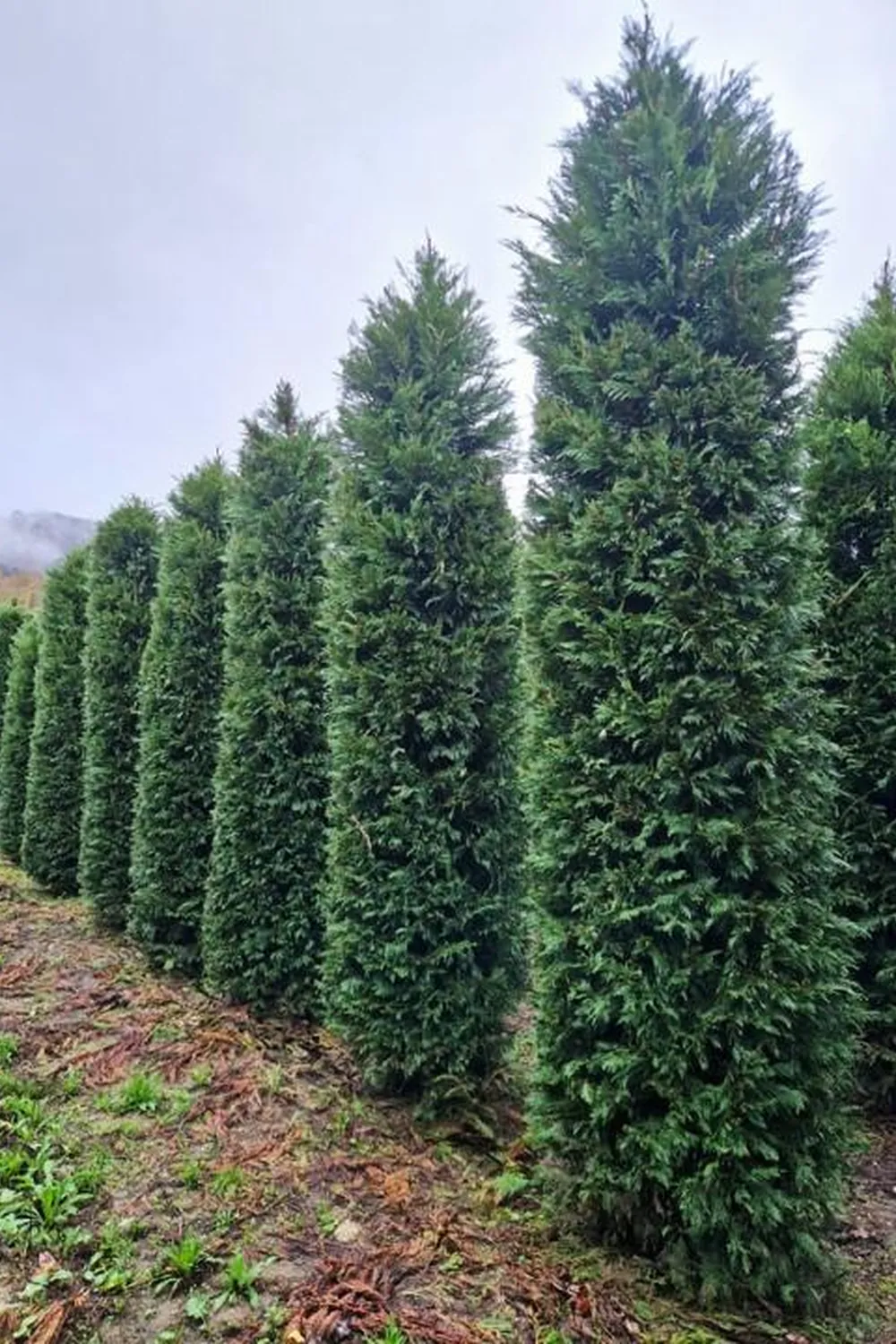
Fast-growing and densely columnar, it closes a boundary or raises a windbreak within a few seasons where slower conifers would take a decade, holding dark evergreen cover year-round on almost any free-draining soil in full sun.
About this Species
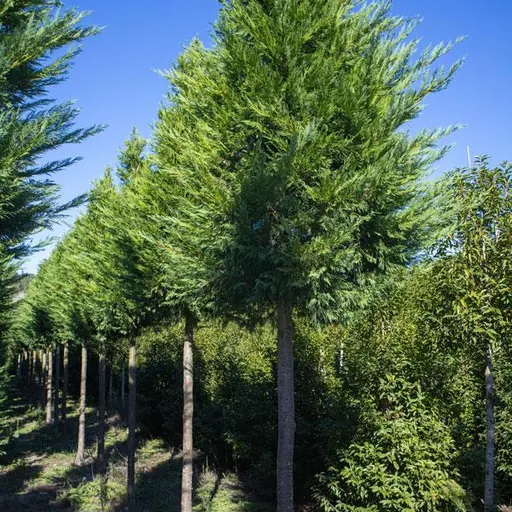
A hybrid conifer (×Cupressocyparis leylandii, accepted as ×Hesperotropsis leylandii) of rapid growth and large stature, reaching 15 to 25 metres tall and 4 to 6 metres wide with a dense, narrow, conical crown of dark blue-green scale foliage. Annual extension exceeding one metre on favourable sites makes it the standard specification where a screen, a…
Read more
Show less
A hybrid conifer (×Cupressocyparis leylandii, accepted as ×Hesperotropsis leylandii) of rapid growth and large stature, reaching 15 to 25 metres tall and 4 to 6 metres wide with a dense, narrow, conical crown of dark blue-green scale foliage. Annual extension exceeding one metre on favourable sites makes it the standard specification where a screen, a privacy barrier, or a windbreak (Windschutz) must reach height quickly. The upright branch structure resists breakage and recovers well from hard cutting, so it holds a formal clipped face under the pruning regimes German practice expects of structural conifers.
Winter hardiness (Winterhärte) is adequate across much of Germany for established trees: the foliage withstands well below minus 5 degrees Celsius once the tree is settled, and it performs through the milder Klimaregionen, from the Oberrheingraben (Upper Rhine valley) to the Niederrheinische Bucht (Lower Rhine basin) and the norddeutsche Tiefebene (northern German lowlands). The material risk in continental-cold, dry-windy sites east of the Elbe and in the exposed voralpenland (pre-Alpine foothills) is winter foliage desiccation rather than absolute cold death; on such sites give a sheltered position and water before hard frost in dry autumns.
It grows on acid through alkaline soils provided drainage is good, taking loam, clay, and nutrient-poor ground, and tolerates urban air and moderate de-icing salt. It is not a Straßenbaum in the GALK-Straßenbaumliste sense; its place is screening and shelter (Sichtschutz und Windschutz) in parks, perimeters, and Landschaftsbau planting rather than the inner-city tree pit.
Two conditions govern the specification. Roots are relatively shallow, so very large specimens want shelter from the strongest exposed wind to limit blow-over. The species is prone to bagworm, to Seiridium and Botryosphaeria canker (which follows drought stress), and to Phytophthora and Armillaria root rot; specify free-draining ground, avoid summer drought stress, and plan the regular pruning the dense form requires.
Advice on this species
Want to know more about ×Cupressocyparis leylandii?
Tell us about your project and we'll advise you on this species — where it thrives, which size makes sense, and what to expect once planted.
- Produção própria
- Exemplares adultos
- Resposta em 1–2 dias
Sem compromisso · orçamento personalizado