

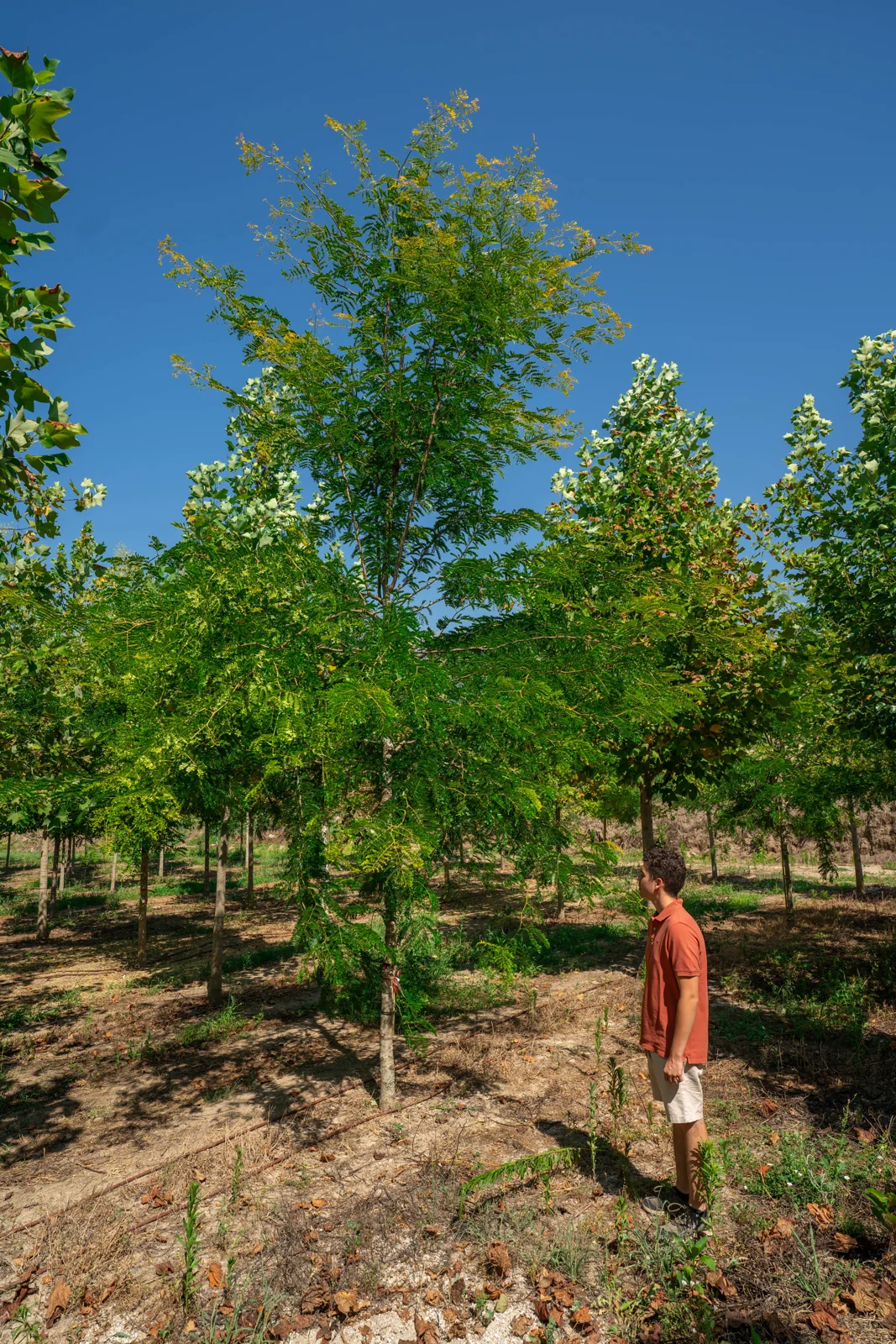
Thornless golden-foliage Stadtbaum for compacted urban pits
Honey Locust ‘Sunburst’ · Gleditsia triacanthos ‘Sunburst’
A thornless, podless honey locust cultivar carrying golden-yellow spring foliage and an open, light-casting crown. It suits street and square planting on confined urban soils, performing reliably across the milder and the colder German Klimaregionen alike.
Key Facts
About this Cultivar
Gleditsia triacanthos 'Sunburst' is a thornless and fruitless selection of a species already established in the German street-tree canon (Stadtbaum-Kanon), placing it among the safer specifications a specifier can defend to German partners. The new foliage emerges golden-yellow in spring, softens to yellow-green through summer, and returns to warm tones…
Read more
Show less
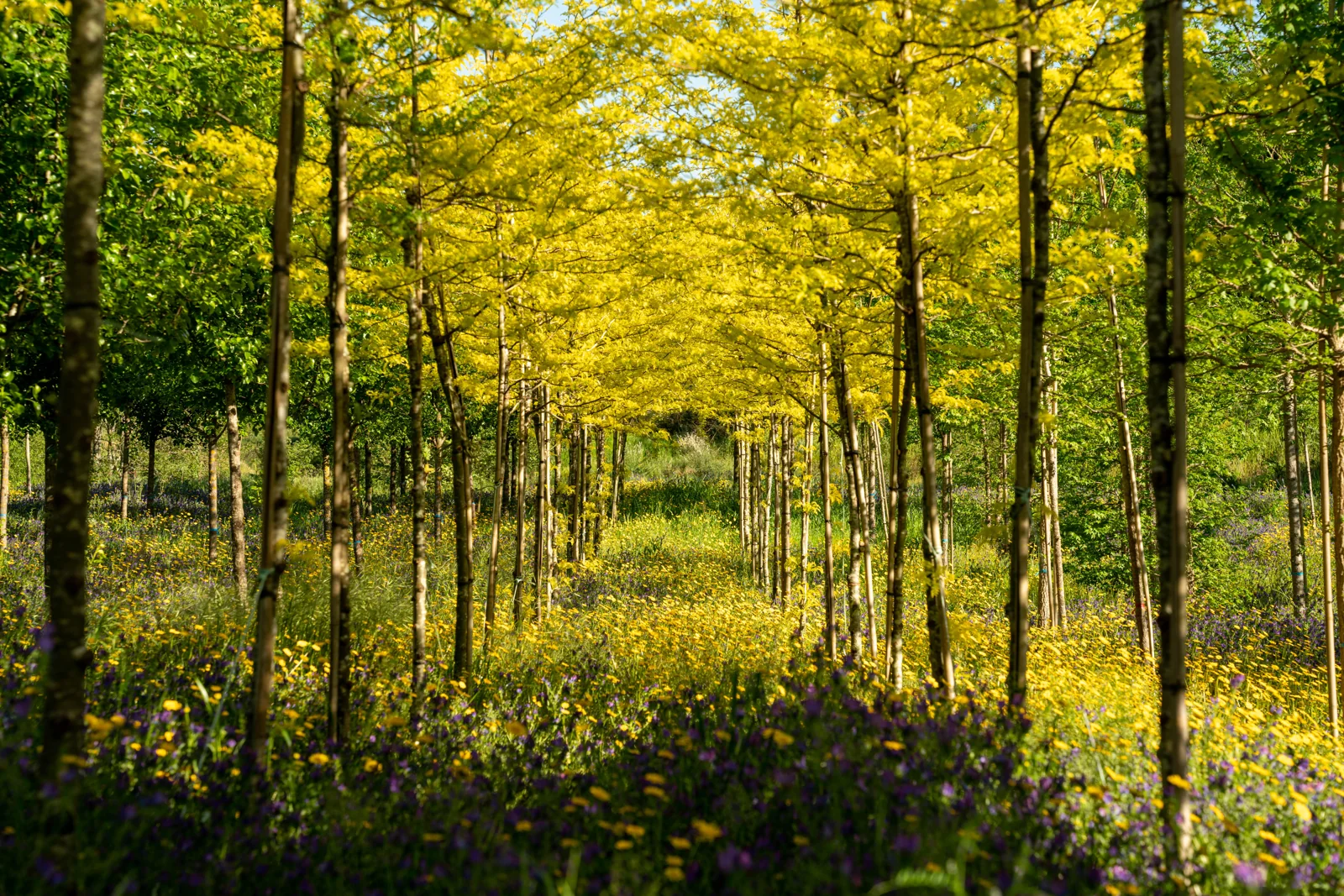
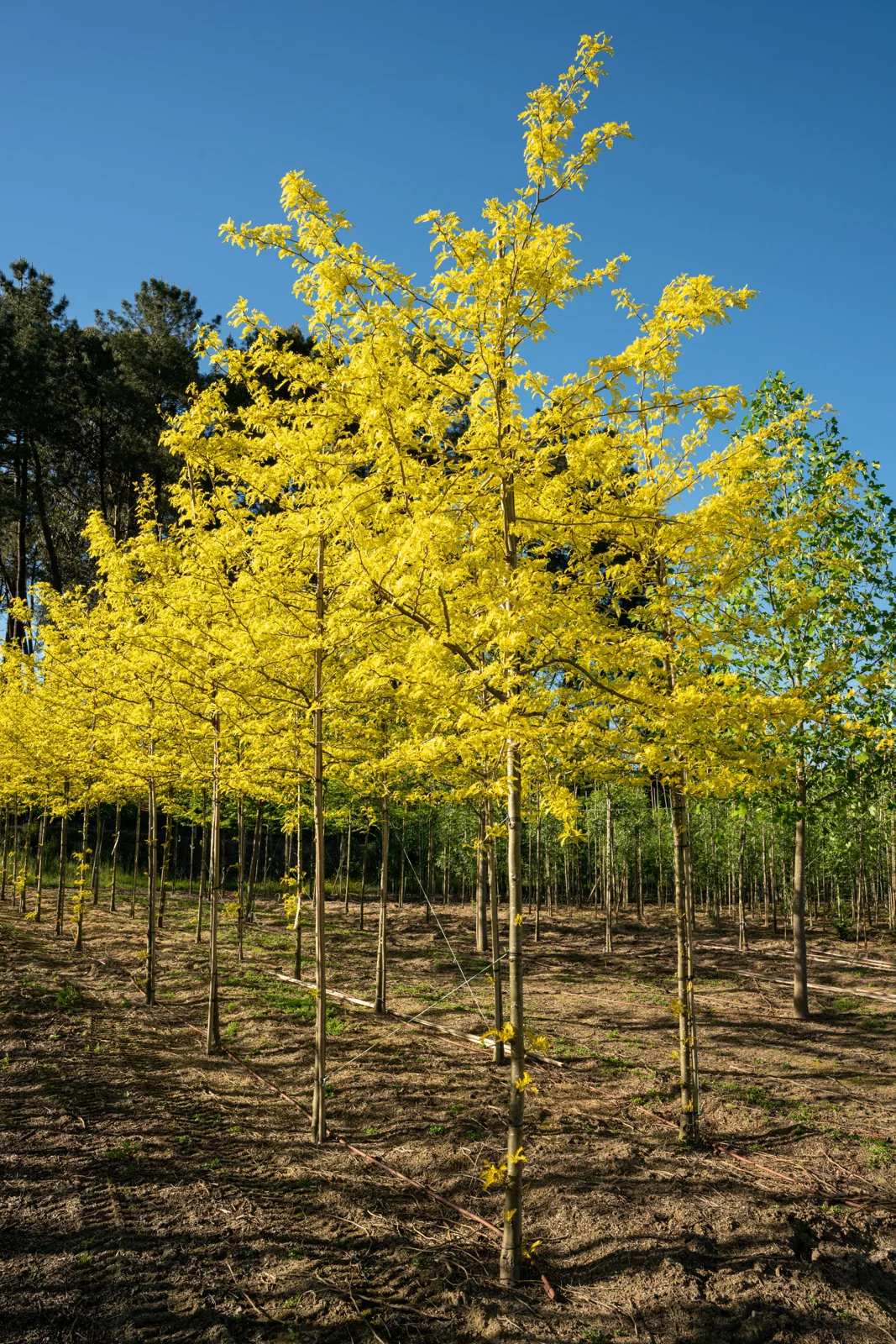
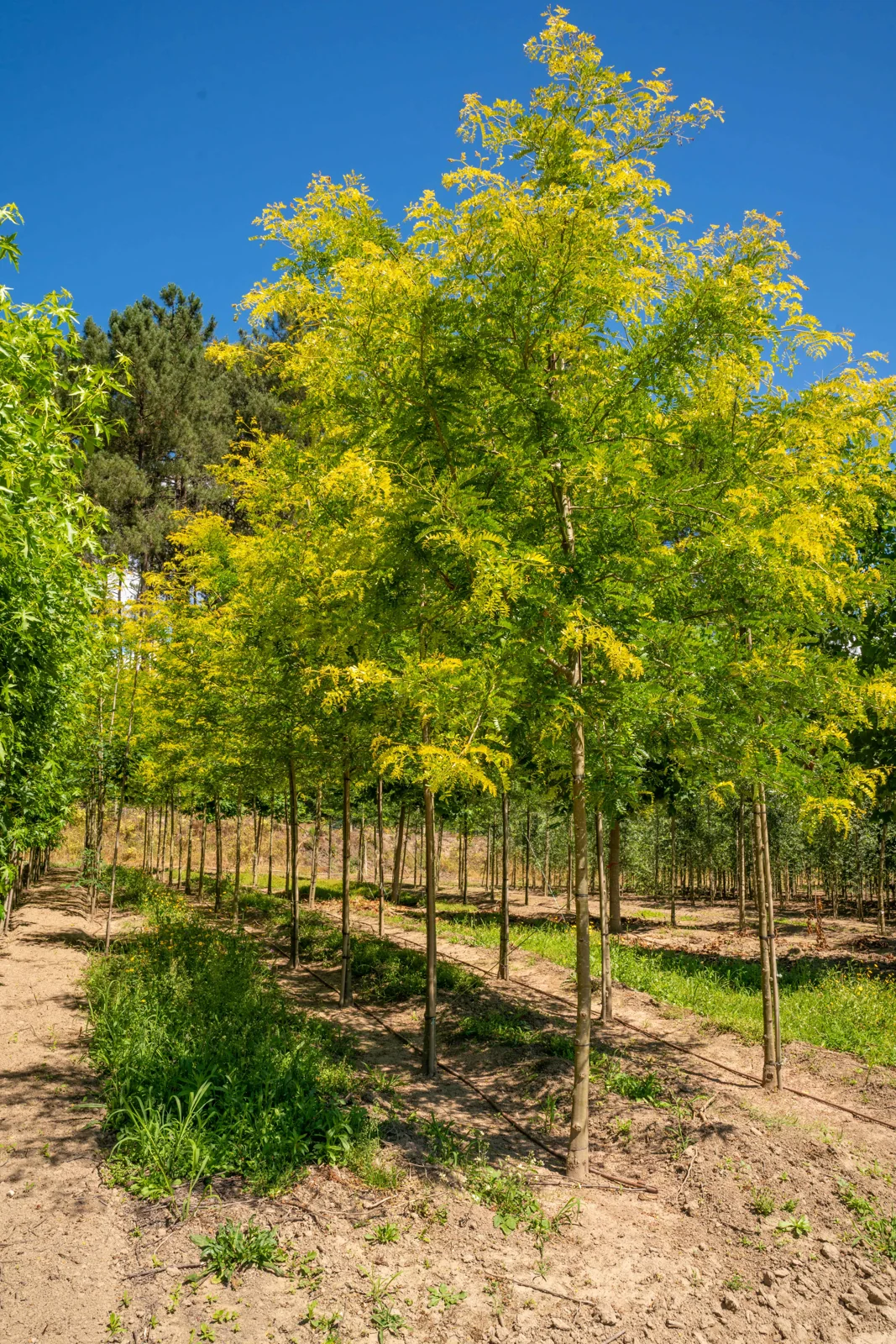
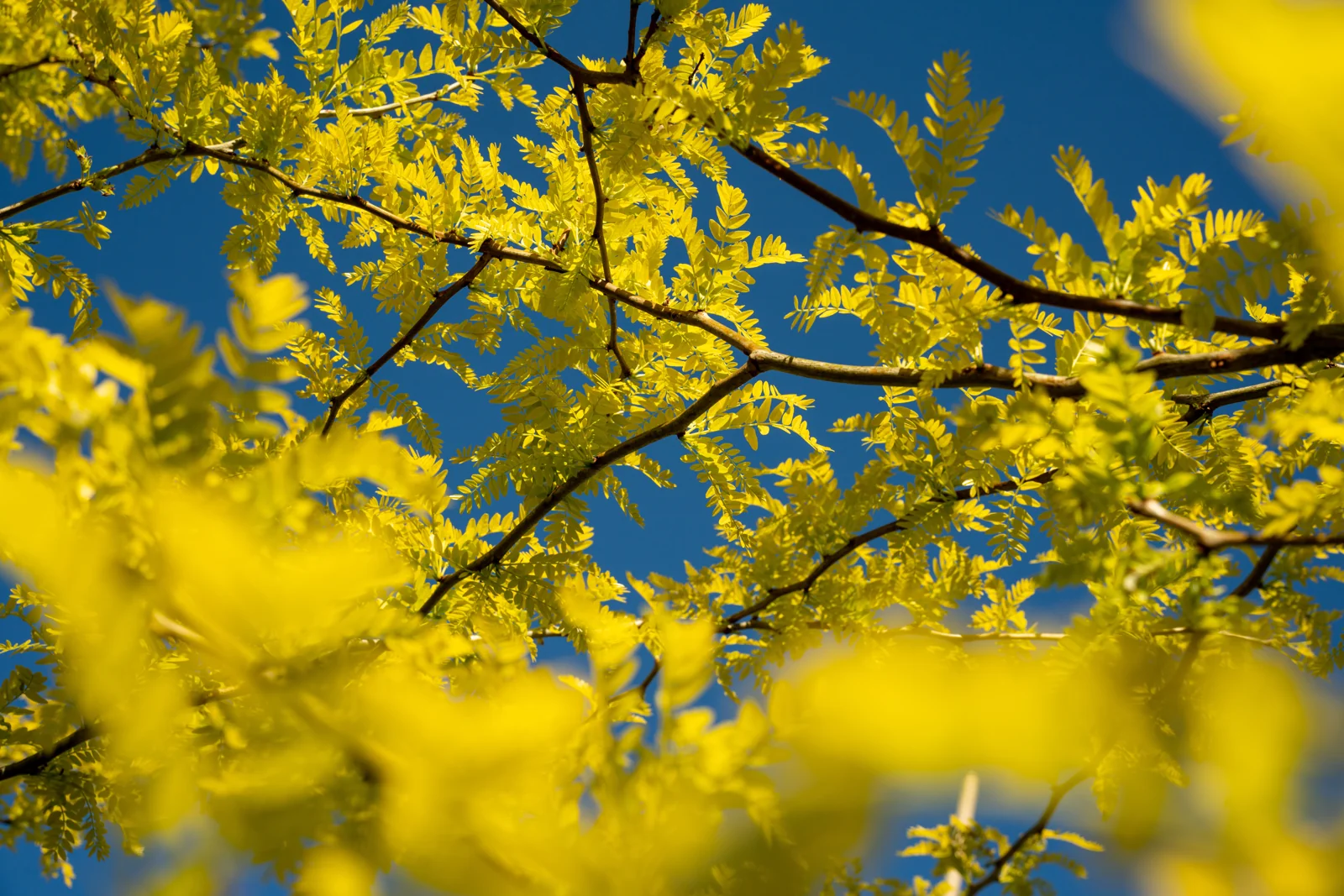
Gleditsia triacanthos 'Sunburst' is a thornless and fruitless selection of a species already established in the German street-tree canon (Stadtbaum-Kanon), placing it among the safer specifications a specifier can defend to German partners. The new foliage emerges golden-yellow in spring, softens to yellow-green through summer, and returns to warm tones before leaf fall; the finely divided pinnate leaves cast a light, dappled shade that allows turf and underplanting beneath. The crown is open and rounded, an asset for winter structure where leaf-off accounts for half the visible year.
Winter hardiness (Winterhärte) is the decisive argument here, and it runs in the tree's favour. The species is reliably hardy well below minus 20 degrees Celsius, so it performs not only in the mild Upper Rhine valley (Oberrheingraben) and the Lower Rhine basin (Niederrheinische Bucht) but also east of the Elbe and through the colder continental winters of eastern Germany. It carries no meaningful frost risk in the northern German lowlands (norddeutsche Tiefebene), and remains workable in the pre-Alpine foothills (Voralpenland) where altitude shortens the season.
Street-tree suitability (Stadtbaumeignung) is the species' core strength. The parent species sits on the GALK street tree list (the definitive German municipal recommendation list), and its de-icing salt tolerance, resistance to urban air pollution, and capacity to hold canopy through hot, dry summers make it an active Zukunftsbaum candidate as the 2018 to 2022 drought sequence reshapes German urban planting. It tolerates confined root volumes and compacted substrates better than most broadleaves of comparable stature.
On soil (Standortansprüche) it is broadly adaptable: free-draining loams, sands, and clays, and calcareous substrates to high pH once established, provided drainage is adequate. It belongs to no genus under current German phytosanitary pressure, and the thornless, podless habit removes the maintenance and safety objections that rule the wild type out of public planting.
Advice on this species
Want to know more about Gleditsia triacanthos 'Sunburst'?
Tell us about your project and we'll advise you on this species — where it thrives, which size makes sense, and what to expect once planted.
- Produção própria
- Exemplares adultos
- Resposta em 1–2 dias
Sem compromisso · orçamento personalizado