

Frost-hardy avenue and specimen tree for compacted urban pits
Maidenhair Tree · Ginkgo biloba
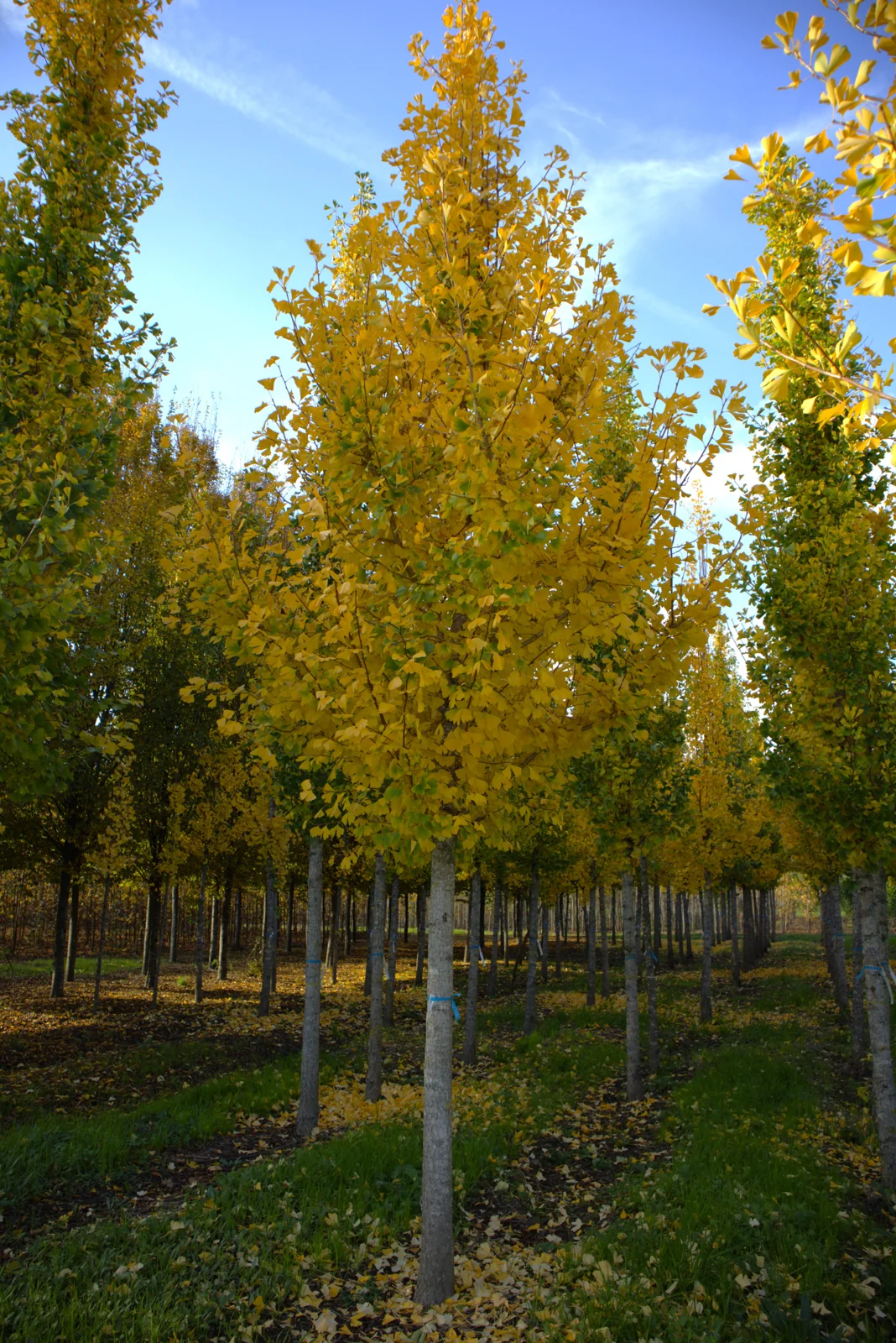
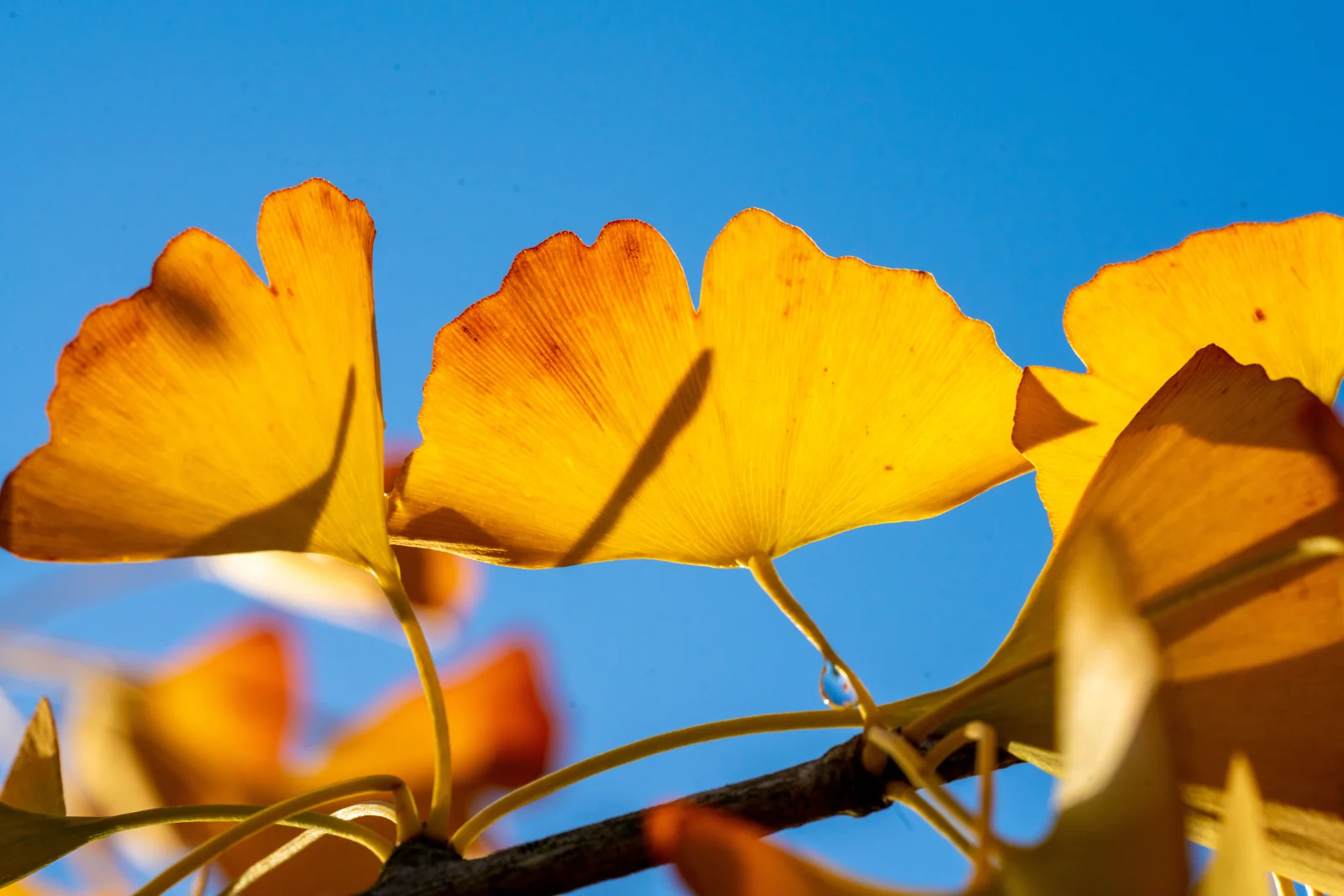
A slow-growing deciduous conifer relative with fan-shaped foliage, reliably hardy across all German Klimaregionen and tolerant of compacted, salted urban soils. Its primary role is as a street tree (Stadtbaum) and solitary specimen on heat-stressed sites.
About this Species
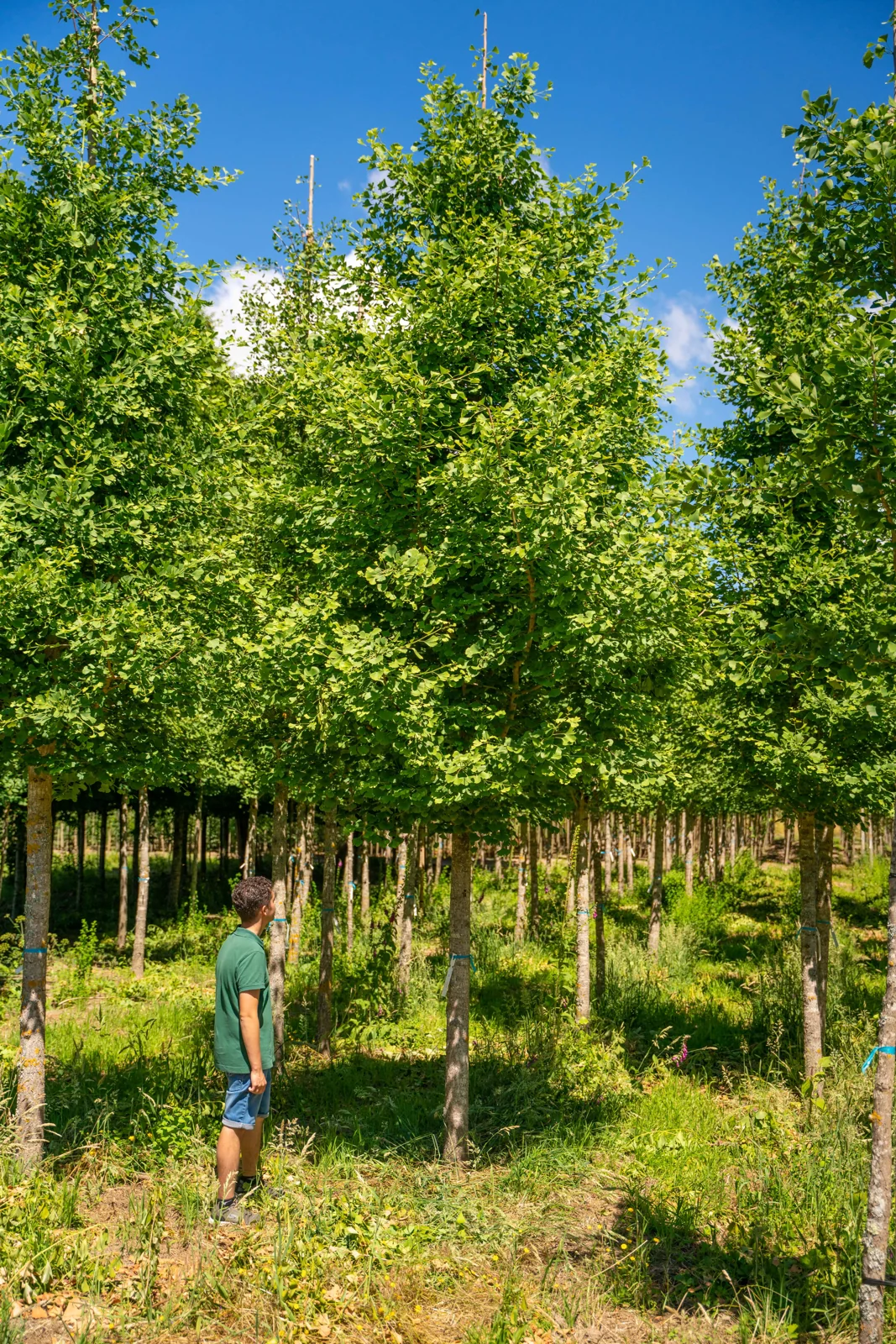
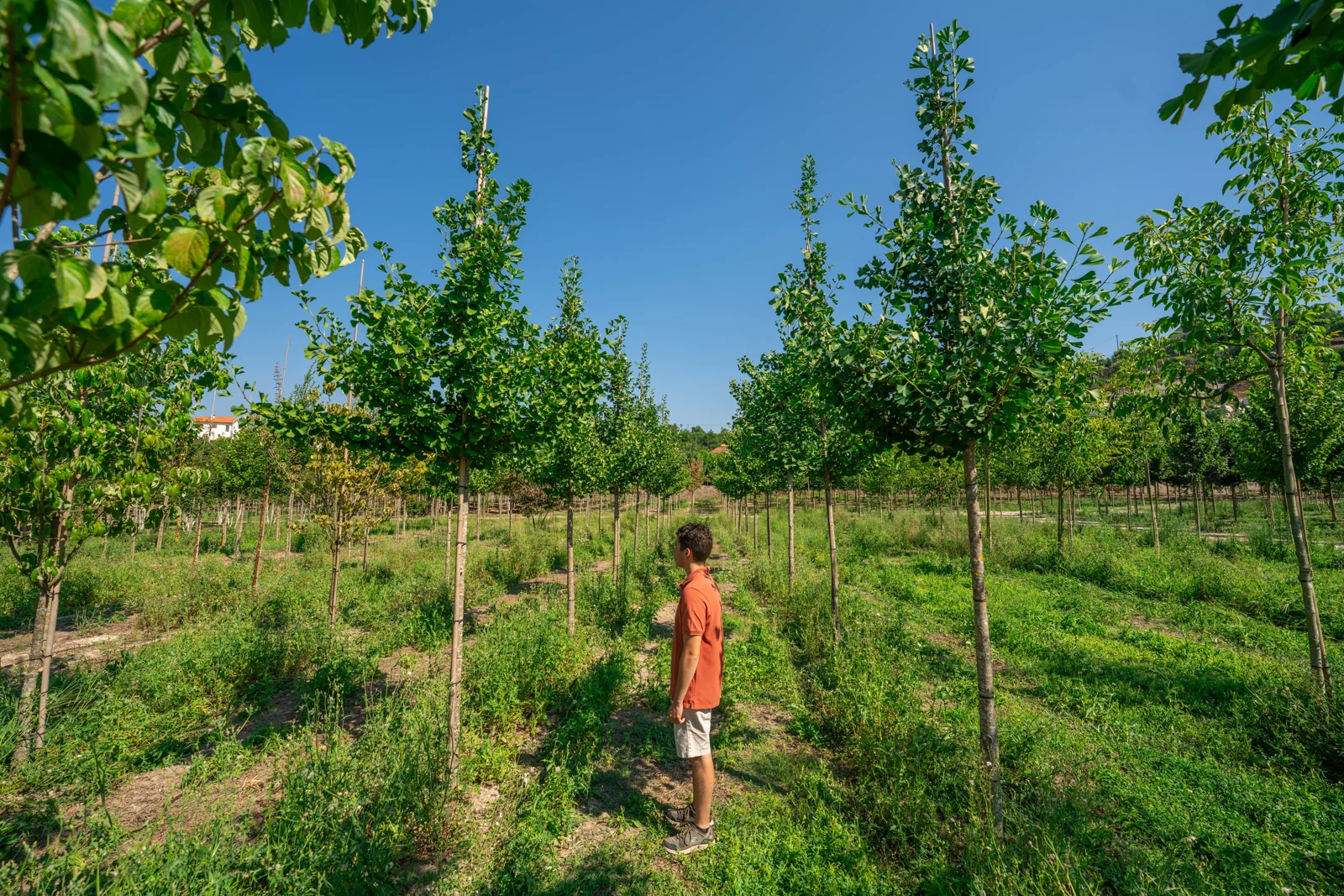
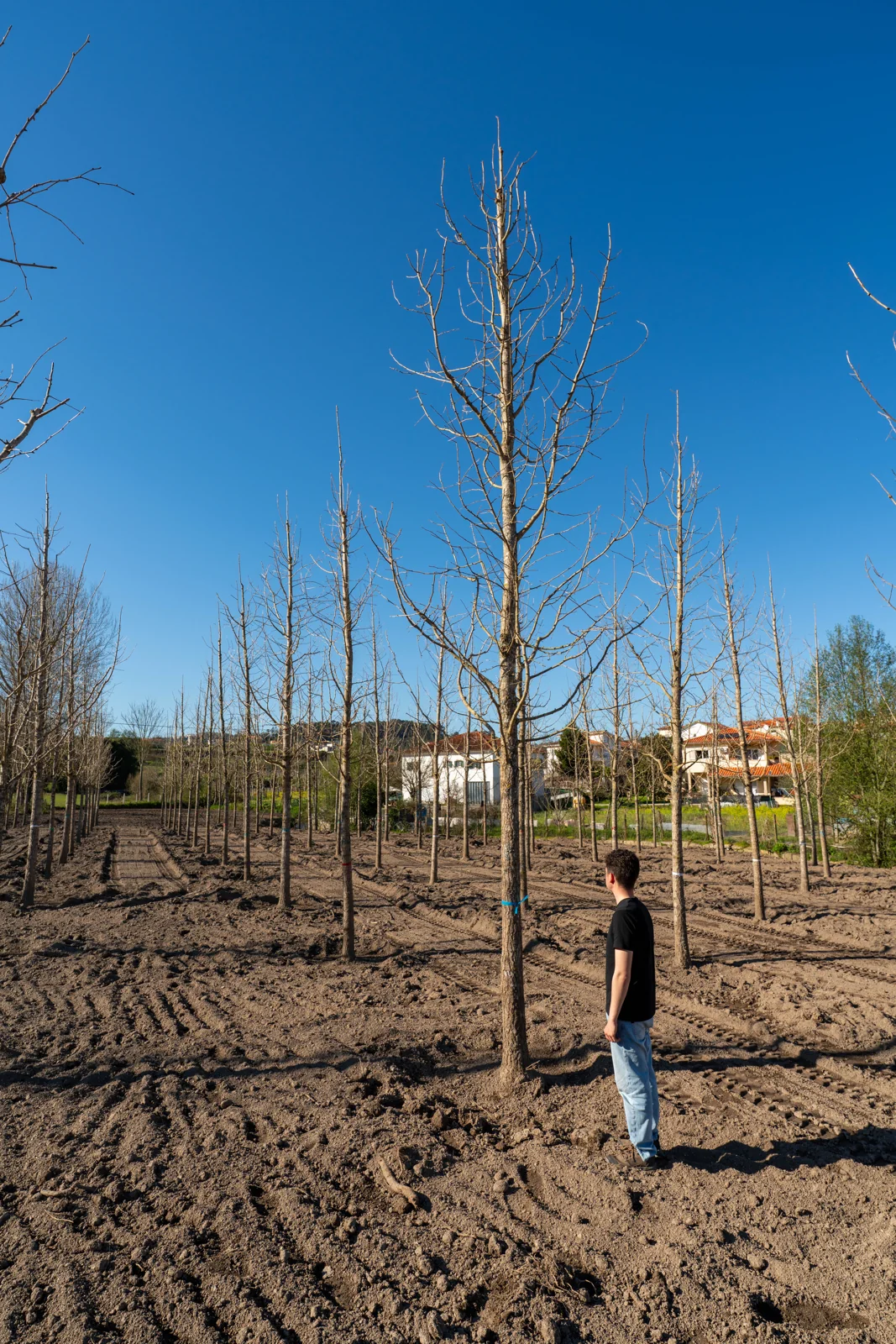
Ginkgo biloba (German: Ginkgo) is a deciduous gymnosperm of upright to conical habit (Habitusform), reaching roughly 15 to 25 metres in height and 8 to 12 metres in spread at maturity, though it does so slowly. The growth rate is genuinely slow, which suits confined street settings where rapid crown expansion is unwelcome, and it means a specimen sold at…
Read more
Show less
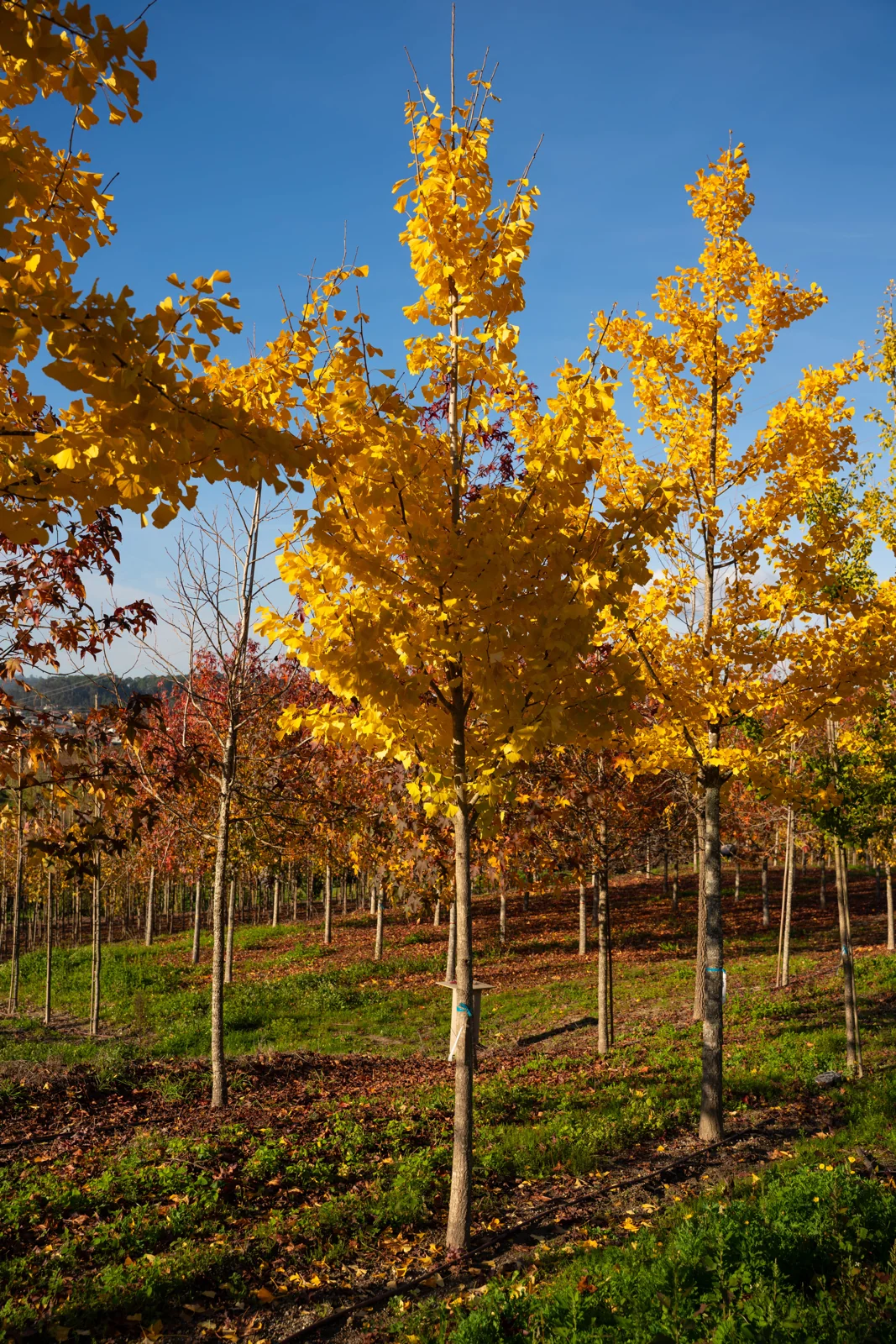
Ginkgo biloba (German: Ginkgo) is a deciduous gymnosperm of upright to conical habit (Habitusform), reaching roughly 15 to 25 metres in height and 8 to 12 metres in spread at maturity, though it does so slowly. The growth rate is genuinely slow, which suits confined street settings where rapid crown expansion is unwelcome, and it means a specimen sold at size represents many years of standing structure rather than a sapling that will outgrow its pit.
Winter hardiness (Winterhärte) is the species' strongest argument for German use. Ginkgo is reliably hardy well below minus 20 degrees Celsius in open positions on free-draining substrate, so it carries no frost risk in any German Klimaregion: it performs from the Oberrheingraben (Upper Rhine valley) and the Niederrheinische Bucht (Lower Rhine basin) through the norddeutsche Tiefebene (Northern German lowlands) and east of the Elbe, and remains sound at elevation in the voralpenland (pre-Alpine foothills). There is no northern or eastern limit to qualify for this species in Germany.
Stadtbaumeignung is well documented. The tree tolerates compacted urban soils and confined root volumes (Wurzelverhalten), withstands summer heat and air pollution, and is moderately tolerant of de-icing salt, the basis for its long use along salted streets. Drought tolerance is moderate rather than absolute, so canopy is best maintained on sites with some summer soil moisture; this heat tolerance and the species' freedom from significant pests and diseases support its standing as a Zukunftsbaum candidate in the Klima-Artenmatrix used for climate-adapted municipal planting.
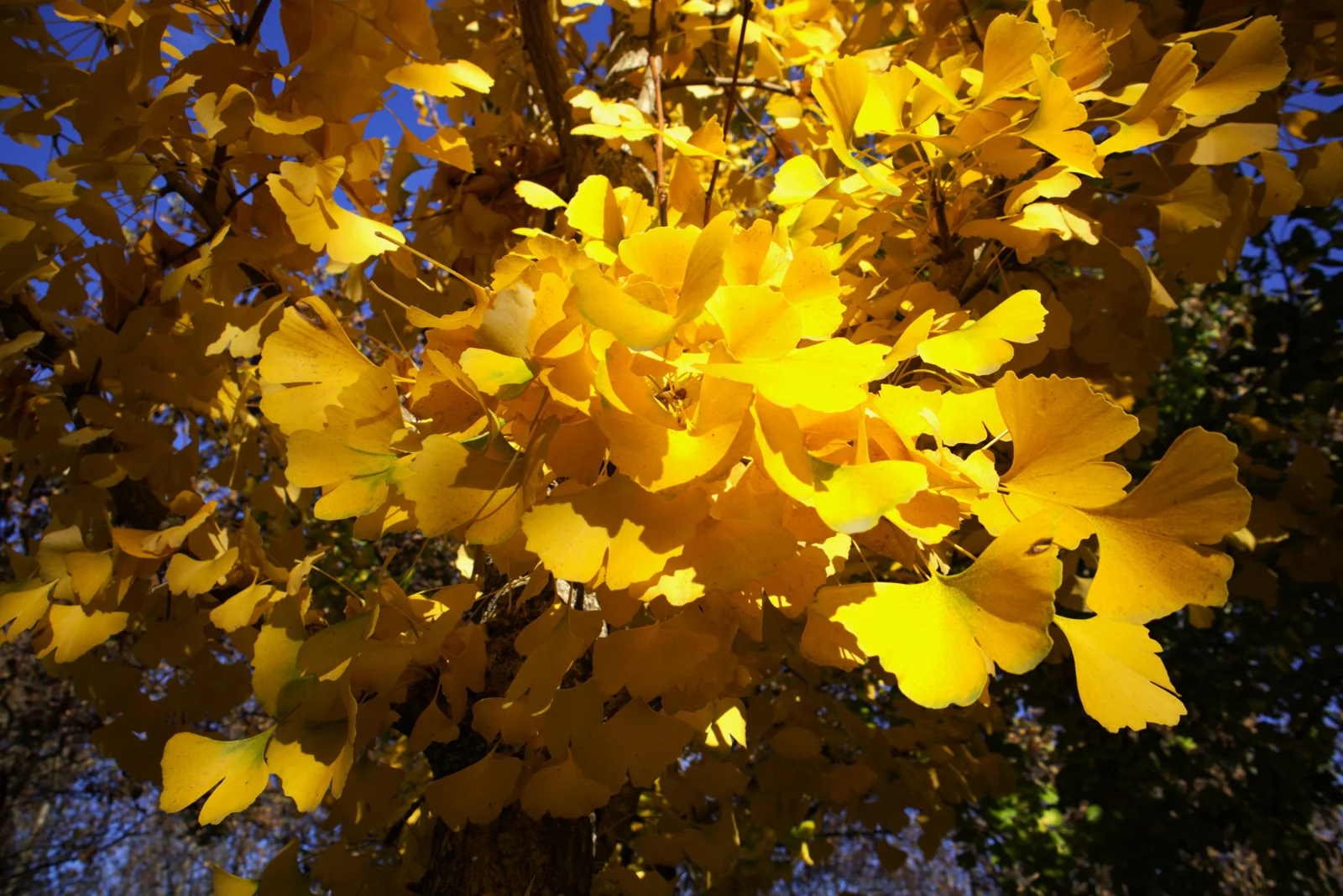
It performs on free-draining loams, sands, and calcareous substrates in full sun, but fails on wet or poorly drained ground. The fan-shaped foliage turns clear golden yellow in autumn, a defensible seasonal-interest criterion for public spaces. For street and avenue work, specify grafted male clones (the Stadtbaum-Kanon cultivars such as 'Autumn Gold' and 'Princeton Sentry'), since female trees bear malodorous seeds.


Advice on this species
Want to know more about Ginkgo biloba?
Tell us about your project and we'll advise you on this species — where it thrives, which size makes sense, and what to expect once planted.
- Produção própria
- Exemplares adultos
- Resposta em 1–2 dias
Sem compromisso · orçamento personalizado